Real estate has created more millionaires than any other investment — and you don’t need to be rich to start. From $10 crowdfunding investments to creative rental strategies, beginners today have more entry points than ever before. Real estate offers something stocks can’t: tangible assets, tax advantages, and multiple income streams from a single investment.
Whether you have $100 or $100,000, there’s a real estate passive income strategy that fits. Here are 15 beginner-friendly ways to start earning from property.
1. Invest in REIT ETFs Through a Brokerage
Real Estate Investment Trust ETFs let you own a slice of hundreds of properties — apartments, offices, warehouses — for the price of a single share, often under $100. They trade like stocks, pay quarterly dividends of 3-8% annually, and require zero property management. It’s the simplest possible entry into real estate.
Open any brokerage account (Fidelity, Schwab, or Robinhood), search for VNQ or SCHH, and buy your first share in minutes. Reinvest dividends to compound growth. A $10,000 REIT ETF position yielding 5% pays you $500/year passively — and you never fix a toilet or chase rent.

2. Try Real Estate Crowdfunding with Small Minimums
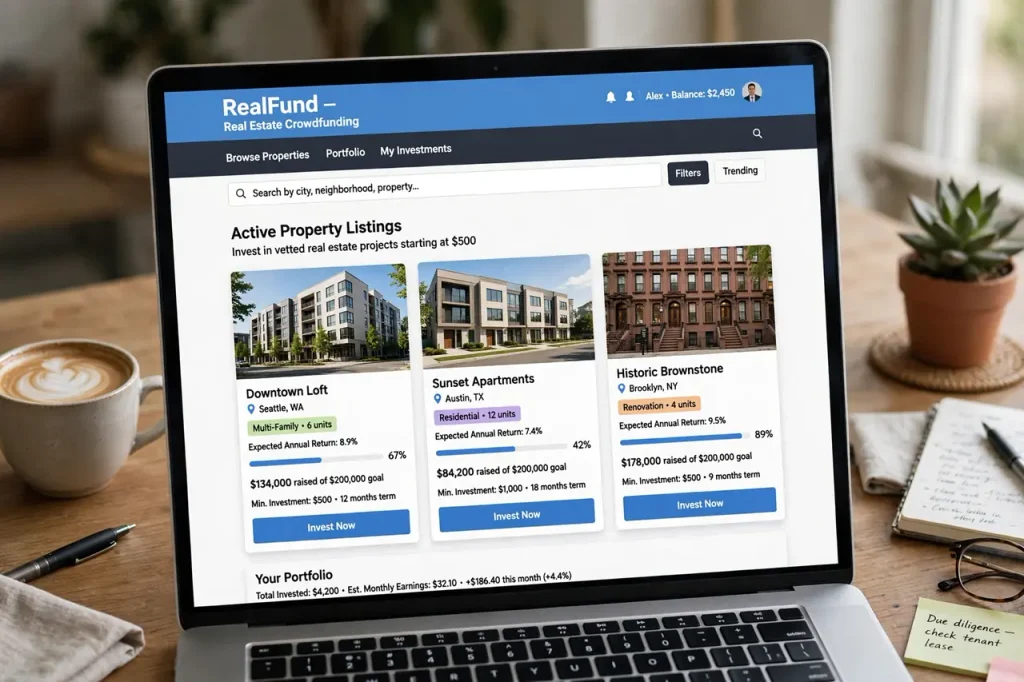
Crowdfunding platforms like Fundrise and Arrived let beginners invest in commercial properties and rental homes with minimums as low as $10. You pool money with thousands of investors to fund deals you’d never access alone, then earn quarterly dividends plus appreciation when properties sell.
Sign up, choose a portfolio matching your risk tolerance, and set up automatic monthly contributions. Returns historically range 7-12% annually — far above savings accounts. While your money is typically locked for 3-5 years, the completely hands-off nature makes crowdfunding ideal for beginners building their first real estate position.
3. House Hack a Multi-Unit Property
House hacking means buying a duplex or triplex, living in one unit, and renting the others — with tenants covering most or all of your mortgage. FHA loans require just 3.5% down for owner-occupied multi-unit properties, making this achievable for beginners with modest savings.
A $300,000 duplex with 3.5% down costs about $10,500 upfront. If each unit rents for $1,400 and your mortgage is $2,000, your tenants pay your housing cost while you build equity. After a year, you can move out, rent your unit too, and own a cash-flowing investment property.

4. Rent Your Property on Airbnb Part-Time
You don’t need a dedicated rental property — rent your own home on Airbnb when you travel, or list a spare bedroom year-round. Short-term rentals typically earn 2-3x what long-term leases pay. A spare room in a decent metro area can generate $800-$2,000/month with minimal effort.
Start by listing one room with great photos and competitive pricing. Use a smart lock for self check-in and hire a cleaner between guests. Many hosts spend just 2-3 hours weekly managing bookings. It’s the fastest way to turn your existing housing into an income-producing asset.

5. Invest in Real Estate Notes for Fixed Returns
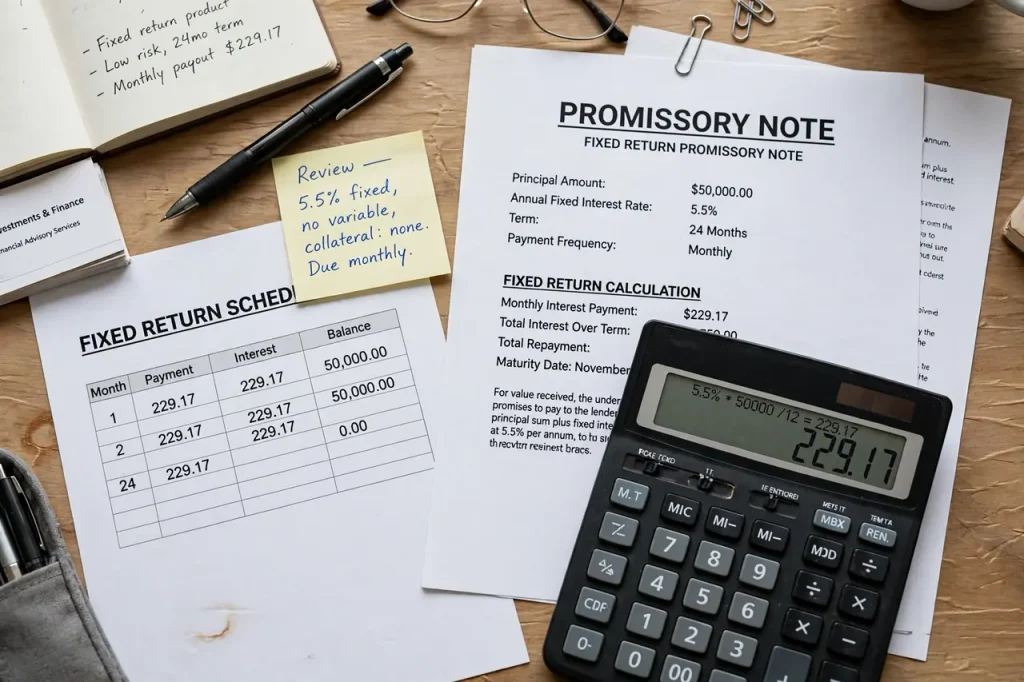
Real estate notes let you play the bank — you lend money secured by property and collect fixed interest payments, typically 8-12% annually. Platforms like Groundfloor let beginners buy into notes for as little as $10, with terms of 6-18 months. No tenants, no toilets, just interest checks.
Notes are secured by the underlying property, so if the borrower defaults, the property backs your investment. Diversify across dozens of small notes to spread risk. A $5,000 note portfolio at 10% average returns pays $500/year in truly passive interest income.
6. Buy a Duplex and Live in One Unit
Similar to house hacking but framed as your first investment purchase: buy a duplex as your primary residence with a low-down-payment loan, live in one side, and let the other side’s rent offset your costs. After building equity and experience, repeat with a second property.
The math is compelling — a $250,000 duplex where you collect $1,200/month in rent against a $1,600 mortgage means your housing costs just $400/month while you build equity in an appreciating asset. It’s how many real estate investors acquire their first 2-3 properties with minimal out-of-pocket cost.

7. Try Rental Arbitrage Without Owning Property
Rental arbitrage means leasing a property long-term, then re-renting it short-term on Airbnb at a markup. You don’t need a down payment or mortgage — just first month’s rent, a security deposit, and landlord permission. The spread between your lease cost and Airbnb revenue is your profit.
Find apartments in tourist-friendly areas where nightly rates exceed monthly rent divided by 30. A $1,500/month lease generating $3,000/month on Airbnb nets $1,500 before expenses. Get written landlord approval first — many leases prohibit subletting. Successful arbitrageurs manage 3-5 units earning $1,000-$2,000/month each.

8. Invest in Farmland Crowdfunding Platforms
Farmland is real estate most beginners overlook — and it’s historically one of the most stable investments, appreciating steadily for decades. Platforms like AcreTrader and FarmTogether let you buy fractional shares of working farms for $100-$500 minimums, earning from crop revenue and land appreciation.
Farmland returns average 10-12% annually with low correlation to stock markets, making it excellent diversification. You own a tangible asset producing real food. While investments typically lock for 3-7 years, the passive quarterly distributions and long-term appreciation reward patient beginners.

9. Earn from Real Estate Investment Apps
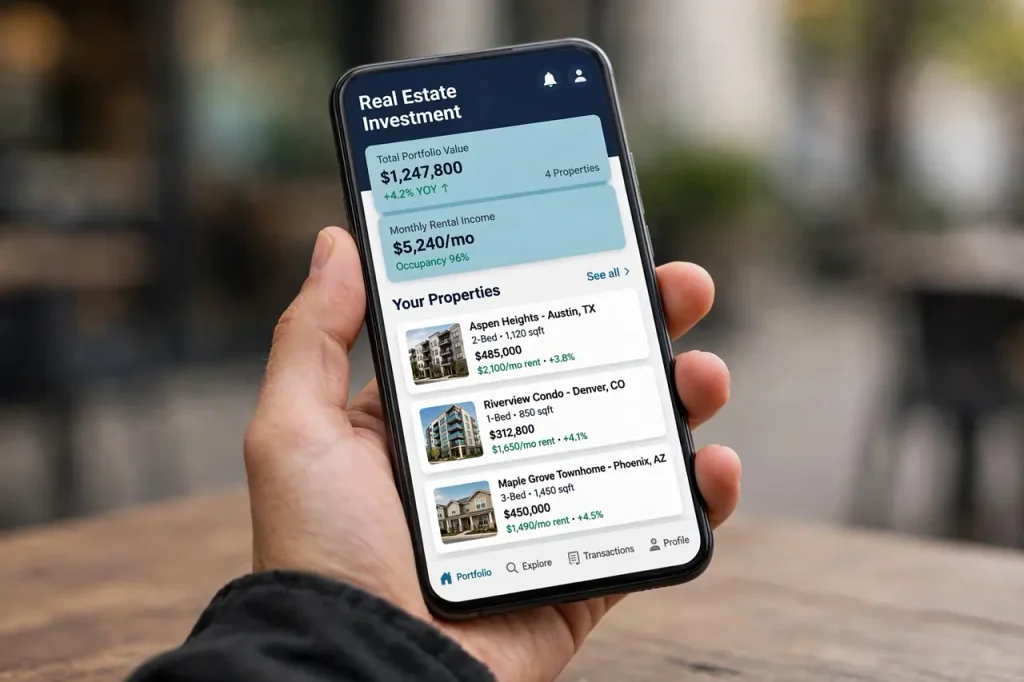
Apps have democratized real estate investing — start with spare change through platforms offering fractional property shares, REIT portfolios, or real estate-backed loans. These apps handle all management; you just invest and watch quarterly distributions arrive.
Try Arrived for single-family rental shares ($100 minimums), Fundrise for diversified eREITs ($10 minimums), or RealtyMogul for commercial deals. Set up automatic monthly investments of $50-$200. While returns vary, a $5,000 app-based portfolio at 8% yields $400/year — growing automatically as you add funds.
10. Lease Your Land for Billboards or Solar
If you own land — even a small rural parcel — leasing it for billboards, cell towers, or solar panels generates passive income with zero effort. Billboard leases pay $500-$5,000/month depending on traffic visibility. Solar companies pay $500-$1,000 per acre annually for 25-year leases.
Contact billboard companies directly if your land sits near highways, or list on sites connecting landowners with solar developers. These are pure triple-net leases — the tenant handles everything. A single billboard lease can outperform many rental properties with none of the headaches.

11. Offer Private Money Loans to House Flippers
Experienced flippers constantly need short-term capital and pay private lenders 10-15% interest for 6-12 month loans secured by the property being renovated. If you have $25,000+ in savings earning minimal interest, private lending can multiply your returns with the property as collateral.
Connect with local real estate investor groups or hard money brokers to find vetted borrowers. Always use proper legal documentation and verify the property’s after-repair value covers your loan. A $50,000 private loan at 12% earns $6,000/year — far exceeding any savings account.

12. Invest in Storage Unit REITs
Self-storage is one of real estate’s best-performing sectors — Americans keep accumulating stuff, and storage facilities boast 90%+ occupancy with minimal management needs. Storage REITs like Public Storage and Extra Space let beginners invest in this boom for the cost of a single share.
Storage REITs have delivered 12-15% annualized returns over the past decade with dividends yielding 3-5%. Buy through any brokerage and reinvest dividends. It’s a bet on a secular trend — shrinking living spaces and growing possessions — that shows no signs of slowing.

13. Buy Tax Liens for High Interest Returns
When property owners don’t pay taxes, counties auction tax liens — you pay the owed taxes and earn 8-18% interest when the owner repays, which they almost always do. If they don’t, you can potentially acquire the property for just the tax amount owed. Minimums start around $500.
Research your county’s auction process — many now run online. Focus on liens for properties worth far more than the tax debt, ensuring your investment is well-secured. While it requires some learning upfront, tax lien investors report 10-15% annual returns with the property as ultimate collateral.

14. Monetize Vacant Land with Parking Rentals
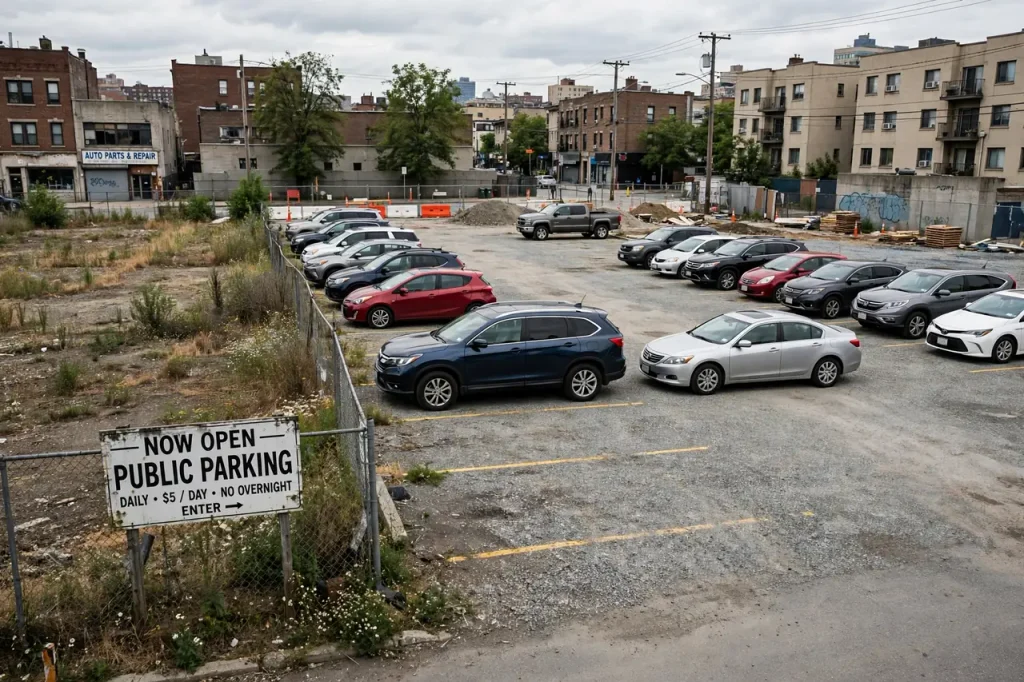
Vacant lots near stadiums, downtowns, or event venues can generate surprising income as parking. List your space on SpotHero or ParkWhiz during events — a lot holding 20 cars at $20/event across 50 events yearly earns $20,000 with almost no work. Even monthly parking rentals add up.
No land? Lease an underused lot from its owner and sublease parking rights. The setup is minimal: clear signage, a payment system, and basic liability insurance. Urban landowners report $500-$3,000/month from parking alone — truly passive income from dirt you already own.
15. Start a Real Estate Newsletter with Affiliate Deals
Combine real estate knowledge with affiliate marketing: build a newsletter sharing investment opportunities, tool reviews, and market analysis, then monetize through affiliate links to brokerages, courses, and software. Real estate affiliates pay generously — $50-$200 per referred investor.
Grow your list by sharing valuable local market insights on social media and forums. A newsletter with 2,000 engaged real estate investors can generate $1,000-$5,000/month from affiliate partnerships with platforms, lenders, and education companies. Your knowledge becomes the asset; the newsletter is the distribution.

Frequently Asked Questions
How much money do I need to start investing in real estate?
You can start with as little as $10 through crowdfunding platforms like Fundrise or REIT ETFs through any brokerage. Rental properties typically require $10,000-$30,000 for down payments and reserves. House hacking with FHA loans needs just 3.5% down. Start small with REITs or crowdfunding, then scale to physical properties as you learn.
Is real estate really passive income?
It depends on the strategy. REITs, crowdfunding, and notes are truly passive — you invest and collect. Rental properties require some management unless you hire a property manager (typically 8-10% of rent). Even “active” real estate becomes mostly passive once systems are in place. Budget 2-5 hours monthly per rental property after the initial setup.
What are the tax benefits of real estate investing?
Real estate offers powerful tax advantages: depreciation lets you deduct a portion of the property’s value annually even as it appreciates, mortgage interest is deductible, and 1031 exchanges defer taxes when selling investment properties. Consult a CPA familiar with real estate — proper structuring can save thousands yearly.
Should beginners start with REITs or physical property?
Start with REITs or crowdfunding to learn how real estate returns work with minimal risk and capital. Once you understand the basics and save a down payment, consider house hacking a duplex — it’s the best beginner path to physical property because you live there while learning landlording. Avoid buying distant rentals as your first property.
What are the biggest risks for beginner real estate investors?
Overleveraging (borrowing too much), underestimating repair costs, and buying in unfamiliar markets top the list. Mitigate by starting small, keeping 6 months of expenses in reserve, getting professional inspections, and investing locally where you understand the market. Never invest money you can’t afford to have illiquid for several years.
Conclusion
Real estate passive income isn’t reserved for the wealthy — it’s accessible to anyone willing to start small and learn. Whether you begin with a $10 REIT share or a house-hacked duplex, each step builds knowledge and equity that compound over time. The strategies above offer entry points for every budget and risk tolerance.
The best time to start was ten years ago; the second-best time is today. Pick one strategy that fits your current resources, take the first step this week, and start building the property portfolio that will pay you for decades. Your future self — collecting checks from assets you own — will thank you for starting now.