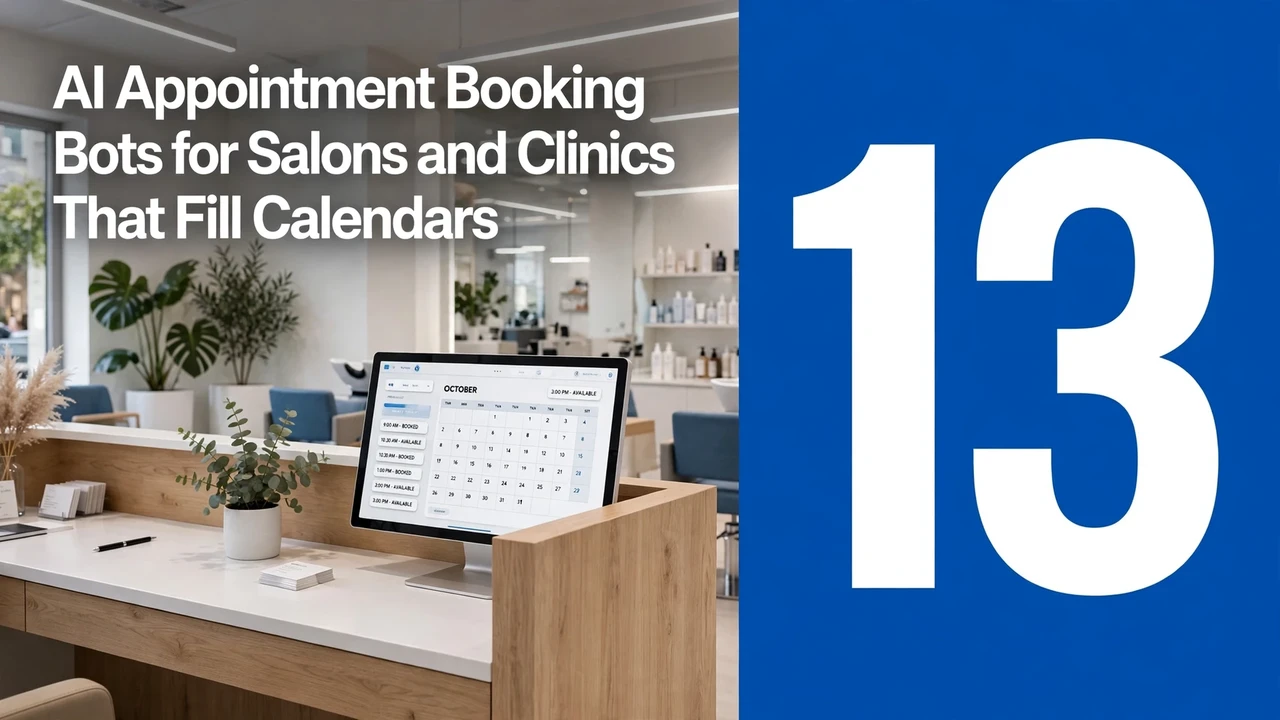
Every empty chair in a salon and every unfilled slot in a clinic is money that never comes back. Yet most salons and clinics still take bookings only during business hours, by phone, while their front desk is busy with the clients already in the building. An AI appointment booking bot fixes that by letting customers book any time, from anywhere, without a human touching the calendar.
This is also a service you can sell. Salons and clinics pay $200 to $600 a month for a booking bot that works, because one filled chair a week already covers the cost. If you want the bigger picture on AI services for local businesses, start with AI voice receptionists and AI lead follow-up systems — booking bots pair perfectly with both.
1. 24/7 SMS AI Appointment Booking Bot for After-Hours Clients
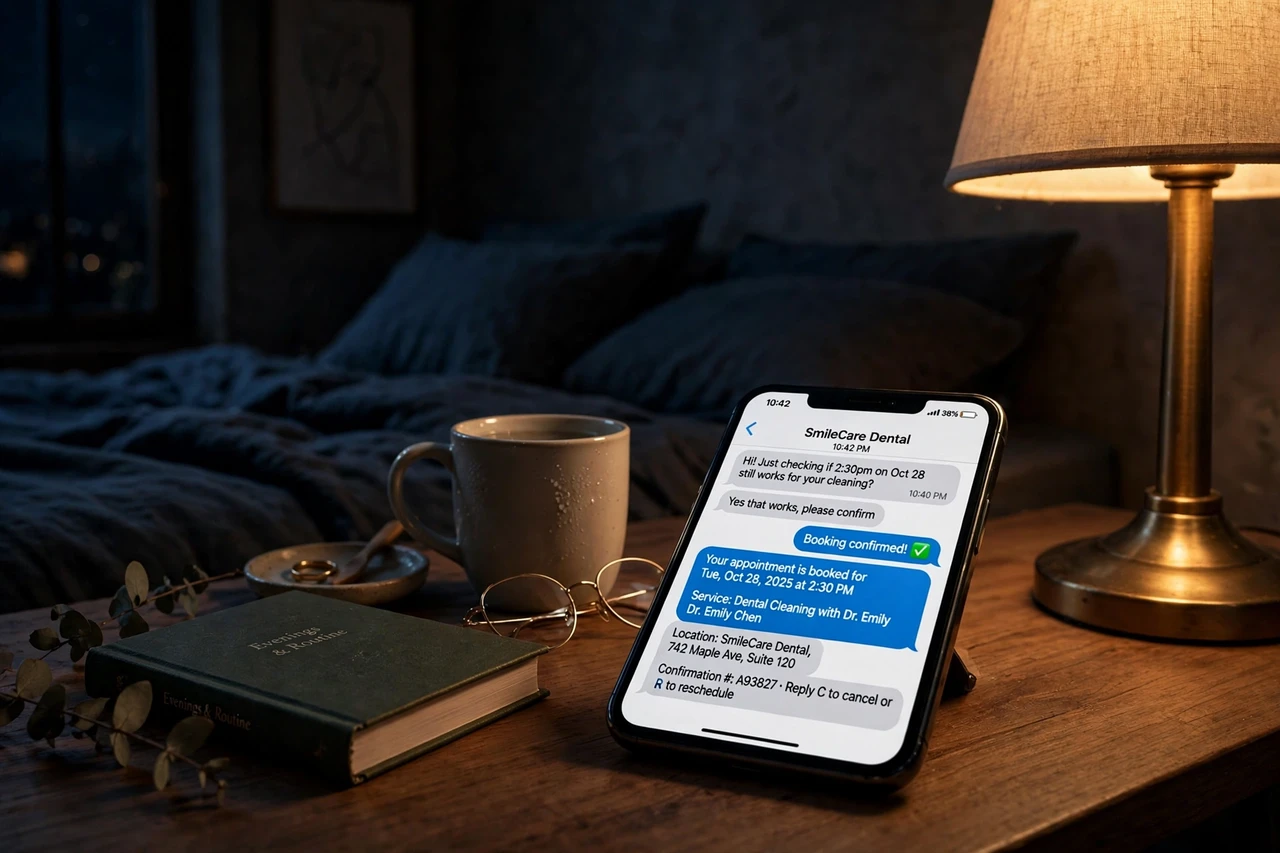
Most booking requests arrive when the business is closed — evenings, weekends, holidays. An SMS booking bot answers those messages instantly, checks real availability, and confirms the appointment on the spot. Clients love it because they book in 30 seconds without a phone call, and owners love it because after-hours demand stops evaporating.
Setup takes a day: connect the bot to the booking calendar, write the conversation flow, and test it with the owner’s own phone. Sell it as a setup fee ($300 to $800) plus a monthly retainer ($150 to $300) for monitoring and tweaks. The first month’s report — “23 appointments booked after hours” — usually sells the renewal by itself.
2. Website Chat Widget That Books in Real Time
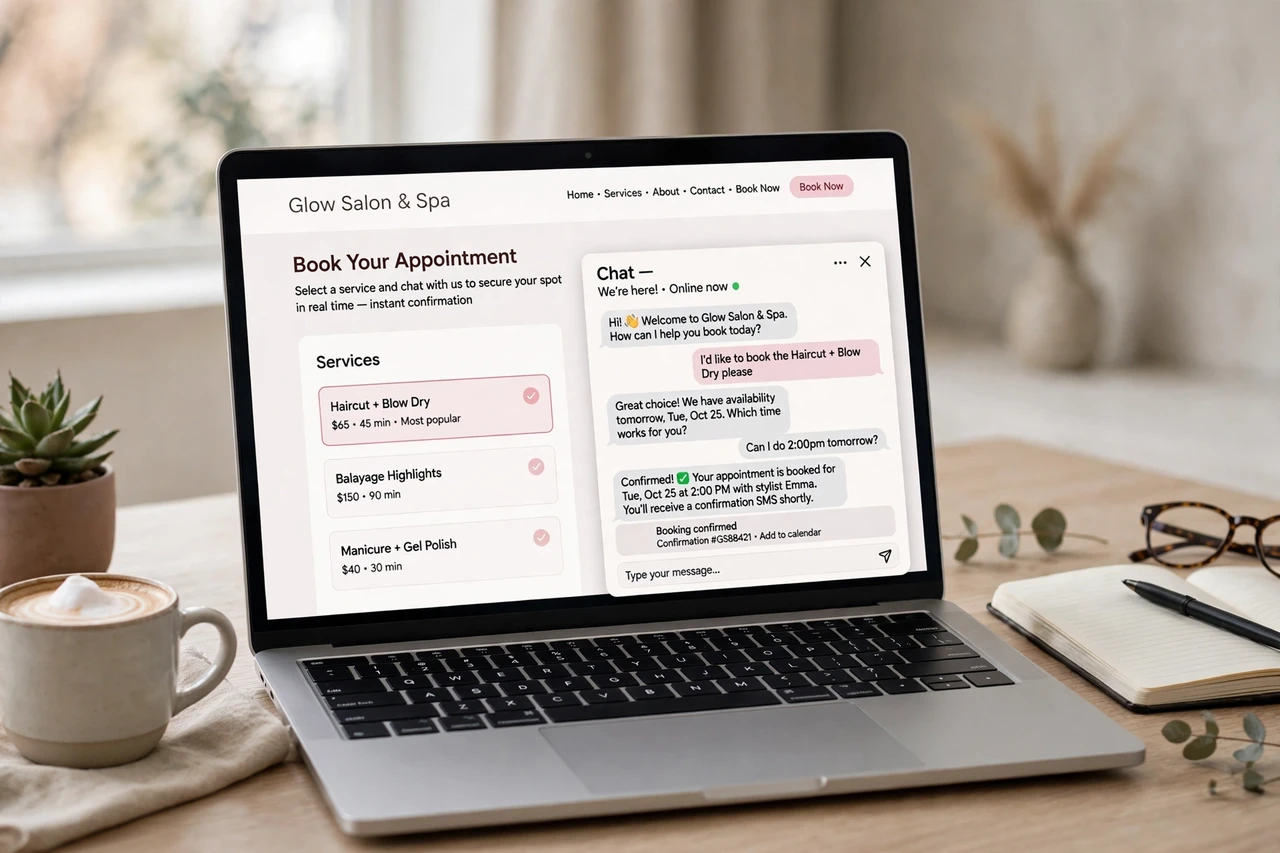
Visitors on a salon or clinic website are already interested — they just need a nudge. A chat widget that greets them, asks what service they want, and books a slot without leaving the page converts far more visitors than a “call us” button. It also works at 2 a.m., when the owner is asleep and the competitor’s phone is off.
The widget connects to the same calendar the front desk uses, so double bookings never happen. Offer it as part of a booking package, and show the client their website’s visitor numbers: even a 5 percent conversion lift is dozens of appointments a month for a busy site.
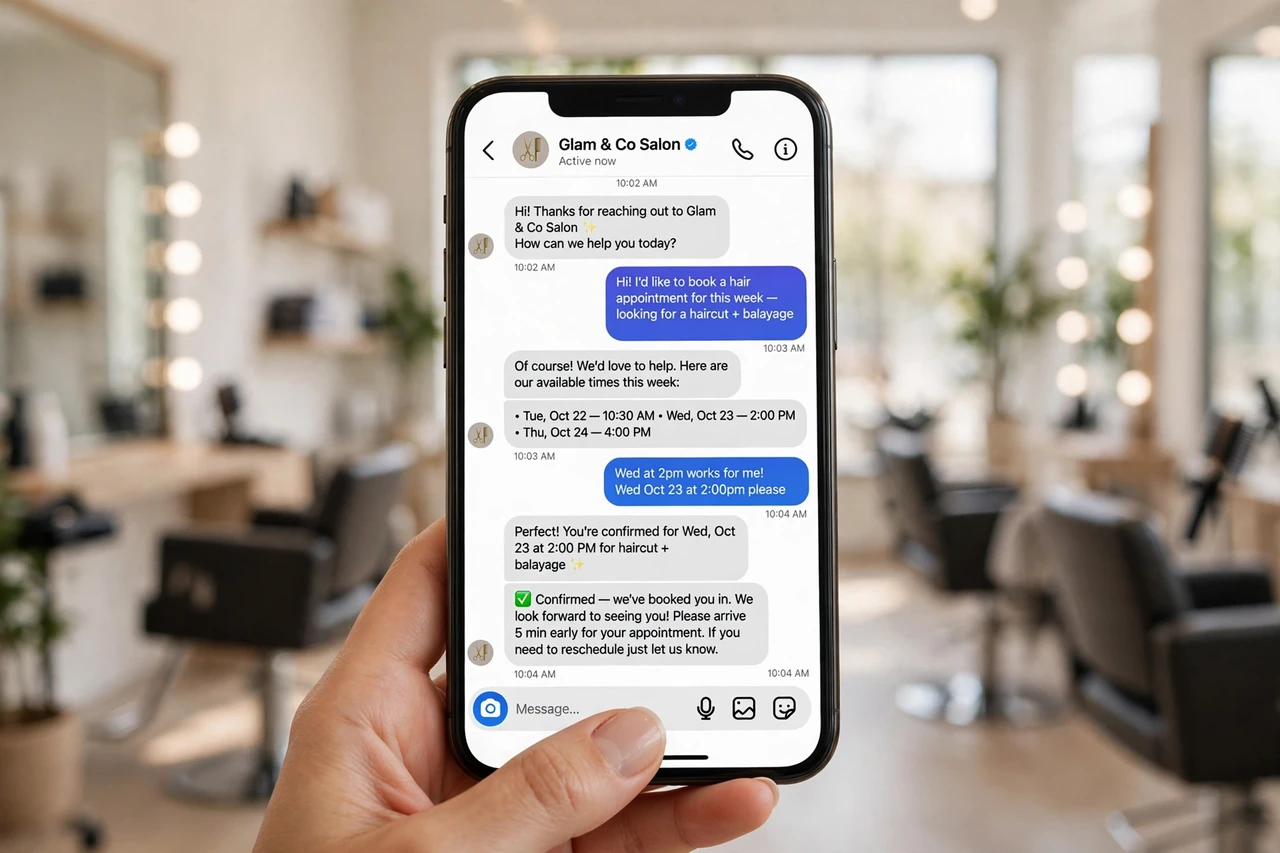
3. Instagram DM Booking Bot for Salons
Salons live on Instagram, and clients DM them constantly asking for appointments, prices, and availability. A DM booking bot answers those messages instantly, shows available services and times, and books the slot inside the conversation. For salons, this is often the highest-converting bot of all, because the customer is already engaged.
Build the flow around the salon’s actual services and stylists, and keep the tone friendly and short — Instagram users hate long menus. Charge a setup fee plus a monthly retainer, and track one number for the client: appointments booked from Instagram per month. When that number grows, so does your retainer.
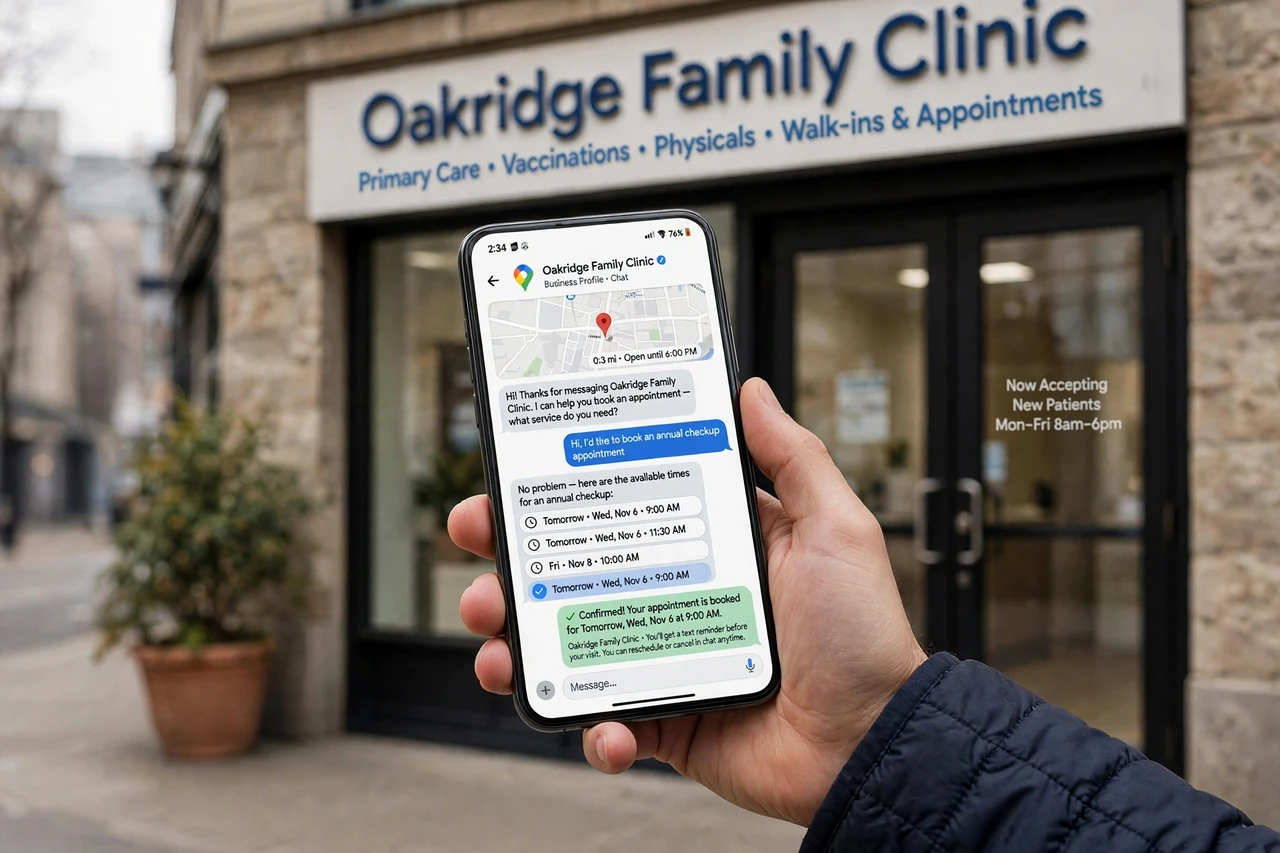
4. Google Business Chat Booking Assistant
When someone finds a clinic on Google Maps, they can message the business directly — and most businesses never reply. A booking assistant on Google Business Chat answers those messages, offers available times, and books the appointment before the searcher moves on to a competitor. It captures demand at the exact moment of highest intent.
This bot is quick to set up and easy to sell as an add-on to profile optimization work. The pitch writes itself: “People are already messaging you on Google. Right now, nobody answers. This bot answers in seconds.” For clinics competing on local search, that speed is the difference between a booked patient and a lost one.
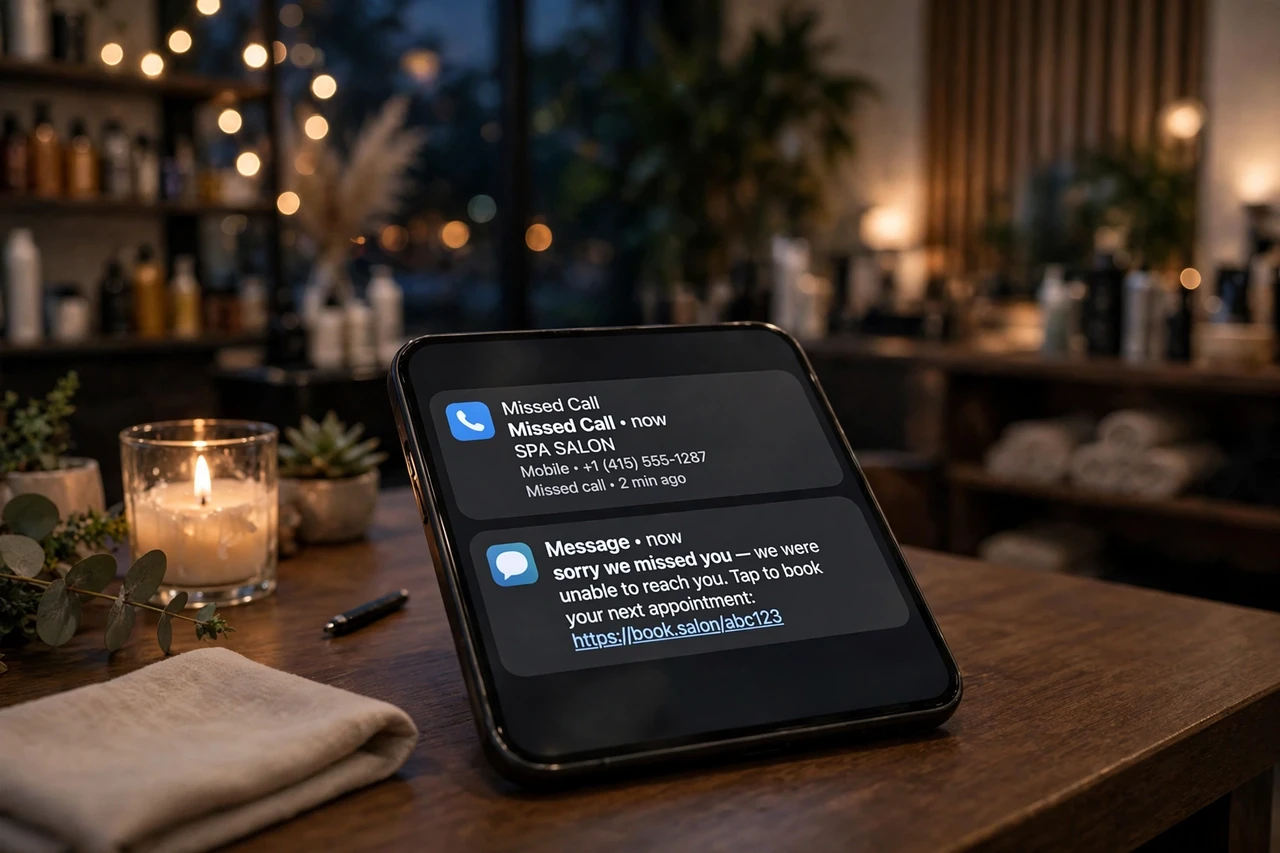
5. After-Hours Missed-Call Booking Bot
Missed calls are lost appointments, and salons and clinics miss a lot of them — during treatments, during lunch, after closing. A missed-call booking bot texts the caller within a minute: “Sorry we missed you — would you like to book?” with a link to live availability. Recovery rates of 30 to 50 percent are common, which means real revenue from calls that were already lost.
This is one of the easiest bots to sell because the owner already feels the pain of missed calls. Show them their phone’s missed-call log for a week, multiply by their average ticket, and the bot pays for itself in the pitch. Setup is simple, and the monthly report — recovered appointments — is the most satisfying number you will ever send a client.
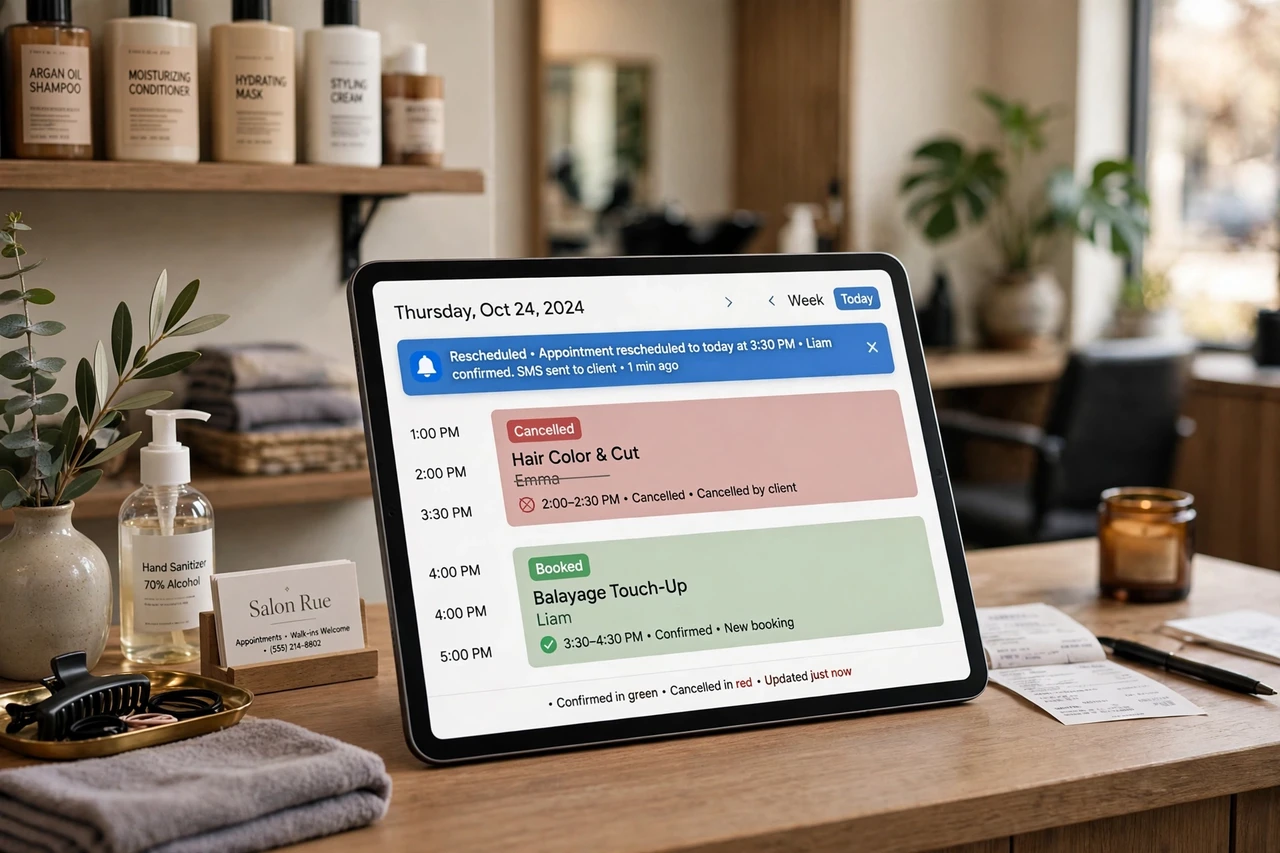
6. Smart Rescheduling Bot That Fills Cancellations
Cancellations create gaps, and gaps cost money — unless something fills them fast. A rescheduling bot does two jobs: it lets clients reschedule in seconds without calling, and it immediately offers the freed slot to waitlisted clients. The calendar stays full with zero front-desk effort.
Build the flow so rescheduling is easier than cancelling outright — one tap to move, not a phone call to cancel. Clients who reschedule instead of cancelling are worth their weight in gold to a salon, and owners notice the difference in their books within weeks.
7. Deposit-Taking Bot That Cuts No-Shows
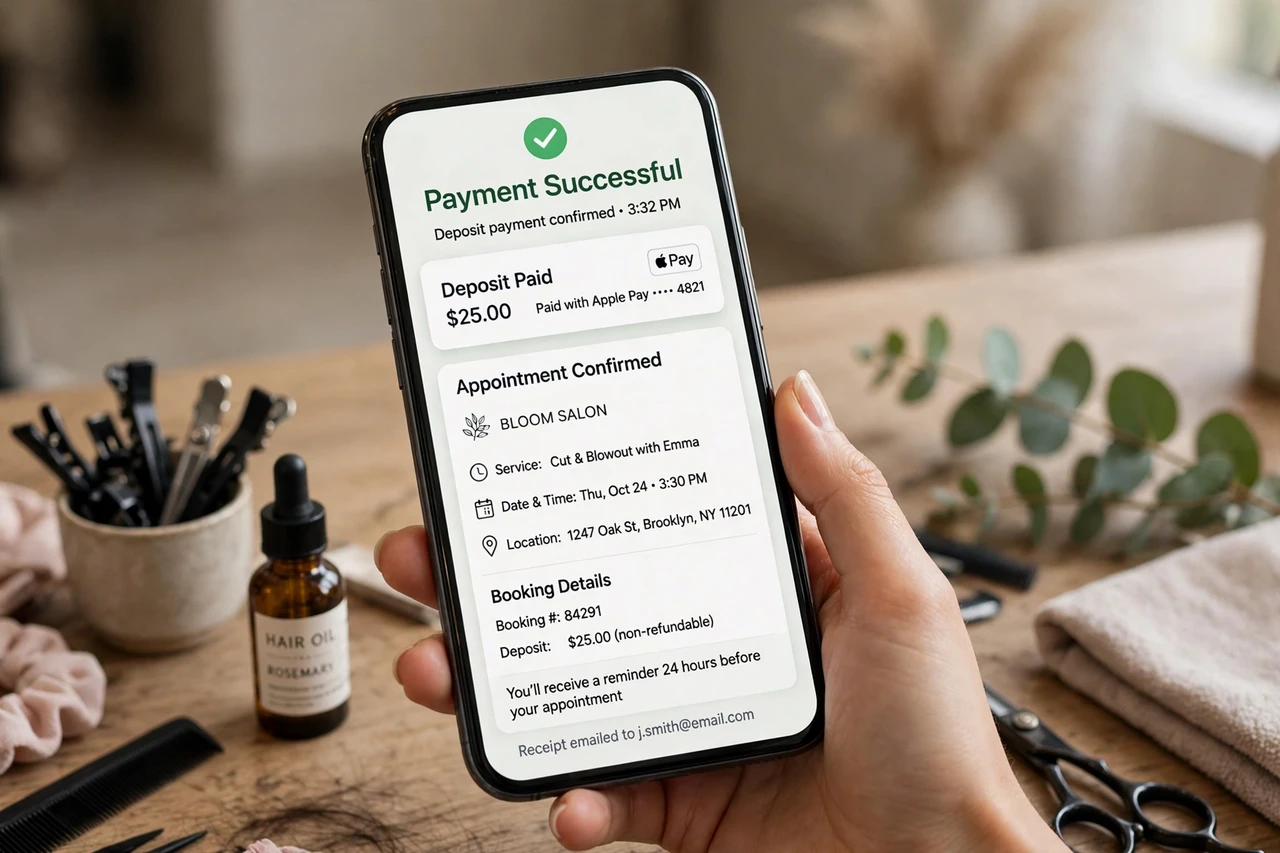
No-shows are the silent killer of salons and clinics: a 15 percent no-show rate means 15 percent of revenue never happens. A deposit-taking bot fixes the psychology — when a client pays a small deposit at booking, they show up. The bot collects the deposit, applies it to the appointment, and handles refunds for timely cancellations automatically.
Sell this to owners who complain about no-shows, and show the math: cutting no-shows from 15 percent to 5 percent on a $60 average ticket across 200 appointments a month is $1,200 recovered. The bot costs a fraction of that, which makes it one of the easiest ROI stories in this niche.
8. Multi-Staff Calendar Sync Bot for Large Salons
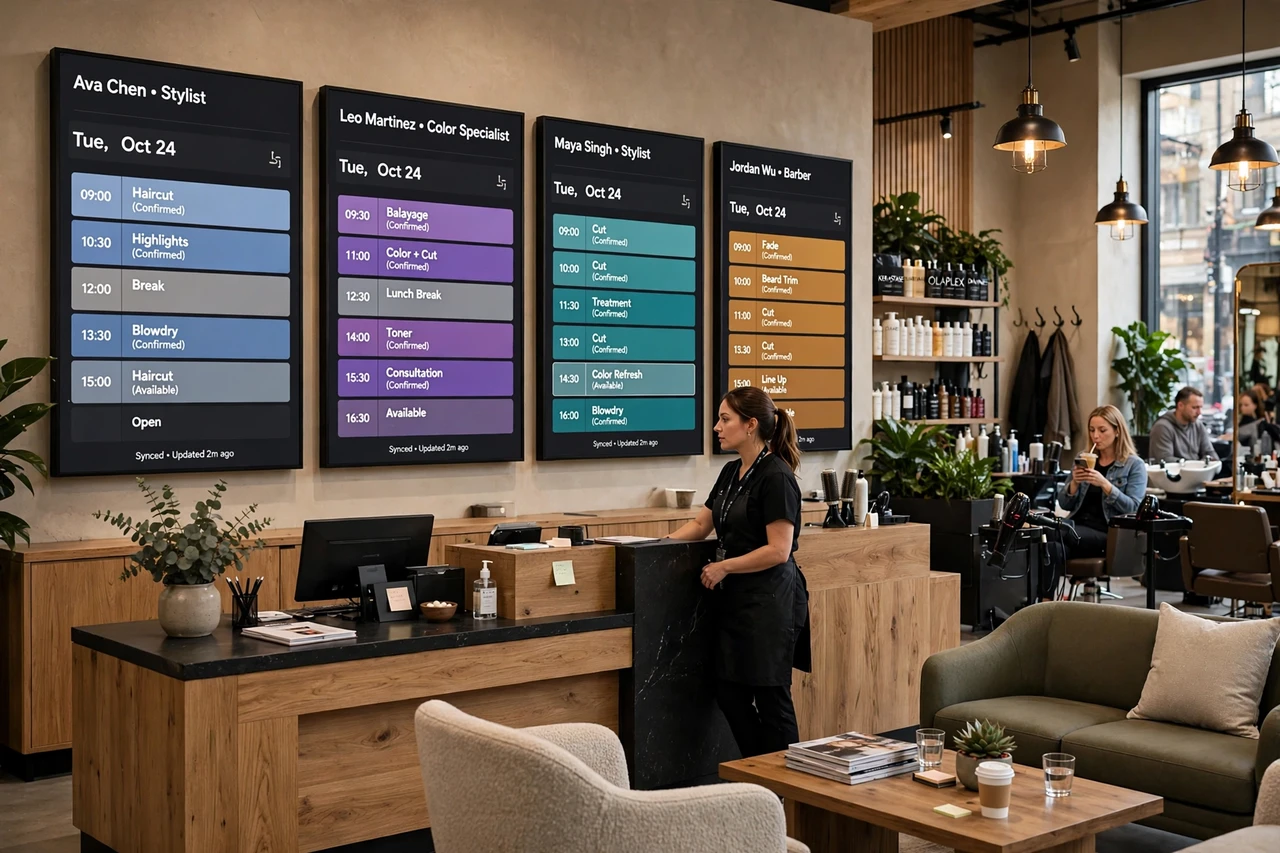
Large salons have a coordination problem: five stylists, five calendars, and clients who want a specific person at a specific time. A multi-staff sync bot shows only real availability per stylist, books the right chair, and prevents the double bookings that embarrass the front desk. It also balances the load, filling quieter stylists’ chairs first.
This bot sells to bigger operations at higher prices ($400 to $800 a month) because the pain is bigger. Map the staff and services carefully during setup — this is the bot where attention to detail matters most — and test every stylist’s calendar before launch. A smooth launch here wins you referrals to other large salons.
9. Intake-Form Bot for Clinics
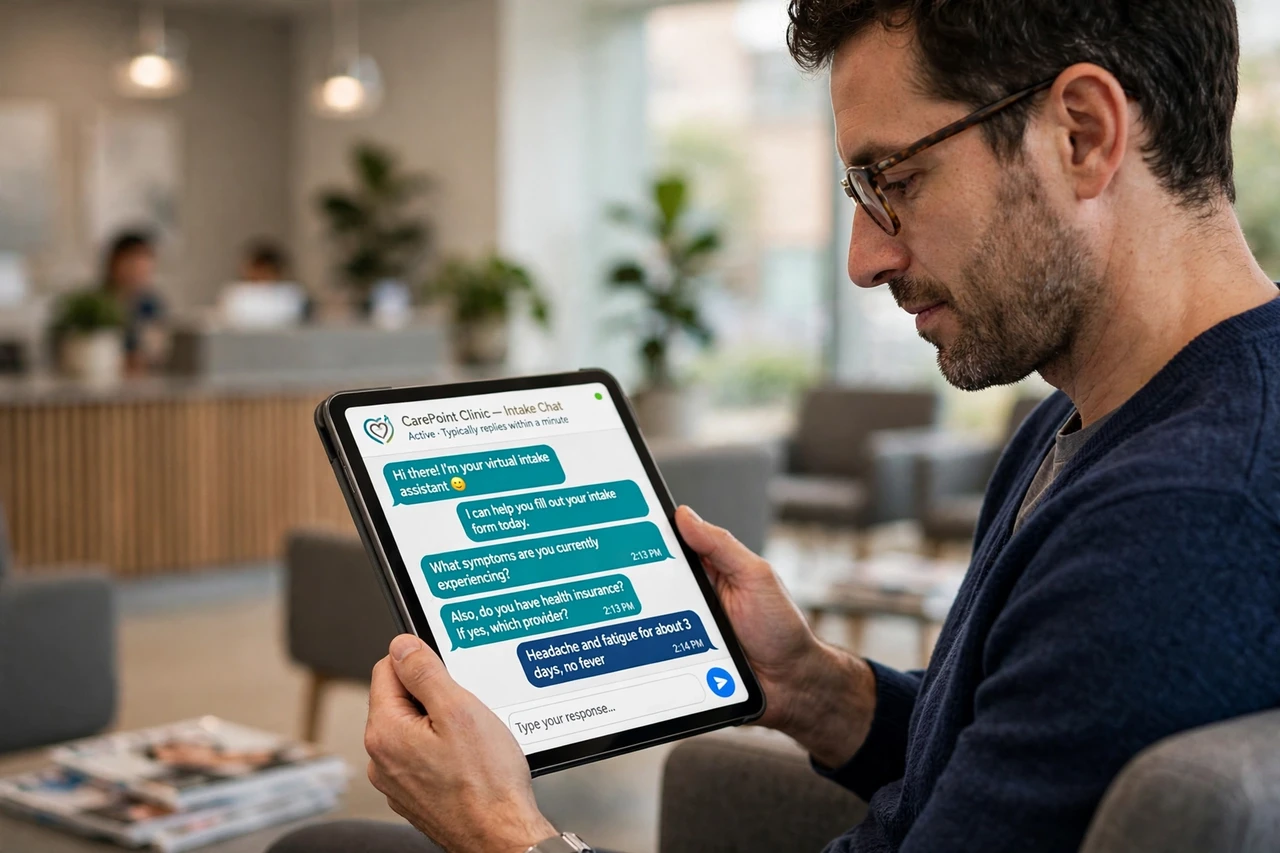
Clinics waste the first ten minutes of every appointment on paperwork. An intake-form bot collects the essentials before the visit — symptoms, insurance details, consent forms — through a friendly chat, and delivers a completed form to the front desk. Patients arrive ready, appointments start on time, and the clinic sees more patients per day.
Build the forms around the clinic’s actual paperwork, keep the chat short, and make sure sensitive data is handled securely — this is healthcare, so privacy is non-negotiable. Clinics pay premium retainers for this bot because it directly increases daily capacity, which is the metric clinic owners care about most.
10. Recurring Appointment Bot for Regular Clients
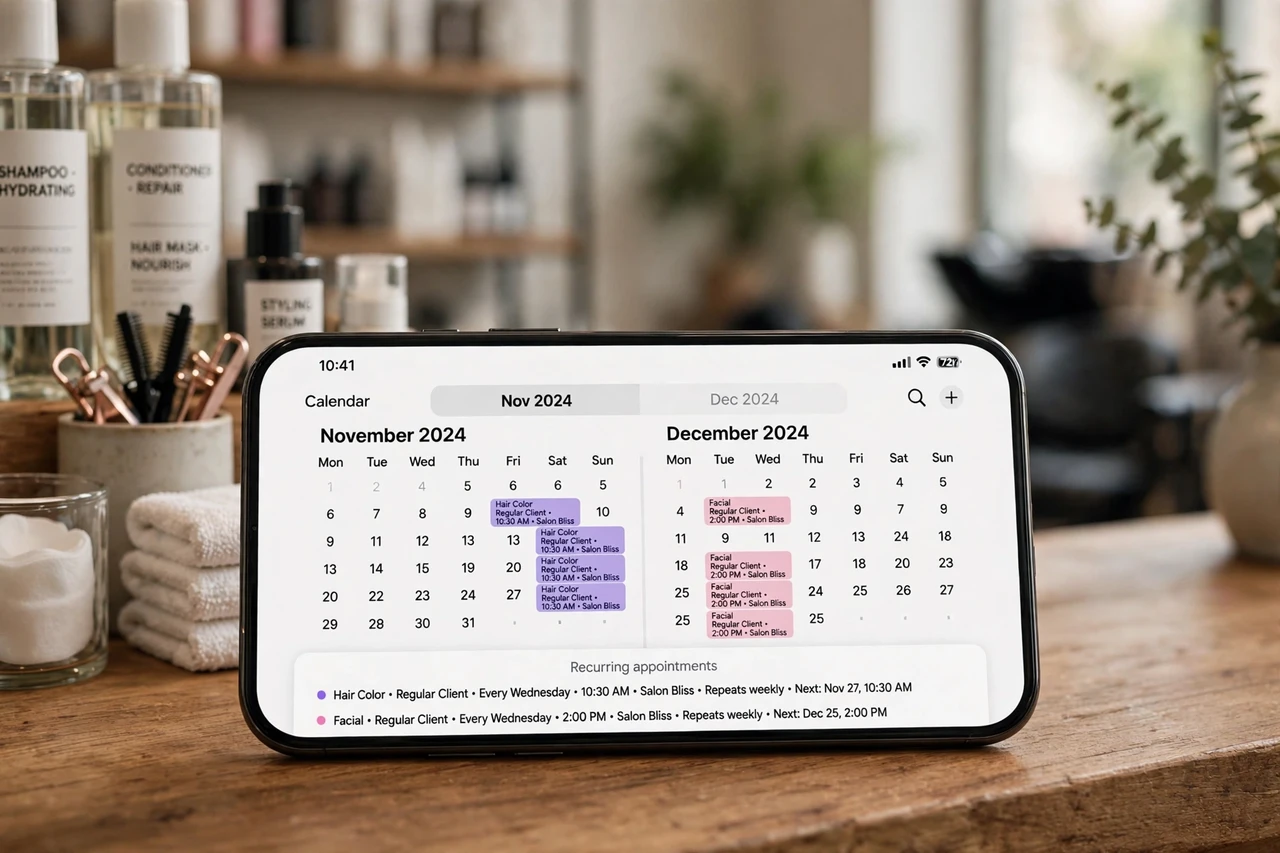
Salons thrive on regulars — the color client every six weeks, the facial client every month — but regulars forget to rebook. A recurring appointment bot fixes that by booking the next visit at checkout, then confirming it a few days before. The client never has to remember, and the salon never has a gap.
This bot is beautifully simple to sell: “Your regulars already come every six weeks. This makes sure they always do.” Track retention rate before and after, and the improvement — usually 10 to 20 percent — becomes your case study for the next salon.
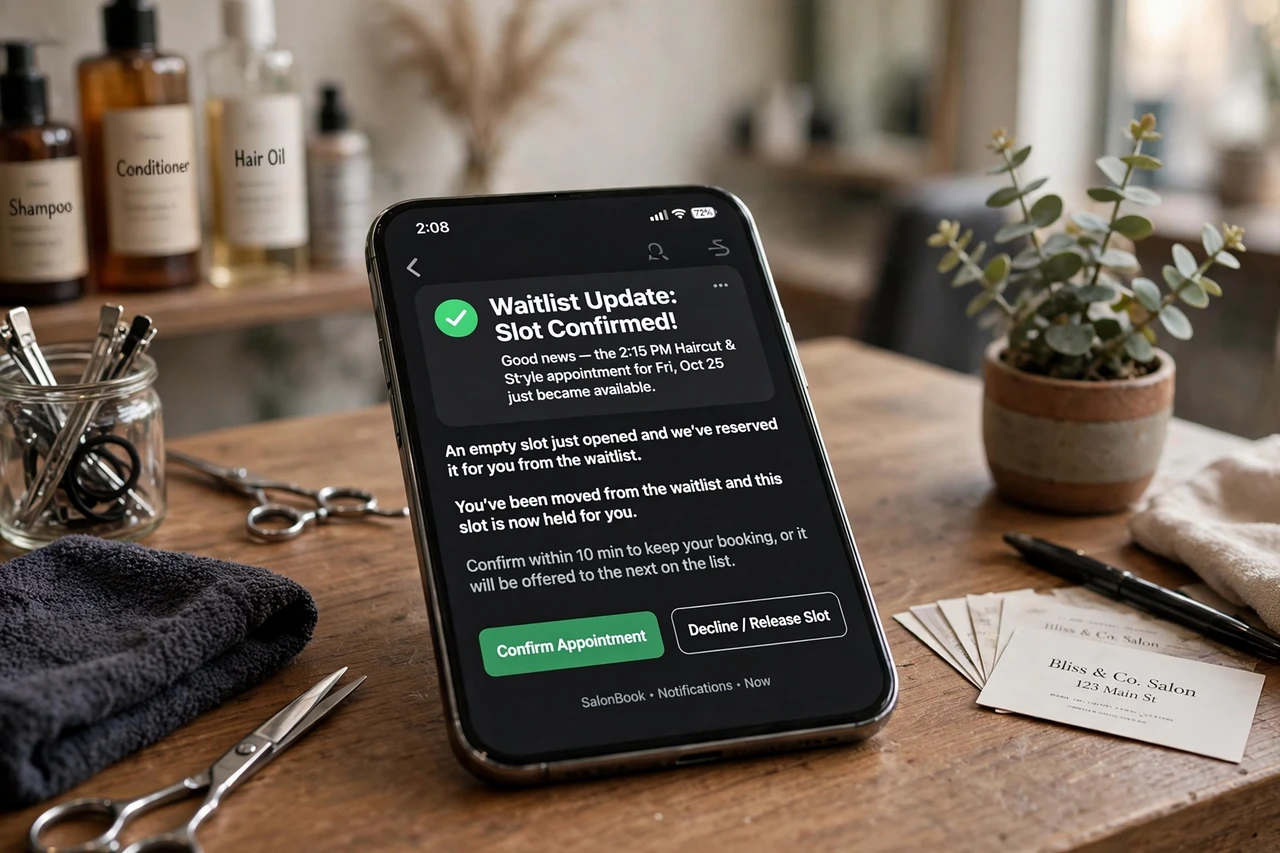
11. Waitlist Bot That Backfills Empty Slots
When a slot opens unexpectedly, most salons scramble — calling clients one by one while the slot sits empty. A waitlist bot does it instantly: the moment a cancellation hits, it messages waitlisted clients in order until someone takes the slot. Empty chairs get filled in minutes, not hours.
Clients love being on a waitlist that actually works, because it feels like VIP treatment. Owners love it because it recovers revenue they had written off. This bot is a great add-on sale to any existing booking client, and it takes less than a day to set up once the booking system is connected.
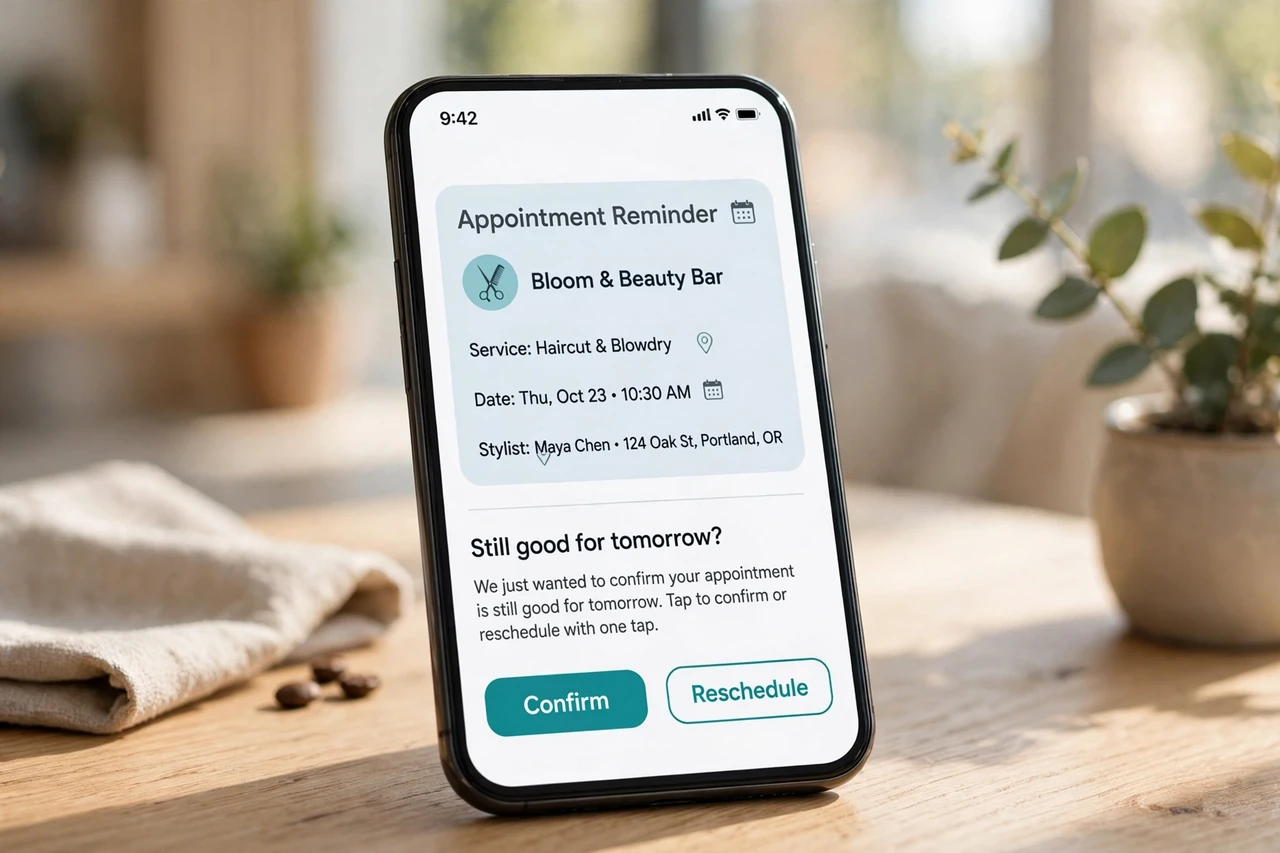
12. Two-Way Reminder Bot With One-Tap Reschedule
One-way reminders get ignored; two-way reminders get answered. A reminder bot that asks “Still good for tomorrow at 2?” and lets the client confirm or reschedule with one tap does more than reduce no-shows — it surfaces problems early, while there is still time to fill the slot. Confirmation rates above 80 percent are normal.
Pair this bot with the waitlist bot and you have a complete no-show defense system: reminders catch problems early, and the waitlist fills whatever slips through. Sell them together as a package, and report one combined number — “slots kept full” — that owners instantly understand.
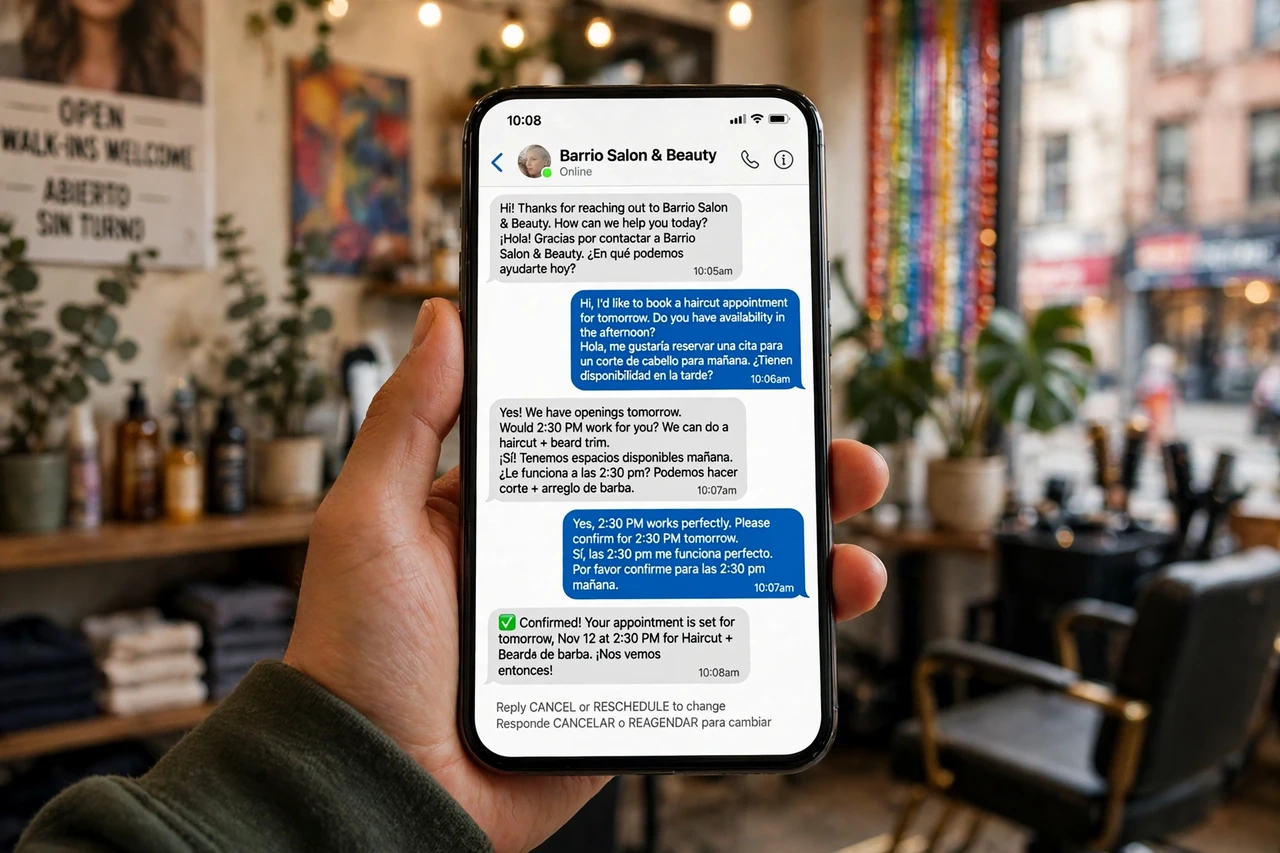
13. Bilingual Booking Bot for Diverse Neighborhoods
In diverse neighborhoods, a large share of customers prefer to book in Spanish, Vietnamese, Chinese, or another language — and businesses that only book in English lose them. A bilingual booking bot greets clients in their language, books the appointment, and hands off to the front desk with a translated summary. It opens an entire customer segment the business was silently missing.
Build the bot around the neighborhood’s actual demographics, not a generic language list, and have a native speaker review the flows. This bot sells on inclusion and revenue at once: owners feel good about serving their whole community, and the new bookings pay for the bot many times over. If you want to audit a business before pitching, our AI automation audit approach works well here too.
Frequently Asked Questions
Do these bots replace the front desk?
No — they handle the repetitive booking work so the front desk can focus on the clients in the building. Owners who frame bots as replacements scare their staff; owners who frame them as helpers keep their team and gain bookings. Always sell the bot as support, not replacement.
What if a client wants to talk to a human?
Every good booking bot has a human handoff: a “talk to us” option that routes to the front desk during business hours. Bots handle the 80 percent of bookings that are routine; humans handle the exceptions. That combination is what makes the system trustworthy.
How much can I charge for a booking bot?
Setup fees of $300 to $800 plus $150 to $400 a month per location is standard, with higher prices for multi-staff and clinic bots. Price on the value — recovered appointments and filled chairs — not on your hours, and report that value monthly.
Which bot should I sell first?
The SMS after-hours bot or the missed-call bot, because every salon and clinic feels that pain immediately. Win one client with an easy bot, prove the results, then expand into reminders, waitlists, and deposits. One happy owner refers you to the next three.
Empty chairs do not pay rent, and missed calls do not book themselves. The salons and clinics in your town are losing appointments every single day to slow, manual booking — and the bots that fix it take days to build and hours a month to maintain. Pick one bot, offer it to one local business this week, and let the recovered appointments sell the rest.