
Every home baker who has killed a sourdough starter knows the real problem: it was not the starter, it was the tracking. Starters fail when feedings get forgotten, when nobody remembers whether it peaked two hours ago or six, and when a struggling starter’s warning signs go unnoticed for a week. A sourdough starter tracker fixes all of that with one simple habit — writing down what you did, when you did it, and what the starter did back.
The trackers below are printable formats you can buy on Etsy, print at home, or build in a notebook. Each one solves a different part of starter care, from the first week of building a starter to the fine-tuning that turns good bread into great bread. Most cost under $5 as a printable, and a single saved starter — one you do not have to restart from scratch — is worth far more than that.
1. The Daily Feeding Log
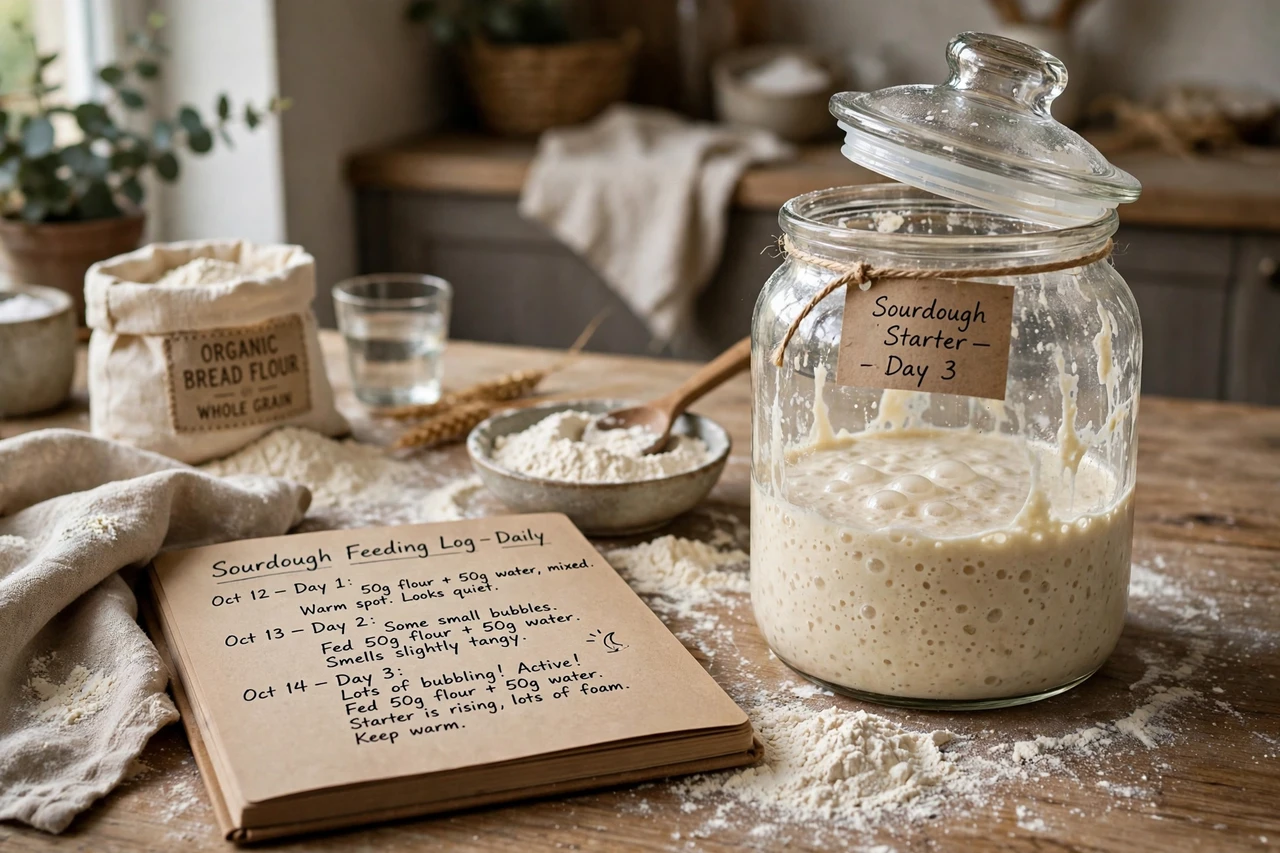
The daily feeding log is the foundation of starter care: one row per day with the date, the time fed, the amounts of flour and water added, and how much starter you discarded. It sounds basic, and that is exactly why it works — when your starter starts smelling like acetone or refusing to rise, the log tells you whether you missed feedings, changed flour, or accidentally starved it.
Use it every single day for the first month, even when the starter seems fine. The habit matters more than the data: bakers who log feedings catch problems days earlier than bakers who rely on memory. A simple rule to write at the top of the page — feed at the same time every day, and never skip two days in a row — prevents most beginner starter deaths on its own.
The log also reveals your starter’s personality over time. Some starters peak in four hours, others in eight, and knowing yours means you stop guessing when to bake. After a month of entries, you will know your starter’s rhythm better than any recipe book could tell you, and your bread will get more consistent because of it.
2. The 7-Day Starter Growth Tracker
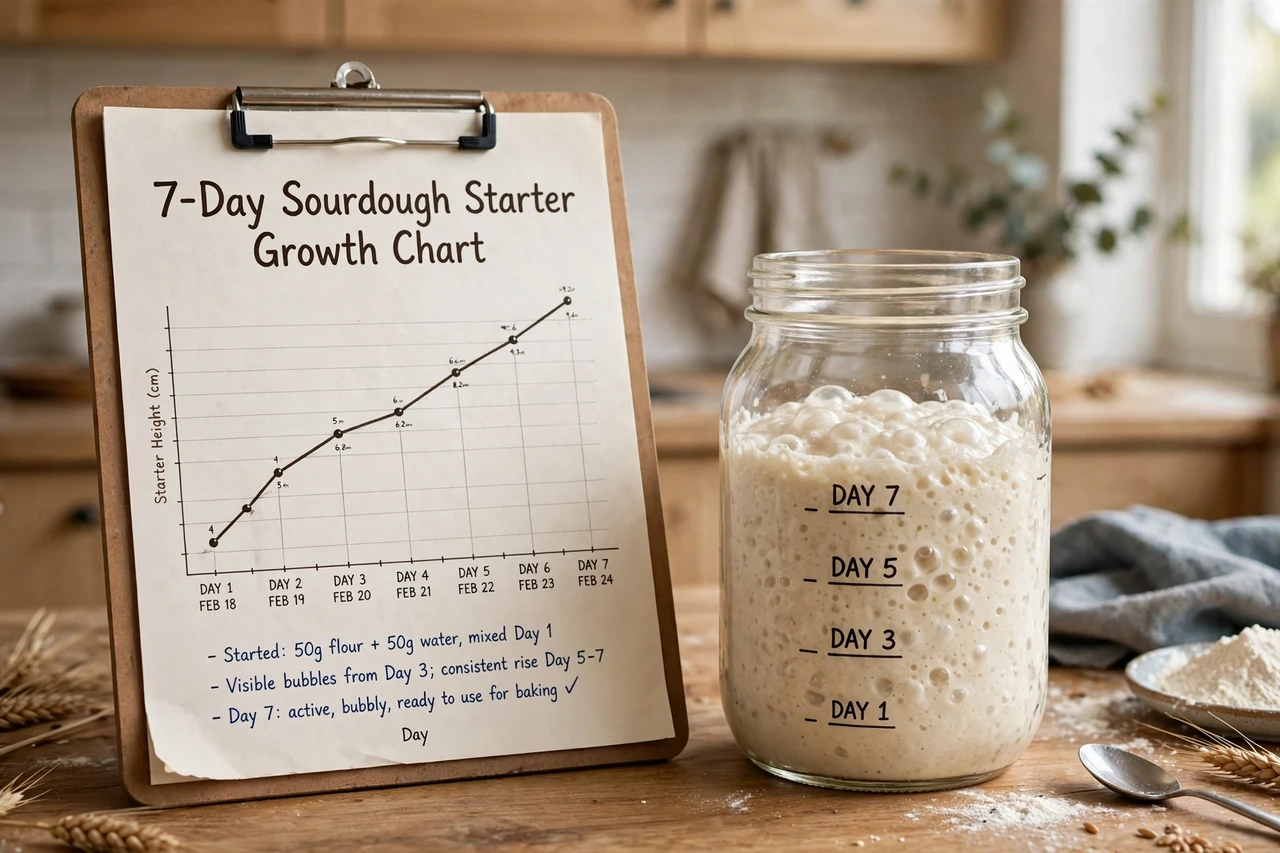
Building a new starter from scratch takes about a week, and the 7-day growth tracker is designed for exactly that first week. Each day has a row for observations — bubbles, rise height, smell, and color — plus a simple graph where you mark how high the starter rose after feeding. Watching the line climb across the week is genuinely motivating, and it turns an anxious first week into a visible story of progress.
The tracker’s real value is expectation-setting: most new starters look dead on days two and three, then suddenly come alive around day five. Bakers who track this pattern stop throwing away perfectly healthy starters on day three, which is the single most common beginner mistake. If your tracker shows bubbles returning and a sour, yeasty smell developing, your starter is alive — keep feeding.
Keep the completed first-week tracker as a reference. When you build your next starter, or when a friend asks why theirs looks dead, you will have proof of what a normal first week actually looks like, bad days included.
3. The Hydration Ratio Tracker
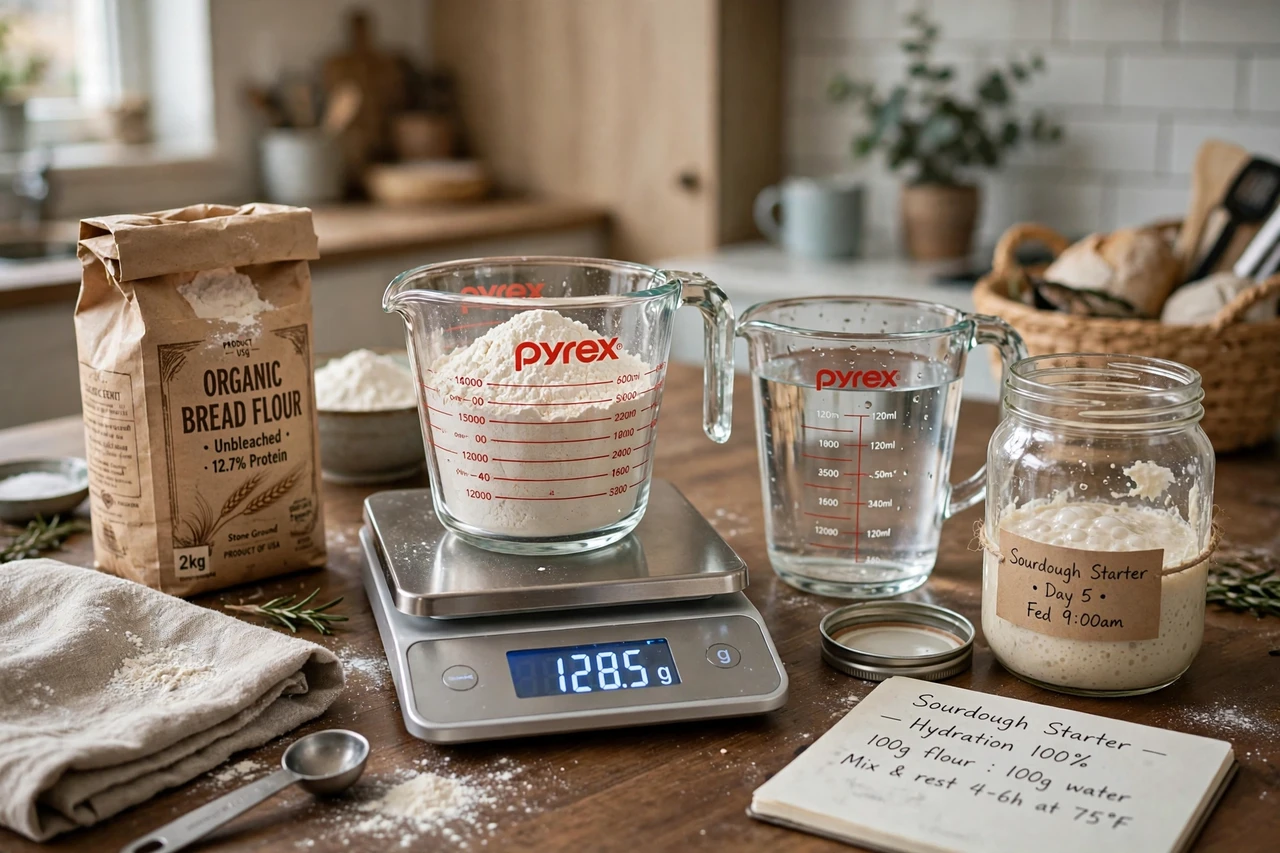
Hydration — the ratio of water to flour in your starter — controls how thick or runny it is, how fast it ferments, and how your dough behaves. The hydration ratio tracker logs each feeding’s flour type, water amount, and resulting consistency, so you can experiment deliberately instead of randomly.
Most beginners start at 100 percent hydration, meaning equal weights of flour and water, which produces a thick, pancake-batter starter. If your kitchen is warm, a stiffer starter at 80 percent hydration ferments more slowly and is easier to manage; if your kitchen is cold, a wetter starter moves faster. The tracker lets you record what you tried and what happened, so you find your starter’s sweet spot by evidence, not guesswork.
Record flour type too, because it matters more than most recipes admit: whole wheat and rye ferment faster than white flour, and switching flours changes rise times noticeably. When your bread suddenly behaves differently, the hydration tracker usually shows you changed something you had forgotten about.
4. The Peak Rise Timing Chart
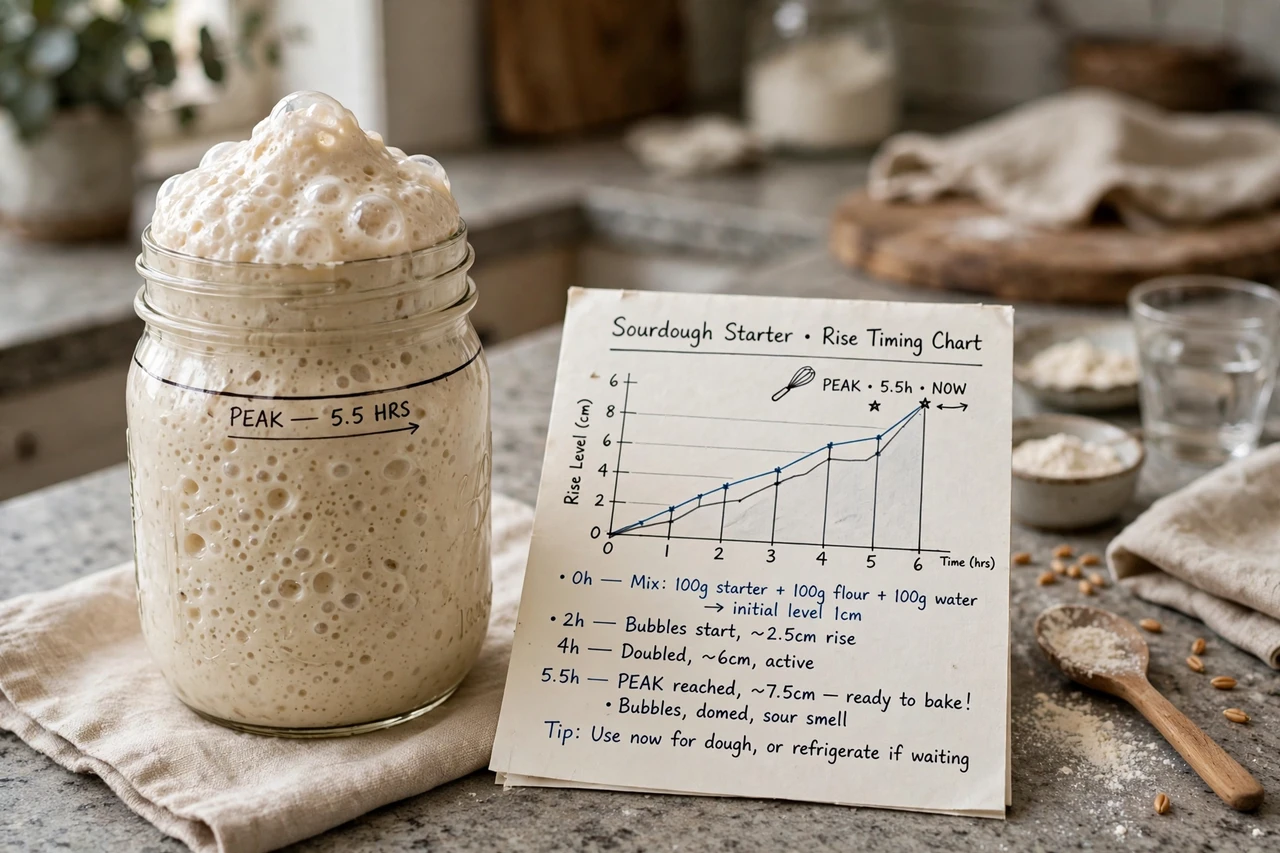
The most important moment in starter care is peak rise — the point where your starter has risen as high as it will go and is at its most active. Bake with it at peak and your bread rises beautifully; bake too early or too late and it falls flat. The peak rise timing chart helps you find that window for your starter, in your kitchen, in your climate.
Here is how it works: after feeding, mark the starter’s height on the jar with a rubber band, then record the height every hour until it starts to fall. Do this for a few days and a pattern emerges — most starters peak between four and eight hours after feeding, but yours has its own number. Once you know it, you can time feedings so peak lands exactly when you want to mix dough.
The chart is especially valuable when seasons change, because a starter that peaks in five hours in summer may take ten in winter. Bakers who re-chart each season never wonder why their winter bread is suddenly dense — they already know their starter slowed down, and they adjusted feeding times accordingly.
5. The Discard Recipe Planner
Every feeding produces discard — the portion of starter you remove before feeding — and throwing it away feels wasteful. The discard recipe planner turns that waste into a second baking stream: it lists the discard amount, the date, and which recipe it became, from pancakes and waffles to crackers, muffins, and pizza dough.
The planner’s best feature is a simple weekly map: which days produce discard, and which recipes use it. Discard pancakes on Saturday morning, crackers on Wednesday evening, and suddenly nothing gets thrown away. Families with kids love this planner because discard recipes are usually the fun, fast bakes — pancakes and crackers beat a two-day sourdough loaf for weeknight excitement.
One important note to write on the planner: discard from a brand-new starter under a week old should be thrown away, not eaten, because the bacterial balance has not stabilized yet. Once the starter is established and rising reliably, the discard is perfectly safe and delicious.

6. The Temperature and Rise Journal
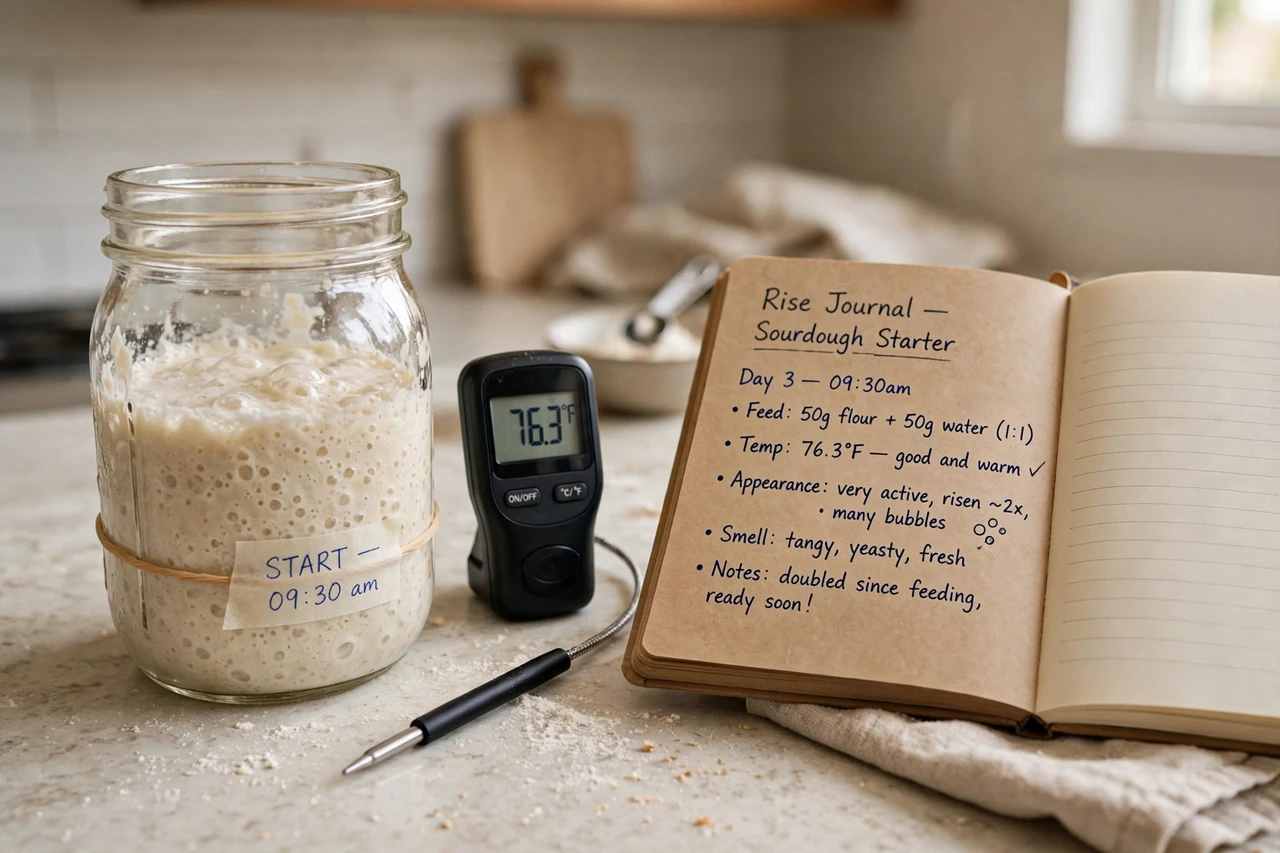
Temperature is the hidden variable in sourdough baking: a starter in a 78-degree kitchen behaves completely differently from the same starter at 68 degrees. The temperature and rise journal logs kitchen temperature alongside rise times, so you can finally see the relationship instead of guessing at it.
After a few weeks of entries, the pattern becomes obvious — every few degrees warmer shaves an hour or more off peak time. That knowledge changes how you bake: in summer you feed later or use colder water, in winter you find a warm spot like the top of the fridge or inside the oven with the light on. Without the journal, most bakers blame their starter for what is actually a temperature problem.
The journal also helps you troubleshoot: if your starter suddenly slows down, check whether the kitchen got colder before you assume the starter is dying. More starters are “fixed” by moving the jar somewhere warmer than by any feeding change, and the journal is what points you to that answer.
7. The Starter Health Checklist
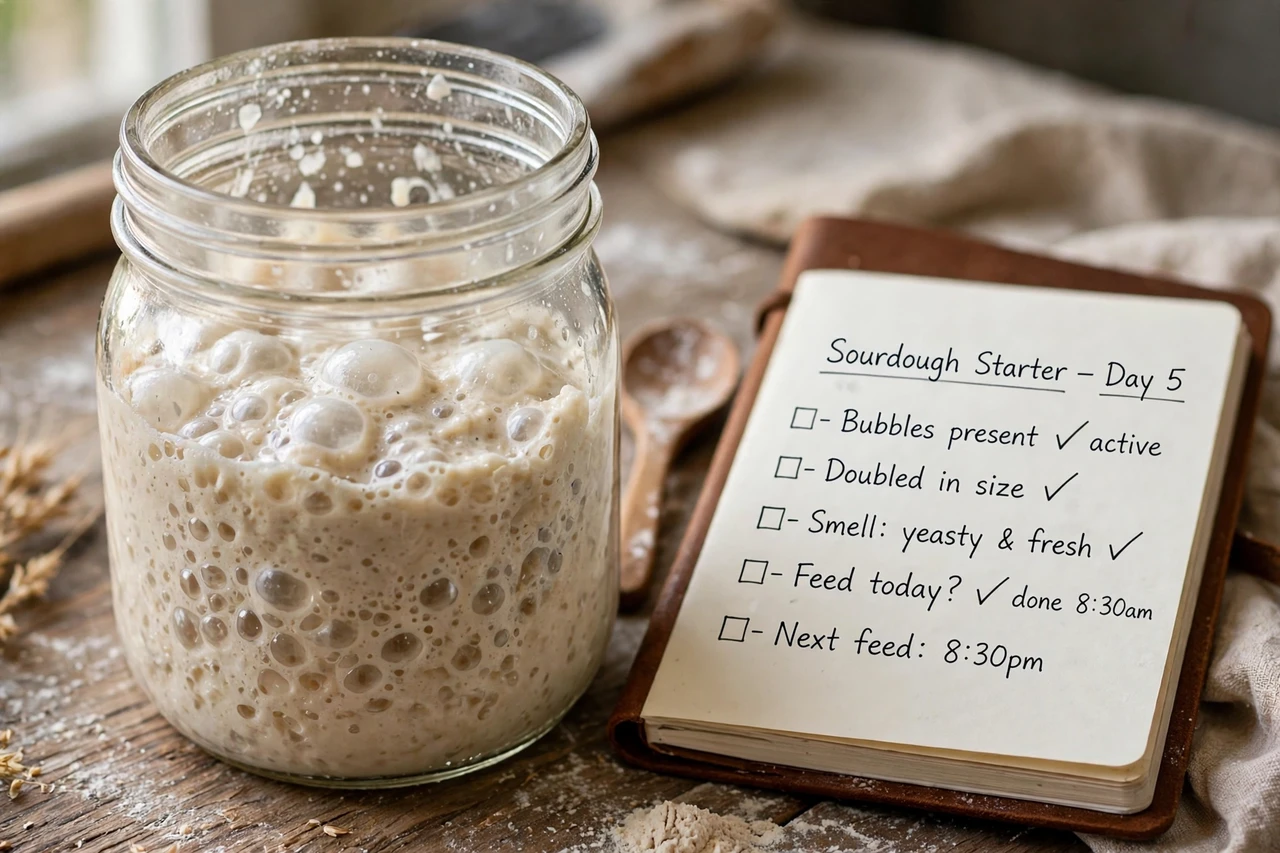
The starter health checklist is a weekly once-over: smell, bubbles, rise, color, and hooch — the dark liquid that forms on a hungry starter. Each item has a healthy range and a warning sign, so you can assess your starter in two minutes and know whether it needs attention or is doing fine.
Healthy signs are a pleasant sour, yeasty smell, lots of bubbles throughout, a doubling rise after feeding, and no discoloration. Warning signs are a strong acetone or nail-polish smell (hungry — feed more often), pink or orange streaks (contamination — discard and start over), and no rise at all for several days (check temperature and flour before giving up). The checklist keeps you from panicking at normal signs, like hooch, which just means your starter is hungry and can simply be stirred back in.
Run the checklist every Sunday. It takes two minutes, and it catches problems while they are still easy fixes — a feeding schedule adjustment, a warmer spot, a flour change — instead of discovering them when the bread fails.
8. The Two-Starter Comparison Tracker
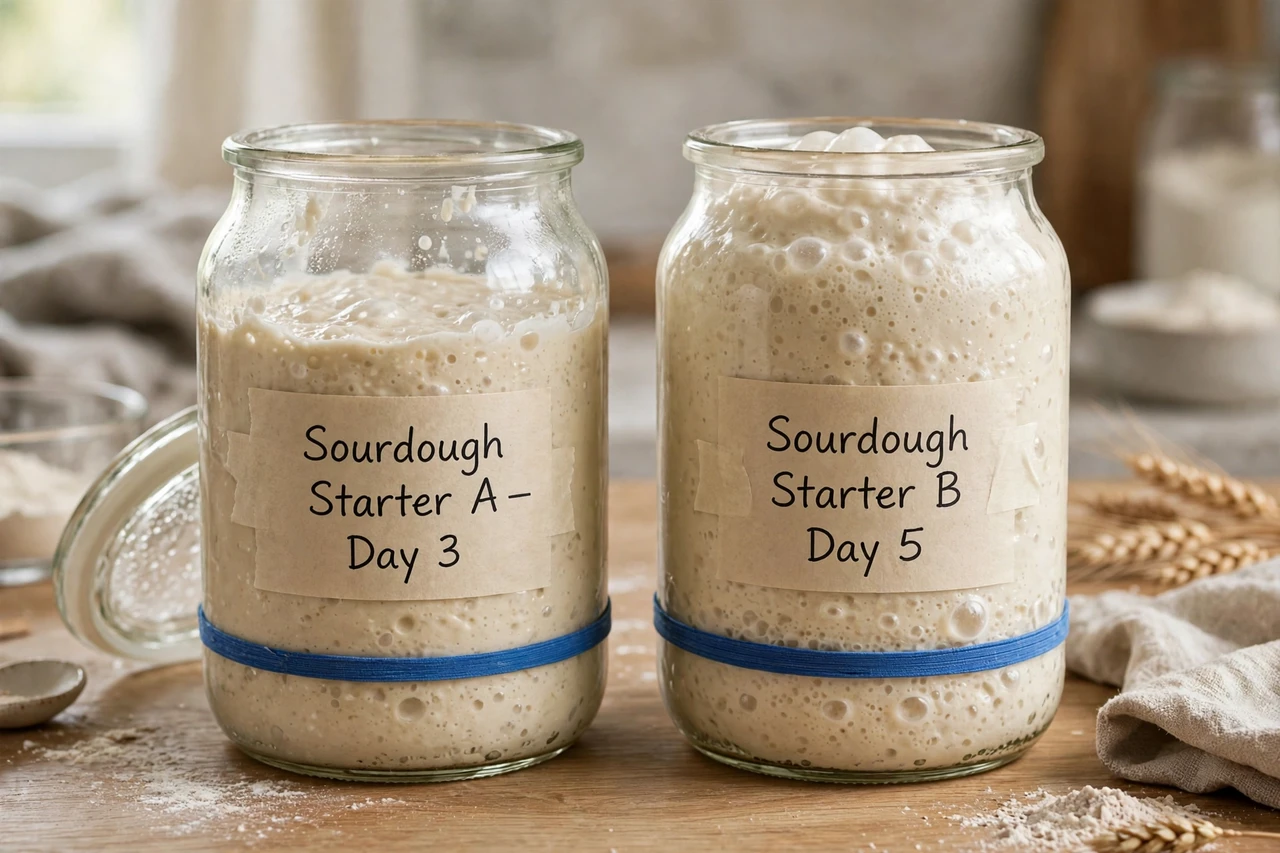
Once you are comfortable with one starter, many bakers keep two — a white flour starter and a whole wheat or rye starter — because they produce noticeably different breads. The two-starter comparison tracker logs both side by side: feeding times, rise heights, smells, and which breads each one made, so you can compare them fairly.
The comparison reveals real differences: whole grain starters usually ferment faster and taste tangier, while white starters are milder and more predictable. Knowing which starter suits which recipe — tangy rye for a hearty loaf, mild white for sandwich bread — makes you a more deliberate baker instead of a one-starter baker hoping for the best.
The tracker also serves as a backup system: if one starter gets contaminated or neglected, the other is still alive. Bakers who keep two starters almost never have to start from scratch, and the comparison tracker is what keeps both of them healthy at the same time.
Frequently Asked Questions
How often should I feed my sourdough starter?
At room temperature, once or twice a day. In the fridge, once a week is enough — just take it out, feed it, let it peak, and return it. A starter that lives in the fridge and gets fed weekly can live for years with almost no effort.
What does hooch mean on my starter?
Hooch is the dark liquid that forms when a starter is hungry. It is harmless — stir it back in for extra tang, or pour it off for a milder flavor — and then feed the starter. It is a sign to feed more often, not a sign that the starter is dead.
Why does my starter smell like acetone?
An acetone or nail-polish smell means the starter is very hungry. Feed it twice a day for a few days, possibly with a larger feeding ratio, and the smell will fade as the yeast population recovers.
Can I use discard from a new starter?
Not in the first week. Discard from a starter under seven days old should be thrown away because the bacterial balance has not stabilized. Once the starter rises reliably, discard is safe and great for pancakes, crackers, and muffins.
Do I really need a tracker, or can I just wing it?
Experienced bakers can wing it, but beginners should not. A tracker catches problems days earlier, reveals your starter’s personal rhythm, and turns guesswork into knowledge. After a month or two of tracking, you will know your starter well enough to relax the habit.
Start with the daily feeding log and the peak rise chart — those two alone will transform your bread. If printables interest you as a side income too, check out printable digital product ideas, browse Etsy digital product ideas, and learn the basics in digital product ideas for beginners.