
Every small business owner wonders what their competitors are doing — what they charge, where they advertise, and why customers pick them. But almost none of them have time to investigate it themselves. That is why competitor analysis reports are such a fast-selling AI side hustle: the buyer already wants the answers, AI speeds up the gathering, and you deliver a finished document they can read in one sitting. The reports below are all one-off deliverables you can price between $75 and $200, and each one targets a different kind of buyer, so you can build a menu instead of relying on a single offer. Start with the two or three report types closest to a niche you already understand, build one strong sample for each, and use those samples to win your first paying clients before you expand the menu. If you are new to AI services, AI side hustle ideas for beginners gives the wider picture, and AI video editing side hustle ideas is another fast-selling service to pair with reports.
1. Competitor Pricing Tracker Reports for E-Commerce Sellers
Online sellers need to know what rival shops charge for the same or similar products, including shipping and discounts. A pricing tracker report lists three to eight competitors, their prices for the client’s top products, and notes on bundles, sales, and shipping terms. You update it monthly for repeat buyers, which turns a one-time report into recurring income. Use AI to organize the price tables, but always check the live product pages yourself, since prices and promotions change weekly.

2. Rival Social Media Playbook Reports
A social media playbook report breaks down what a client’s top three competitors actually post: how often, on which platforms, which formats get the most engagement, and which topics they repeat. You finish with a short list of content ideas the client can borrow — not copy — for their own accounts. Local gyms, salons, restaurants, and boutiques are great buyers, because they can see their rivals’ posts every day but never sit down to analyze them. Keep the report visual, with example posts and simple engagement notes.

3. Competitor Ad Campaign Teardown Reports
Many businesses run ads without ever studying what their competitors’ ads look like. An ad teardown report collects a competitor’s current ads from public ad libraries, then analyzes the headline, offer, image style, and call to action in each one. You close with three to five takeaways the client can test in their own campaigns. This report sells well to e-commerce stores, coaches, and local services already spending on ads, because it speaks directly to money they are already putting out.

4. Rival Website Conversion Teardown Reports
A conversion teardown looks at a competitor’s website the way a customer would: what the homepage promises, how easy it is to buy or book, what proof and guarantees appear, and where visitors might drop off. You compare two or three rival sites against the client’s own site and list the strongest ideas worth testing. You are not redesigning anything — you are handing the owner a short, specific list of improvements. This works especially well when the client’s website is older than their competitors’.

5. Side-by-Side Competitor Reputation Scorecard Reports
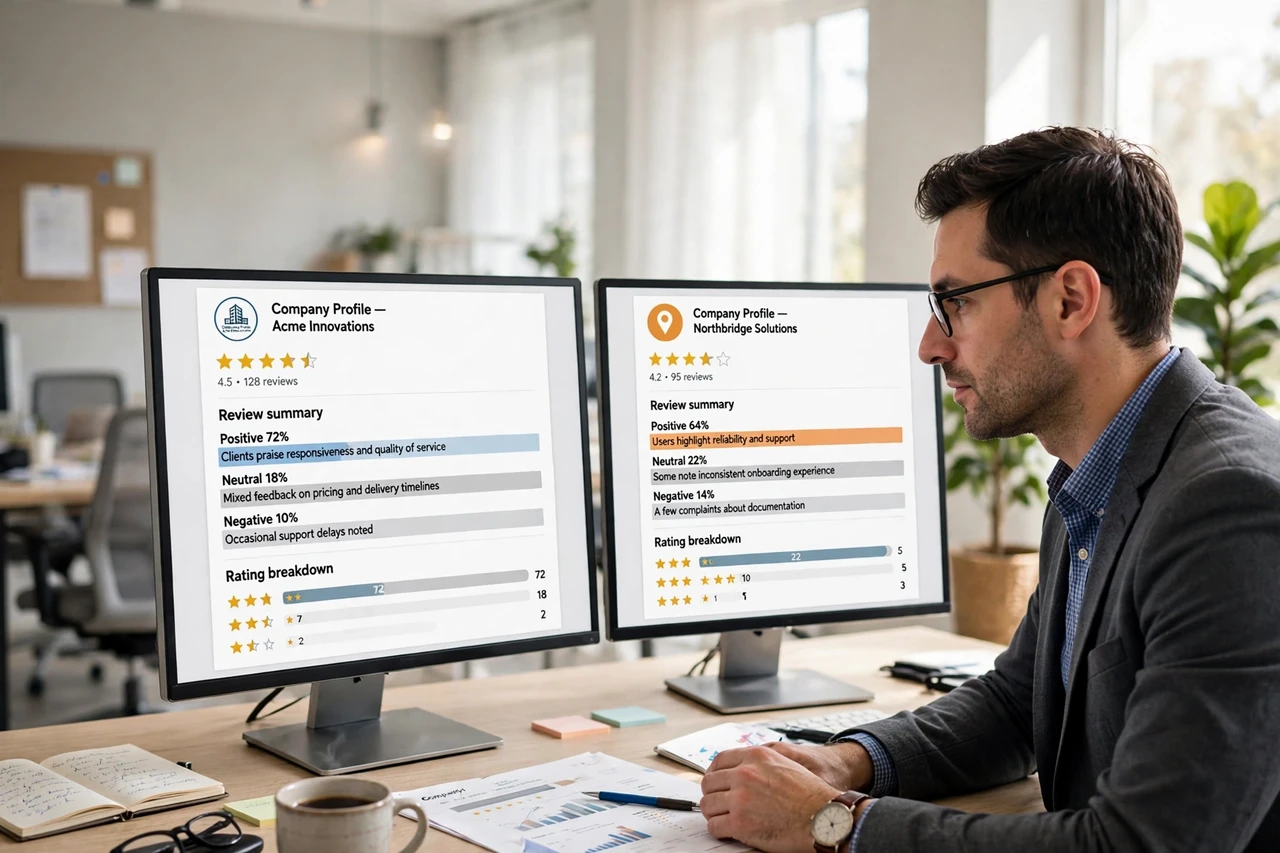
A reputation scorecard compares a business with two or three rivals on review ratings, review volume, response habits, and the themes customers mention most. You present it as a simple scorecard so the owner can see at a glance where they lead and where they lag. The value is not the star ratings alone — anyone can look those up — it is the comparison and the short action list at the end. Clinics, restaurants, auto shops, and home services are steady buyers for this one.
6. Competitor Product Feature Comparison Reports
When a business sells a product, customers compare features before they compare prices. A feature comparison report lays out the client’s product next to three or four rivals in a clear table: features, sizes, materials, warranties, and extras. You highlight where the client genuinely wins and where a rival has an edge they should answer. Product sellers on Etsy, Shopify, and Amazon use this report to rewrite listings and to decide what to improve next.

7. Rival Email and Offer Funnel Reports
Signing up for a competitor’s email list is free, but almost no business owner does it systematically. A funnel report does: you subscribe to two or three rivals, track their welcome emails, offers, and follow-ups over two to three weeks, and summarize the sequence, the discounts offered, and the urgency tactics used. Then you suggest a simple funnel the client can build for themselves. Coaches, course creators, and e-commerce brands pay well for this because email drives so much of their revenue.

8. Local Search Rival Ranking Reports
For local businesses, the most important competitors are the ones showing up first in map and search results. A local search ranking report shows who ranks for the client’s top five to ten local keywords, what their listings contain, and what review and photo activity supports those rankings. You finish with three practical fixes the client can make to their own listing. This report is a natural first sale, because every local owner cares about being found, and the findings are easy to verify.

9. Competitor Hiring and Growth Signal Reports
Job postings, new locations, and new hires reveal where a competitor is heading before they announce anything. A growth signal report tracks a rival’s open roles, expansion news, and new service launches over a few weeks, then summarizes what the pattern suggests. Small agencies, clinics, and trades businesses use this to spot a rival moving into their area or adding a service they should answer. Be careful to stick to public information only, and say so in the report.

10. Rival Promotion and Discount Watch Reports
Seasonal sales, bundle deals, and limited-time offers are easy to miss if you are not watching every day. A promotion watch report tracks a set of competitors for one month and logs every promotion: what was offered, when, how long it ran, and how it was promoted. You add a short note on which promotions the client should match, ignore, or beat. Retailers and e-commerce sellers love this report ahead of holidays, when one missed rival sale can cost them real revenue.

Frequently Asked Questions
Do I need paid tools to write competitor analysis reports? No. You can start with free public sources: competitor websites, social pages, public ad libraries, review sites, and job boards. AI tools help you organize and draft, and you can add paid tools later once clients are paying. Your first reports should prove the concept before you spend on subscriptions.
How fast can I deliver a competitor report? A focused report on two to three competitors usually takes three to five hours once you have a template, so a two to three day turnaround is realistic for beginners. Offer faster delivery as a paid rush option rather than promising it by default, so you never have to cut corners on checking facts.
Is it legal to research competitors this way? Yes, as long as you stick to public information — published prices, public ads, public reviews, and job postings. Never access private accounts, scrape behind logins, or present a rival’s private material. State in your report that all sources are public, which also reassures the buyer.
How do I price competitor reports as a beginner? Start at $75 to $125 for a report covering two or three competitors, and $150 to $200 for deeper reports with five or more competitors or a month of tracking. As you build samples and testimonials, raise prices rather than adding hours. A clear one-page sample sells better than a long pitch.
What makes a competitor report sell fast? Specificity. A pitch that names the buyer’s niche, names the exact report, names one decision it helps with — for example, “a pricing tracker for your top ten products” — converts far better than “I do competitor research.” Lead with the deliverable, not with yourself.