Where you sell matters as much as what you sell. These 5 best platforms to sell digital products each serve different sellers — compare fees, built-in traffic, and control to find your fit.
1. Etsy – Best Marketplace for Printable Sellers
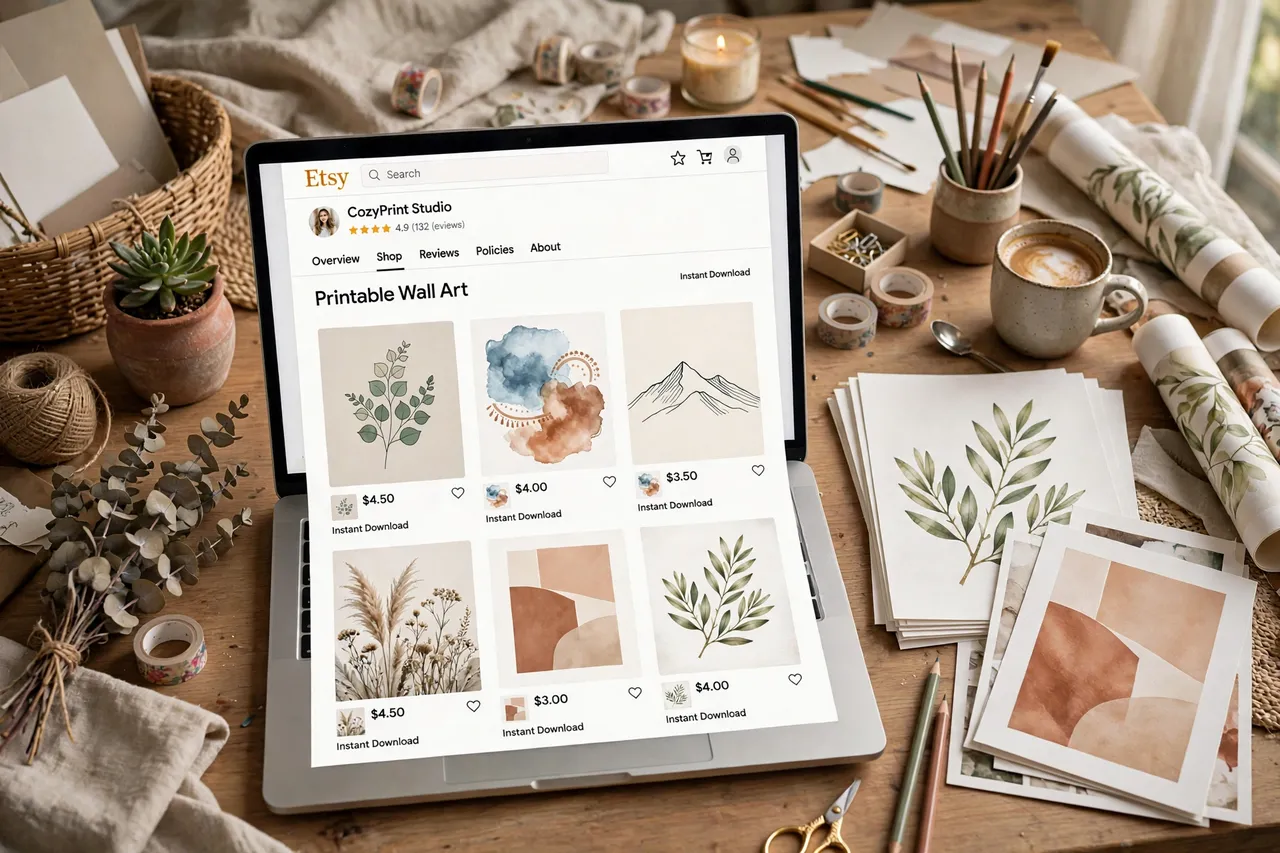
Etsy’s 90 million buyers actively search for printables, planners, and digital downloads, giving you instant traffic no other platform offers beginners. Listing costs $0.20 per item plus 6.5% transaction and payment fees — reasonable for access to that audience. Printable and planner sellers routinely reach $1,000+ months within their first year.
Etsy rewards SEO-optimized titles and consistent new listings, so treat it like a search engine. The built-in audience is the entire value proposition — if you can drive your own traffic, other platforms keep more profit.
2. Gumroad – Best for Creators Selling Direct
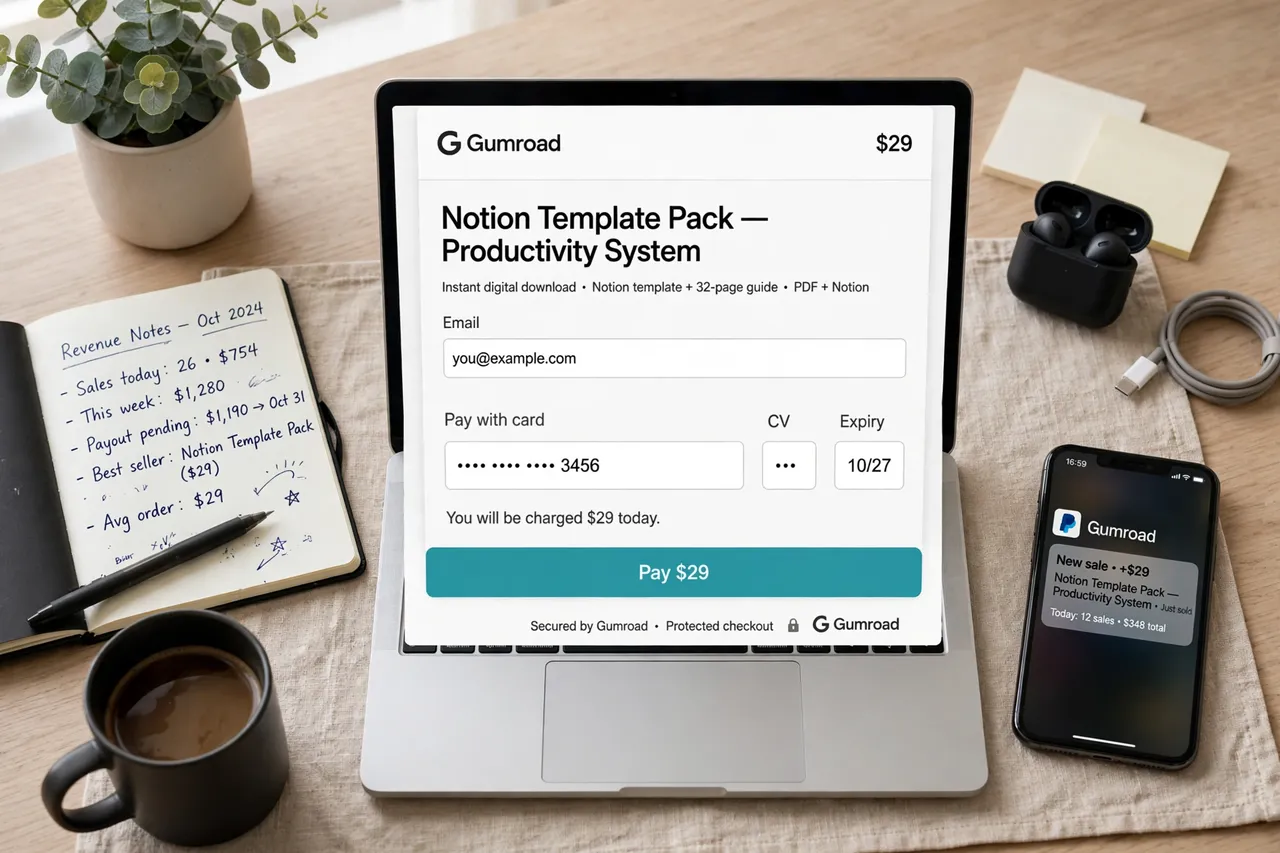
Gumroad lets you sell ebooks, courses, templates, and memberships with zero monthly fees — you pay 10% per sale plus processing, nothing upfront. Its “Discover” marketplace, checkout flows, and email tools are built for creators with audiences on social media or newsletters. Many creators clear $2,000 to $10,000 monthly selling direct.
Gumroad shines when you bring your own traffic from TikTok, YouTube, or email. If you have even a small audience, the 10% fee beats Etsy’s total take while giving you customer emails Etsy never shares.
3. Shopify – Best for Building Your Own Store
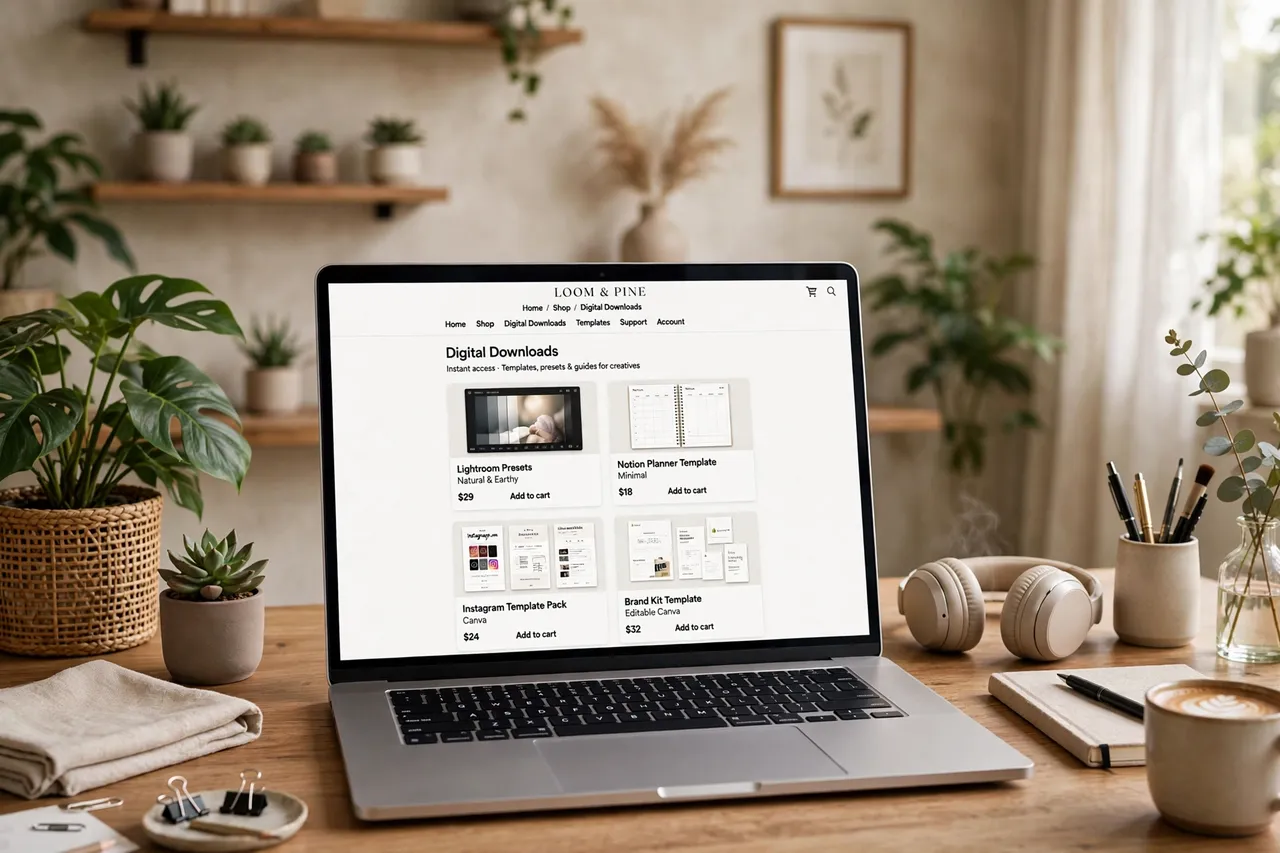
Shopify gives you a complete branded storefront for $29+ a month plus ~2.9% payment fees — total control over design, pricing, upsells, and customer data. It’s the right choice once you’re selling consistently and the marketplace fees elsewhere exceed Shopify’s subscription. Store owners keep the most profit per sale of any option here.
The tradeoff is traffic: Shopify brings zero buyers, so you need Pinterest, SEO, or ads driving visitors. Start on a marketplace, then graduate to Shopify when monthly fees cost less than what marketplaces take from you.
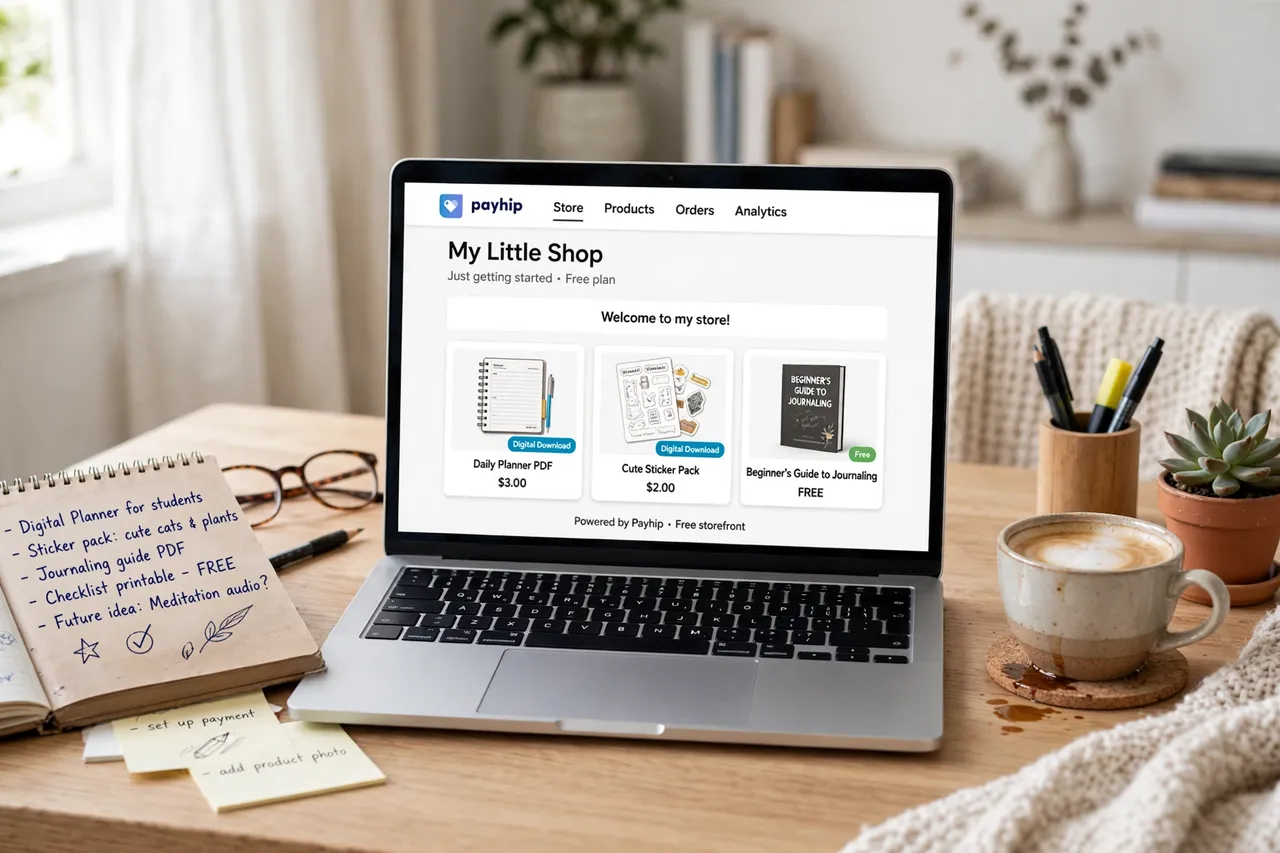
4. Payhip – Best Free Plan for Beginners
Payhip’s free plan charges 5% per sale with no monthly fee — the cheapest way to start selling ebooks, courses, and digital downloads today. It includes a storefront, EU VAT handling, affiliate tools, and email marketing even on free, which competitors charge extra for. Beginners love that there’s literally no cost until you earn.
The 5% free-plan fee drops to 2% or 0% on paid plans ($29–$99/month) as you grow. It’s the lowest-risk starting point in digital sales: list products this afternoon, pay nothing until someone buys.
5. Sellfy – Best All-in-One for Print-on-Demand
Sellfy combines digital downloads, print-on-demand, and subscriptions in one $29+ monthly plan with 0% transaction fees on paid tiers. If you sell both digital products and POD merch, Sellfy eliminates juggling two platforms. The built-in POD fulfillment means designs you upload become products automatically.
It’s ideal for creators whose audience buys both digital goods and physical merch — YouTubers, artists, and niche influencers. The flat subscription beats per-sale fees once monthly revenue passes a few hundred dollars.

Frequently Asked Questions
Which platform is cheapest for selling digital products?
Payhip’s free plan (5% per sale, $0 monthly) is cheapest to start. At scale, Shopify or Sellfy’s flat subscriptions cost less than any per-sale fee once you’re earning consistently.
Should I sell on Etsy or my own website?
Start on Etsy for its built-in buyer traffic while you’re unknown. Move to Shopify or your own site once you have an audience — you’ll keep more profit and own your customer relationships.
Can I sell the same products on multiple platforms?
Yes, and you should. List on Etsy for discovery, Gumroad or Payhip for your social audience, and your own store for maximum margin. Just keep pricing consistent so buyers don’t feel cheated.
Do I need a business license to sell digital products?
Usually not to start, but check your state and city rules — some require a basic business license for any selling activity. You’ll owe income tax on profits regardless, so track earnings from day one.
Conclusion
Match the platform to your stage: Payhip or Etsy to start, Gumroad when you have an audience, Shopify or Sellfy when you’re scaling. The platform matters less than the product — pick one today and list your first digital product this week.