AI has removed every excuse for not starting a blog — research, writing, design, and SEO all have AI copilots now. These 9 steps to use AI to start a blog take you from zero to a monetizable site, with AI accelerating every stage.
1. Pick a Profitable Niche With AI Research
Use ChatGPT or Claude to brainstorm niches at the intersection of your knowledge, advertiser spending, and search demand — then validate with free tools like Google Trends and Ubersuggest. Ask AI to list 20 sub-niches within “personal finance,” score them by competition and monetization potential, and pick the one you’d enjoy writing about for two years. Profitable blogging niches share three traits: buyers with problems, advertisers bidding on keywords, and affiliate programs paying commissions.
Go narrower than you think: “budgeting for traveling nurses” beats “personal finance” because you can rank faster and attract a devoted audience. AI helps you find these micro-niches in minutes.

2. Generate Domain and Brand Name Ideas
Feed your niche into an AI naming session: ask for 30 brandable domain ideas, check availability with Namecheap or Porkbun, and pick something short, memorable, and free of hyphens. AI excels at combinations you’d never think of — alliteration, portmanteaus, and niche-specific wordplay. Secure the .com if available; it’s still the most trusted extension.
Check social handle availability simultaneously with Namechk so your brand is consistent everywhere. A cohesive brand from day one looks established even when you’re brand new.

3. Set Up WordPress in an Afternoon
Modern hosting (Bluehost, SiteGround, or Cloudways) installs WordPress in one click — AI can’t do this step, but it takes under an hour. Install a lightweight theme like Kadence or GeneratePress, add RankMath for SEO, and configure essential pages: About, Contact, and Privacy Policy. These three pages are also required for ad network approval later.
Ask AI to draft your About page and Privacy Policy from a few facts about you — then edit for authenticity. Done beats perfect; you can refine everything as the blog grows.

4. Create a Content Plan With AI Outlines
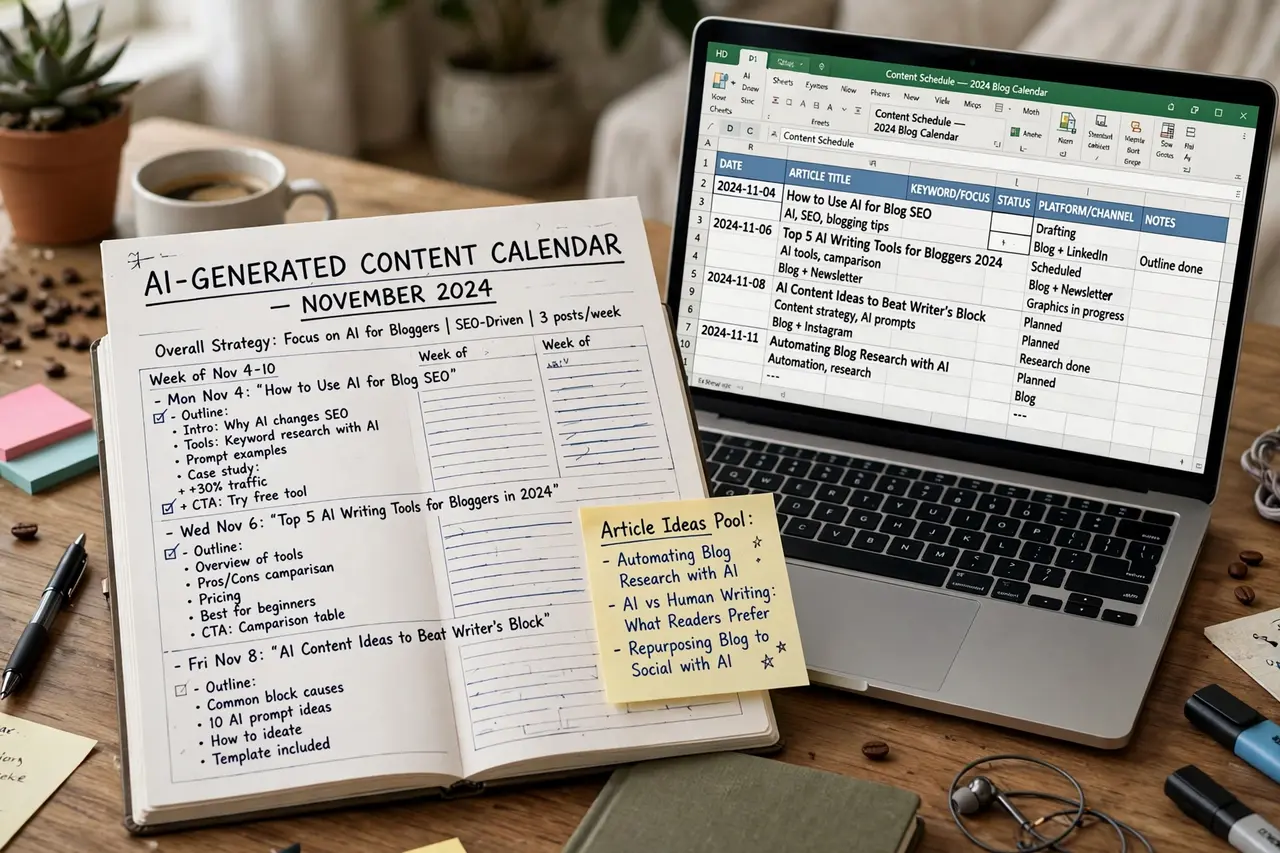
Ask AI to generate 50 article ideas for your niche, then organize them into content pillars and a 90-day publishing calendar. Have AI draft detailed outlines for each — H2s, key points, FAQ questions — so writing days become filling-in-the-blanks instead of staring at blank pages. A planned blog publishes consistently; an unplanned one publishes twice and dies.
Prioritize low-competition, high-intent keywords first — AI can estimate competition, but verify with Ubersuggest’s free keyword data before committing your calendar.
5. Write Posts Faster With AI Drafts
Use AI to draft sections from your outlines, then rewrite in your voice with real examples, opinions, and experience — the human layer is what ranks and resonates. A post that took 8 hours now takes 2 to 3: AI handles structure and research summaries while you add the insight no model can fake. Never publish raw AI output; Google and readers both penalize it.
Develop a personal editing checklist: add one personal anecdote, one contrarian opinion, and one specific number per post. These three elements transform generic AI drafts into content worth reading.

6. Design a Logo and Branding With AI
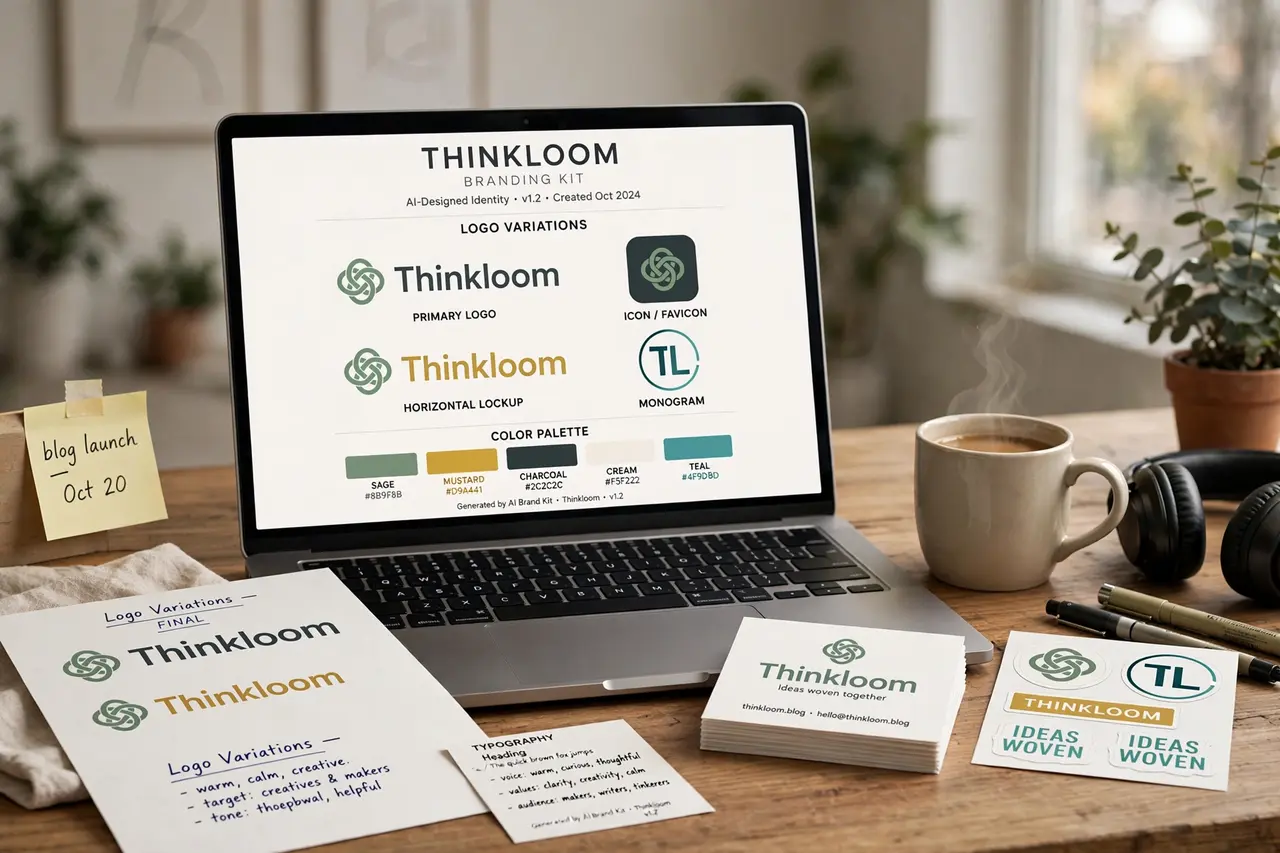
Generate a logo with Ideogram or Looka, pick a two-color palette and two fonts, and apply them consistently across your site and socials — that’s a complete brand identity in an afternoon. AI image tools also create custom featured images and Pinterest graphics that make your blog look established from post one. Visual consistency signals professionalism to readers and advertisers alike.
Keep branding simple: one logo, two colors, two fonts, used everywhere. Amateur blogs have seven fonts; professional ones have two.
7. Optimize Every Post for SEO
RankMath’s AI features plus your own checklist cover on-page SEO: keyword in title, URL, first paragraph, and at least one H2; meta description under 160 characters; internal links to related posts; descriptive image alt text. Ask AI to suggest semantic keywords and FAQ questions targeting “People Also Ask” boxes. SEO compounds — posts you publish today can drive traffic for years.
Write for humans first, optimize second. The blogs that win long-term publish genuinely useful content consistently; SEO just ensures Google can find it.

8. Create Pinterest Pins With AI Tools
Pinterest is a search engine disguised as social media — and it’s the fastest free traffic source for new blogs. Use Canva’s AI features or Ideogram to generate 3 to 5 pin designs per post, write keyword-rich descriptions (Pinterest SEO matters enormously), and pin consistently. New blogs routinely get their first 10,000 monthly visitors from Pinterest within 3 to 6 months.
Batch your pin creation: one design session per week produces pins for all that week’s posts. Consistency beats virality on Pinterest — the algorithm rewards steady pinners.

9. Monetize: Affiliates, Ads, and Digital Products
Once traffic flows, monetize in layers: affiliate links from day one (Amazon Associates plus niche programs), display ads at 10,000+ monthly sessions (Journey by Mediavine), and digital products when you know your audience (templates, guides, printables). AI helps at every layer — writing product descriptions, optimizing affiliate content, designing digital products. Most blogs reach $500 to $2,000 monthly within 12 to 18 months of consistent publishing.
Don’t wait for “enough” traffic to start monetizing — affiliate links in early posts earn from your first visitors. Revenue, even small, is the motivation that sustains year two.

Frequently Asked Questions
Can AI write my entire blog for me?
Technically yes, practically no — fully AI-written blogs struggle to rank and retain readers because they lack original insight. The winning formula is AI-assisted, human-led: AI drafts, you add experience, opinions, and examples. That’s what both Google and readers reward.
How much does it cost to start a blog with AI?
Under $100 for the first year: domain (~$12), hosting (~$36–$60 with intro pricing), and free tiers of AI tools, Canva, and WordPress. Everything else — themes, SEO plugins, email — has capable free versions until you’re earning.
How long until a new blog makes money?
Realistically 6 to 12 months of consistent publishing (2–3 posts weekly) before meaningful income — 3 to 6 months for first Pinterest traffic, 6 to 9 for Google traction, 9 to 18 for $500+ months. Blogging is a compounding asset, not a quick win.
Do I need to show my face or use my real name?
No — many successful blogs run under brand names with AI-generated or stock imagery. That said, a real persona (even a pen name with a consistent voice) builds more trust and commands higher affiliate conversions than a faceless brand.
Conclusion
AI didn’t just make blogging easier — it made the excuses obsolete. Niche research, writing, design, SEO, and promotion all have AI copilots now; the only irreplaceable ingredient is your consistency. Follow these nine steps this week, publish your first AI-assisted post, and start the compounding clock.