Not every remote job suits an introvert — some “work from home” roles mean eight hours of video calls a day. These 10 remote jobs for introverts are picked for minimal live interaction, async communication, and long stretches of deep-focus work, with realistic pay for beginners in the US.
1. Freelance Resume Writer
Resume writers work one-on-one with clients almost entirely over email, turning work histories into polished resumes and LinkedIn profiles. Beginners charge $75 to $150 per resume, and experienced writers clear $300+ — with each project taking 2 to 4 quiet hours. The work is pure writing: no calls required unless you offer them.
Start by rewriting resumes for friends for testimonials, then list services on Upwork, Fiverr, or the NRWA directory. A simple before-and-after portfolio page converts better than any ad — clients buy proof, not promises.

2. Grant Writer for Nonprofits
Nonprofits constantly need grant proposals written, and most of the work is solitary research plus long-form writing against a deadline. Entry-level grant writers earn $25 to $40 an hour, and full proposals often pay $1,500 to $5,000 flat. Communication happens in occasional email check-ins, not daily standups.
Learn the standard proposal structure (need statement, goals, budget narrative) through free courses from Candid or the Grant Professionals Association. Small local nonprofits are the easiest first clients — they desperately need help and rarely get pitched.

3. Technical Writer for Software Companies
Technical writers turn developer notes into help docs, API guides, and tutorials — deeply focused writing work with almost no meetings. Junior roles pay $30 to $45 an hour, and SaaS companies hire remote technical writers constantly. You’ll collaborate through docs and Slack threads, rarely on live calls.
Build a portfolio with two sample pieces: a how-to guide for an app you use and a rewritten help article from a real product. MadCap Flare or even clean Google Docs samples are enough to land interviews.

4. Podcast Audio Editor
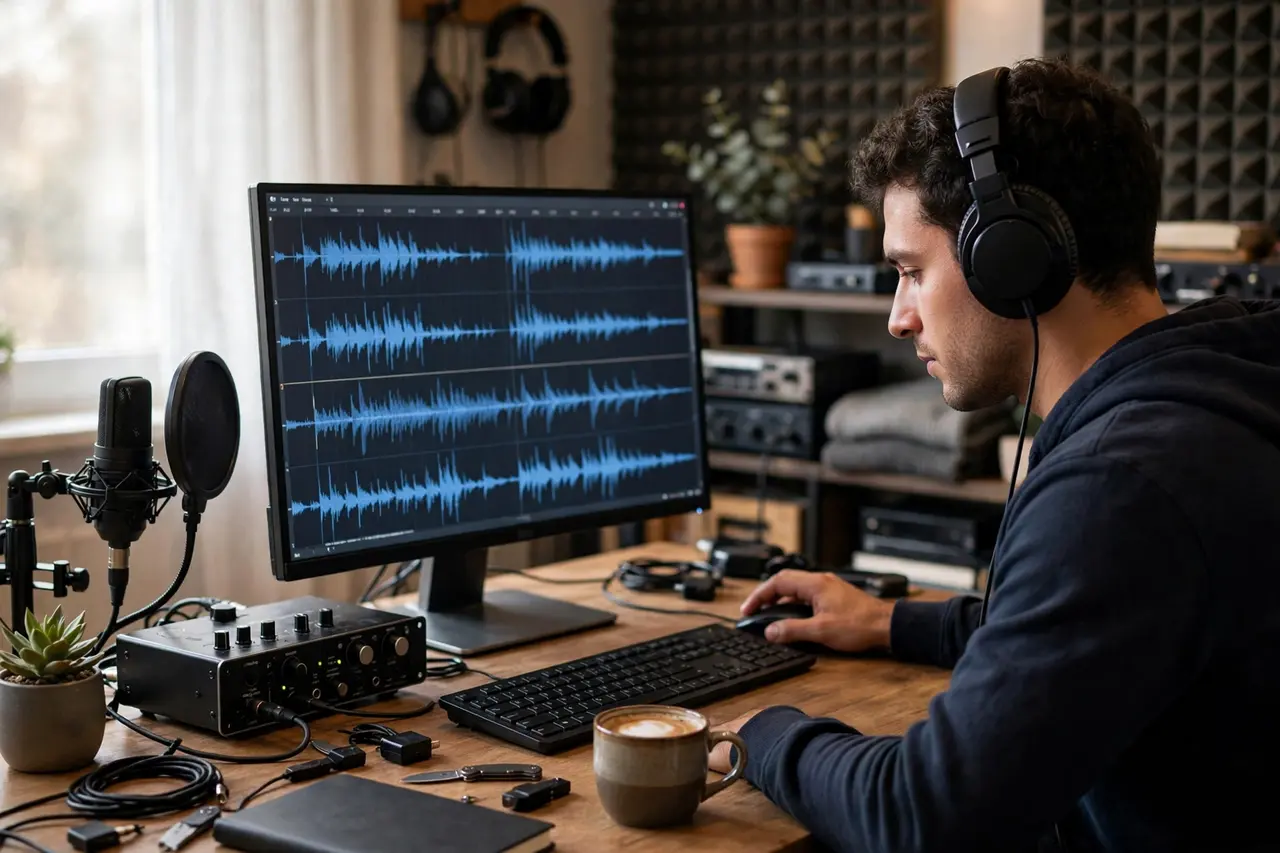
Podcast editors clean up recordings — removing filler words, balancing levels, adding intros — in long, uninterrupted solo sessions. Beginners charge $50 to $100 per finished episode; established editors earn $200 to $500 per episode with weekly recurring clients. Feedback arrives as timestamped notes, not phone calls.
Learn Descript or Audacity (both free) and offer to edit three episodes for small podcasters at a discount. One happy host with a weekly show becomes $400 to $800 a month of predictable, quiet income.
5. Ebook Formatter and Typesetter
Self-published authors need their manuscripts formatted for Kindle and print — meticulous, heads-down work converting Word docs into clean EPUBs and PDFs. Formatters charge $100 to $400 per book depending on length and complexity, and the entire client relationship runs over email.
Master Vellum (Mac) or Atticus and format one public-domain book as a portfolio piece. Authors’ Facebook groups and the Reedsy marketplace are where clients actively search for formatters.

6. Website Accessibility Auditor
Accessibility auditors test websites against WCAG standards — checking contrast, keyboard navigation, and screen-reader compatibility — in methodical solo review sessions. Freelance auditors charge $50 to $100 an hour, and agencies subcontract this work constantly. Deliverables are written reports, not presentations.
Start with the free W3C accessibility fundamentals course and audit three well-known sites as samples. Law firms and universities are prime clients since accessibility lawsuits make this a compliance necessity, not a nice-to-have.

7. Data Visualization Specialist
Companies drown in spreadsheets and need someone to turn them into clear dashboards and charts — focused analytical work done alone. Junior specialists earn $30 to $50 an hour building Tableau, Power BI, or Looker dashboards. Stakeholders review the finished dashboard; they don’t hover while you build it.
Publish two portfolio dashboards using public datasets (data.gov is full of them) to prove your skills. Small marketing agencies are ideal first clients — they need dashboards for their clients but can’t justify a full-time hire.

8. Freelance Book Indexer
Book indexers create the alphabetical indexes at the back of nonfiction books — patient, detail-obsessed solo work that introverts tend to love. Indexers earn $30 to $50 an hour or $4 to $7 per indexable page, and publishers assign work by email with weeks-long deadlines. No meetings, ever.
Take the American Society for Indexing’s training course, then index a public-domain book as your sample. Academic and professional publishers are the steadiest clients — they publish on schedule, year after year.

9. Remote CAD Drafter
CAD drafters turn engineers’ sketches into precise technical drawings — hours of concentrated, solitary drafting work. Remote drafters earn $25 to $40 an hour, and architecture firms, manufacturers, and engineering consultancies hire contract drafters for project-based work. Revisions come as marked-up PDFs, not calls.
AutoCAD proficiency plus a small portfolio of sample drawings is the whole job requirement. Start with freelance platforms, then pitch local engineering firms that need overflow drafting help.

10. Metadata Specialist for Digital Libraries
Libraries, archives, and media companies hire metadata specialists to catalog digital collections — tagging photos, documents, and videos with accurate descriptions. Pay runs $22 to $35 an hour, and the work is gloriously solitary: you, the collection, and a taxonomy spreadsheet. Universities and museums hire remote contractors regularly.
Any library science coursework helps, but many employers accept demonstrated attention to detail plus familiarity with standards like Dublin Core. Digital archive projects on Upwork are a good entry point.
Frequently Asked Questions
What is the best remote job for a true introvert with no experience?
Freelance resume writing and ebook formatting have the lowest barriers — both can be learned in weeks, need no degree, and involve almost zero live interaction. Start with one, build a small portfolio, and raise rates as testimonials accumulate.
Do introvert-friendly remote jobs pay well?
Yes. Technical writing, grant writing, and data visualization all pay $30 to $50+ an hour once established. Even entry-level options like resume writing scale quickly: raising your per-project rate from $100 to $250 doubles income without more hours.
How do I avoid video-call-heavy roles when job hunting?
Filter postings for “async,” “written communication,” and “independent work” — and ask directly in interviews how many recurring meetings the role has. Contract and freelance roles are naturally lower-meeting than full-time employee positions.
Can introverts succeed in client-facing freelance work?
Absolutely — most freelance client communication is email-based and asynchronous. Many introverts prefer freelancing to employment precisely because they control when and how they interact, with deep work filling most of the day.
Conclusion
The best remote job for an introvert isn’t just “work from home” — it’s work where solitude is the job, not an obstacle to it. Pick one role from this list that matches skills you already have, spend two weeks building a tiny portfolio, and pitch five prospects. Quiet, focused work pays just as well as the loud kind.