The machine matters less than where you put it. The best vending machine locations share three traits: steady foot traffic, people who wait or work long shifts, and limited nearby alternatives for food and drinks. A mediocre machine in a great location will outsell a premium machine in a dead hallway every time. This guide covers placement strategy — how to judge a location, what products fit it, and how to approach the decision-maker — for nine proven high-traffic spot types. If you are still choosing your business model, read the companion ideas article first; here the focus is purely on where to place machines for maximum profit.
1. Hospitals and Medical Centers
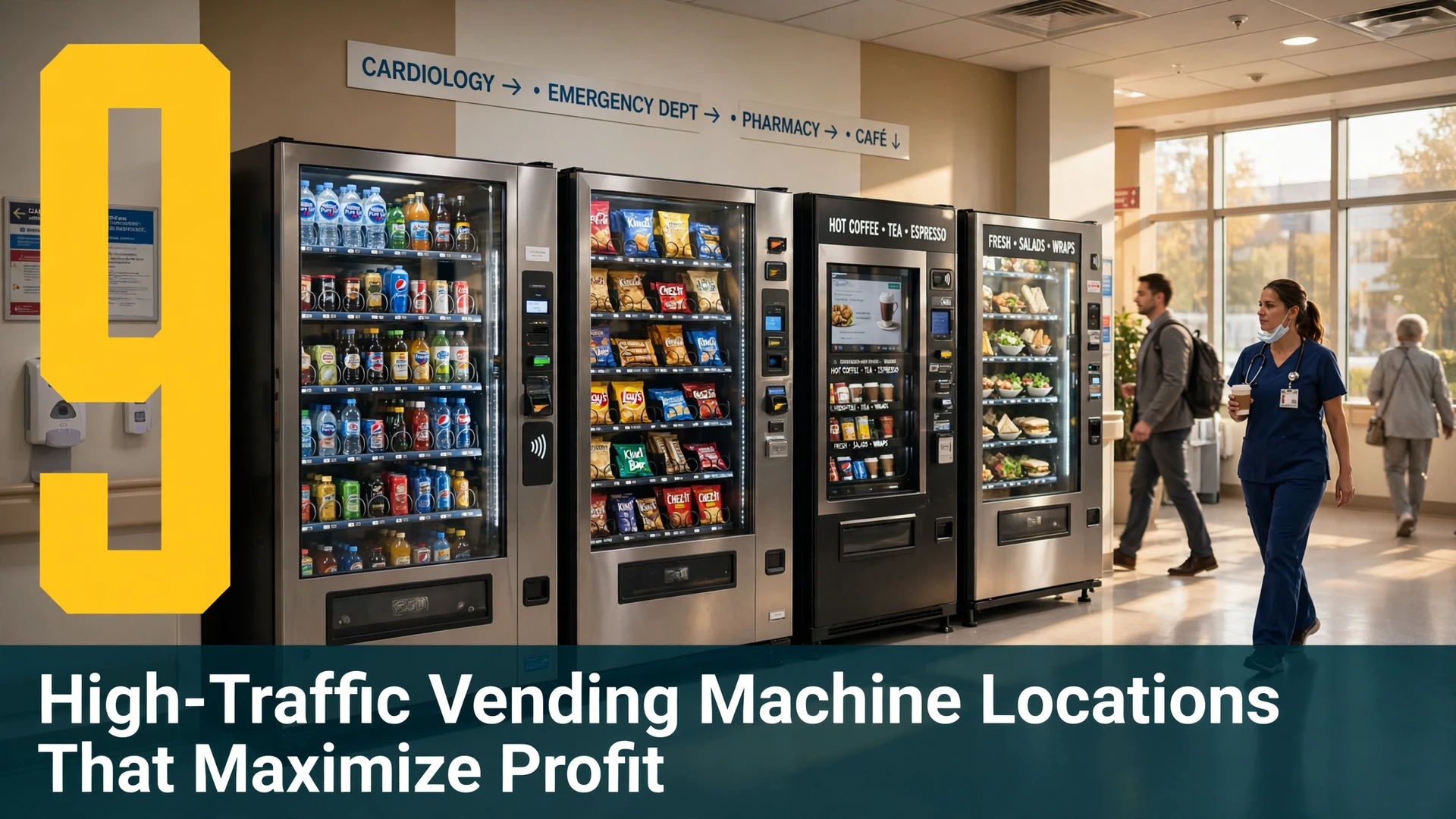
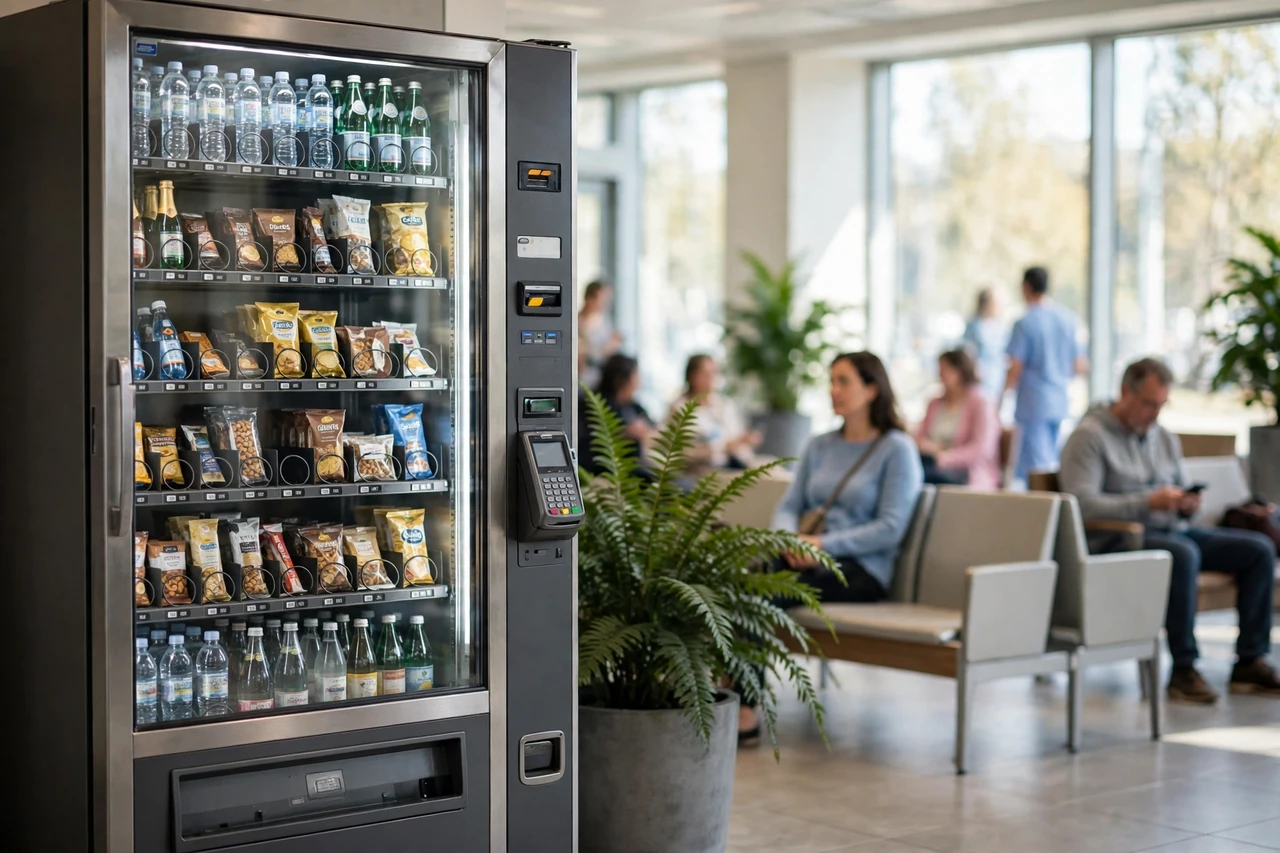
Hospitals run around the clock, with staff working long shifts, patients’ families waiting for hours, and visitors arriving at all times of day. That combination creates constant demand for snacks, drinks, and coffee, especially in waiting areas, staff break rooms, and near emergency departments. Hospital vending also tends to be recession-resistant, since healthcare foot traffic does not depend on seasons or trends.
Winning a hospital placement usually means dealing with facilities management and meeting stricter rules on healthy options and cleanliness. Offer a mix that includes healthier snacks alongside classics, keep machines spotless, and propose a trial period to prove reliability. Hospital contracts are competitive, but a single hospital placement can support several machines and years of steady income.
2. Manufacturing Plants and Warehouses
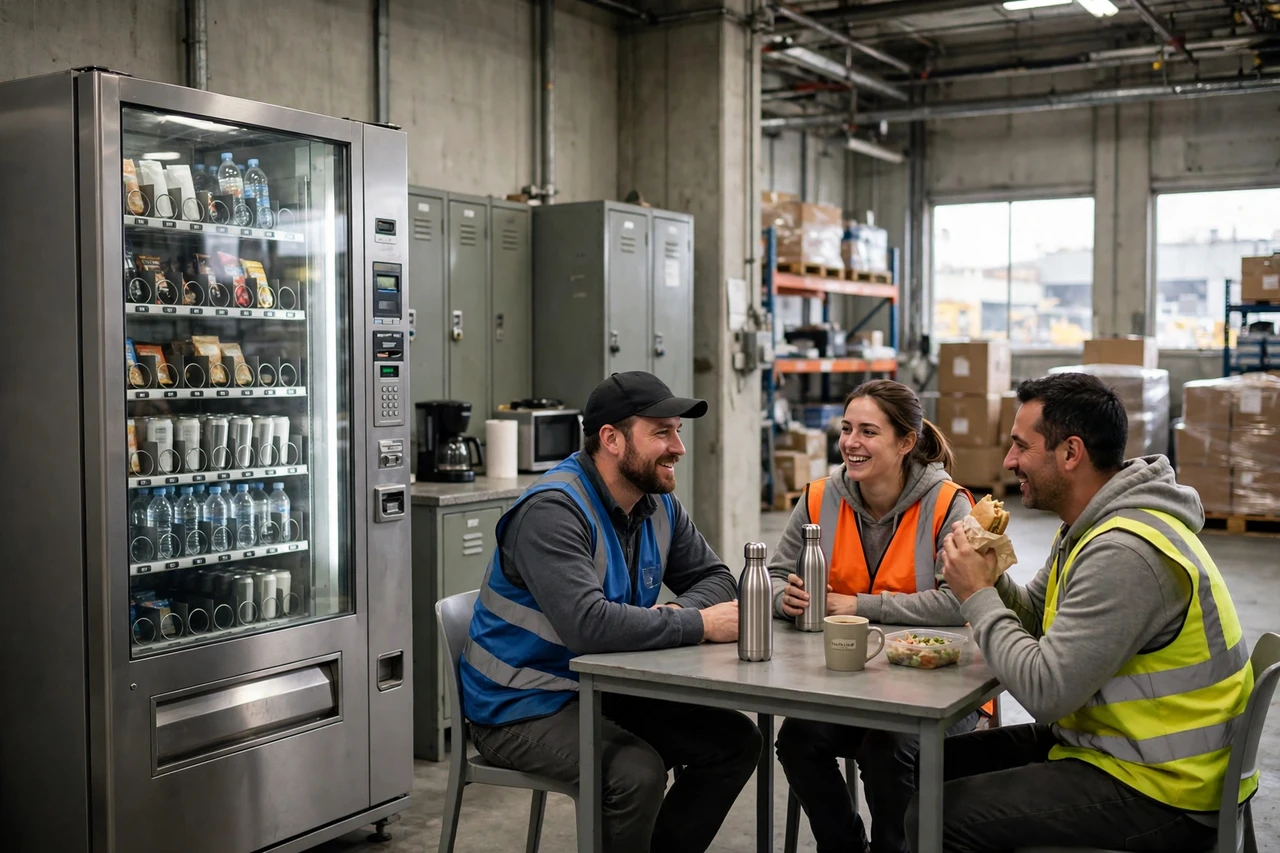
Factories and warehouses employ hundreds of workers on fixed shifts with short breaks and few nearby shops, which is an ideal vending setup. Workers buy drinks and snacks on every break, and night shifts create demand when everything else is closed. Because the audience is the same every day, you can learn exactly which products sell and stock precisely to demand within a few weeks.
Approach plant managers or HR with a simple proposal: free machine installation, regular servicing, and a small commission on sales. Emphasize reliability and restocking during shift changes so machines are never empty at break time. A single large plant can justify two or three machines — drinks, snacks, and coffee — making it one of the most profitable location types per placement effort.
3. Colleges and University Campuses
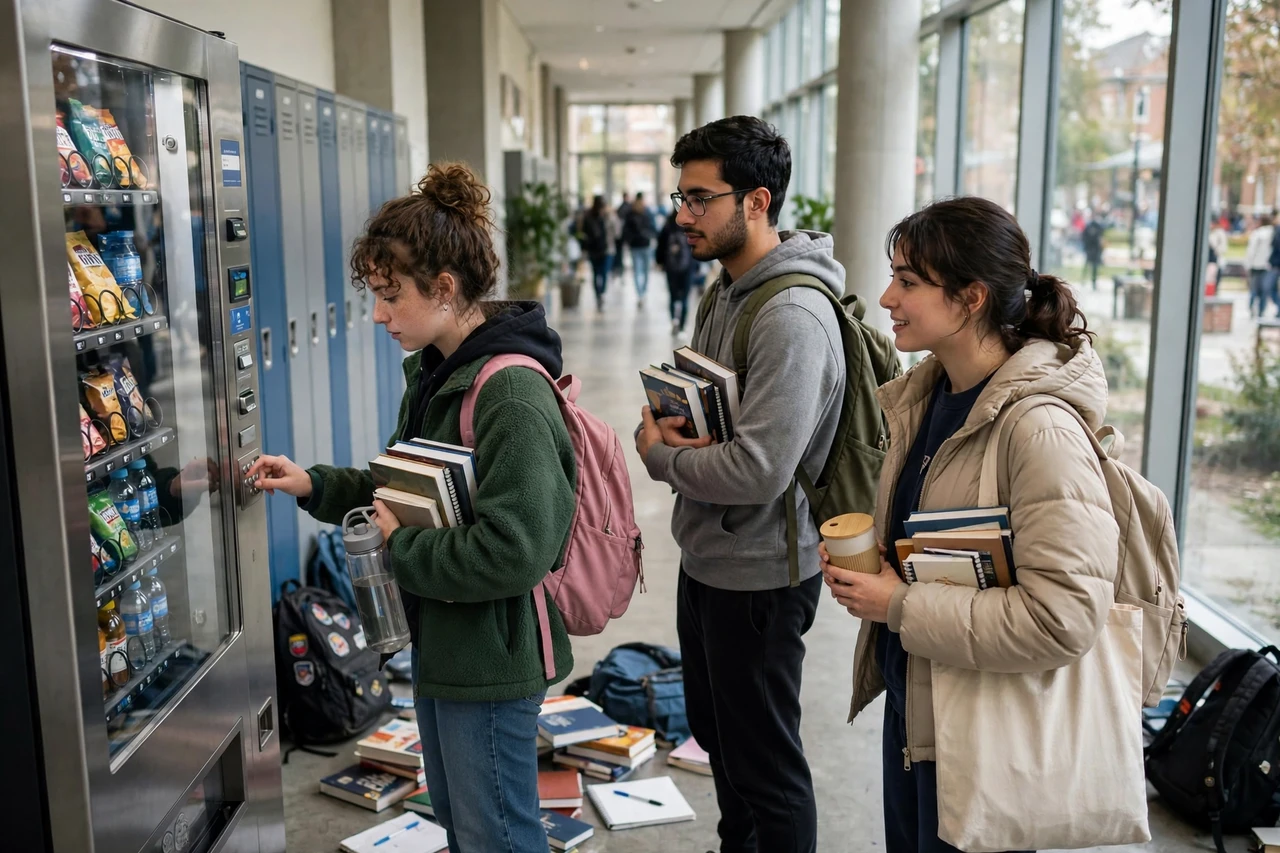
College campuses combine huge foot traffic with students who buy impulsively between classes, late at night, and during exam weeks. Dorms, libraries, student unions, and recreation centers all generate different buying patterns, so one campus can host many machines with different product mixes. Late-night demand is especially strong, since campus shops close early while students stay up.
Campus placements often go through student services or facilities departments, and some schools require revenue-sharing agreements. Pitch the convenience for students, offer popular items at student-friendly prices, and include card and mobile payments, since students rarely carry cash. A well-placed campus machine can outperform an office machine by a wide margin during term time.
4. Airports and Bus Terminals
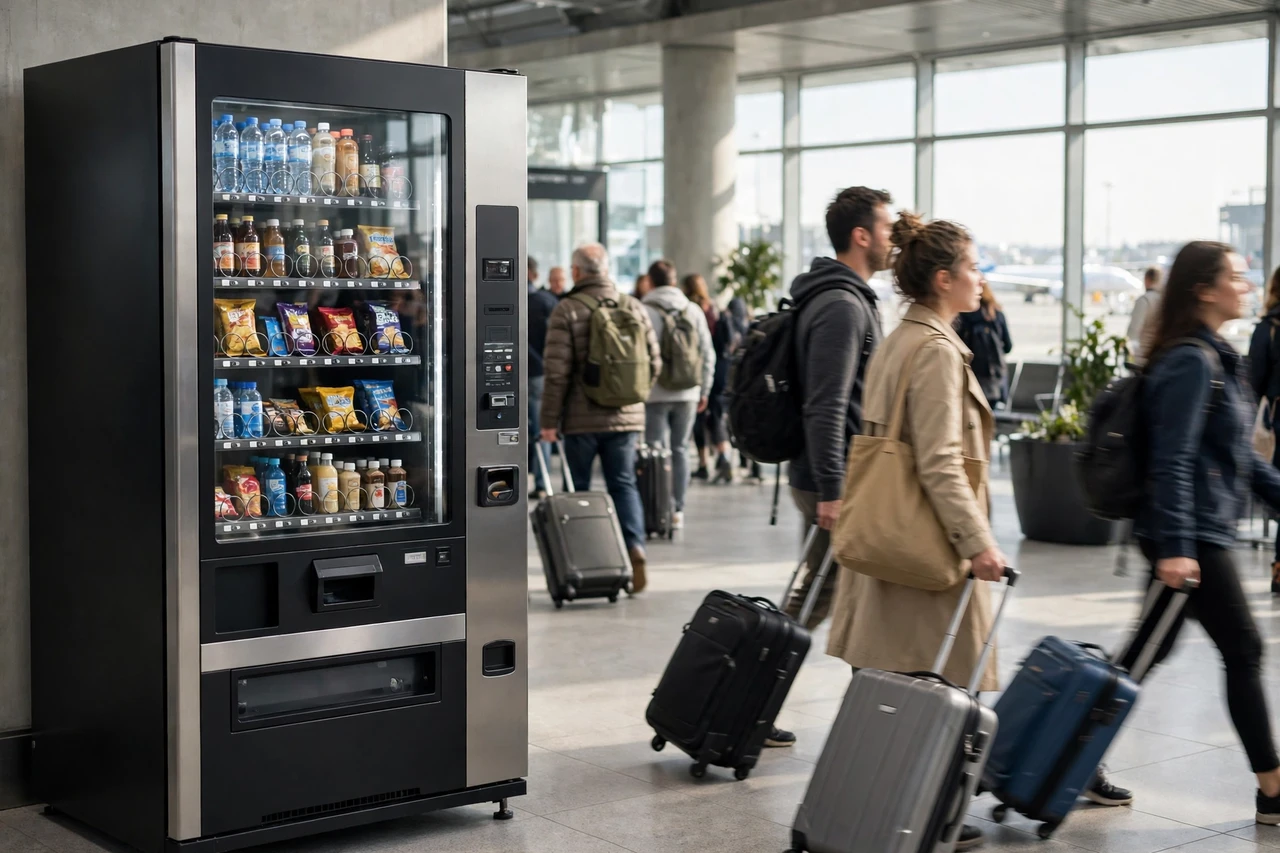
Travelers are a captive audience with time to kill, money to spend, and immediate needs — a drink before boarding, a snack during a delay, a charger for a dying phone. Airports and bus terminals deliver high foot traffic all day, and travelers are far less price-sensitive than office workers because alternatives are limited and time is short. Delays and long layovers only increase sales.
These locations are harder to win, since airports use concession contracts and terminal managers have strict requirements. Start with smaller bus terminals, regional airports, and private shuttle lounges, where decisions are faster and competition is lower. Once you have a transport location on your record, larger venues take your proposals more seriously.
5. Gyms and Fitness Centers
Gym members arrive thirsty, leave hungry, and care about what they consume, making gyms a strong fit for healthy drinks, protein bars, and recovery snacks. Unlike offices, gym traffic peaks at predictable times — early mornings and evenings — so restocking can be planned precisely. Members also buy repeatedly, giving you a loyal, regular customer base that notices when favorites are out of stock.
Pitch gym owners on member convenience and offer a product range that matches their brand, such as low-sugar drinks and protein options rather than candy. A commission share helps win the placement, and gym owners often welcome a machine that keeps members in the building longer. One busy gym can support a drink machine and a healthy snack machine side by side.

6. Apartment Complexes and Residential Buildings
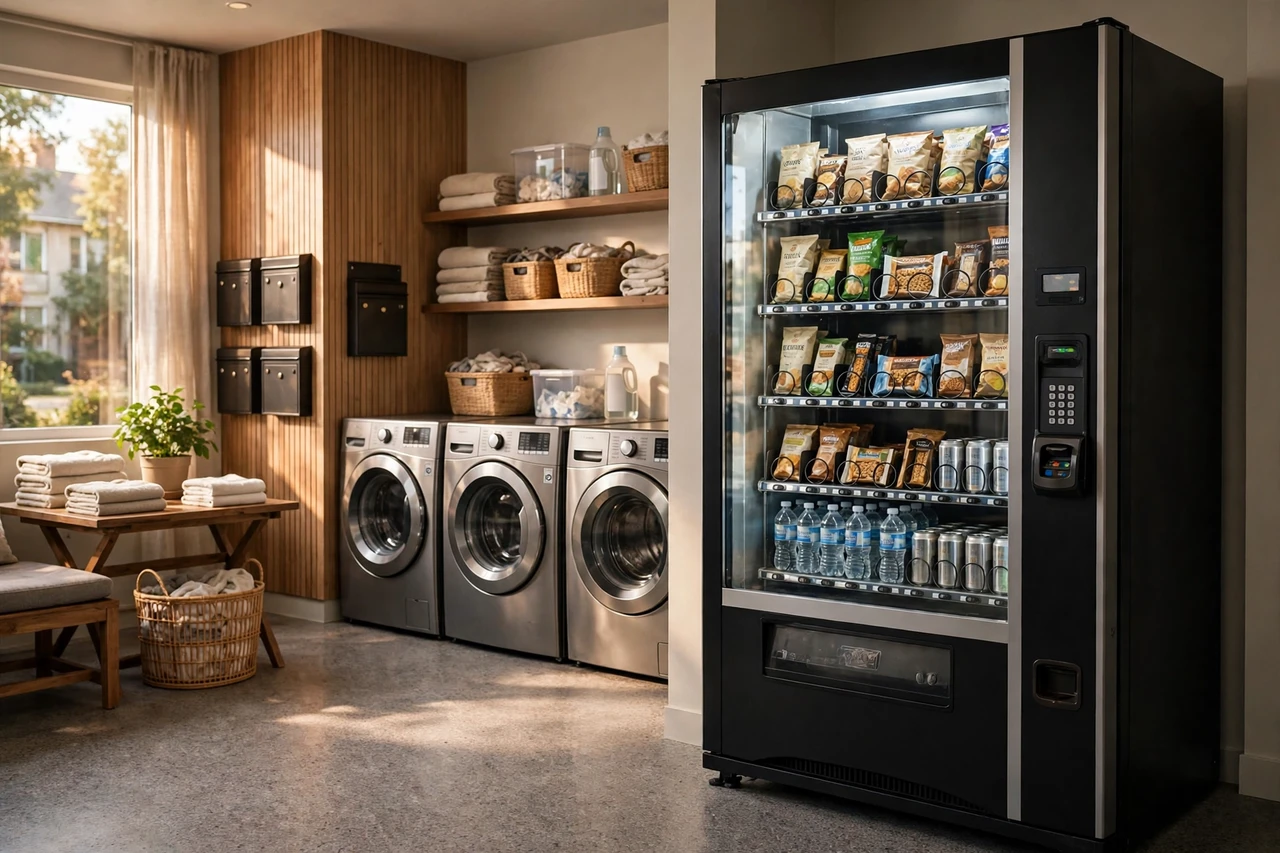
Large apartment buildings put hundreds of residents steps away from your machine, day and night, with no competition inside the building. Residents buy late-night snacks, drinks, and everyday essentials they forgot at the store, and laundry rooms and lobbies are natural gathering points. Because the audience is stable, sales patterns become predictable quickly, and restocking routes are simple.
Approach property managers with the resident-convenience angle and offer a small revenue share or a free amenity framing. Larger complexes with 100-plus units work best, and buildings without a nearby convenience store perform strongest. Apartment placements are also easier to win than hospitals or airports, making them a smart second or third location for beginners.
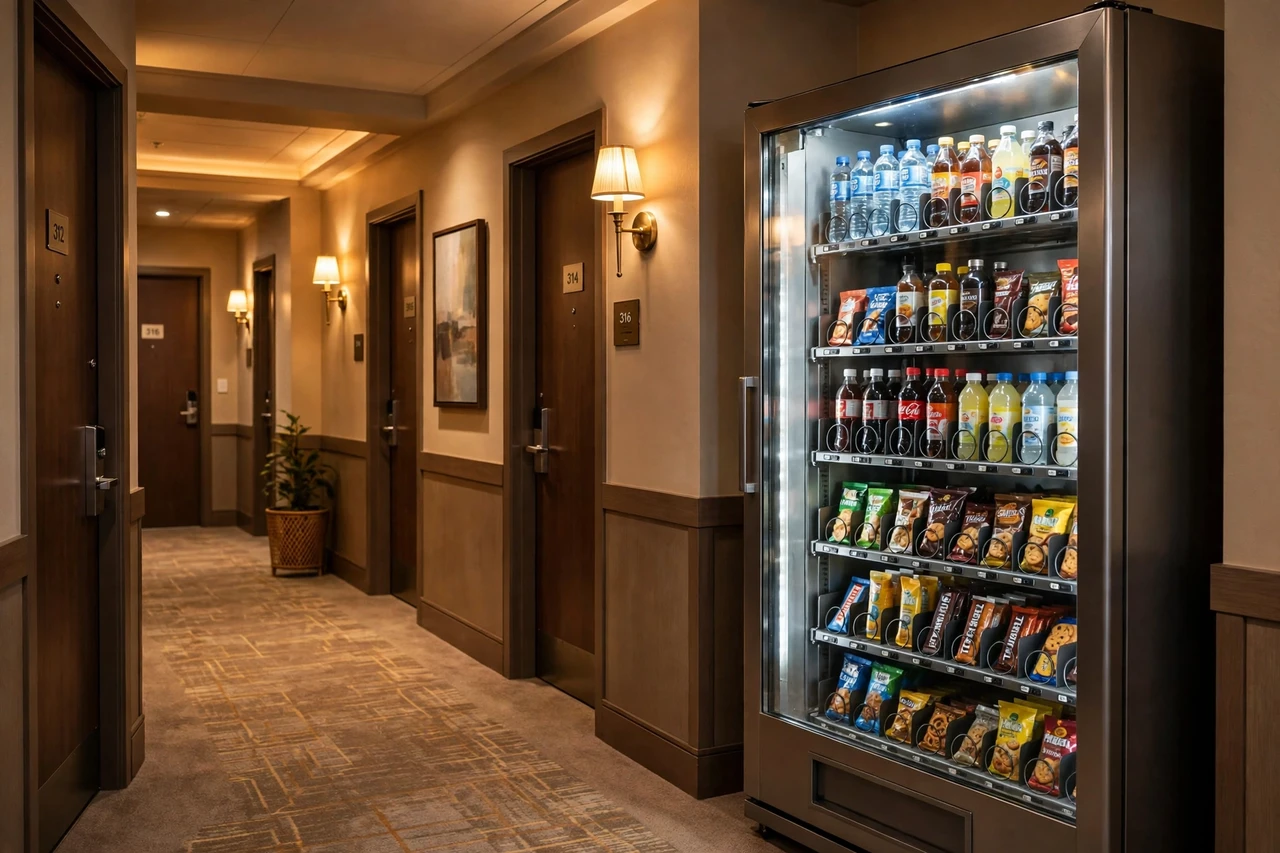
7. Hotels and Extended-Stay Properties
Hotels serve guests who arrive late, leave early, and often skip the restaurant, creating steady demand for drinks, snacks, and travel essentials in lobbies and on guest floors. Extended-stay properties are even better, since long-term guests treat the machine as their corner shop for weeks at a time. Hotel guests are also less price-sensitive than locals, supporting higher margins.
Pitch hotel managers on guest satisfaction: a well-stocked machine is a small amenity that prevents complaints about closed restaurants and empty minibars. Offer to stock travel essentials alongside snacks, keep machines immaculate, and respond fast to service calls. A single hotel placement often leads to referrals to other properties under the same management group.
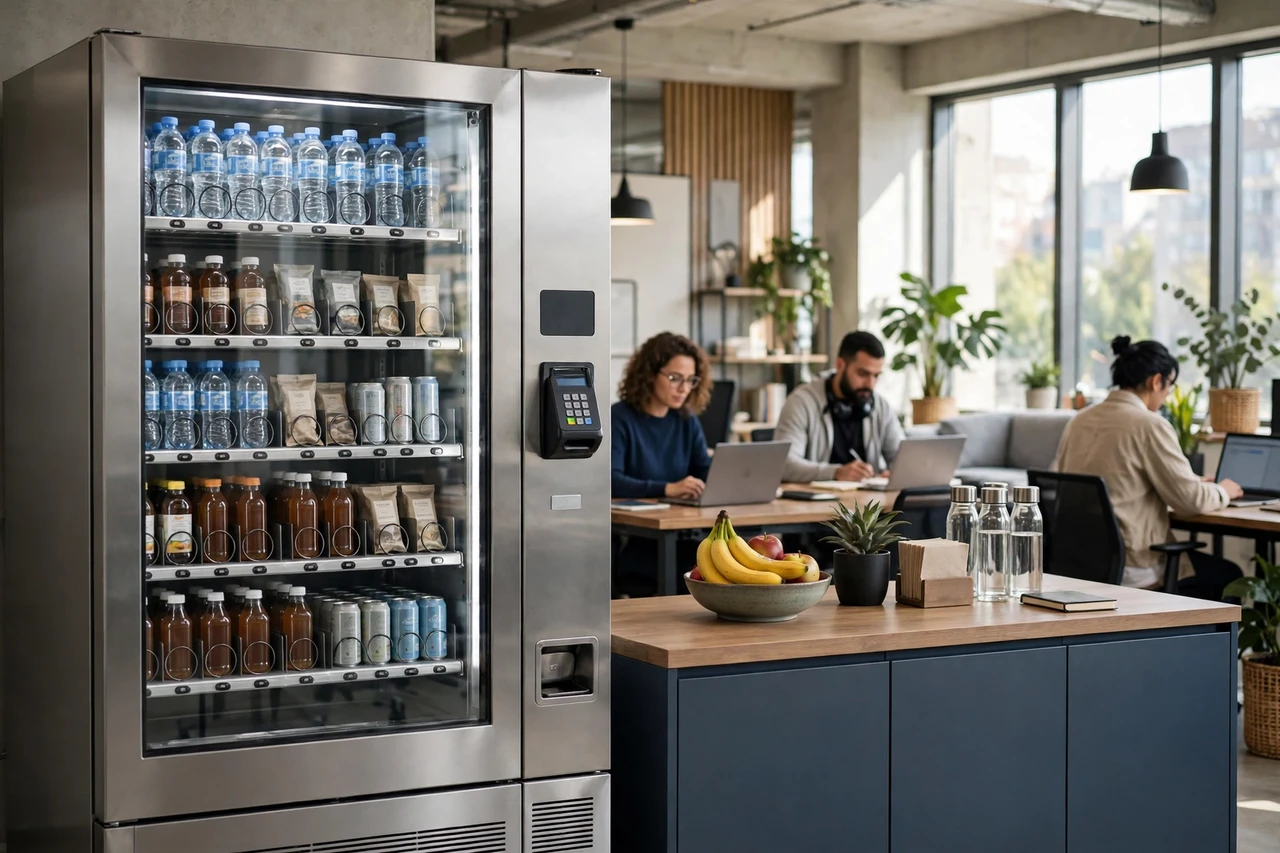
8. Office Parks and Coworking Spaces
Office parks and coworking spaces concentrate dozens of small businesses and hundreds of workers in one location, all sharing the same break areas. Workers buy coffee, snacks, and drinks throughout the day, and coworking members — freelancers and startup teams — work irregular hours, creating demand beyond the standard nine-to-five. A central break room or lobby machine serves everyone in the building with one placement deal.
Talk to the building manager or coworking operator rather than individual tenants, and offer a product mix that suits a professional crowd, including quality coffee and healthier snacks. Coworking spaces in particular value amenities that attract members, so frame the machine as a perk for their community. For a broader sense of how location-based income fits a busy professional’s portfolio, passive income ideas for busy professionals puts vending alongside other hands-off options.
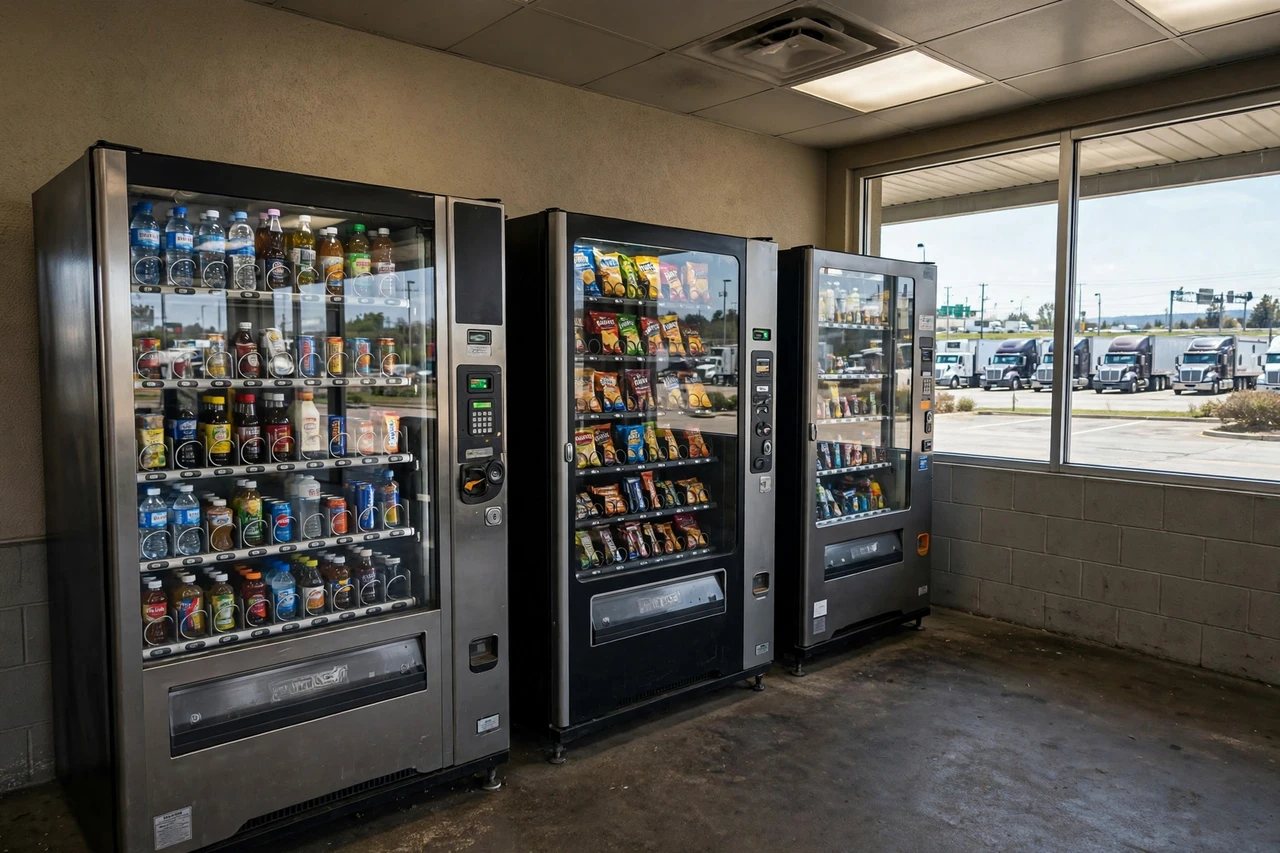
9. Truck Stops and Highway Rest Areas
Truck drivers and road travelers stop at all hours, need food, drinks, and supplies, and have few alternatives on the highway. Truck stops offer round-the-clock foot traffic, a loyal regular customer base of drivers on fixed routes, and demand for hearty snacks, coffee, and energy drinks. Rest areas and travel plazas share the same pattern, with peaks around holidays and weekends.
Placement here usually means negotiating with the travel plaza operator or franchise owner, and reliability matters enormously — a broken machine at 2 a.m. loses a driver who may never return. Keep coffee and energy drinks well stocked, offer larger drink sizes, and service the machine on a strict schedule. A truck stop machine will not win design awards, but its sales consistency makes it a favorite among experienced operators. Before committing to any location, compare the effort involved with other income streams in ways to earn passive income online so you invest where your time pays best.
Frequently Asked Questions
How do I find the decision-maker for a vending location?
For offices and gyms, ask for the operations or facilities manager; for hospitals and colleges, contact facilities or procurement departments; for apartments, talk to the property manager. A short, polite visit or email works better than a long pitch. State what you offer, that installation is free, and that you handle all servicing, then ask for a ten-minute conversation.
Should I pay commission to location owners?
A small commission of 10 to 25 percent of gross sales is standard in competitive locations like hospitals and airports, while smaller venues may accept the machine free as an amenity. Commission is worth paying for a genuinely high-traffic spot, but negotiate it against your margins and get the agreement in writing, including who pays for electricity.
How do I judge whether a location is actually profitable?
Count foot traffic at different times of day, check how far the nearest shop or cafe is, and ask how many people work or live there. A location with 100-plus daily passersby and no nearby store is promising. Start with a trial period of 60 to 90 days and track weekly sales before committing to a long contract or a second machine.
Can one location support multiple machines?
Yes, if foot traffic is high enough. Large factories, hospitals, and campuses commonly host separate drink, snack, and coffee machines, since different products sell at different times. Start with one machine, prove your reliability, and expand once sales data shows unmet demand at that site.
What makes a location stop being profitable?
Construction, a new nearby store, a change in building occupancy, or a switch to remote work can all cut foot traffic. Review each location’s sales monthly, and be ready to relocate an underperforming machine rather than letting it sit half-empty. Relocating quickly is one of the most important skills in this business.