Most passive income advice for millennials is either outdated or unrealistic — buy rental property with money you don’t have, or build an app with skills you don’t have. The real passive income ideas for millennials are smaller, cheaper, and more honest: they start with skills or assets you already own, cost little or nothing to launch, and grow slowly into meaningful side income over 6 to 18 months.
The ideas below are ranked by how realistic they are for someone with a full-time job and limited savings. None of them will make you rich overnight, but all of them can add $100 to $1,000 a month once built — and they stack, so two or three together can genuinely change your monthly budget.
1. Automate Micro-Investing With Round-Ups
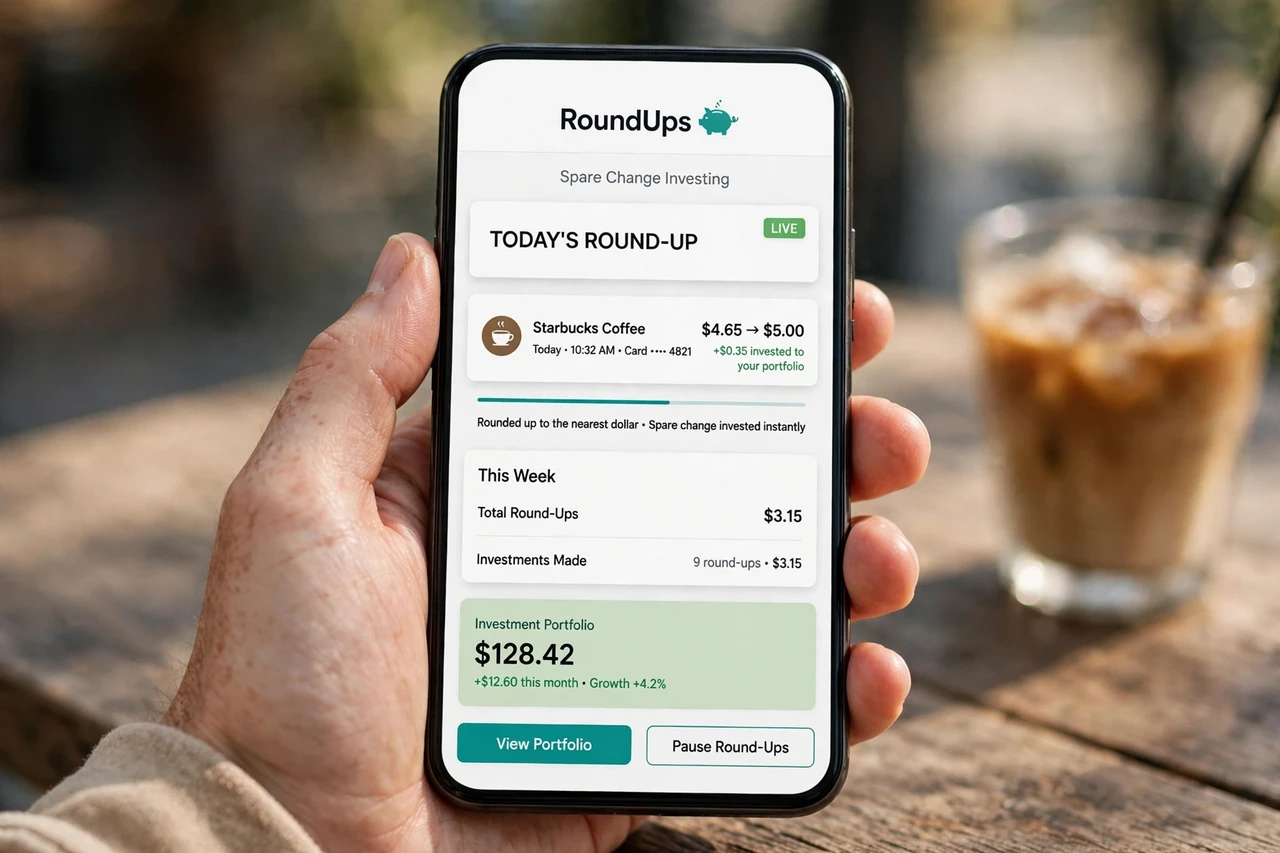
Micro-investing apps like Acorns round up your everyday purchases and invest the spare change automatically. Spend $3.50 on coffee, and $0.50 goes into a diversified ETF portfolio. It sounds trivial, but the average user invests $30 to $50 a month without noticing — and over a decade of compounding, that becomes thousands of dollars from money you never missed.
Set it up once, connect your bank, and forget it. Increase the multiplier during months when you have extra cash, and check the balance quarterly rather than daily. This is the lowest-effort passive income stream that exists: it requires zero ongoing work, and the only skill is leaving it alone.
2. Sell Notion Templates and Other Passive Income Ideas for Millennials
Notion has millions of users, and many of them will pay $10 to $50 for a well-designed template that saves them hours: budget trackers, habit systems, freelance client dashboards, study planners. If you already use Notion for your own life, you have the raw material — package your best setup, polish it, and sell it on Gumroad or the Notion template gallery.
The upfront work is real: a good template takes 10 to 20 hours to design, document, and test. But once it is listed, sales are nearly passive — the same file sells hundreds of times with no additional work. Successful template sellers earn $200 to $2,000 a month from a small catalog, and the best templates keep selling for years.

3. Faceless Shorts Channel Around Your Hobby
YouTube Shorts and TikTok pay creators through ad revenue and creator funds, and faceless channels — stock footage, screen recordings, text overlays, AI narration — remove the biggest barrier, which is appearing on camera. Pick a hobby you already follow, like personal finance, history, or fitness, and post one short a day using clips and narration.
Growth is slow for the first two months, then compounds as the algorithm learns your audience. Channels with 50,000 subscribers typically earn $200 to $800 a month from ads and affiliate links. The work is front-loaded: batch-record a week’s shorts in one sitting, schedule them, and let the platform do the distribution.

4. Paid Community Around Your Niche
If people already ask you for advice — about budgeting, career changes, fitness, or a hobby — a paid community turns that advice into income. Platforms like Skool, Discord, or Circle let you charge $10 to $30 a month for access to a focused group, templates, and weekly Q&A sessions. Fifty members at $20 a month is $1,000 a month, and the work is mostly showing up and answering questions you already know the answers to.
Start free to build trust, then add a paid tier once the group has real activity. The key is picking a narrow niche where you are genuinely ahead of your members — broad “money advice” communities fail, while “budgeting for nurses on night shift” communities thrive.

5. License Music and Beats to Creators
If you make music as a hobby, licensing turns it into passive income: upload beats and tracks to Artlist, Epidemic Sound, or BeatStars, and creators pay to use them in videos, podcasts, and ads. A single track can be licensed dozens of times, and a catalog of 50 tracks can earn $200 to $600 a month in royalties.
The work is in building the catalog — one finished track a week for a year beats ten tracks made in a burst and then abandoned. Focus on genres creators actually search for: lo-fi, corporate background, upbeat vlog music. Each upload is an asset that keeps paying long after you made it.

6. Lightroom Presets and Phone Photo Filters
Phone photography is universal, and presets — one-tap color and light adjustments — sell for $5 to $25 a pack on Etsy, Creative Market, and your own site. If you already edit your photos with a consistent style, package your 10 best presets, show dramatic before-and-after examples, and list them.
Presets are ideal passive products: they are digital, they never run out, and the same pack sells to every new buyer. Sellers with a few popular packs earn $100 to $500 a month, and the marketing is built into the product — every buyer who posts an edited photo is advertising your presets for free.

7. Fractional Real Estate With Small Amounts
Fractional real estate platforms like Fundrise and Arrived let you invest in rental properties and real estate funds with as little as $10. You earn through rental income distributions and property appreciation, without ever dealing with tenants, repairs, or mortgages — the platform handles all of it.
Returns are modest, typically 5 to 9 percent annually, and your money is locked up for years, so this is a long-game play, not a quick flip. Start with $100, add $25 a month automatically, and let it compound alongside your other streams. It is the closest most millennials will get to owning rental property without a down payment.

8. Deals and Comparison Site With Affiliate Links
A niche deals or comparison site earns affiliate commissions every time a reader clicks through and buys. The trick is picking a narrow niche — standing desks, mechanical keyboards, budget travel gear — and writing genuinely useful comparisons rather than generic listicles. One well-ranked article can earn $50 to $200 a month for years.
Building the site takes upfront effort: 20 to 30 solid articles, basic SEO, and honest reviews. But once an article ranks, the income is passive — readers find it through search, click your affiliate links, and you earn without touching the page again. This pairs well with any other idea on this list, because the same content skills apply everywhere.

9. Print-on-Demand Designs for Fandoms
Print-on-demand lets you sell shirts, mugs, and posters without inventory: you upload a design, the platform prints and ships when someone orders, and you keep the margin. Fandom niches — specific shows, games, hobbies, professions — outperform generic designs because fans actively search for them and buy them as identity markers.
Designs do not need to be masterpieces; clever, specific ideas outsell beautiful generic art. Start with 20 designs in one fandom, use trending phrases and inside jokes, and avoid copyrighted characters or logos — original art inspired by a fandom is legal, direct copies are not. A shop with 100 designs can earn $200 to $800 a month, and each design is a permanent asset.

Frequently Asked Questions
How much money do I need to start passive income as a millennial?
Almost none for most ideas here: micro-investing starts with spare change, templates and presets cost only your time, and faceless channels need just a phone. Fractional real estate starts at $10. Only property and vending-style ideas need real capital, and none of those are on this list.
How long until passive income becomes meaningful?
Plan on 6 to 12 months before any single stream feels significant, and 2 to 3 years before several streams together replace a meaningful chunk of income. The millennials who succeed are the ones who start one stream, finish it, and then add the next — not the ones who start five at once.
Which passive income idea is best for beginners?
Micro-investing and selling a digital product you already use — a Notion template, presets, or a guide — are the best first steps. They teach you the two core skills of passive income: automating money and packaging knowledge, and both pay while you learn.
Is passive income really passive?
Not at first. Every stream on this list needs 10 to 40 hours of setup, then 1 to 5 hours a month of maintenance. The “passive” part is that income continues during months you do almost nothing — unlike a job, where no work means no pay.
The honest path to passive income is boring: pick one idea from this list, spend a month building it properly, and then start the next one. A year from now, you will have three streams paying you while you sleep — and that is worth far more than any get-rich-quick scheme.