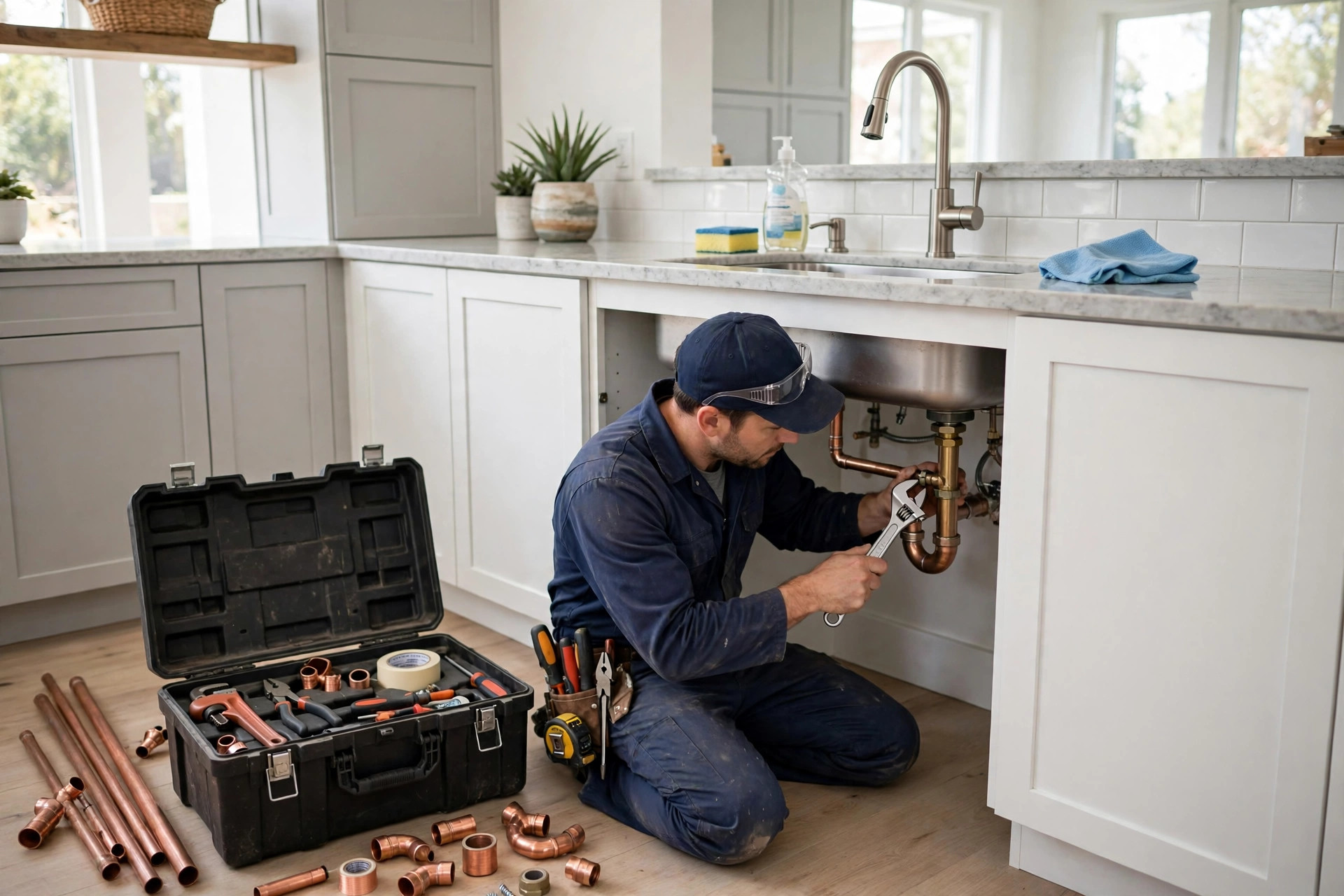
A dripping tap at midnight or a toilet that will not stop running is the kind of problem people want fixed today, not next week. That urgency is why plumbing work pays premium rates: customers are paying for speed, skill, and the relief of a problem solved. If you already know your way around basic fixtures and fittings, you can turn that knowledge into a well-paid side hustle on evenings and weekends. The jobs below stick to small, common repairs and installs — the kind a capable handyperson can handle safely. Here are 8 plumbing side hustles that pay premium rates.
1. Fixing Leaking Taps and Running Toilets
Leaks are the most common plumbing call there is, and they are also one of the easiest to fix. A dripping tap usually needs a new washer or cartridge, while a running toilet often needs a new flapper or fill valve — parts that cost a few dollars and take under an hour to swap. Homeowners happily pay to stop the drip and the wasted water, and because the fix is quick, you can fit several jobs into a single evening. Pay usually runs $50 to $120 per visit, depending on the fixture and your area. Tip: carry a small box of common washers, cartridges, and flappers so most jobs need only one trip.
2. Installing New Faucets and Showerheads
When homeowners renovate a bathroom or kitchen, the faucet and showerhead are often the first things they upgrade, and many would rather pay someone than wrestle with the fittings themselves. Installing a new faucet means shutting off the water, removing the old unit, fitting the new one, and checking for leaks — straightforward work for anyone comfortable with a wrench. The same goes for showerheads, which are often a twenty-minute job. You can charge $60 to $150 per install, varying by the fixture type and whether the old one is stuck or corroded. Customers usually buy the fixture themselves, so your price is pure labour, and a clean, leak-free install earns strong reviews.
3. Unclogging Drains with a Drain Snake
Slow drains and blocked sinks are miserable to live with, and a plunger only goes so far. A hand-crank drain snake clears most clogs in under an hour, and the tool itself costs less than a single job pays. You feed the cable into the drain, work it through the blockage, and flush the pipe clean — a satisfying job with an obvious result. Homeowners often try everything else first, so by the time they call you, they are ready to pay. Drain clearing usually earns $75 to $150 per visit, depending on the clog and the number of drains. Always protect the customer’s floors and explain what caused the blockage, because that advice often leads to repeat calls.
4. Replacing Toilet Parts and Installing New Toilets
Toilets fail in predictable ways: a worn flapper, a faulty fill valve, a cracked seat, or a seal that has given up. Replacing these parts is quick, cheap, and well paid, and a full toilet swap is only a step further — drain the old one, unbolt it, set the new wax ring, and bolt the new unit down. Homeowners put this job off for months, so when they finally book it, they want it done properly. Part replacements pay $50 to $100, while a full toilet installation usually brings $150 to $300, varying by the model and whether the old toilet needs hauling away. Legit side hustles that actually pay often share this pattern: a simple skill, a problem people avoid, and a fair price for solving it fast.
5. Flushing Water Heaters and Basic Maintenance
Water heaters quietly collect sediment, and a yearly flush keeps them running efficiently and extends their life. The job means shutting off the power or gas, draining the tank, flushing out the sediment, and refilling it — work that takes about an hour and needs only a garden hose and basic care. Many homeowners have never flushed their heater and do not know it needs doing, so offering it as a yearly service creates repeat business. A flush and basic check usually pays $80 to $150, depending on the heater size and your area. Tip: offer this in spring or autumn when homeowners are already thinking about home maintenance, and remind customers to book again next year.
6. Installing Dishwashers and Washing Machine Hookups
A new dishwasher or washing machine arrives in a box, and the buyer still needs it connected to the water supply and drain. If you know how to fit supply lines, tighten compression fittings, and check for leaks, this is a well-paid, in-demand job. The work usually takes one to two hours, and customers are grateful to have an appliance running the same day it arrives. Hookup and install jobs typically pay $100 to $200, varying by the appliance and whether new supply lines or valves are needed. Be careful to test thoroughly before you leave, because a slow leak behind an appliance is the one mistake customers remember.
7. Repairing Outdoor Taps and Garden Irrigation
Outdoor taps freeze, crack, and leak, and garden irrigation systems develop broken heads and split lines every season. These are outdoor jobs with easy access and no worries about water on a customer’s floor, which makes them a good fit for a beginner. Replacing a frost-damaged tap or a broken sprinkler head takes under an hour, and a full irrigation check can fill a morning. Pay usually falls between $60 and $140 per visit, depending on the repair and how many heads or lines need attention. Spring is the busiest season for this work, as homeowners turn their systems back on and discover the winter damage, so advertise early.
8. Emergency Call-Outs for Burst Pipes and Small Leaks
When a pipe bursts or a leak appears under a sink, the homeowner needs help now, and emergency rates reflect that. Your job is to stop the water, assess the damage, and make a safe repair — replacing a section of pipe, refitting a joint, or swapping a failed valve. Emergency call-outs usually pay $120 to $250 per visit, varying by time of day and repair size, with some jobs earning more if parts are needed. How to charge premium prices as a beginner covers the same idea: urgency and reliability justify higher rates. Only take jobs you can safely complete, and always tell the customer honestly if a repair needs a licensed plumber.
Frequently Asked Questions
Do I need a plumbing licence for these side hustles?
It depends on where you live and the size of the job. Small repairs like replacing a tap washer or a toilet flapper are usually fine without a licence, but bigger work such as repiping or gas lines normally requires one. Check your local rules before you start, and never take on work you are not qualified or legally allowed to do.
How much can I earn from plumbing side hustles?
Many part-time plumbing helpers earn $300 to $900 a month from a handful of weekend jobs, though it varies by area, demand, and how many jobs you accept. Emergency and evening calls pay the most, while routine repairs are steadier. This is extra income, not a guaranteed wage, and building a customer base takes time.
What tools do I need to start plumbing side jobs?
A good adjustable wrench, pipe wrench, plunger, drain snake, plumber’s tape, and a basic set of screwdrivers will cover most jobs on this list. Add a basin wrench for tight faucet work and a bucket for catching water. Buy tools as jobs pay for them rather than stocking up all at once.
How do I find plumbing customers as a beginner?
Start with neighbours and local community groups, where people already trust you. Post clear photos of finished jobs and ask satisfied customers for reviews. Word of mouth is powerful in plumbing, because a homeowner who trusts you with their pipes will recommend you to everyone they know.
What should I do if a job is bigger than I expected?
Be honest with the customer right away. Explain what you found, what it will take to fix properly, and whether it needs a licensed plumber. Customers respect honesty far more than a botched repair, and a referral to the right professional still builds your reputation as someone trustworthy.
Plumbing side work pays premium rates because it solves urgent problems that people cannot ignore. Start with the smallest jobs, do them well, and let each happy customer become your next referral. Pick one service from this list, gather the tools you need, and take your first booking this weekend — a single fixed leak can be the start of a steady extra income. Start with a neighbour who has been putting off a small repair, because one good job often leads to the next. Keep a simple price list for your most common jobs so quotes stay quick and consistent, and set aside part of every payment for tools and supplies.