Learning to read starts with phonics — connecting letters to the sounds they make — and parents of early readers are always searching for workbooks that make that practice fun instead of frustrating. A phonics activity book is a printable PDF children can work through page by page, and it is one of the most popular digital products in the early learning niche. You design the book once, list it on Etsy or Teachers Pay Teachers, and sell the same file again and again. Buyers want books that are colorful, clearly organized, and matched to what a four- to seven-year-old can actually do. Here are 8 phonics activity books for early readers that sell.
1. Letter Sounds and Beginning Sounds Book
A beginning sounds book is usually the first phonics product a parent buys, because it teaches the most basic reading skill: hearing the first sound in a word. Each page shows a letter with pictures of things that start with that sound, and the child circles or colors the matching picture. Keep the layout the same on every page so young children know what to do without reading long instructions. Parents buy these for preschoolers and kindergarteners, and teachers use them for literacy centers. A 20 to 26 page book usually sells for $3 to $6, though prices vary by page count, illustration quality, and where you list it. Tip: use bright, simple pictures a child can recognize at a glance, and avoid words with tricky spellings.
2. CVC Words Build and Read Book
CVC words — three-letter words like cat, pin, and sun — are the first words children read on their own, so a build-and-read book is a bestseller in the phonics niche. Each page should let the child build the word with letter tiles or cut-out cards, then read it, trace it, and draw it. That mix of hands-on building and reading practice is exactly what teachers look for in a literacy center activity. Aim for 20 to 30 pages covering the five short vowels, and include an answer key at the back. A CVC activity book typically sells for $4 to $7, with prices varying by page count and by whether you include printable letter cards. This is a strong product to make first, because demand for it stays steady all year.
3. Short Vowel Word Families Activity Book
Word families like -at, -in, and -og help early readers spot patterns instead of memorizing every word one by one. A word family activity book groups pages by family, with rhyming word lists, fill-in-the-blank pages, and simple matching games. Parents love these books because a child can finish one family in a single sitting and feel successful right away. Design 24 to 30 pages with a consistent routine on each page — read the words, circle the rhyming pair, write the missing letter — so children build confidence through repetition. These books usually sell for $4 to $7, though prices vary by page count and illustration style. If you are new to selling printables, these digital product ideas for beginners explain how to start with simple books like this one.
4. Blends and Digraphs Practice Book
Once children know their CVC words, the next step is blends like bl and st and digraphs like sh, ch, and th — and parents quickly discover this is where reading gets harder. A blends and digraphs book should introduce one sound at a time, with a picture page, a tracing page, and a short reading list for each sound. Keep the words simple and everyday — ship, chop, frog — so children can focus on the new sound instead of struggling with the vocabulary. Teachers buy these books for first and second grade reading groups, and tutors use them for one-on-one lessons. A 24 to 32 page book generally sells for $4 to $8, with prices varying by page count and by whether you add flashcards. Tip: add a progress chart at the front so children can tick off each sound they master.
5. Sight Word Activity Book
Sight words are the high-frequency words children need to recognize instantly — the, and, said, was — and a dedicated activity book for them is a reliable seller. Each page should focus on one word with tracing, coloring, a fill-in-the-blank sentence, and a small search puzzle where the child finds the word hidden among others. Parents buy these for kindergarten and first grade, and homeschool families often work through one word a day. Build the book around a standard list of 30 to 50 words, and keep the design cheerful with plenty of color. A sight word activity book usually sells for $4 to $7, though prices vary by word count and page count. Pair it with these sight word flashcard sets for kindergarteners and you have a matching set parents love to buy together.
6. Rhyming Words Matching Book
Rhyming is one of the earliest phonics skills, and a matching book built around it works for children as young as four. Each spread shows pairs of rhyming pictures — cat and hat, bee and tree — and the child draws lines to connect them, colors the pairs, or cuts and pastes them together. The pages should feel like a game rather than a lesson, with big pictures and very little text. Preschool teachers and parents buy these books for circle time, quiet time, and car rides. A 20 to 26 page rhyming book typically sells for $3 to $5, with prices varying by page count and by how much hand-drawn-style artwork you include. This is a quick book to design, which makes it a good second product after your first phonics book.
7. Phonics Coloring and Tracing Book
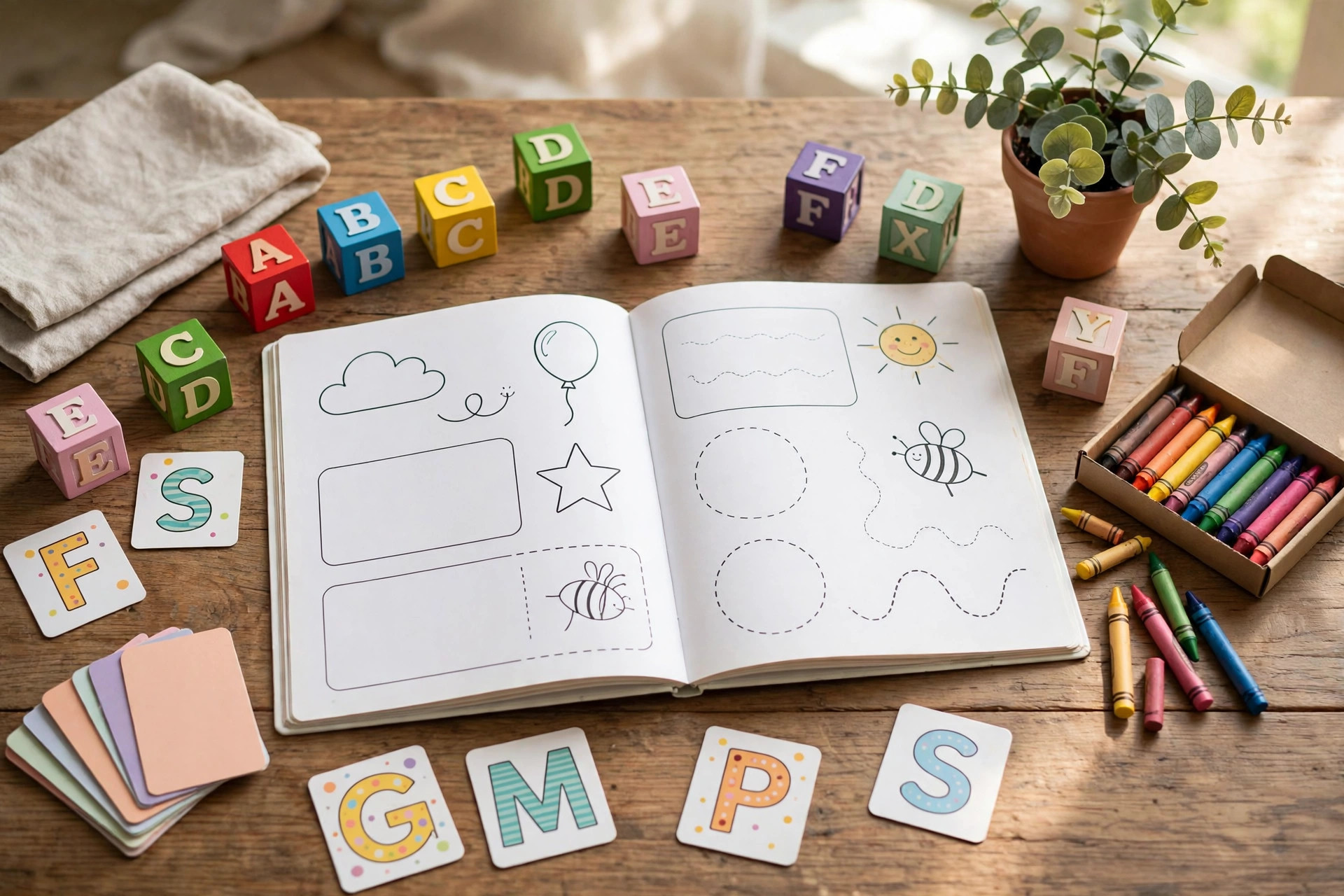
Some children will happily color and trace long before they will sit down for a worksheet, and a phonics coloring and tracing book meets them where they are. Each page features a big letter with a picture that starts with that sound, plus dotted lines for tracing the letter and the word. The format is gentle and low-pressure, which is why parents of reluctant learners buy it so often. Keep the letters large, the pictures friendly, and the tracing lines thick enough for small hands. A 26 page book — one page per letter — usually sells for $3 to $6, though prices vary by illustration quality and whether you include both uppercase and lowercase pages. Tip: release this one before back-to-school season, when parents are stocking up on quiet activities.
8. Read and Draw Simple Sentences Book
A read-and-draw book is the bridge between sounding out words and actually reading, and it is a favorite with first grade teachers. Each page gives the child a short sentence — “The cat sat on the mat” — and asks them to draw what it says, which proves they understood it. That simple idea turns reading practice into an art activity, and children who resist worksheets will often happily complete these pages. Design 20 to 25 pages with sentences that use only words the child has already met, and add a small word bank at the bottom of each page for extra support. These books usually sell for $4 to $7, with prices varying by page count and by whether you include a matching writing page. It is a lovely final product in a phonics series, because it shows parents how far their child has come.
Frequently Asked Questions
What age are phonics activity books for?
Most phonics activity books are designed for children aged four to seven, covering preschool through second grade. Beginning sounds and rhyming books suit four- and five-year-olds, while blends, digraphs, and sentence books fit six- and seven-year-olds. Always state the age range clearly in your listing so parents buy the right level.
Do I need teaching experience to make a phonics book?
No, you do not need to be a teacher, but you do need to follow the usual order in which children learn phonics — letter sounds first, then CVC words, then blends and digraphs. Study a standard phonics sequence before you start designing, and double-check every word list against it. Parents and teachers notice mistakes quickly, and errors lead to bad reviews.
How long should a phonics activity book be?
Most printable phonics books run 20 to 30 pages, which is long enough to feel like a real book but short enough for a young child to finish. A single-skill book can be shorter, around 15 to 20 pages, while a full series covering several skills can run 40 pages or more. Price your book to match its length and the effort behind it.
Where do phonics activity books sell best?
Teachers Pay Teachers is the largest marketplace for teacher-made learning materials, and Etsy is strong with parents searching for printable activity books. Many sellers list on both platforms to reach both audiences. A simple shop of your own can work later, once you have built up an audience that already trusts your books.
Can I use clip art from Canva in a book I sell?
You can use most Canva elements in products you sell, but you must check the license for each element, since some graphics are free only for personal use. To stay safe, use Canva Pro licensed graphics, buy commercial-use clip art, or draw your own simple illustrations. Never use images copied from Google or from another seller’s product.
Phonics activity books are a warm, evergreen product because every year a new group of children starts learning to read. Pick one book from this list, design it around a clear phonics sequence, and list it on Teachers Pay Teachers or Etsy with a bright cover and a few sample pages. One finished book teaches you the whole process — and once it is listed, it can keep selling while you design the next book in the series.