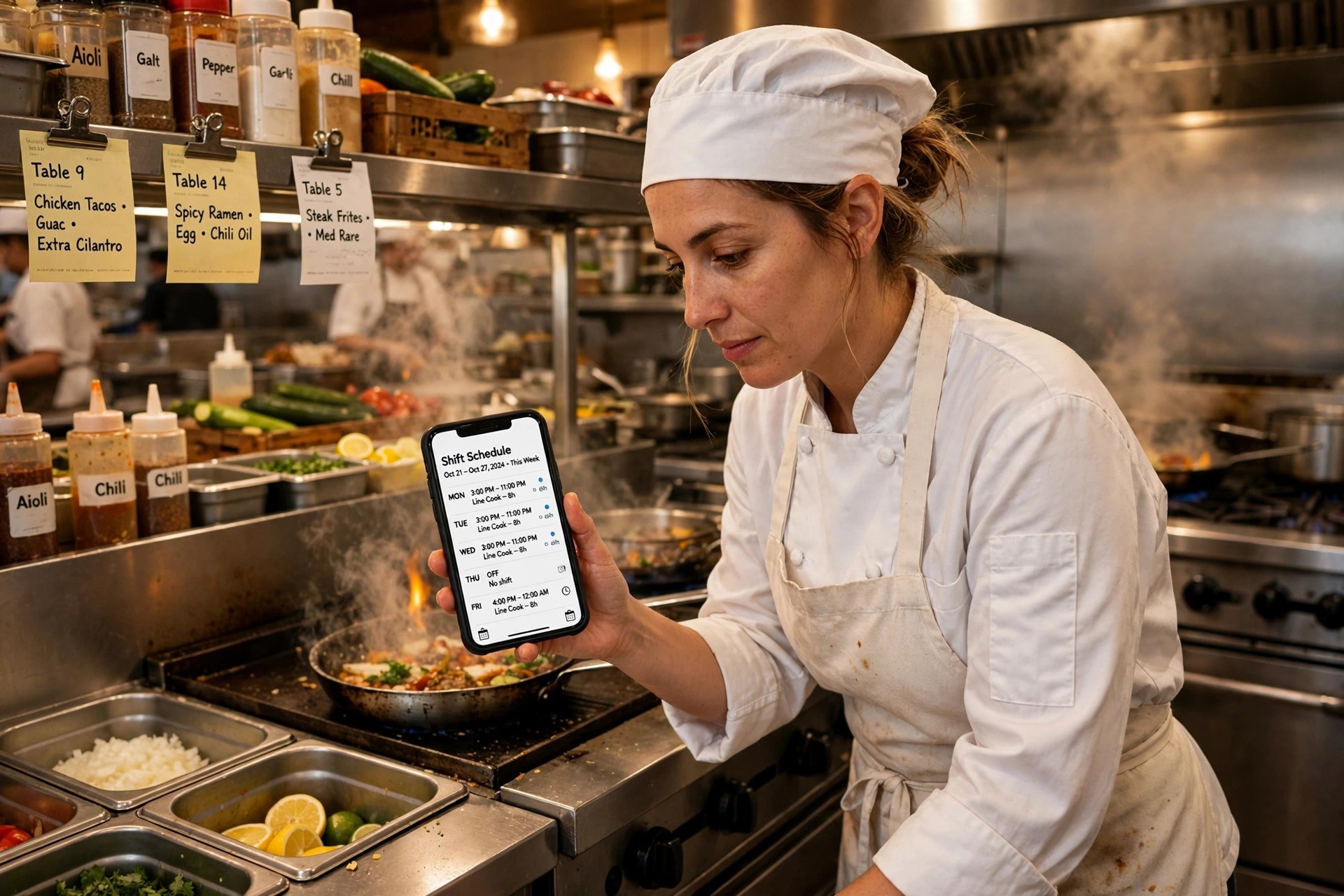
Restaurant kitchens always need extra hands, and the work is now a few taps away on your phone. Kitchen shift apps list single shifts for line cooks, prep cooks, dishwashers, and catering staff at restaurants, hotels, and event venues near you. You see the pay, the hours, and the location before you accept, and most apps pay weekly by direct deposit. Whether you have years of kitchen experience or you are just looking for steady extra income, there is a shift that fits your skills. Here are 8 apps that pay you to pick up kitchen shifts.
1. Line Cook Shifts on Instawork
Instawork lists on-demand kitchen shifts in most major US cities, and line cook work is one of the most common roles on the app. You work the line during lunch or dinner service, cooking orders to the restaurant’s recipes and keeping your station clean and stocked. Most shifts run 4 to 8 hours, and the app shows the pay rate before you claim a shift. Pay usually falls between $16 and $25 an hour, depending on the city, the restaurant, and whether the shift is a busy weekend night. Tip: set your availability for Friday and Saturday evenings, when restaurants pay more to fill gaps.
2. Banquet and Catering Shifts on Qwick
Qwick is built for hospitality work, and banquet and catering shifts are its bread and butter. You might plate food for a wedding, serve at a corporate dinner, or work a buffet line at a hotel event. The work is fast and team-based, and most shifts last 4 to 8 hours. Pay usually ranges from $16 to $26 an hour, varying by the event, the venue, and the role, with lead cooks and captains earning more. The app shows the uniform and arrival instructions upfront, so you know exactly what to bring. Catering shifts are a good fit if you like varied work and do not mind evenings and weekends.
3. Dishwasher and Prep Cook Shifts on GigSmart
GigSmart lists short kitchen shifts that are easy to pick up, including dishwasher and prep cook work. As a dishwasher you keep plates, glasses, and pans moving through the machine during service, and as a prep cook you chop, portion, and set up ingredients before the rush. Most shifts last 4 to 6 hours, which makes them a good fit if you only have half a day free. Pay usually ranges from $15 to $22 an hour, depending on the restaurant and the shift. These roles need no special experience, so they are a solid first step into kitchen gig work. Most kitchens will train you on the first shift, so you can start earning right away.
4. Short Kitchen Shifts on Upshift
Upshift is a staffing app that lists kitchen shifts at restaurants, hotels, and food service operations, including short shifts that fit around another job. You can claim a single lunch rush or a full dinner service, and the app shows the pay, the location, and the duties before you accept. The work ranges from prep and plating to dishwashing and banquet setup. Pay typically falls between $15 and $24 an hour, varying by the venue and the shift time, and most jobs pay weekly by direct deposit. Because Upshift is W-2 in many areas, the app handles taxes for you, which is one less thing to track.
5. Food Service Shifts on Wonolo
Wonolo connects workers with restaurants and food service operations that need extra help for a day or a weekend. The shifts cover kitchen prep, dishwashing, catering setup, and event service, and most are posted a few days ahead or the same morning. A typical shift means working alongside the restaurant’s regular crew, following the kitchen manager’s instructions, and keeping the station running during service. Pay usually ranges from $15 to $23 an hour, depending on the venue and the city, with higher rates for late-night or event work. Tip: wear non-slip shoes, since most kitchens will not let you start without them.
6. Restaurant Back-of-House Jobs on Snagajob
Snagajob is a job board for hourly work, and restaurants post kitchen shifts there when they need cooks, prep staff, and dishwashers. Unlike the on-demand apps, many Snagajob listings are for ongoing part-time roles, which suits people who want a regular kitchen schedule without a full-time commitment. You can filter by location, pay, and hours, and most listings state the pay schedule upfront. Pay usually runs $15 to $24 an hour, varying by the employer and the city, and weekly pay is common for kitchen roles. Hiring is often fast, sometimes just a short interview or a trial shift.
7. Kitchen and Food Prep Shifts on Bluecrew
Bluecrew is a W-2 staffing app, which means you work as an employee rather than an independent contractor, with benefits that vary by state and hours worked. Its kitchen jobs often involve food prep, plating, and dishwashing at restaurants, hotels, and corporate cafeterias. Pay typically falls between $15 and $24 an hour, depending on the venue and your city, and pay arrives weekly. Because Bluecrew is W-2, the app handles taxes for you. Tip: complete the app’s onboarding early so you can claim shifts as soon as they appear, since kitchen shifts fill fast.
8. Catering and Concessions Shifts on Adia
Adia is a staffing app that covers hospitality and food service work, including catering and concessions shifts at stadiums, concert venues, and event centers. You might serve food at a sports game, run a concession stand, or help set up a catered event. The work is lively and social, and most shifts last 4 to 8 hours. Pay usually ranges from $16 to $25 an hour, depending on the venue and the event, with evening and weekend shifts paying more. Weekly pay by direct deposit is the norm. If you like kitchen work with a bit of energy around it, event shifts are worth a try — many of the same venues also post event staffing work that pays per event, and warehouse gig apps that pay weekly offer similar flexible shifts when kitchen work is slow.
Frequently Asked Questions
Do I need experience to pick up kitchen shifts?
Most dishwashing and prep shifts need no experience at all — the kitchen trains you on the spot. Line cook roles usually ask for some kitchen experience, though smaller restaurants are often flexible. Starting with prep and dishwashing is the fastest way to learn a kitchen and build a work history on the app, which helps you claim better shifts later.
How fast do kitchen shift apps pay?
Weekly pay by direct deposit is the standard for the apps in this list, with the money landing a few days after your shift ends. Some apps also offer faster pay options, such as next-day or instant pay, sometimes for a small fee. Always check the pay schedule in the app before you claim a shift, since the exact payday varies.
What should I wear to a kitchen shift?
Most kitchens require non-slip shoes, dark pants, and a clean shirt or chef coat, and many ask you to bring a hat or hairnet. The app usually lists the dress code for each shift, so read it before you accept. Long hair must be tied back, and jewelry is often not allowed in food prep areas. Showing up dressed right means you can start work immediately.
Can I do kitchen shifts part time around another job?
Yes, that is exactly what these apps are built for. You claim single shifts, often on evenings or weekends, with no minimum hours. Many workers pick up one or two kitchen shifts a week as a second income, often on Friday and Saturday nights when restaurants are busiest. The flexibility is the whole point — you work when you want.
Are kitchen gig shifts very physical?
Yes, kitchen work means standing, walking, lifting, and moving quickly for most of the shift. Line cook and dishwashing shifts are the most physical, while catering setup and banquet service are lighter. Read the shift description before you claim it, and wear comfortable non-slip shoes. If you have a bad back or bad knees, prep work is usually easier on your body than the dish pit.
Kitchen shift work will not make you rich, but it is one of the most reliable ways to earn extra cash on your own schedule. The shifts are real, the pay is weekly, and you can start with no special skills. Pick one app from this list, finish the signup this week, and claim your first shift. Start with the app that lists the most shifts in your city, and keep a small kit ready — non-slip shoes, a chef knife you trust, and a water bottle — so you can say yes the moment a good shift appears. A single weekend of work is enough to know whether kitchen gigs fit your routine — and the money lands in your account the same week.