Healthcare is one of the biggest employers in the United States, and not every job in it needs a four-year degree. Behind every hospital and clinic is a whole team of remote workers handling records, scheduling, billing, and patient support — and many of these roles train you on the job. If you are organised, comfortable with computers, and good with people, you can build a steady work-from-home career in healthcare without going back to college. Some roles ask for a short certificate, but none of the jobs on this list require a degree. Here are 13 remote healthcare jobs that don’t require a degree.
1. Remote Medical Scribe
Doctors spend hours typing notes after seeing patients, and medical scribes take that work off their hands. As a remote scribe, you listen to a recorded visit or join a live telehealth call and write up the doctor’s notes in the patient’s record. The work needs fast typing, good listening, and a basic grasp of medical terms, which most employers teach during paid training. Scribes typically earn $15 to $22 per hour, varying by the specialty, the training provided, and whether the role is full-time. Tip: a quiet room and a good headset are essential, because you will be listening to real conversations all day.
2. Medical Transcriptionist
Medical transcriptionists turn recorded dictation from doctors and nurses into written reports, referral letters, and discharge summaries. The work is similar to scribing but more focused on audio files, and accuracy matters more than speed. You need strong typing skills and a willingness to learn medical vocabulary, but most employers provide style guides and glossaries. Pay usually runs $15 to $24 per audio hour, depending on the difficulty of the recordings and the turnaround time.
3. Medical Billing Support Assistant
Every medical bill has to be checked, coded, and sent to the right insurer, and billing support assistants help keep that process moving. You might enter charges, check that patient details are correct, follow up on rejected claims, or answer billing questions from patients. Employers usually provide training, and a short billing certificate can help you get hired faster. Billing support roles typically pay $16 to $24 per hour, varying by the employer and your experience.
4. Health Insurance Claims Processor
When a patient files a claim, an insurance company needs someone to review it, check the policy, and decide what gets paid. Remote claims processors do exactly that, working through queues of claims from home. You follow clear procedures, request missing documents when needed, and update the claim file at each step. Pay usually falls between $17 and $25 per hour, depending on the insurer and the type of claims you handle. Many of these roles are full-time with benefits, because insurers hire permanent staff rather than short-term contractors.
5. Patient Appointment Scheduler
Clinics and hospitals need people to book appointments, confirm visits, and remind patients about upcoming tests. As a remote scheduler, you work from a booking system, answer calls and messages, and keep the day running smoothly for doctors and patients alike. The job needs a friendly phone manner and good organisation, but no medical background. Schedulers typically earn $15 to $21 per hour, varying by the clinic and the shift. Remote jobs that need no degree often include scheduling work, because employers value reliability and clear communication over formal qualifications.
6. Telehealth Customer Support Agent
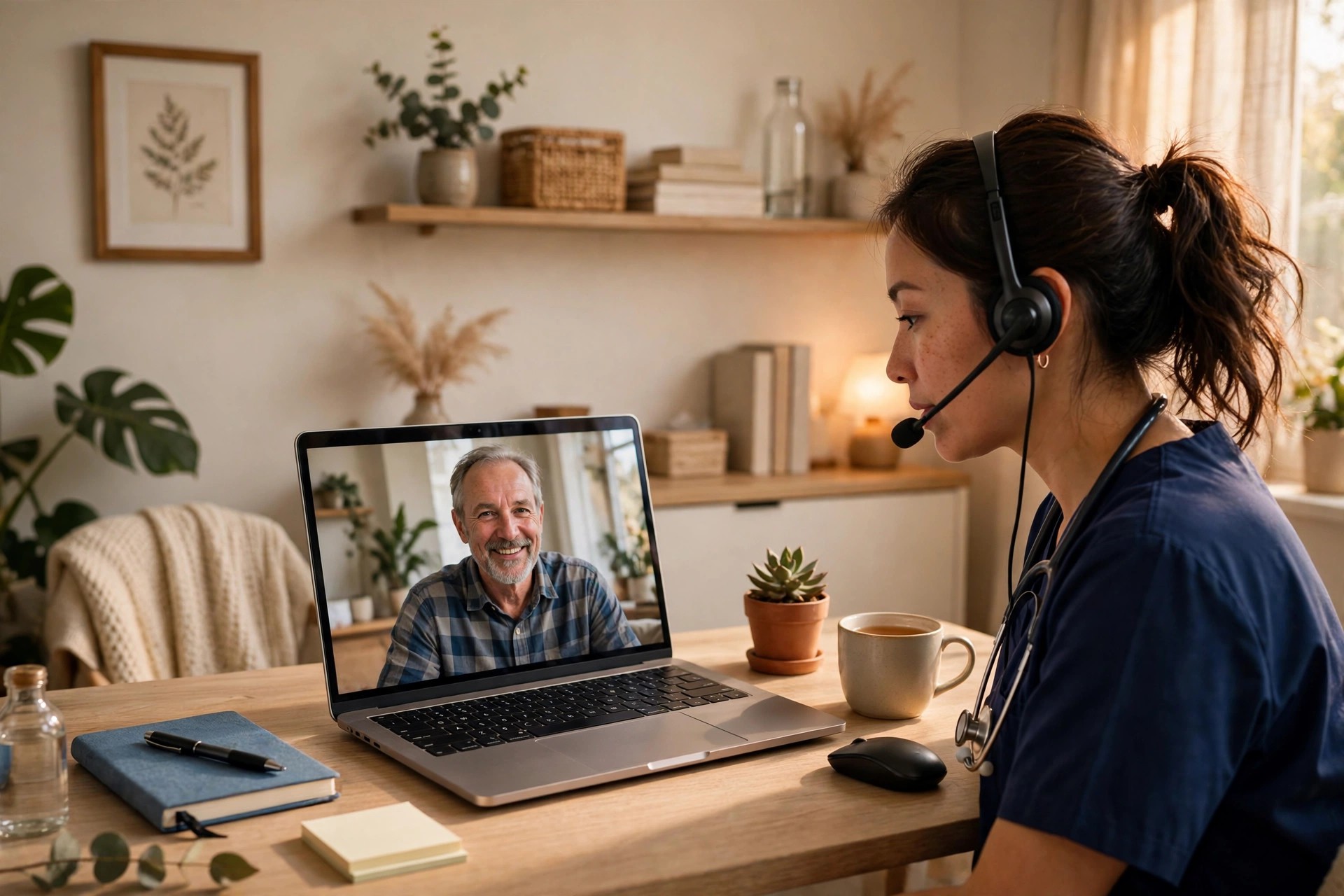
Telehealth companies need support agents who can help patients log in, fix video and audio problems, and answer basic questions about their visit. You are the first person a patient talks to, so patience and a calm voice matter more than technical knowledge. Most companies provide training on their platform, and the work is done entirely from home. Support agents usually earn $15 to $22 per hour, depending on the company and whether the role includes evening or weekend shifts. Tip: keep a notebook of common fixes, because the same five problems come up again and again.
7. Remote Pharmacy Support Assistant
Pharmacies need remote help with prescription refills, insurance checks, and patient calls, and support assistants handle much of that work from home. You might verify patient details, check whether a prescription is ready, or pass messages to the pharmacist. Some states ask pharmacy technicians to register, so check your state rules before you apply, but many support roles need no licence at all. Pay typically runs $16 to $23 per hour, varying by the employer and the duties involved. This role suits people who are careful with details, because prescriptions leave no room for mistakes.
8. Medical Records Clerk
Hospitals and clinics hold enormous amounts of patient records, and medical records clerks keep them organised, accurate, and private. Working remotely, you might file digital records, check that documents are complete, or release records to other providers when a patient asks. The work is quiet and methodical, and employers train you on their systems. Records clerks usually earn $15 to $21 per hour, depending on the employer and the volume of records. Confidentiality is the most important part of this job, so a trustworthy, careful approach is what managers look for.
9. Healthcare Data Entry Specialist
Healthcare generates endless forms: intake sheets, lab results, insurance details, and survey responses that all need entering into computer systems. Data entry specialists do that work accurately and quickly, often from home with flexible hours. You need fast, accurate typing and basic computer skills, but no degree and usually no certificate either. Pay usually runs $14 to $20 per hour, varying by the employer and the complexity of the data. Nurses looking for extra income on their days off sometimes take data entry shifts too, because the work is familiar and the hours can be flexible.
10. Prior Authorization Coordinator
Before some treatments and prescriptions are covered, the insurer has to approve them first, and prior authorization coordinators handle that process. You gather the doctor’s notes, submit the request, and follow up until a decision comes back. The work needs persistence and clear written communication, because insurers ask for specific documents in specific formats. Coordinators typically earn $17 to $25 per hour, varying by the employer and the type of authorizations. This is a growing role, because more treatments now require approval before they are covered.
11. Remote Health Coach Assistant
Health and wellness companies hire assistants to support their coaches: scheduling sessions, checking in with clients, preparing materials, and tracking progress. You do not need to be a coach yourself, but an interest in health helps, and some employers offer a short wellness course as part of training. The work is people-focused and encouraging, which suits anyone who likes helping others stay on track. Assistants usually earn $15 to $22 per hour, depending on the company and the hours.
12. Medical Interpreter
If you speak two languages fluently, hospitals and clinics need you. Remote medical interpreters join phone or video calls to help doctors and patients understand each other, translating everything accurately and without adding opinions. Spanish is the most in-demand language, but many others are needed too. Some employers ask for a short interpreter training course, but no degree is required. Interpreters typically earn $18 to $28 per hour, varying by the language, the certification, and the employer. This is meaningful work, because a good interpreter can genuinely change a patient’s outcome.
13. Clinical Trial Recruitment Coordinator
Drug companies and research hospitals need participants for clinical trials, and recruitment coordinators find them. Working remotely, you review referrals, call potential participants, explain the study in plain language, and schedule screening visits. The work needs empathy and organisation, because you are talking to people who may be unwell or nervous. Coordinators usually earn $18 to $27 per hour, varying by the study, the employer, and your experience. This role is a good fit if you enjoy talking to people and want work that genuinely helps medical research move forward.
Frequently Asked Questions
Can I really work in healthcare without a degree?
Yes, many healthcare support roles need training or a short certificate, not a degree. Scheduling, data entry, records, and support work all rely on organisation and communication skills that employers teach on the job. Read each job description carefully, because requirements vary, but a degree is not the default for the roles on this list.
Do I need a certificate for these jobs?
Some roles ask for one, but most do not. Medical coding and pharmacy work often prefer a certificate, while scheduling, data entry, and support roles usually provide their own training. A short online course in medical terminology can help your application stand out, even when it is not required.
How much can I earn in a remote healthcare job without a degree?
Most roles on this list pay $14 to $28 per hour, depending on the job, the employer, and your experience. Full-time roles often come with benefits like health insurance and paid time off. Pay grows as you gain experience and add skills, so treat your first role as a starting point.
Where do I find remote healthcare jobs with no degree required?
Start with the careers pages of hospitals, clinics, insurers, and telehealth companies, and use job boards with a remote filter. Search for the job titles on this list and set up alerts, because new postings appear every week. Staffing agencies that specialise in healthcare also place remote workers regularly.
Is remote healthcare work stable?
Healthcare is one of the most stable industries, because people always need care. Remote support roles are usually full-time and long-term, especially with hospitals and insurers. Seasonal or contract work exists too, so check whether a posting is permanent before you apply.
Healthcare needs far more than doctors and nurses, and remote support roles are a real way in without a degree. Pick one role from this list that fits your skills, check the requirements, and start applying this week. Your first healthcare job could be the start of a steady work-from-home career.