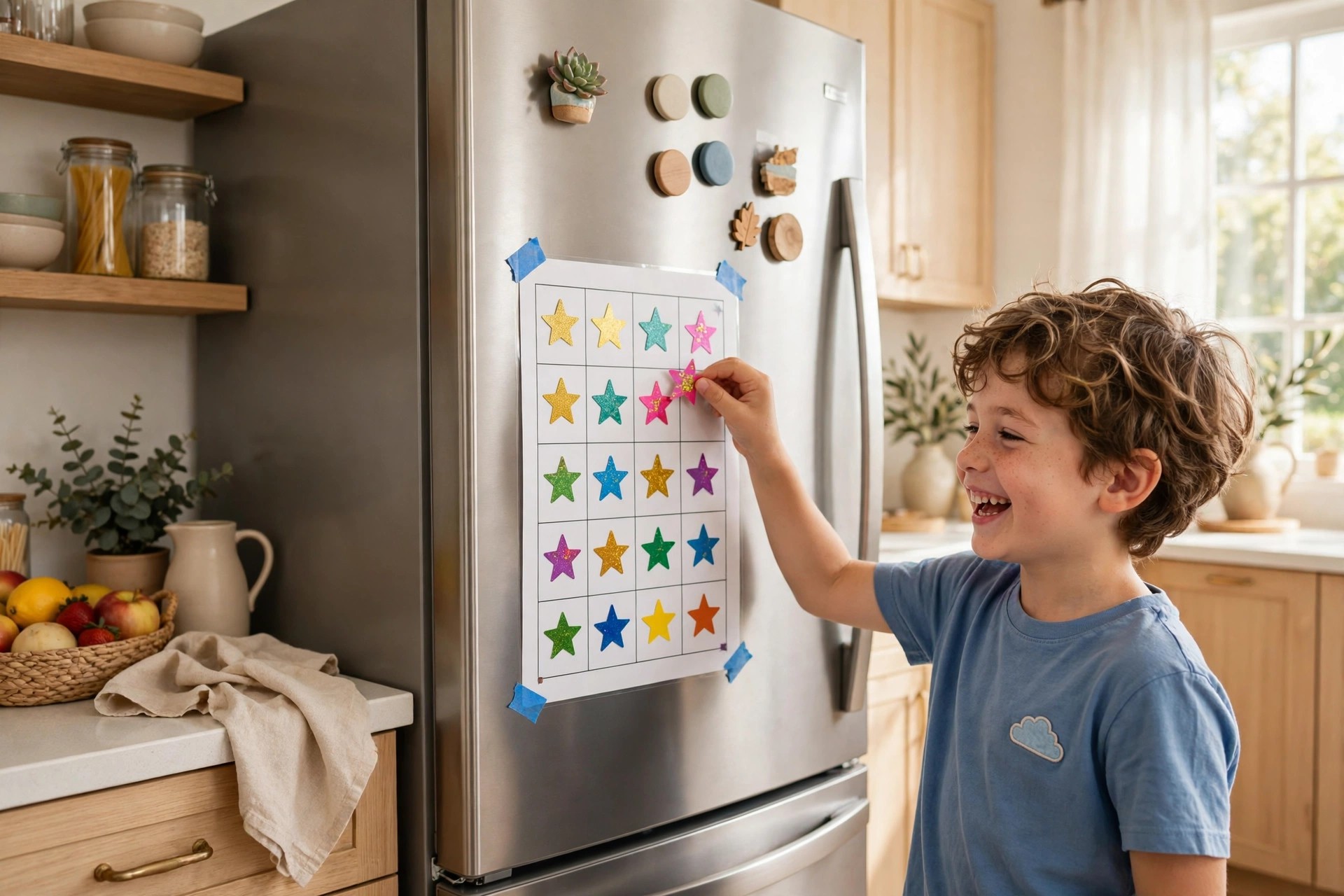
If getting your child to tidy up, read, or brush their teeth feels like a daily battle, a sticker reward chart can change the whole mood. Children love seeing their progress grow, and a small sticker for each good habit turns a boring routine into a game they want to win. These sticker reward charts are printable pages you can stick on the fridge, and each one is built around a different habit or age group. Here are 10 sticker reward charts that motivate kids.
1. Daily Morning Routine Chart
Mornings run smoother when children know exactly what to do, and this chart breaks the routine into simple steps — get dressed, brush teeth, eat breakfast, and pack the school bag. Your child earns a sticker for each step, and a full row means a calm morning for everyone. The chart works best when it hangs where your child can see it while getting ready. Printable packs usually sell for $3 to $6, varying by the page count and whether a weekly version is included. Tip: let your child choose the stickers, because picking their favourite characters makes the chart feel like theirs.
2. Bedtime Routine Reward Chart
Bedtime battles fade when children can see their progress toward a calm evening, and this chart covers the usual steps — bath, pyjamas, brush teeth, story time, and lights out. Each completed step earns a sticker, and a full week of stickers can earn a small reward like choosing the bedtime story. The chart helps children feel in control of their own routine instead of being told what to do. Packs usually sell for $3 to $7, varying by the design and whether a reward tracker is included. Keep the chart near the bedroom door so it becomes part of the nightly ritual.
3. Chore Chart with Sticker Rewards
Chores feel fair when children can see exactly what is expected, and this chart lists age-appropriate jobs like making the bed, feeding the pet, and clearing the table. Each finished chore earns a sticker, and a full row can earn a small treat or extra playtime. The chart teaches responsibility without nagging, because the stickers do the reminding for you. Printable packs usually sell for $3 to $7, varying by the number of chore options and whether a reward menu is included. Chore charts for kids ages 3 to 10 offer more ideas for matching chores to your child’s age, so the jobs stay fair and achievable.
4. Reading Challenge Sticker Chart
Reluctant readers often need a small push, and this chart turns reading into a challenge with a clear goal — a sticker for every book or every twenty minutes of reading. Children watch the chart fill up, and finishing a row feels like winning a prize. The chart works well for summer reading, school reading logs, and bedtime stories alike. Packs usually sell for $3 to $6, varying by the page count and whether a book list is included. Tip: let your child draw a tiny picture of each book on the chart, because the drawings become a record of everything they read.
5. Homework Completion Chart
Homework goes better when children can see their effort adding up, and this chart gives a sticker for each finished assignment, with space for the subject and the date. A full week of stickers can earn a reward like a movie night or a favourite meal. The chart also helps parents spot patterns, such as which subjects your child avoids. Printable packs usually sell for $3 to $7, varying by the design and whether a subject tracker is included. Keep the chart on the desk or the fridge, somewhere your child sees it every day after school.
6. Potty Training Sticker Chart
Potty training is easier with encouragement, and this chart gives a sticker for every successful trip to the toilet, with a big reward at the end of a full row. The visual progress helps toddlers understand what they are working toward, and the celebration matters more than the sticker itself. Keep the chart simple, with big boxes and cheerful pictures that a two- or three-year-old can understand. Packs usually sell for $3 to $6, varying by the design and whether a reward certificate is included. Tip: praise the effort every time, even on the days when the chart stays empty, because patience is what makes potty training work.
7. Kindness and Good Behaviour Chart
Good behaviour grows when it is noticed, and this chart rewards kindness, sharing, helping, and using polite words. Each kind act earns a sticker, and the chart helps children see that being good is something to be proud of. Teachers and parents both use this chart, and it works well for siblings who need a reason to be kind to each other. Printable packs usually sell for $3 to $7, varying by the page count and whether example behaviours are listed. A weekly family review, where everyone shares one kind thing they did, makes the chart feel special.
8. Screen Time Earned Chart
Screen time feels fairer when children earn it, and this chart gives stickers for chores, reading, and outdoor play that can be traded for screen minutes. A child who earns their screen time values it more, and parents spend less time arguing about limits. The chart sets a clear rule — stickers first, screens second — that children can understand. Packs usually sell for $3 to $6, varying by the design and whether a trade-in table is included. Tip: agree on the exchange rate together, such as one sticker for fifteen minutes, so the rules feel fair to everyone.
9. Teeth Brushing Twice-a-Day Chart
Brushing teeth twice a day is a habit that sticks when children can see their streak, and this chart has a morning and evening box for every day of the week. A sticker for each brush, and a full week earns a small reward like a new toothbrush in a fun colour. The chart turns a two-minute chore into a game, and dentists will notice the difference at the next check-up. Printable packs usually sell for $3 to $6, varying by the design and whether a monthly version is included. Math worksheets for first graders use the same kind of daily tracking, and children who enjoy filling in one chart often enjoy filling in another.
10. Weekly Star Reward Chart for Big Goals
Some goals take a whole week, and this chart is built for them — a sticker each day your child practises piano, finishes homework on time, or helps without being asked. Seven stickers in a row earn a bigger reward, like a special outing or a small toy. The chart teaches patience and consistency, because the best prize comes from a full week of effort. Packs usually sell for $4 to $8, varying by the page count and whether a reward certificate is included. Start with one goal at a time, because a single clear target is easier for a child to reach than five at once.
Frequently Asked Questions
What age are sticker reward charts for?
Sticker charts work best for children aged two to ten, with simpler charts for toddlers and more detailed ones for older kids. Younger children respond to big pictures and immediate stickers, while older children enjoy tracking streaks and earning bigger rewards. Choose a chart that matches your child’s age and attention span.
How many stickers should a child earn before a reward?
A small reward after five to ten stickers works well for most children, because the goal feels reachable. Bigger rewards can wait for a full week or a full chart. Keep the first goal easy so your child experiences success quickly, then make later goals a little harder as the habit forms.
Do sticker charts really work for behaviour?
Yes, when they are used consistently and the goals are clear — children respond to visible progress and praise. The chart works best when the sticker is paired with specific praise, such as “you brushed your teeth all by yourself”. Avoid taking stickers away as punishment, because that turns a positive tool into a source of stress.
Can I use the same chart for more than one child?
Yes, you can print a separate chart for each child, or use one chart with different coloured stickers for each child. Separate charts usually work better, because each child can track their own progress and earn their own rewards. Let each child choose their own chart design if you can.
What if my child loses interest in the chart?
Change the stickers, the reward, or the goal — a fresh design or a new prize often brings the excitement back. You can also take a short break and restart the chart when your child is ready. A chart that feels boring will not motivate anyone, so keep it fun and flexible.
A sticker reward chart works because it makes progress visible — your child can see, touch, and count every good habit. Pick the chart that matches the habit you want to build, print it tonight, and stick it where your child will see it first thing tomorrow. The first sticker is the hardest to earn — after that, your child will be asking for the next one.