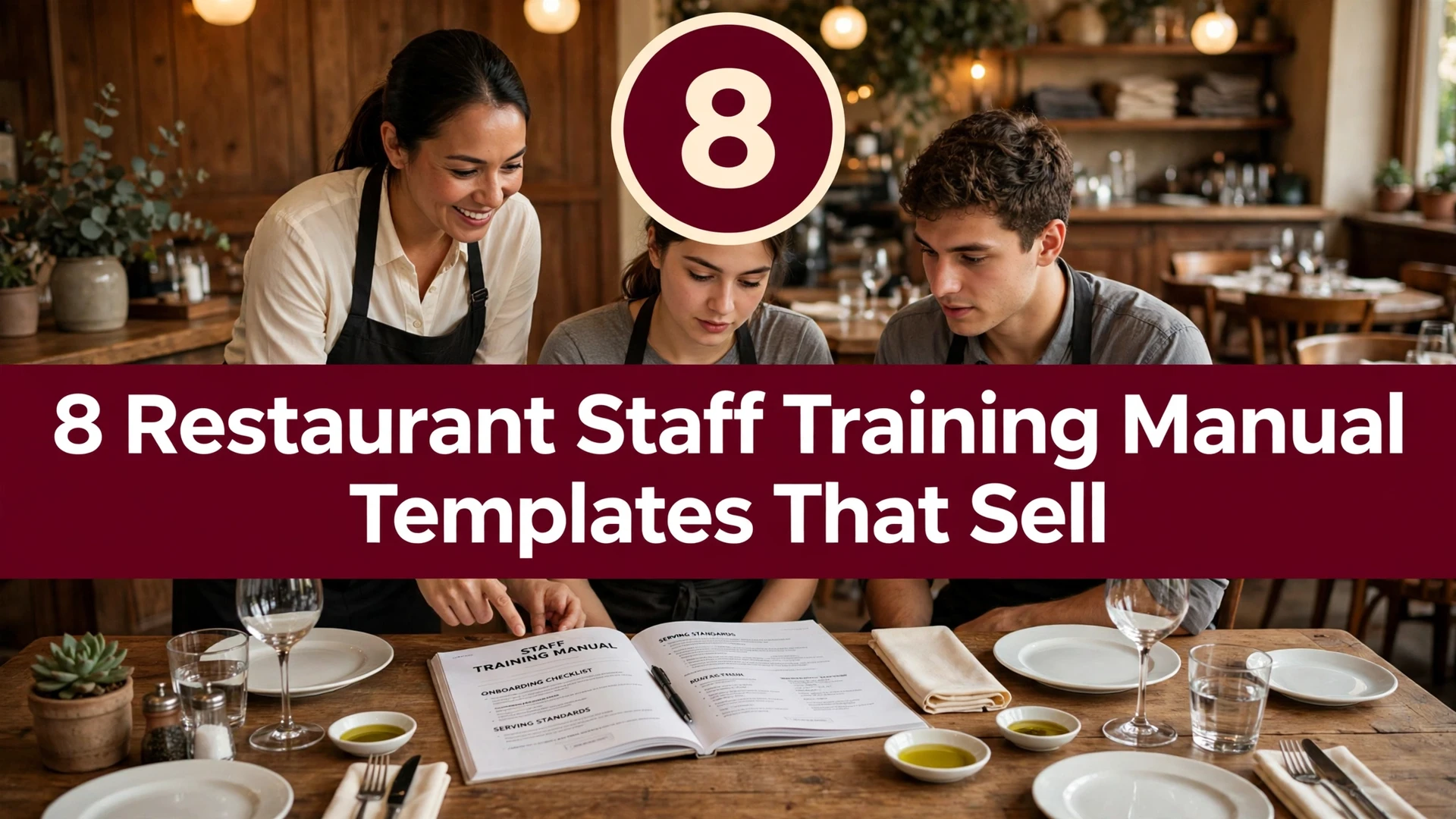
Restaurants run on people, and people need clear training before they ever face a hungry dining room. Yet many restaurant owners still train new hires by shadowing and guesswork, which leads to slow service, food safety mistakes, and staff who quit within weeks. That is why restaurant staff training manual templates sell so well. A good manual gives every role a clear standard: what to do, how to do it, and what great service looks like. If you already sell digital products that sell themselves, these manuals are a strong next product, because every new restaurant and every busy owner is a potential buyer. Here are eight manuals, one for each key restaurant role.
1. Front-of-House Server Service Steps Manual Template
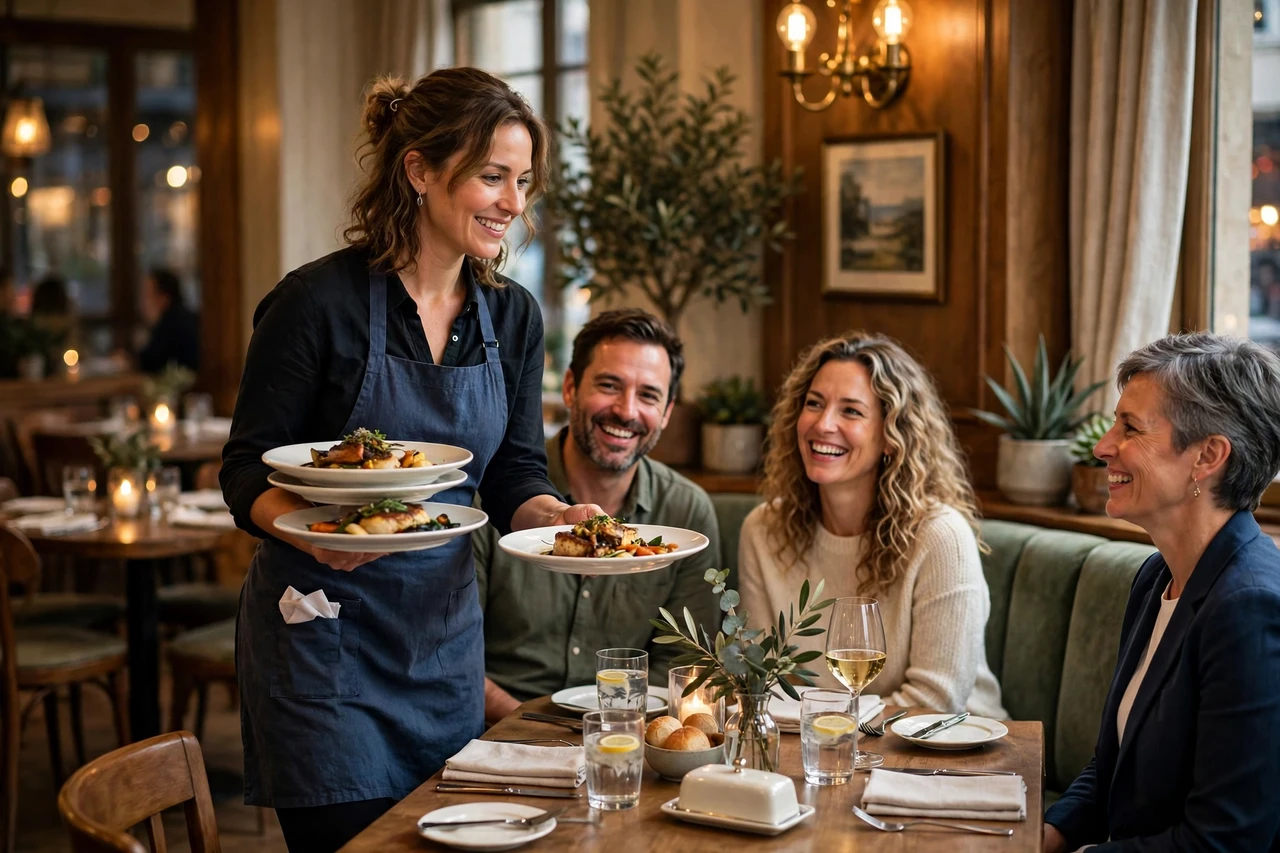
Servers are the face of the restaurant, so this manual sets the full service standard from greeting to goodbye. It covers the steps of service, table numbers and sections, menu knowledge and allergen answers, how to take orders accurately, and how to handle complaints gracefully. It should also explain upselling without being pushy, timing courses with the kitchen, and the checkout and tipping process.
Tip: include a short script for common moments, like greeting a table or explaining a sold-out dish, so new servers sound confident on their first shift. Owners love manuals that reduce the time a new server needs before working a section alone. Add a simple table-side checklist too, covering water refills, clearing finished plates promptly, and checking back within two minutes of serving the main course.
2. Host Stand Greeting and Seating Manual Template

The host sets the first impression, and this manual teaches that job properly. It covers greeting guests warmly, managing reservations and walk-ins, quoting accurate wait times, seating rotation so servers get fair sections, and handling large parties and special occasions. It should also explain phone etiquette, the waitlist system, and what to do when the restaurant is full.
Tip: add a section on reading the room, such as seating families with small children away from quiet anniversary tables. Small details like this are what separate an average host manual from one owners recommend to others.
3. Bartender Drink Recipes and Responsible Service Manual Template
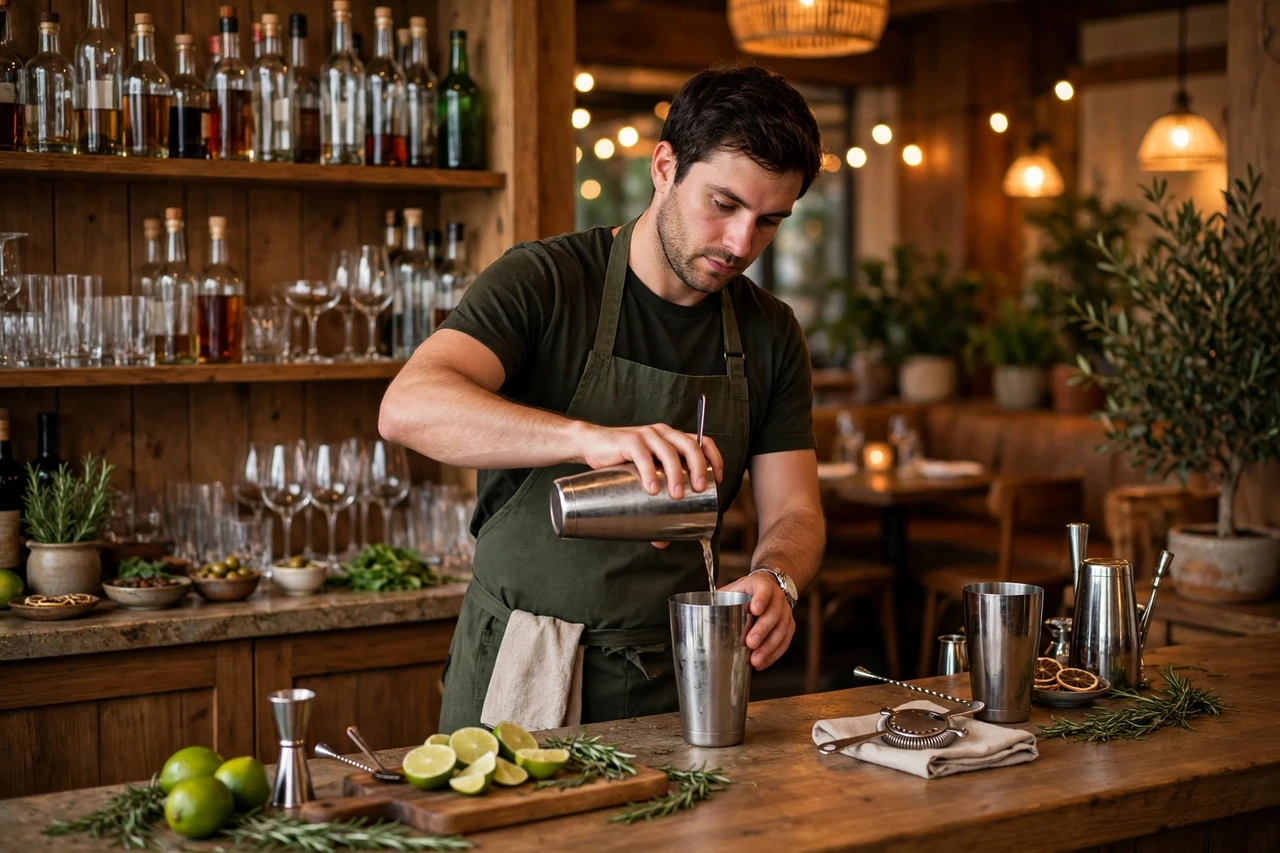
Bartenders need speed, accuracy, and judgment, and this manual covers all three. It includes house cocktail recipes with exact measures, glassware and garnish standards, opening and closing bar duties, and cash and tab handling. Most importantly, it covers responsible alcohol service: checking IDs, spotting signs of intoxication, and refusing service politely and safely.
Tip: add a quick-reference recipe card section that bartenders can keep behind the bar during their first weeks. A manual that doubles as a working tool gets used daily, which leads to better reviews and repeat buyers.
4. Line Cook Station Setup and Recipe Manual Template
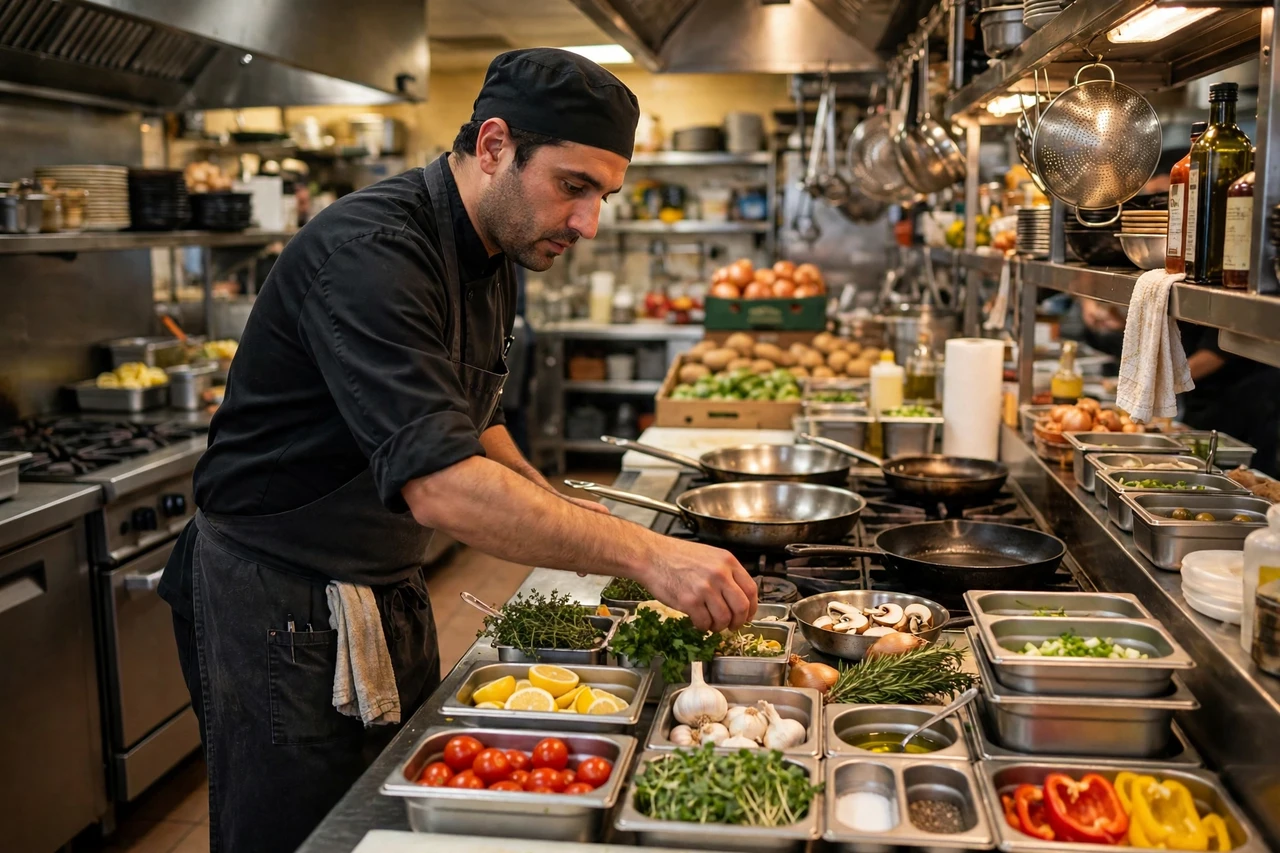
The kitchen lives or dies on consistency, and this manual is the backbone of that consistency. It covers station setup and mise en place, recipe cards with portions and plating photos, ticket timing and communication with the pass, and food safety rules for storage and temperatures. It should also explain cleaning as you go, shift handover notes, and what to do when an ingredient runs out mid-service.
Tip: leave blank recipe card pages at the end so owners can add their own signature dishes. Customizable manuals sell better because every restaurant’s menu is different. Also add a photo standard for each plate, so every cook plates the same dish the same way on a busy Friday night.
5. Dishwasher Sanitation and Safety Manual Template
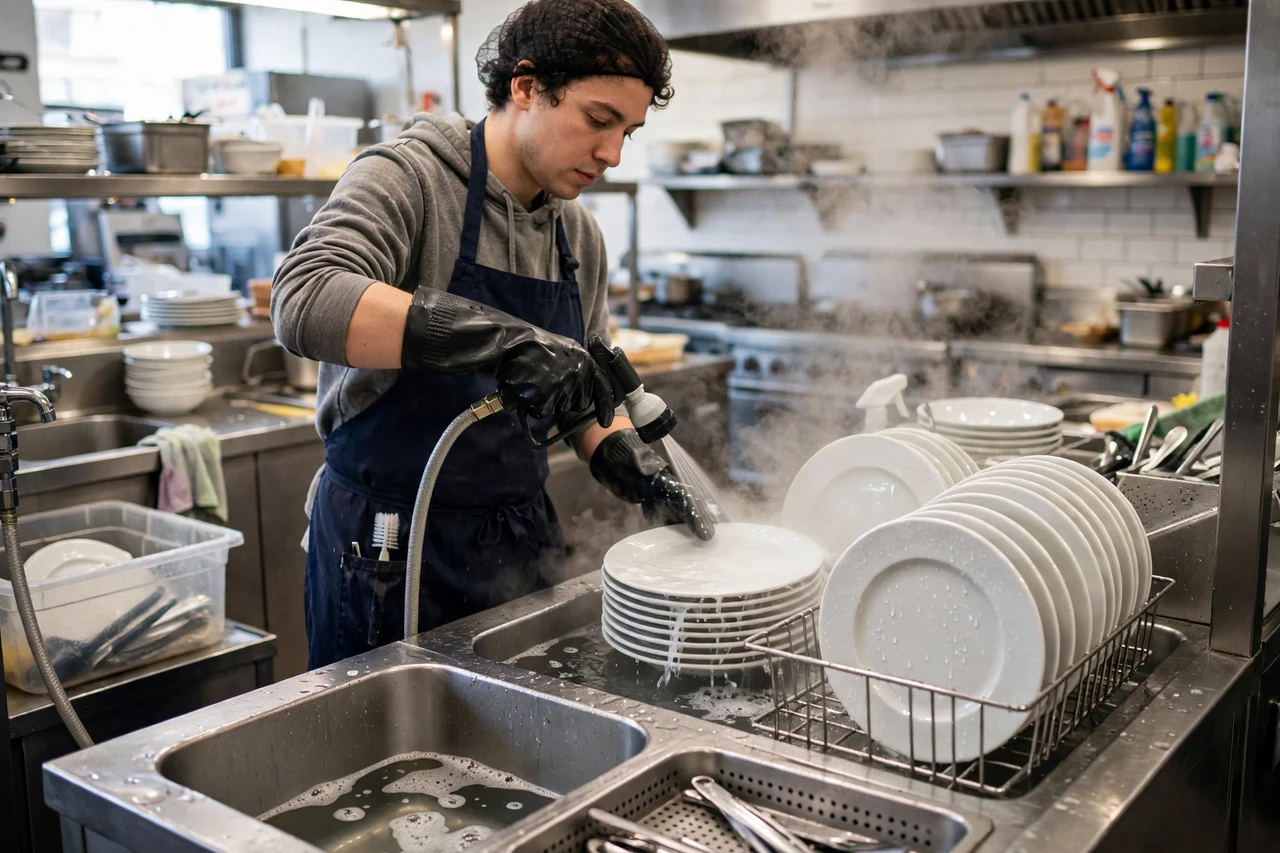
Dishwashers are often the most overlooked role, yet they protect the whole restaurant from health code problems. This manual covers machine operation, chemical handling and safety gear, sorting and stacking, sanitizing surfaces, and trash and recycling routines. It should also explain slip prevention, wet-floor signs, and how to report a broken machine or a pest sighting immediately.
Tip: include a closing checklist with sign-off lines, since a documented sanitation routine matters during health inspections. Owners buy this manual because it turns an entry-level job into a clear, respected system.
6. Food Runner Timing and Table Check Manual Template

Food runners connect the kitchen to the table, and timing is their whole job. This manual covers reading tickets, carrying multiple plates safely, announcing dishes correctly, checking for allergens before serving, and clearing tables without interrupting guests. It should also explain how to communicate delays to servers and when to alert the kitchen about a wrong or missing dish.
Tip: add a simple rule for runners: never serve a dish you cannot name. That one standard prevents awkward moments and wrong orders, and it is the kind of practical detail buyers praise in reviews.
7. Cashier and Takeout Order Accuracy Manual Template
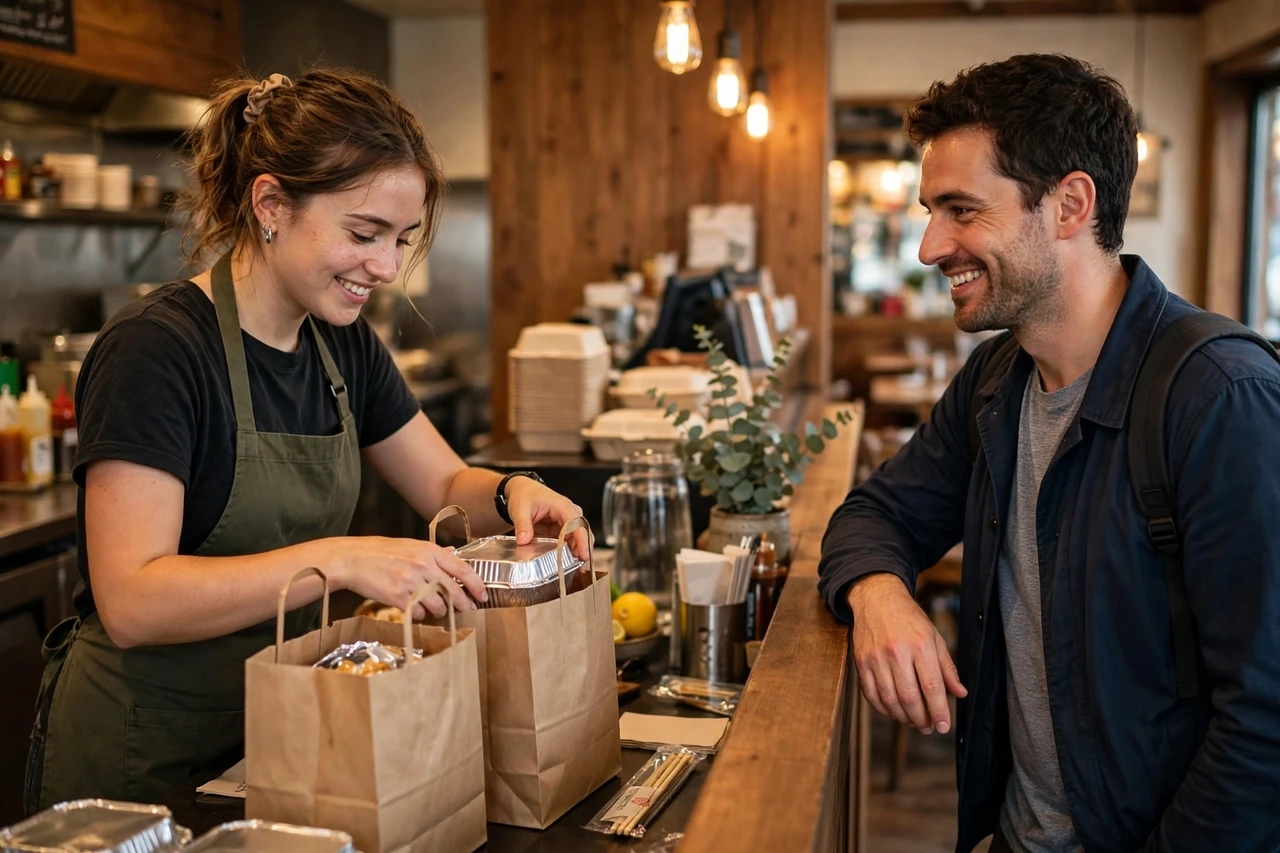
Takeout and delivery orders are a growing share of restaurant revenue, and mistakes cost repeat customers. This manual covers taking phone and online orders, repeating orders back for accuracy, packing hot and cold items separately, including sauces and utensils, and handling payment and refunds. It should also explain curbside pickup steps, delivery handoff, and how to respond when an order is wrong.
Tip: include a packing checklist taped to the takeout station, with boxes for every item category. A manual with a ready-to-print station card feels immediately useful, which helps your listing convert.
8. Shift Lead Closing and Cash Handling Manual Template
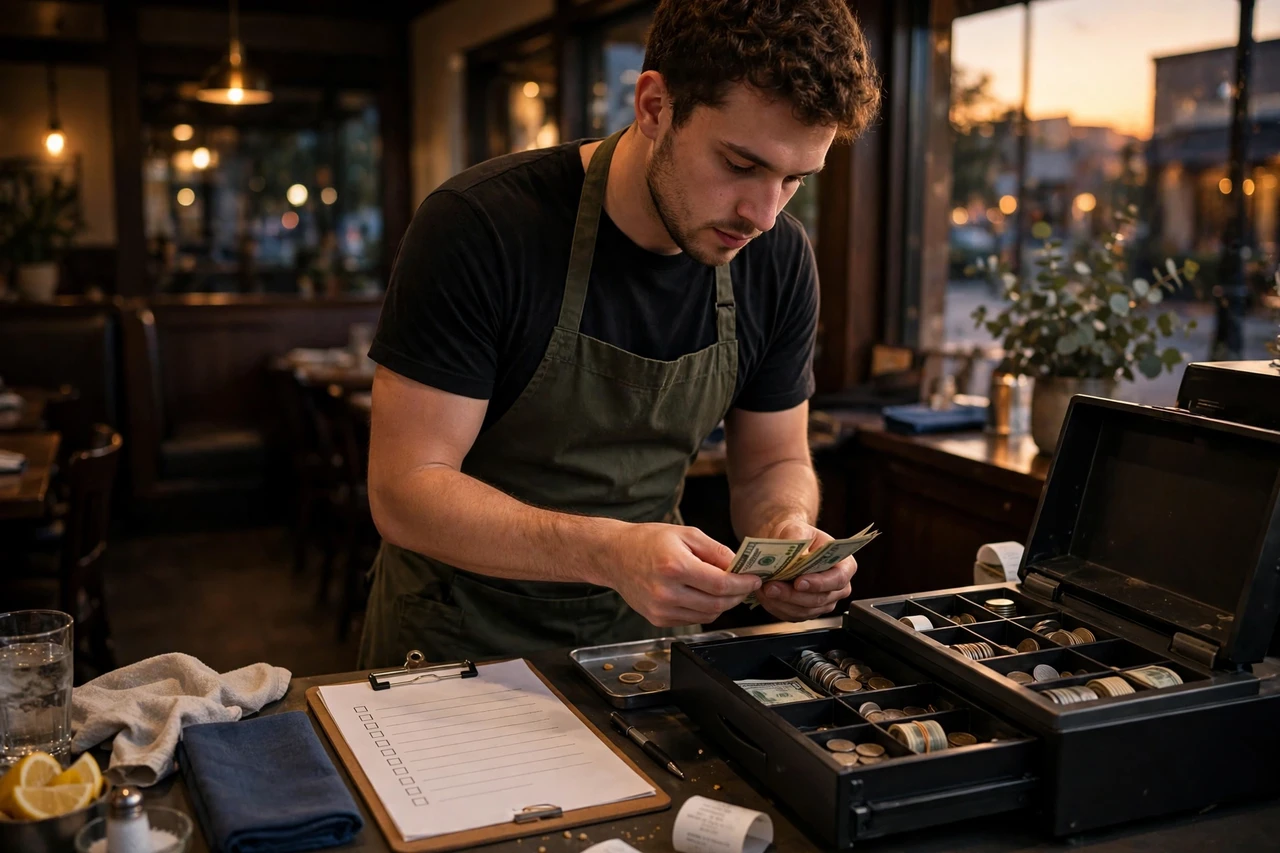
Shift leads carry responsibility after the owner goes home, so this manual gives them a clear closing system. It covers cash counting and safe procedures, tip reporting, locking up and alarm codes, equipment shutdown, and the end-of-night cleaning checklist. It should also explain handling late guests, logging incidents, and writing a handover note for the morning manager.
Tip: add a short section on leading a tired team at the end of a long shift, including fair task assignments and a quick thank-you routine. Manuals that cover leadership, not just tasks, stand out in this niche.
Frequently Asked Questions
What should a restaurant training manual include?
A strong manual covers the role’s daily tasks, service standards, food safety rules, dress code, and communication expectations. It should also include scripts, checklists, and clear steps for common problems. The best manuals are specific enough to use on day one, not vague mission statements.
How long should a restaurant training manual be?
Most role-specific manuals run ten to twenty pages, which is long enough to be useful and short enough that staff actually read it. Keep each section focused on one task, use checklists and photos where possible, and avoid filler that buries the important steps.
Do restaurant owners prefer printable or digital manuals?
Owners usually want both: printable copies for the break room and training binder, plus an editable digital version they can brand with their logo and menu details. Offering PDF and editable formats together makes your template more valuable than a PDF-only listing.
How much can I charge for a restaurant training manual template?
Single role manuals typically sell for fifteen to thirty dollars, while a full bundle covering every role can sell for fifty dollars or more. Restaurant owners see training manuals as a business investment, not a casual purchase, so they will pay for quality and completeness.
Where do restaurant owners buy training manual templates?
Etsy and Creative Market are popular, and many sellers also sell directly from their own websites to restaurant owner groups. Use role-specific keywords in your titles, like “server training manual” or “line cook training manual,” so buyers find exactly the manual they need. If you also create digital marketing templates to sell, cross-promote your manuals to the same small business audience.
Every restaurant needs trained staff, and most owners would rather buy a ready-made system than write one from scratch. That is the opportunity: build one manual per role, make each one practical and customizable, and bundle them into a complete restaurant training kit. Done well, these templates do not just sell — they become the backbone of how small restaurants train their teams.