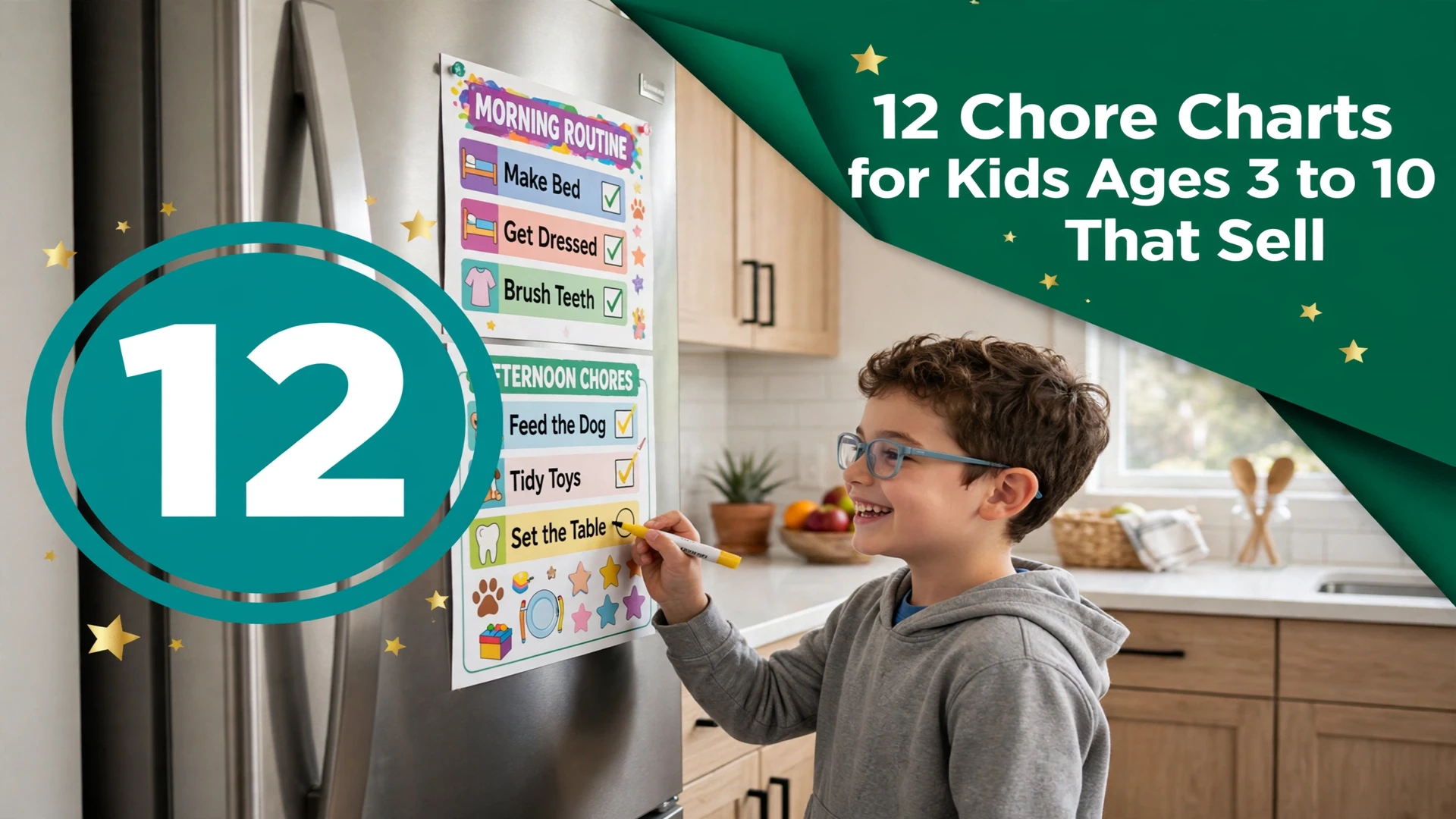
Parents do not buy a chore chart — they buy a calmer household, and that is why chore charts for kids are a steady seller in the printable market. The trick is matching the chart to the child’s age: a three-year-old needs pictures and one simple task, while a ten-year-old wants points, an allowance tracker, and a sense of real responsibility. A chart that fits the age gets used every day, gets recommended to other parents, and brings buyers back for the next age band as their child grows. If you sell printables, age-banded chore charts are a smart niche because one family can buy from you for seven years. Here are 12 chore charts for kids ages 3 to 10 that sell.
1. Age 3 to 4 First Chores Chart With Picture Tasks
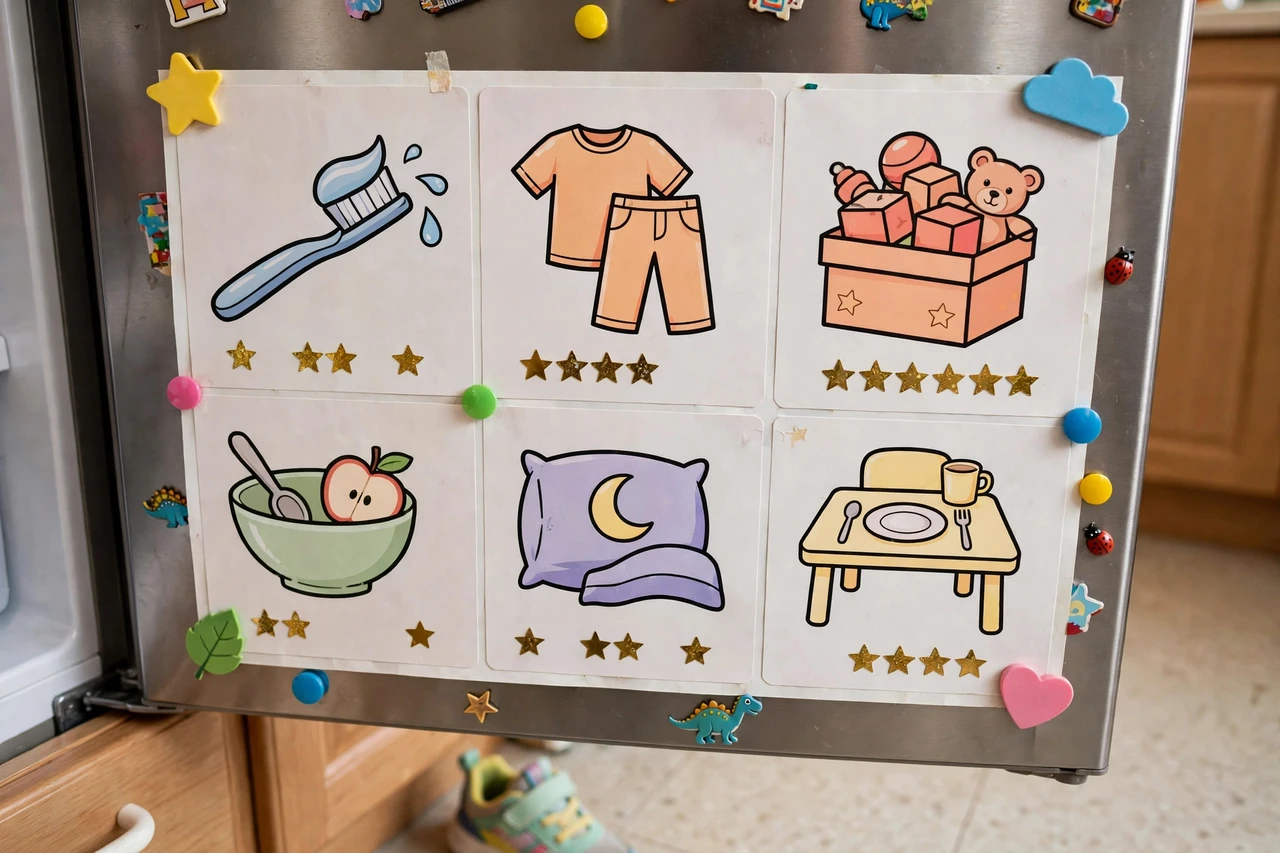
This chart is for the youngest helpers, with four or five picture-only tasks: put toys in the bin, put shoes by the door, help feed the pet, and put dirty clothes in the hamper. No reading is needed, and each task is something a three-year-old can genuinely finish, which matters because a chart full of failed tasks gets abandoned in a week. Parents buy it because it makes a small child feel proud and capable instead of overwhelmed. Use big cheerful pictures and a large star space for each completed task.
Tip: keep the chart to five tasks maximum for this age — a crowded chart looks like work, while a short one looks like a game.
2. Age 5 to 6 Daily Chores Chart With Star Rewards
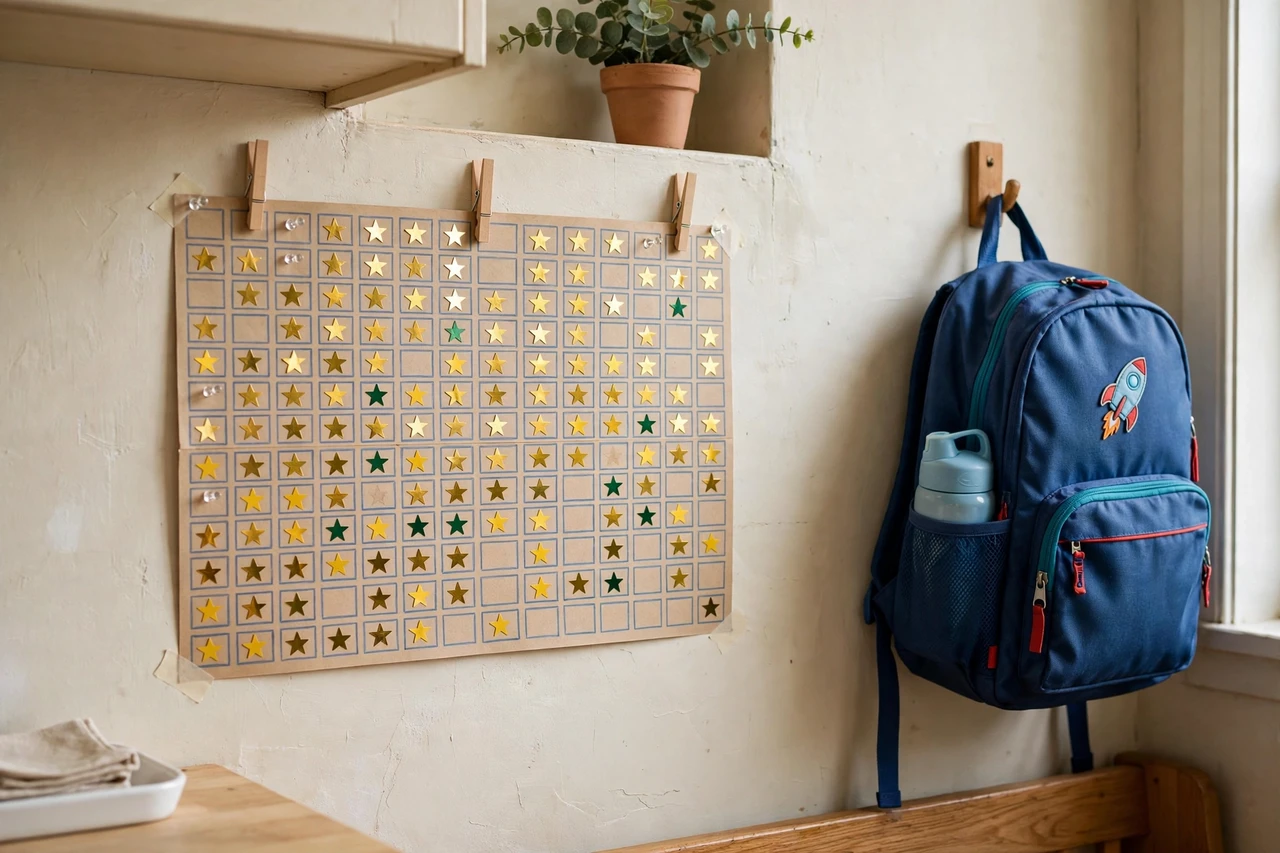
Five- and six-year-olds are starting school and can handle a daily chart: make the bed, clear the plate, brush teeth, tidy the bedroom, and read for ten minutes. A star for each finished task, and a small reward after five stars, is the classic system because it works — the child can see progress building across the week. Parents buy this chart at the start of kindergarten, so it sells well every fall. Add a picture next to each written task so early readers can follow it even while they are still learning words. Families who rely on a sitter after school also like this chart, since a sitter can run the same routine, and babysitting apps that pay sitters in the USA make it easy to find someone who will follow the chart while parents are still at work.
Tip: put the reward box at the end of the week, not the end of the day, so the child learns to stick with tasks for several days before the payoff.
3. Age 7 to 8 Weekly Chores Chart With Points System
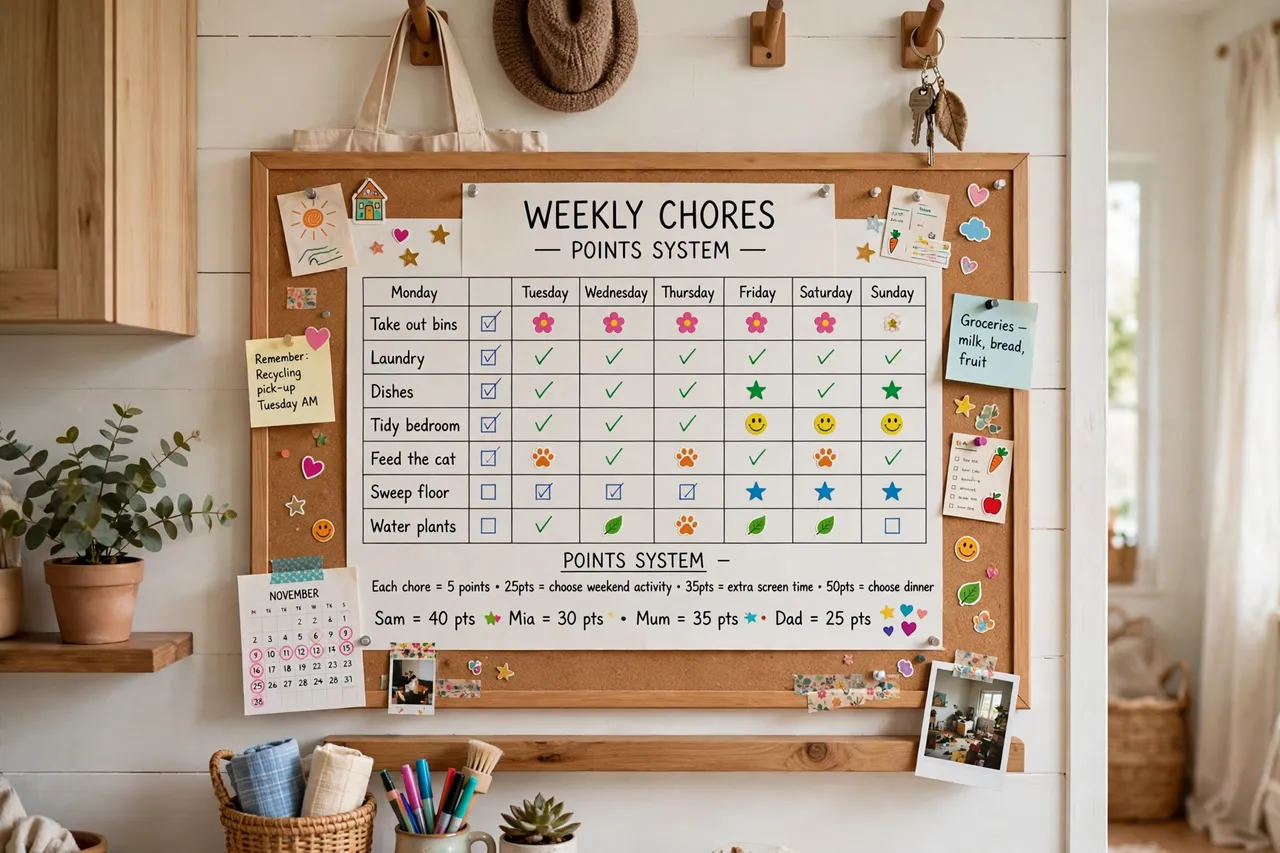
Seven- and eight-year-olds can handle a weekly chart with harder tasks and a points system: take out the trash, help with dishes, water the plants, vacuum one room, and pack their own school bag. Each chore earns points based on difficulty, and points add up to a chosen reward at the end of the week. Parents buy it because points feel like a game and the child starts choosing harder chores to earn more. Include a small menu of rewards the family can pick from, so the chart works for different households.
Tip: make harder chores worth more points and show the point values on the chart itself, so the child can do the math and plan their week.
4. Age 9 to 10 Responsibility Chart With Allowance Tracker

By nine or ten, kids want to feel grown up, so this chart drops the cute stars and uses a responsibility list with an allowance tracker: do laundry, cook one simple meal, clean the bathroom sink, walk the dog, and complete homework before screens. Each finished week earns a set allowance amount, and the tracker shows money building up over the month. Parents buy it because it teaches real money habits alongside responsibility. This is the chart buyers mention most in reviews when it helps a child save for something they want.
Tip: add a “save, spend, share” split on the allowance tracker, so the chart teaches budgeting as well as chores.
5. Bedroom Tidy-Up Chore Chart for Kids
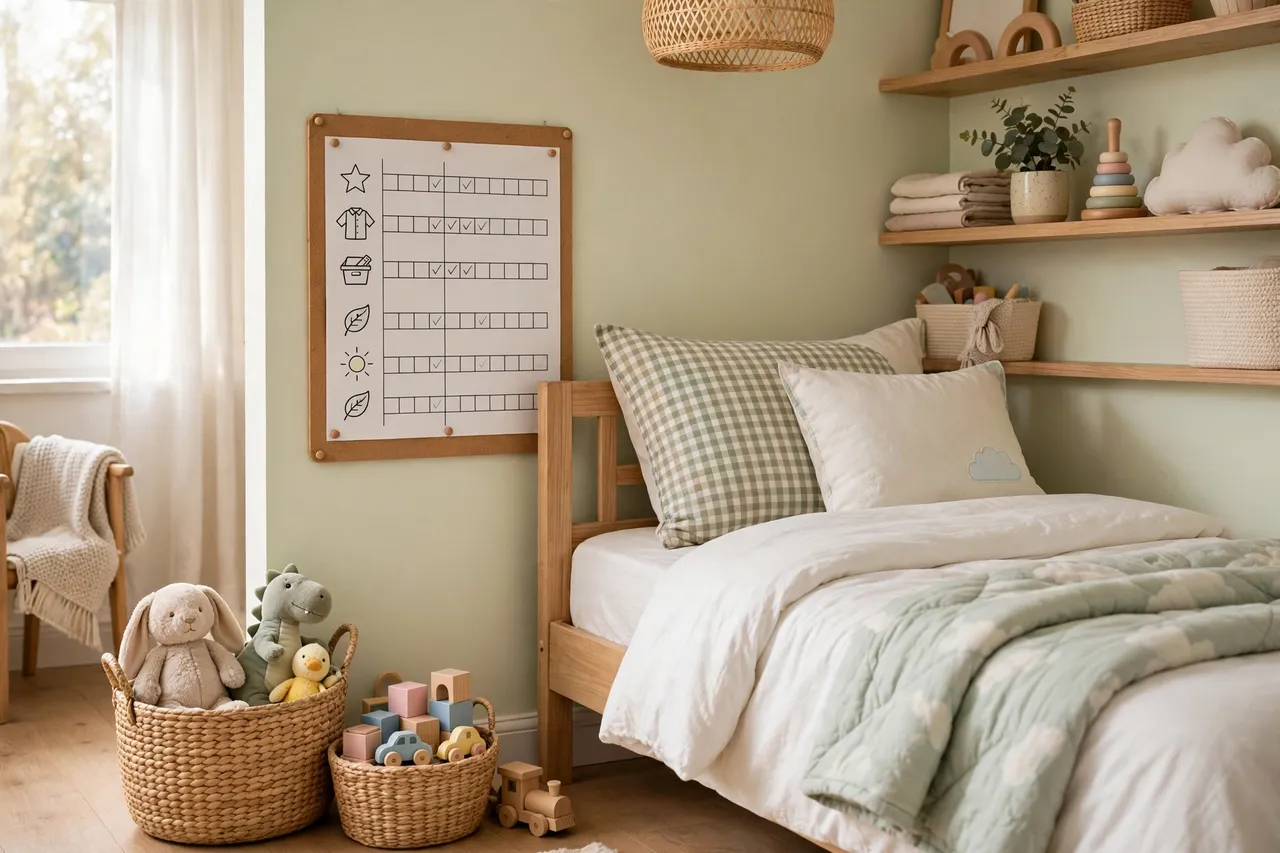
A messy bedroom is the number one chore complaint in most families, so this chart breaks “clean your room” into small steps: make the bed, pick up clothes, put toys away, clear the desk, and take out the trash. Kids buy into it because the steps are specific instead of vague — “tidy your room” means nothing to a seven-year-old, but five clear steps do. Parents buy it because it ends the daily argument about the bedroom. Offer a version with pictures for younger kids and a written version for older ones.
Tip: order the steps so the bed comes first, since a made bed makes the whole room look tidier and gives the child a quick early win.
6. Kitchen Helper Chore Chart for Young Kids
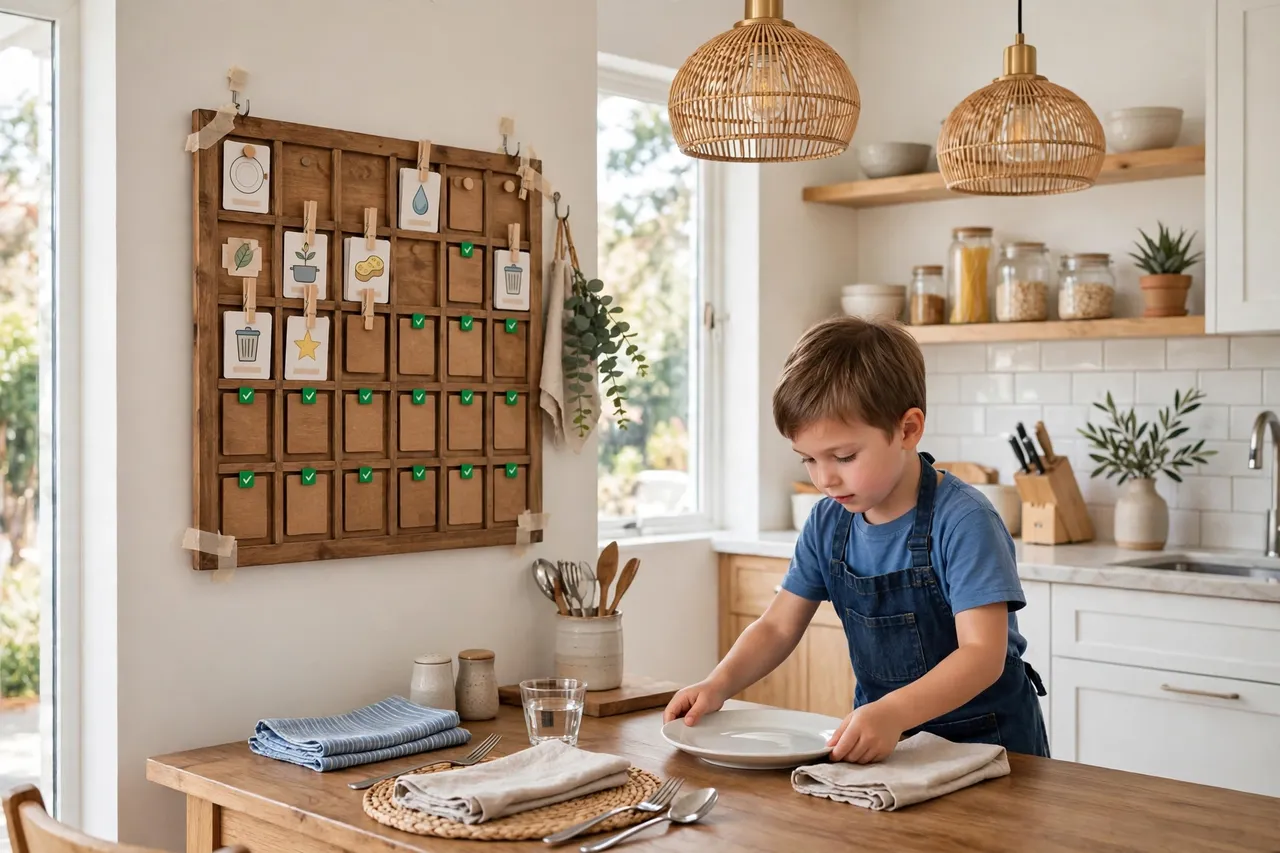
This chart turns kitchen jobs into a helper role kids actually want: set the table, clear plates, wipe the table, help wash vegetables, and put groceries away. It works across ages 3 to 10 because you can assign one row to a younger child and the harder rows to an older one, so one chart serves the whole family. Parents buy it because mealtime chores are daily, which means the chart gets used three times a day and pays for itself in the first week. Use food and kitchen pictures that make the jobs look fun rather than like work.
Tip: include a “chef’s choice” row where the child picks one kitchen job each week, so they feel ownership over at least part of the chart.
7. Pet Care Chore Chart for Kids Ages 3 to 10

Kids beg for a pet, and parents buy this chart to make sure the pet actually gets cared for: fill the water bowl, feed the pet, brush the fur, clean the cage or litter area, and walk the dog. The chart is split by age, with picture tasks for little kids and written tasks with checkboxes for older ones. It sells because it solves the exact argument every pet-owning family has — who was supposed to feed the dog. Include space for the pet’s name and photo, which makes the chart personal and giftable.
Tip: add a weekly “pet health check” row for older kids, like checking water is fresh and the pet has playtime, so the chart teaches care and not just feeding.
8. Homework and Reading Chore Chart for School Kids
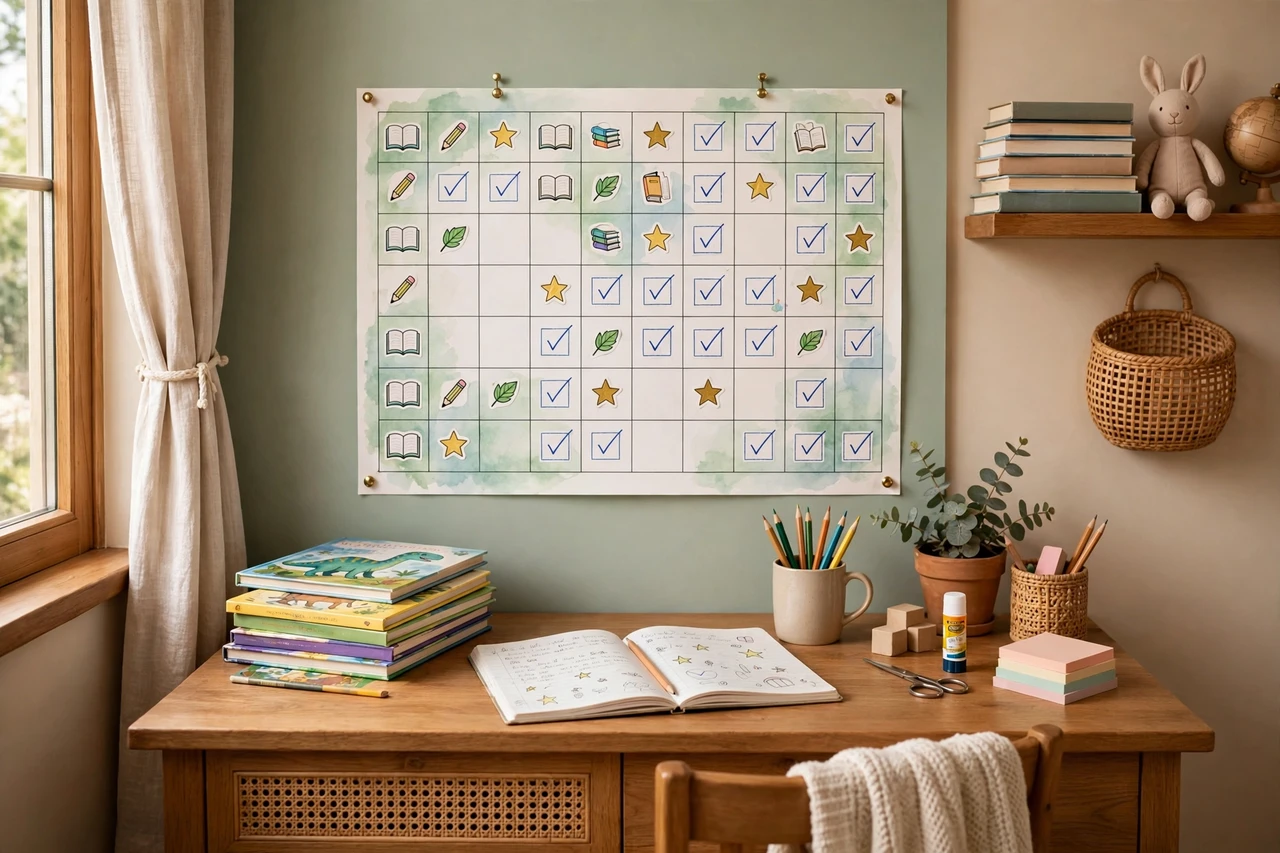
This chart treats homework as a daily routine instead of a nightly battle: unpack the bag, finish homework, read for 20 minutes, pack the bag for tomorrow, and lay out clothes. Parents of school-age kids buy it because the after-school hours are the hardest part of the day, and a chart that runs the routine for them saves an argument every afternoon. It pairs well with the age 7 to 8 weekly chart as a bundle, since the same buyers need both. Keep the design calm and school-themed with books and pencils rather than bright party colors.
Tip: put reading time as its own checked box rather than hiding it inside homework, so the child gets credit for reading as a separate achievement.
9. Bathroom and Self-Care Chore Chart for Kids
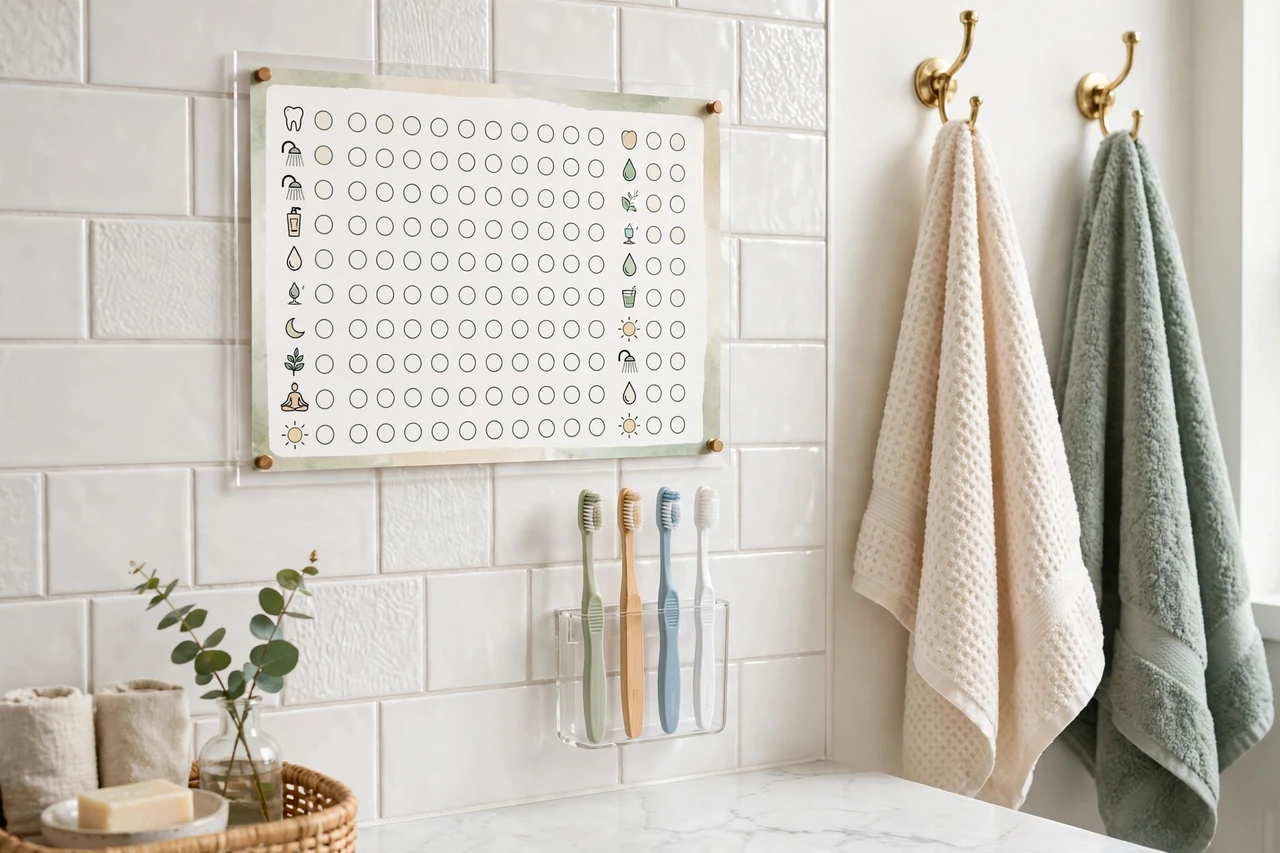
Self-care chores are easy to forget, so this chart covers brush teeth, wash face, wash hands, hang up the towel, and put dirty clothes in the hamper. It works for ages 3 to 10 because younger kids follow the pictures and older kids use it as a morning and evening checklist. Parents buy it because bathroom habits are health habits, and a chart on the bathroom wall is more effective than reminding a child five times a day. Design it to be laminated, and say so in your listing, since buyers hang it where it gets splashed.
Tip: make a morning column and an evening column on the same chart, so one page covers both routines without needing two printouts.
10. Family Teamwork Chore Chart With Shared Jobs
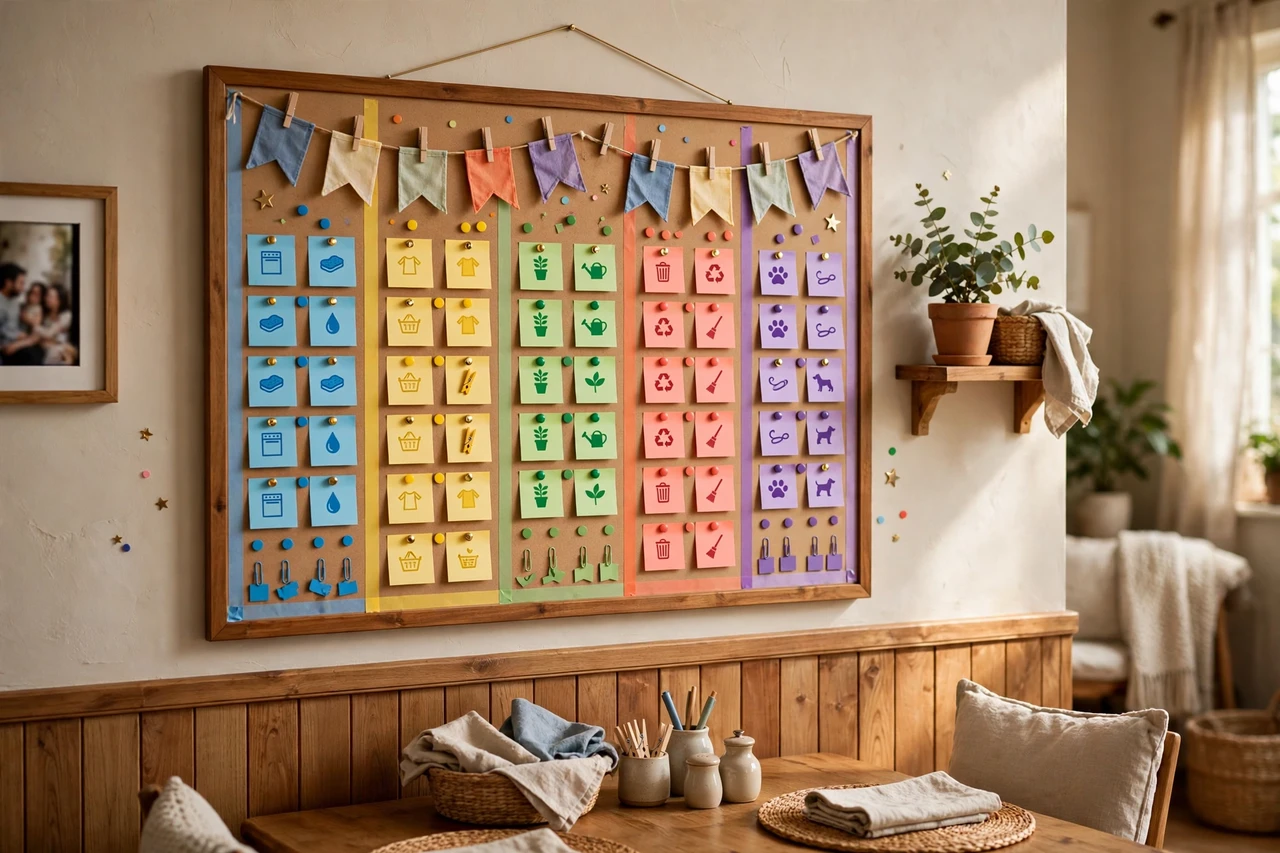
This chart is for the whole family at once: each person gets a color, and shared jobs like setting the table, taking out recycling, and tidying the living room rotate between family members each week. Parents buy it because it stops the “why do I always have to do it” complaint — the rotation is on the wall for everyone to see. It also works for families with a nanny, since the nanny can see at a glance which jobs belong to which child that week, and nanny apps that help families find high-paying nannies often connect parents with caregivers who are used to following household chore systems like this one.
Tip: use a rotating wheel or a weekly column layout rather than a fixed list, so the fairness of the rotation is visible at a glance.
11. Screen-Time Earned Chore Chart for Kids
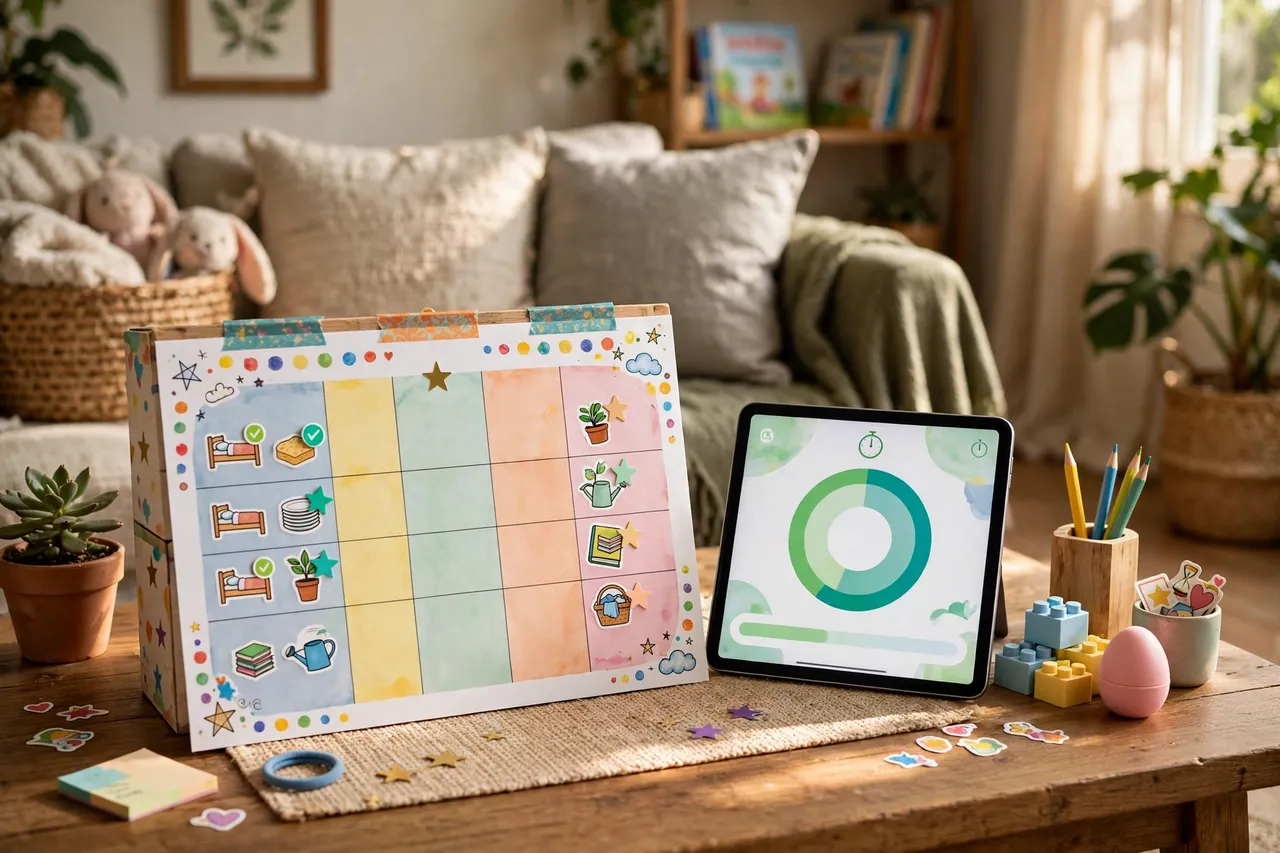
This chart links screen time to finished chores: each completed task earns minutes, and the child trades earned minutes for tablet or TV time. Parents buy it because it ends the screen-time negotiation — the chart, not the parent, decides how much screen time the child has earned. It works best for ages 5 to 10, where kids understand trading effort for a reward. Keep the math simple, like 10 minutes of screen time per chore, and show the running total on the chart so the child can track it themselves.
Tip: cap the total earned screen time on the chart, so the system encourages chores without turning into unlimited screen hours on a productive day.
12. Holiday and Seasonal Chore Chart for Kids
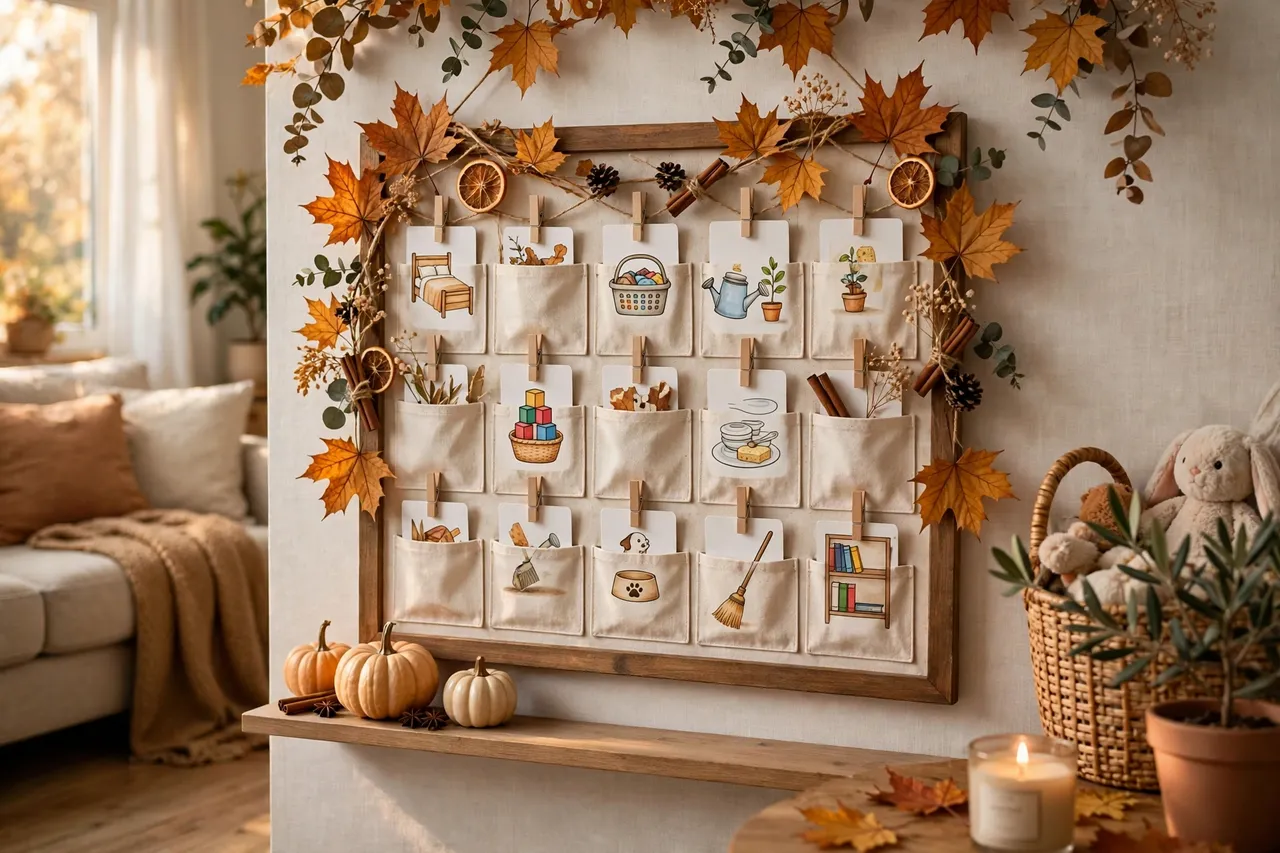
A seasonal chart keeps chores fresh: rake leaves in fall, help decorate in December, spring-clean one drawer a week, and water the garden in summer. Parents buy it because kids get bored of the same chart, and a new seasonal version re-engages them for a few months at a time. It is also a repeat-purchase product — a family that buys the fall chart often comes back for winter and spring. Sell it as a four-season set so buyers get the whole year in one purchase, and update the set each year with fresh illustrations.
Tip: release each seasonal chart six weeks before the season starts, so your listing has time to rank before parents start searching.
Frequently Asked Questions
What age should kids start using a chore chart?
Most kids can start with a picture-only chart around age 3, with one or two very simple tasks like putting toys away. By age 5 they can follow a daily chart with stars, and by age 9 they are ready for a points or allowance system with real responsibility.
How many chores should be on a kids’ chore chart?
Three to five tasks for ages 3 to 6, and five to seven for ages 7 to 10. More than that overwhelms younger kids and makes older kids rush through tasks just to finish the list, so keep the chart short enough to complete every day.
Do chore charts work better with rewards or allowance?
Stars and small rewards work best for ages 3 to 7, while points and allowance work better for ages 8 to 10. The key is matching the reward to the age: little kids want a sticker today, older kids want money building toward something they want.
Should each child have their own chore chart?
Yes, in most families. A shared family chart works for rotating shared jobs, but each child should also have their own chart matched to their age, so a three-year-old is not compared with a ten-year-old on the same tasks.
How do I sell chore charts as a bundle?
Bundle by age band — for example ages 3 to 5, 6 to 8, and 9 to 10 — or bundle by theme, like a bedroom, kitchen, and homework set. Age-band bundles sell best because parents buy the next band as their child grows, which brings them back to your shop.
The best chore charts for kids are the ones matched to the child’s age, with pictures for little kids, points for middle kids, and real responsibility for older ones. Start with one age band, design it well, and let your buyers grow with you — a family that buys your age 3 to 4 chart today is the same family buying your age 9 to 10 chart in a few years.