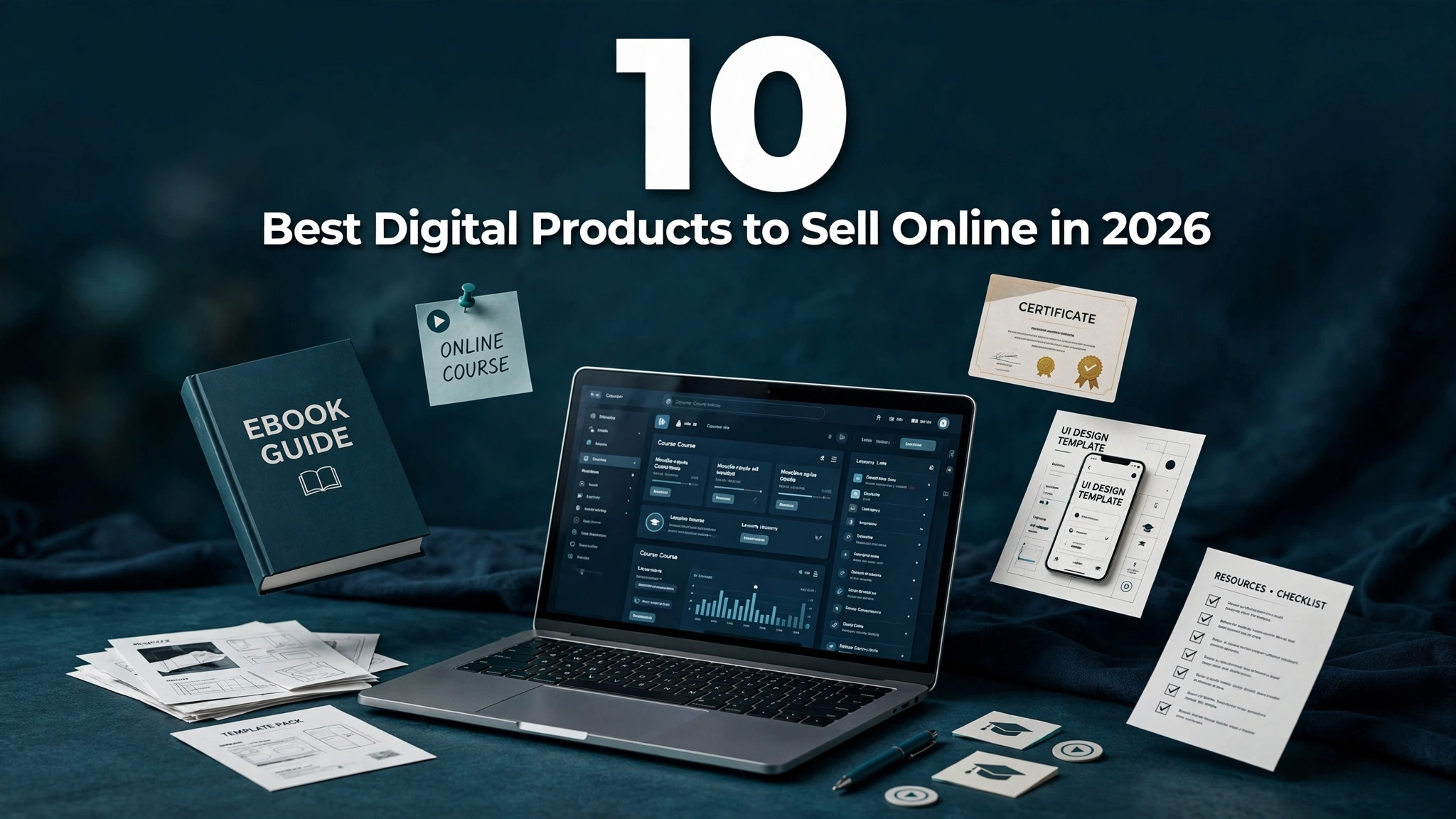
Digital products are one of the smartest ways to build income online: you create them once and sell them over and over, with no inventory, no shipping, and almost no ongoing costs. Whether you are a designer, a writer, or a complete beginner, there is a digital product you can make this week. Here are the 10 best digital products to sell online in 2026.
1. Ebooks & How-To Guides

A short, focused ebook on something you know well can sell for years. Pick a specific problem — meal planning on a budget, beginner gardening, freelance taxes — and solve it in 30 to 60 pages. Write it in Google Docs, design a simple cover in Canva, and sell it on Gumroad or your own site for $9 to $29.
2. Mini Online Courses

You do not need a Hollywood studio to sell a course. A mini course with 10 to 20 short video lessons recorded on your phone can earn steady sales on platforms like Teachable or Udemy. Teach a concrete skill — Excel basics, watercolor florals, sourdough baking — and price it between $29 and $99.
3. Notion Templates & Dashboards

Notion’s user base keeps growing, and people happily pay for well-built templates. Budget trackers, content calendars, project dashboards, and habit systems sell for $5 to $25 on Gumroad and the Notion template gallery. If you already organize your life in Notion, package your best setup and sell it.
4. Resume & Cover Letter Templates

Job seekers pay for resumes that stand out. Clean, ATS-friendly resume and cover letter templates in Word and Canva formats sell consistently on Etsy and Creative Market. Create 5 to 10 designs in different styles, bundle them, and you have a product that sells with almost no updates needed.
5. Lightroom Presets for Photographers

If you edit photos, your editing style is a product. Lightroom presets — one-click filters that give photos a consistent look — sell for $10 to $40 a pack to hobbyist photographers and influencers. Create themed packs like “moody portraits” or “bright travel” and sell them on your own site or Creative Market.
6. Stock Photos & B-Roll Video Clips
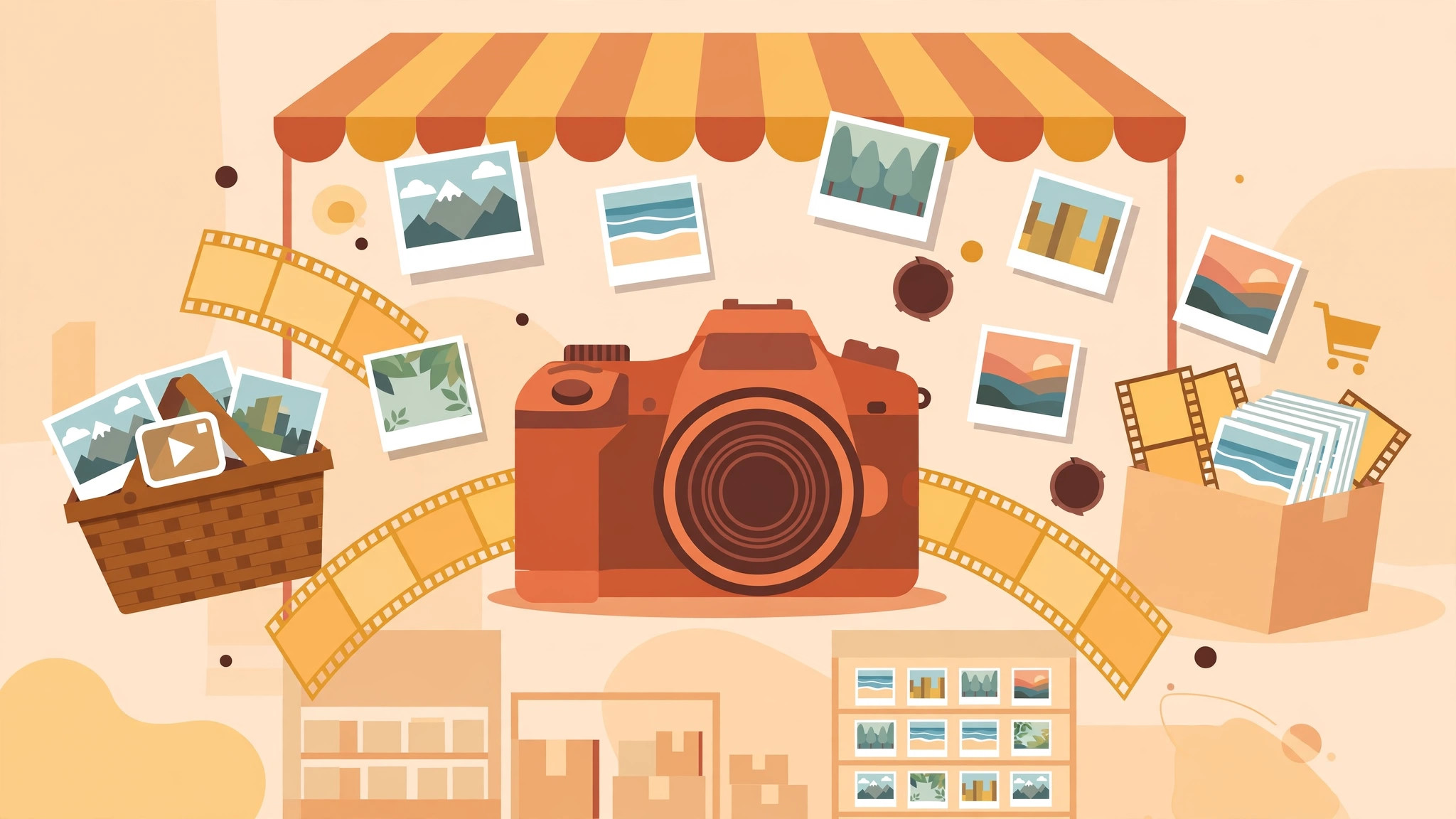
Businesses, bloggers, and video creators constantly need fresh visuals. If you shoot photos or short video clips, upload them to stock sites like Adobe Stock or sell curated packs directly. Niche collections — diverse workplaces, small-town America, home office setups — tend to sell better than generic shots.
7. Fonts & Typography Packs

Designers are always hunting for fresh typefaces. If you can draw letters, a single font family with a few weights can sell for $15 to $60 on Creative Market or MyFonts. Even simpler: hand-lettered script fonts and decorative display fonts remain strong sellers year after year.
8. Royalty-Free Music & SFX Packs

Video creators, podcasters, and game developers need music and sound effects they can legally use. If you produce music, bundle tracks into themed packs — lo-fi background loops, cinematic intros, UI sound effects — and sell them on Pond5, AudioJungle, or your own store with a simple commercial license.
9. Website Themes & Landing Page Kits

Small businesses want professional websites without hiring a developer. Website themes for WordPress or landing page kits for Carrd, Framer, and Webflow sell for $30 to $100. Build one polished template in a popular niche — coaches, restaurants, portfolios — and sell it repeatedly with minor updates.
10. Budget & Finance Spreadsheet Trackers

Spreadsheets do not sound glamorous, but money trackers are evergreen sellers. Budget planners, debt payoff calculators, and small business bookkeeping sheets for Google Sheets or Excel sell for $5 to $20 on Etsy. Build it once, and it keeps selling while you sleep.
Frequently Asked Questions
What are digital products, and why do beginners like them?
Digital products are files customers download — ebooks, templates, presets, courses. Beginners like them because there is no inventory or shipping, startup costs are near zero, and one product can generate sales for years after the initial work is done.
What is the easiest digital product to sell for a first-timer?
Spreadsheet trackers and simple templates are the easiest starting point. They require no special software beyond Google Sheets or Canva, take an afternoon to build, and there is proven buyer demand on marketplaces like Etsy and Gumroad.
Do I need a website to sell digital products online?
No. Marketplaces like Etsy, Gumroad, and Creative Market handle payments and delivery for you. A website helps as you grow, but you can make your first sales with just a marketplace listing and a free social media account for promotion.
How do I price my first digital product?
Look at what similar products sell for, then price slightly below the average while you gather reviews. Simple templates do well at $5 to $15, ebooks at $9 to $29, and courses or theme kits at $29 to $99. You can always raise prices later.
Do I need design skills to create digital products?
Not necessarily. Many top sellers use free tools like Canva and Google Sheets. For products like ebooks or spreadsheets, clear organization matters more than fancy design. Start with what you can make today and improve with each product.
How much can beginners realistically earn selling digital products?
Most beginners earn $50 to $500 per month from their first few products. Sellers who keep publishing — adding new products monthly and promoting them — often reach $1,000 or more per month within a year. It compounds: every product you add keeps selling alongside the rest.