
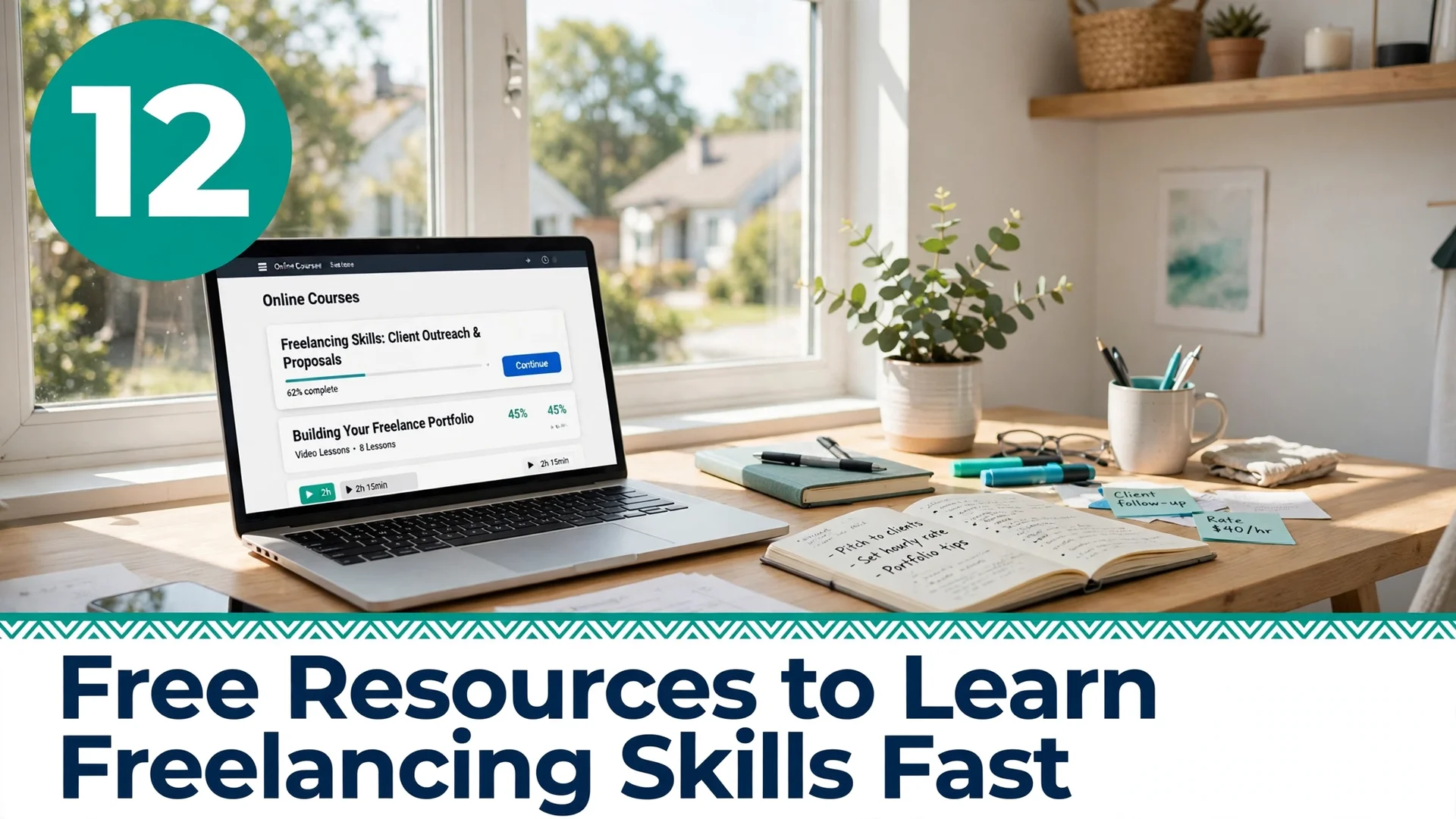
Learning to freelance does not have to cost anything. These free resources to learn freelancing cover courses, practice tools, and communities, and each one teaches a skill you can actually sell — writing, design, video, coding basics, or client management. The trick is not collecting resources but finishing one course and building samples with it. If you are starting from zero, starting freelancing with no experience explains the order to follow. Pick two resources from this list, work through them properly, and you will be further ahead than someone who bookmarked fifty and finished none.
1. Coursera Audit Mode for Free University Courses
Coursera lets you audit many university courses for free, which means you can watch all the lectures and read the materials without paying for the certificate. Search for beginner courses in writing, marketing, graphic design, or data analysis from real universities, and treat the audit like a real class with a weekly schedule. The certificate is optional; clients care about your portfolio, not a PDF badge.
Start with one course that matches the skill you want to sell, and build a sample project from each module as you go. A completed audit course plus three samples is a stronger pitch than a paid certificate with nothing to show for it.

2. YouTube Creator Playlists for Hands-On Practice
YouTube is the largest free skills library in the world, but only if you use playlists instead of drifting between random videos. Find two or three creators who teach your chosen skill step by step — video editing, Canva design, Excel, or copywriting — and work through their beginner playlist in order, pausing to practice each lesson. Channels that assign small projects beat channels that only explain theory.
Keep a practice folder where every lesson produces something: an edited clip, a designed graphic, or a rewritten ad. After twenty lessons you will have a body of work, and the best pieces become your first portfolio.

3. HubSpot Academy Free Marketing Certificates
HubSpot Academy offers genuinely free courses in content marketing, email marketing, social media, and inbound sales, each ending with a certificate you can add to a freelance profile. The lessons are short, practical, and built around real business examples rather than abstract theory. For freelancers, the email marketing and content marketing courses are the most directly sellable.
Finish one course in a weekend, then immediately apply it: write a sample email sequence or a content plan for a fictional business. HubSpot’s name on your profile also reassures small business clients who recognize the brand.

4. Google Skillshop and Grow With Google Lessons
Google’s free learning platforms cover digital marketing fundamentals, data analytics basics, project management, and UX design foundations. Grow With Google’s career certificates have free audit-style paths, and Skillshop offers short courses on Google Ads, Analytics, and business profiles. These are especially useful if you want to offer services to local businesses that live on Google search and maps.
Pick the path closest to your freelance service, complete the exercises rather than just watching, and add the finished certificate to your Upwork or Fiverr profile. Local SEO and ads support are services small businesses understand and pay for.

5. Khan Academy for Foundational Business Math
Freelancers who handle bookkeeping, pricing, or data work need solid basic math, and Khan Academy teaches it better than almost any paid course. Its free lessons cover percentages, spreadsheets logic, basic statistics, and personal finance, all with practice exercises that check your answers instantly. This is the unglamorous foundation that makes your paid skills more trustworthy.
Spend thirty minutes a day on the topics your chosen skill needs — pricing math for bookkeeping, statistics for data work — and you will avoid the calculation mistakes that cost beginners clients. Khan Academy is also completely free with no trial clock.

6. FreeCodeCamp for Beginner Web Skills
FreeCodeCamp is a free, nonprofit platform that teaches responsive web design, JavaScript basics, and data visualization through interactive lessons and five certification projects per course. You learn by building real pages from the first lesson, not by memorizing definitions. Even if you plan to use no-code tools, understanding basic HTML and CSS makes you faster and more capable with client websites.
Complete the responsive web design course and you will have five finished projects for your portfolio. That is enough to start offering simple website fixes and landing pages while you continue learning.

7. Canva Design School for Visual Basics
Canva Design School offers free short courses on design fundamentals, branding, typography, and social media design, taught with Canva’s own free tool. The lessons are practical: you learn a principle, then apply it to a real template in the same session. For a beginner designer, this beats a long theory course because every lesson ends with a usable piece of work.
Work through the design basics and branding courses, then redesign three real local business graphics as portfolio pieces. Canva skills combined with a small portfolio can win your first design clients within weeks.

8. Meta Blueprint Free Social Media Courses
Meta Blueprint is Meta’s official free training for Facebook and Instagram marketing, covering ads, content strategy, and business tools. The courses explain how the platforms actually work from the inside, which is valuable if you want to manage social accounts or run ads for small businesses. Lessons are short and self-paced, with quizzes to confirm understanding.
Start with the social media marketing foundations, then practice by running a content plan for a fictional local business. Clients who advertise on Facebook and Instagram trust freelancers who understand Meta’s own tools and terminology.

9. Alison Free Diploma-Style Skill Courses
Alison offers thousands of free courses in business, marketing, IT, and languages, including longer diploma-level paths that suit learners who want structure. The free tier includes full course content, with certificates available if you choose to pay later — but the learning itself costs nothing. Its project management and digital marketing diplomas are popular with new freelancers.
Choose one diploma path that matches your service, set a weekly lesson target, and build a sample from every major module. A structured path helps if you struggle to stay motivated with scattered YouTube videos.

10. OpenLearn From The Open University
OpenLearn is the Open University’s free platform, offering hundreds of short courses in business, writing, communication, and digital skills. The courses are well-written, self-paced, and free of advertising or upselling pressure. Its business communication and money management courses are particularly useful for freelancers who need to write professionally and manage their own finances.
OpenLearn courses are shorter than full university modules, so you can finish one in a few evenings. Pair each course with a practical output — a rewritten proposal, a budget template — and your learning turns directly into portfolio material.

11. Your Local Library’s Free LinkedIn Learning Access
Many US public libraries offer free LinkedIn Learning access with a library card, unlocking thousands of professional courses in design, video, business, and software that normally cost a monthly subscription. Check your library’s website for digital resources or ask a librarian — this benefit is widely available and widely overlooked. All you need is a free library card.
Use this access strategically: pick one expert-led course in your chosen skill, complete it within a month, and download your practice files as portfolio pieces. Library access often also includes free ebooks and audiobooks on freelancing itself.

12. Free Portfolio Builders and Feedback Communities
Learning a skill is only half the job — you also need somewhere to show it and people to critique it. Behance, Contently, and GitHub Pages let you publish a free portfolio, while Reddit communities like r/freelance and skill-specific Discords give honest feedback from working freelancers. Post your work early and often, and ask specific questions instead of general ones to get useful answers.
Build a simple one-page portfolio with five samples, share it in two communities for feedback, and revise based on what you hear. This free feedback loop is what turns course knowledge into client-ready work, and it costs nothing but your time. Browse freelancing jobs for beginners once your portfolio is ready to see which services match what you have built.

Frequently Asked Questions
Are free freelancing courses really enough to get clients?
Yes, because clients buy results, not certificates. A free course plus a portfolio of strong samples beats an expensive course with no samples every time. Use free resources to learn, then prove the skill with real work, even if your first samples are for fictional businesses.
How do I choose between so many free resources?
Match the resource to the skill you want to sell, not to what looks interesting. If you want to design, use Canva Design School; if you want to write, use HubSpot Academy. Two focused resources finished completely will take you further than ten half-finished ones.
Do free certificates help on Upwork or Fiverr?
They help a little, especially recognizable names like Google, HubSpot, and Meta, but they never replace samples and reviews. Put certificates on your profile, then lead your proposals with portfolio links and a clear offer. Reviews from real clients quickly matter more than any certificate.
How long does it take to learn freelancing for free?
Most beginners can reach a sellable level in one to three months with one to two hours of daily practice. Writing and design skills tend to be faster, while coding and video editing take longer. Set a deadline for your first pitch rather than learning indefinitely, since real client work accelerates learning dramatically.
What is the biggest mistake beginners make with free resources?
Collecting instead of finishing. Bookmarking fifty courses feels productive but produces nothing a client can buy. Pick one resource, finish it, build samples, and pitch. You can always return for a second skill once the first one is earning.


