Starting freelancing with no experience can feel impossible — every job posting seems to want a portfolio you don’t have yet. But every successful freelancer started exactly where you are now. The difference between those who make it and those who quit is simple: a clear, step-by-step plan instead of random guessing.
This guide gives you a practical 15-step roadmap to go from complete beginner to your first paying freelance client — and beyond, to steady, scalable income. Follow the steps in order, and you could be earning your first freelance income within a few weeks.
1. Choose One Beginner-Friendly Skill to Start With

Don’t try to learn five skills at once. Pick one service beginners can learn quickly — writing, graphic design basics, social media management, or virtual assistance are all solid starting points. One focused skill beats five half-learned ones when a client is deciding whether to hire you.
2. Learn the Fundamentals Free in 14 Days

You don’t need an expensive course to begin. YouTube tutorials, free HubSpot and Google courses, and practice projects can teach you the fundamentals of most beginner freelance skills in about two weeks of focused effort. Set a daily learning schedule and treat it like a job — consistency matters more than talent at this stage.
3. Create Three Sample Projects for Your Portfolio

Clients hire based on proof, not promises. Before applying anywhere, create three sample projects that show what you can do — write sample blog posts, design mock logos, or manage a practice social media account. These samples become your portfolio, and they’re what turn “no experience” into “here’s what I can do for you.”
4. Set Up Profiles on Two Freelance Marketplaces

Upwork and Fiverr are the two most beginner-friendly platforms for landing first clients. Create complete profiles on both, including a professional photo, a clear headline stating your service, and your three portfolio samples. A complete, polished profile dramatically increases your chances of getting noticed.
5. Write a Profile That Speaks to Client Problems

Most beginner profiles say “I’m a hard worker looking for opportunities” — clients ignore these. Instead, describe the specific problem you solve: “I help small businesses publish consistent blog content that attracts customers.” When your profile mirrors what clients are already searching for, inquiries come to you.
6. Define Your First Simple Service Package

Vague offers like “I do writing” don’t sell. Package your service clearly: “5 SEO blog posts per month, delivered weekly, with one revision included.” A defined package makes it easy for clients to say yes because they know exactly what they’re getting, when, and for how much.
7. Price Your First Gigs to Win Reviews, Not Riches

Your first few projects are about building a reputation, not getting rich. Price competitively — even slightly below market — to win those crucial first reviews. Five-star ratings on your early gigs become the social proof that lets you charge premium rates later.
8. Send Your First Ten Pitches This Week

Clients won’t find you by accident in the beginning. This week, send ten personalized pitches — not copy-paste templates, but messages that reference the client’s actual business and explain how you can help. Ten thoughtful pitches beat a hundred generic ones every time.
9. Deliver Early and Communicate Clearly

Once you land a gig, over-deliver. Submit work before the deadline, ask smart clarifying questions, and keep the client updated on progress. Beginners who communicate well get rehired and referred far more often than skilled freelancers who disappear for days.
10. Turn First Reviews into Higher-Paying Work

After three to five completed projects with positive reviews, raise your rates. Update your profile with testimonials, add your best work to your portfolio, and start targeting bigger clients. This is the moment freelancing shifts from “side experiment” to real income — and it all started with step one.
11. Set Up a Simple Contract and Invoicing System
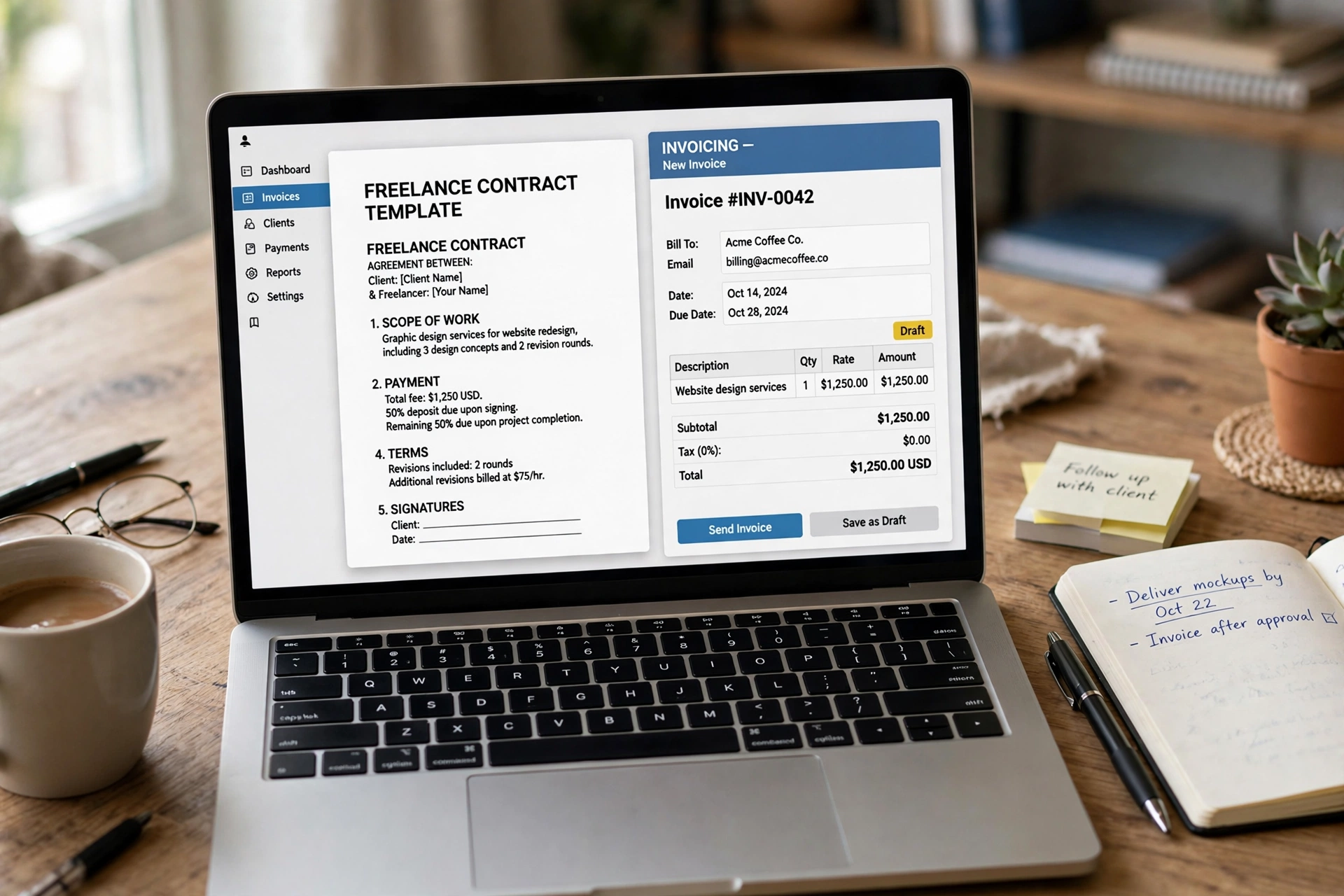
Once real money is involved, protect yourself with basics: a one-page contract covering scope, deadlines, payment terms, and revision limits. Free templates from sites like AND CO or HoneyBook work fine for beginners — you don’t need a lawyer for your first $500 project. Pair it with simple invoicing (PayPal, Wave, or Stripe all offer free invoice tools) and always require payment terms in writing before starting work. This single step prevents the most common beginner nightmare: doing the work and then chasing payment for weeks.
12. Track Your Income and Set Aside Money for Taxes

Freelance income doesn’t have taxes withheld, so the IRS expects you to handle it yourself — and surprises in April are brutal. Open a separate checking account for freelance money, log every payment in a simple spreadsheet, and transfer 25–30% of each payment into a tax savings account the day you get paid. If you expect to owe more than $1,000 in taxes for the year, you’ll need to make quarterly estimated payments. This habit takes ten minutes a month and is the difference between a thriving freelancer and one blindsided by a tax bill.
13. Raise Your Rates Every Few Months
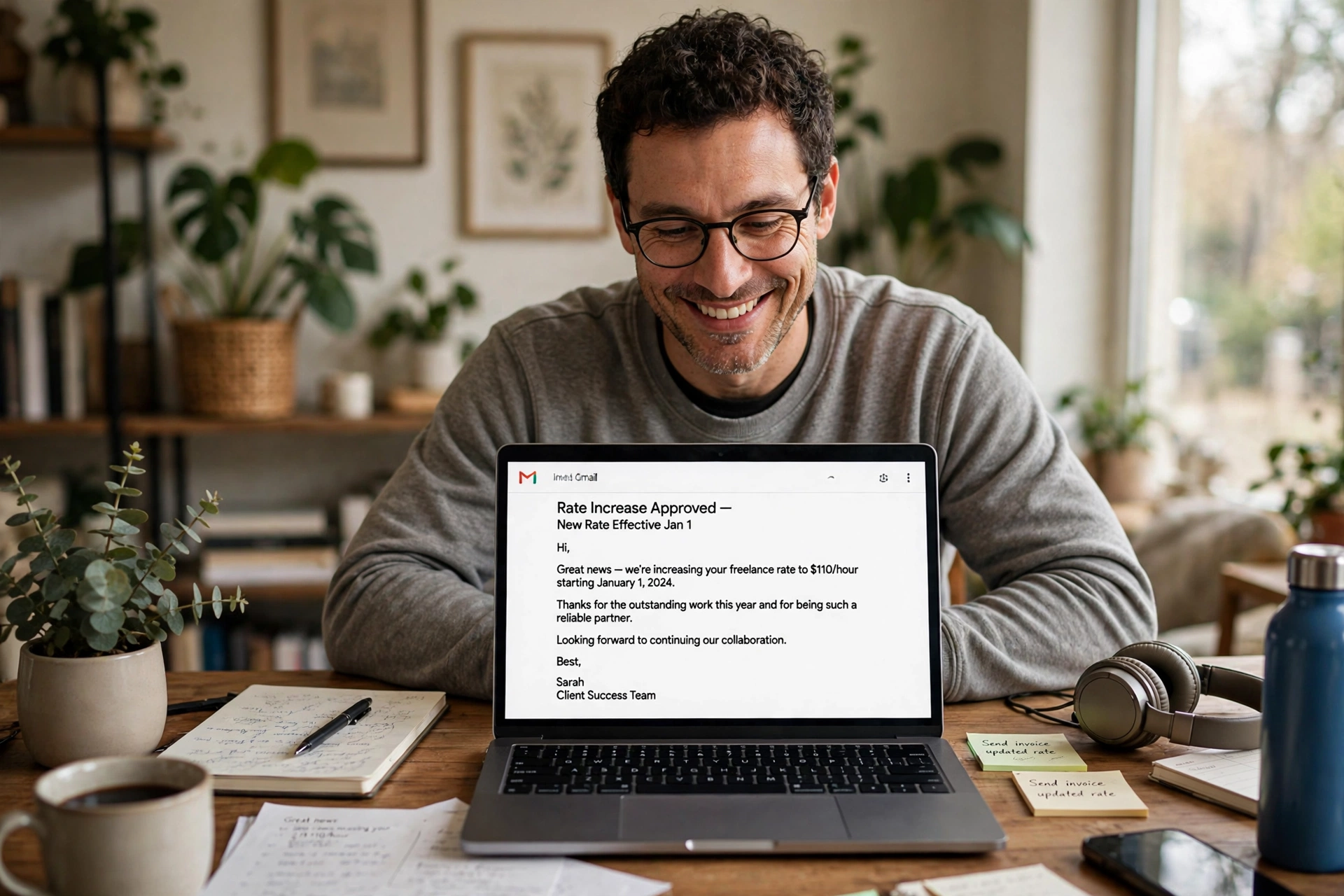
Beginner pricing was a launch strategy, not a permanent discount. Every 3–5 completed projects, raise your rates by 10–20% for new clients — your growing portfolio and reviews justify it. Existing happy clients can stay at old rates briefly, but tell them politely that your pricing updates each quarter. Most freelancers undercharge for far too long out of fear; in practice, higher prices often attract better clients who respect your work more. Track what competitors with similar experience charge on Upwork to calibrate confidently.
14. Add One Complementary Service to Earn More Per Client

Winning a new client is the expensive part — earning more from existing ones is the smart part. If you write blog posts, offer to also write the email newsletter that promotes them. If you design logos, offer matching social media templates. One complementary add-on can increase the value of every project by 30–50% with barely any extra client acquisition effort. Learn the add-on with the same free-resources-in-two-weeks approach from step two, then mention it naturally whenever you deliver work.
15. Set Boundaries and Office Hours to Avoid Burnout
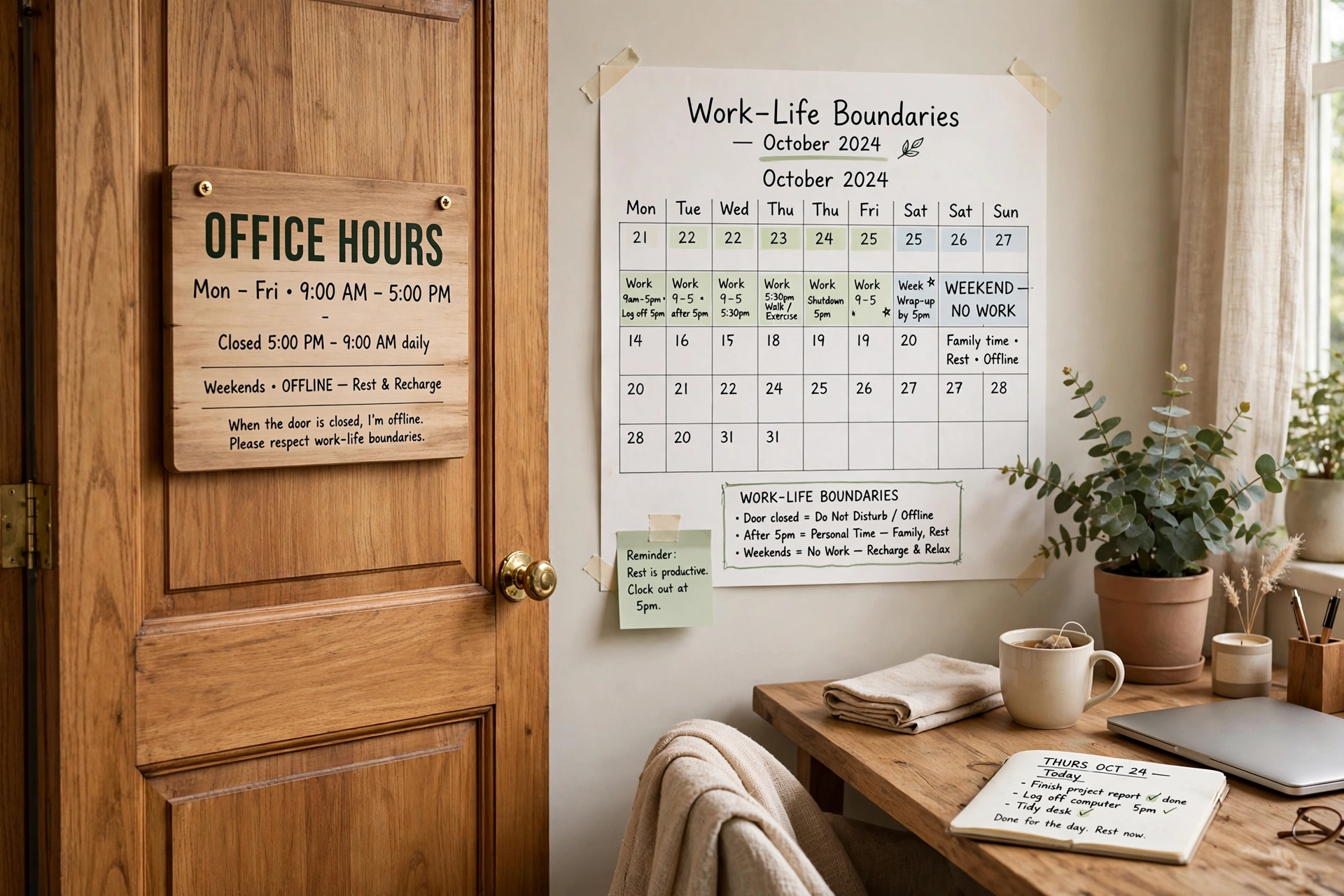
The freedom of freelancing quietly becomes a trap when clients message at midnight and you say yes to everything. Decide your working hours, state your response times in your contract, and keep one full day off each week — treat it as non-negotiable as a client deadline. Turn off notifications outside work hours and batch client communication into set windows. Freelancers who protect their time last for years; those who don’t burn out within months, no matter how talented they are.
Frequently Asked Questions
Can I really start freelancing with no experience at all?
Yes. Every freelancer starts with zero clients. What matters is demonstrating ability through sample projects, not listing past jobs. Clients care about what you can deliver for them, and three strong samples prove that better than any resume.
How long does it take to get your first freelance client?
Most beginners who follow a structured plan land their first client within 2 to 6 weeks. The biggest factor is activity level — sending personalized pitches daily shortens the timeline dramatically compared to passively waiting for inquiries.
Which freelance skill is easiest for beginners to learn?
Writing, virtual assistance, social media management, and basic graphic design are among the easiest to learn because free resources are abundant and clients hire based on samples rather than credentials. Pick the one that matches your natural strengths.
Do I need a website to start freelancing?
No. Freelance marketplaces like Upwork and Fiverr give you a built-in profile page that works as your portfolio. A personal website helps later, but it’s not required to land your first clients.
How much should I charge as a beginner freelancer?
Start slightly below market rate to win your first reviews — for example, $15–$25 per hour or equivalent fixed pricing for writing and admin work. After 3–5 five-star reviews, raise your rates to match or exceed the market average.
Is Upwork or Fiverr better for beginners?
Both work, but they suit different styles. Upwork is better for custom projects where you pitch clients directly; Fiverr is better for packaged services clients buy off the shelf. Setting up both maximizes your chances as a beginner.