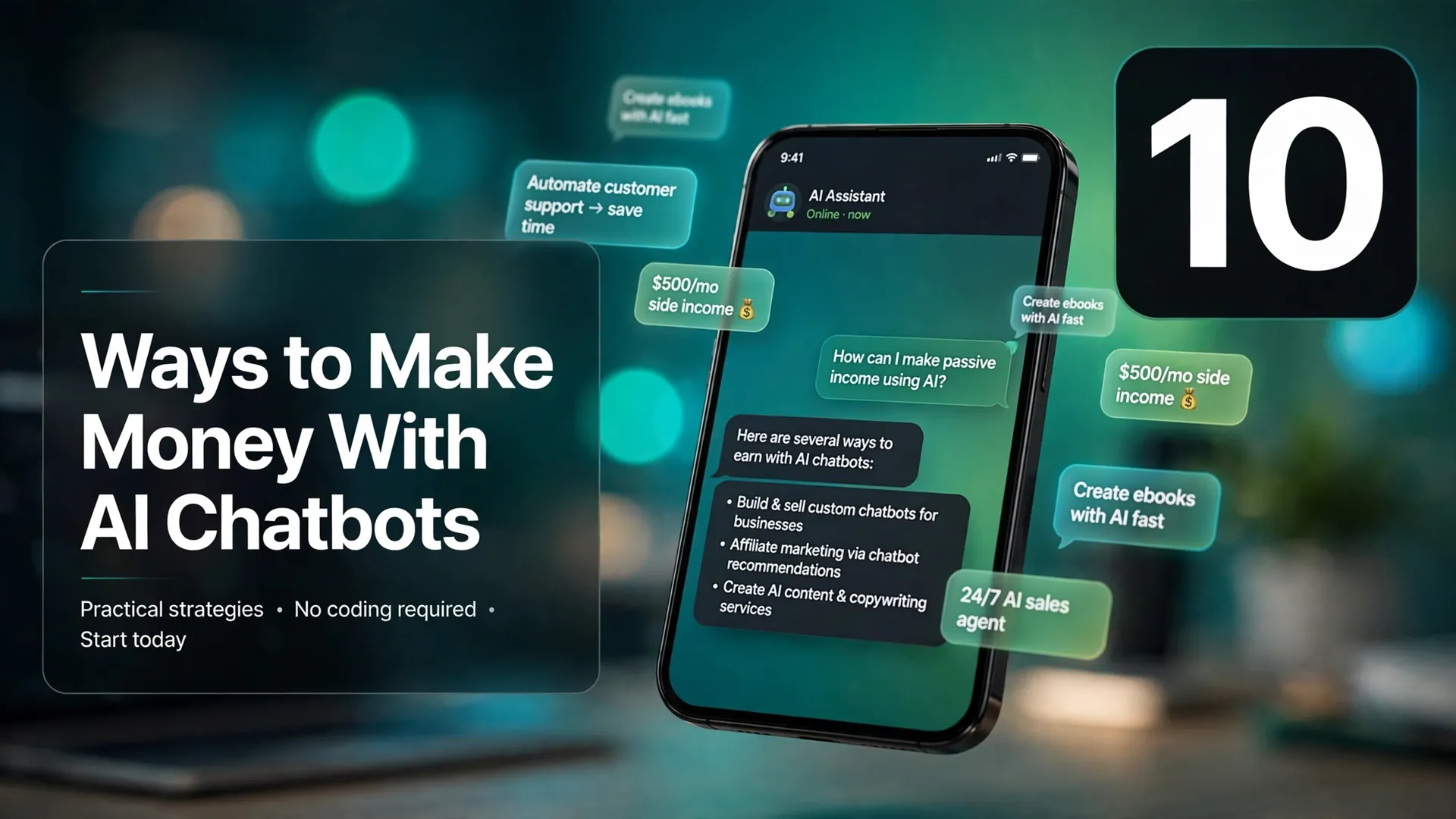
Every missed after-hours message is a lost customer — and small businesses know it. That is why they pay freelancers $500 to $3,000 per chatbot plus monthly retainers. These 10 ways to make money with AI chatbots need no coding: modern no-code builders do the technical work, you bring the strategy and setup.
1. Build FAQ Chatbots for E-Commerce Stores
Online stores drown in repeat questions: shipping times, return policies, sizing. An FAQ chatbot trained on the store’s help pages answers these instantly, cutting support tickets by 40% or more. Store owners gladly pay $800 to $1,500 for setup because it directly reduces their support costs.
Start with Shopify stores in niches you understand. The build takes a weekend with tools like Tidio or Intercom’s no-code builders — most of the work is organizing their existing FAQ content into conversation flows.

2. Create Appointment-Booking Bots for Salons and Clinics
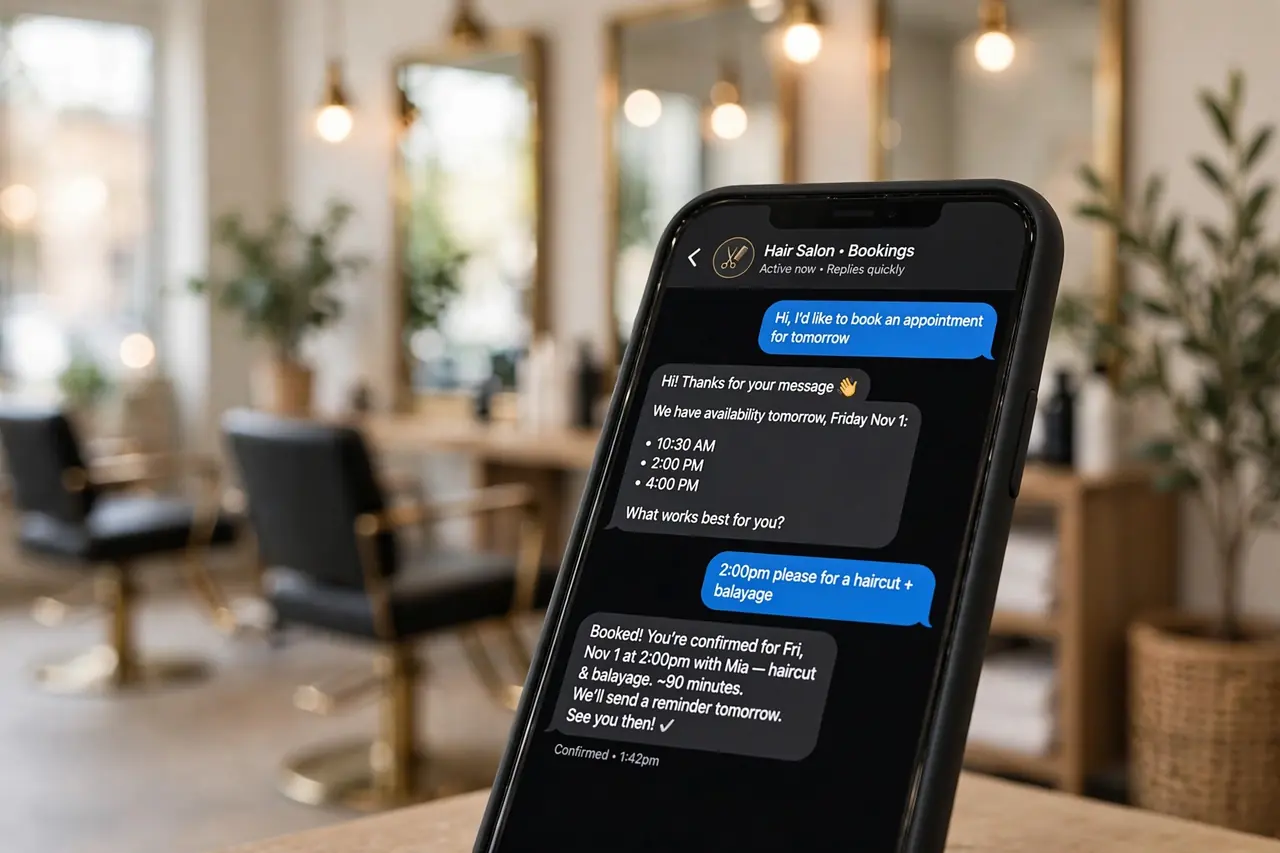
Salons, spas, dental offices, and clinics lose bookings every night they are closed. A booking chatbot lets customers schedule appointments at 11pm on a Sunday, syncing directly with the business’s calendar. Owners see the ROI in the first month of recovered bookings.
Charge $600 to $1,200 for setup plus $50 to $100 monthly for maintenance. Target businesses still taking bookings by phone — they feel the pain most and convert fastest.
3. Sell Lead-Capture Chatbots to Real Estate Agents
Real estate agents pay hundreds per lead from portals, then lose them to slow follow-up. A chatbot on their website engages visitors instantly — asking budget, location, and timeline — then routes hot leads to the agent’s phone within seconds. Speed wins listings.
Agents understand lead value, so pricing is easy: $1,000 to $2,000 setup is trivial against one extra closed deal. Offer it per-agent or white-label it to brokerages for bigger contracts.

4. Offer 24/7 Support Bots for SaaS Startups
Early-stage SaaS companies cannot afford round-the-clock support staff, but their users expect instant answers. A well-built support bot handles the top 50 questions, escalates complex issues with full context, and works while the founders sleep. For a startup, this feels like hiring three support reps.
Price at $1,500 to $3,000 setup with $150 to $300 monthly retainers for training updates as the product evolves. Startups are comfortable with monthly software costs, making retainers an easy sell.

5. Build Restaurant Reservation Chatbots
Missed calls during dinner rush mean empty tables. A reservation chatbot takes bookings, confirms party sizes, handles special requests, and sends reminders that cut no-shows. For a busy restaurant, recovering even two tables a week pays for the bot many times over.
This is a volume play: restaurants are everywhere, the pitch is simple, and setup is fast ($500 to $900). Land five restaurants in your city and you have a real recurring income base.

6. Create Quiz Funnel Chatbots for Course Creators
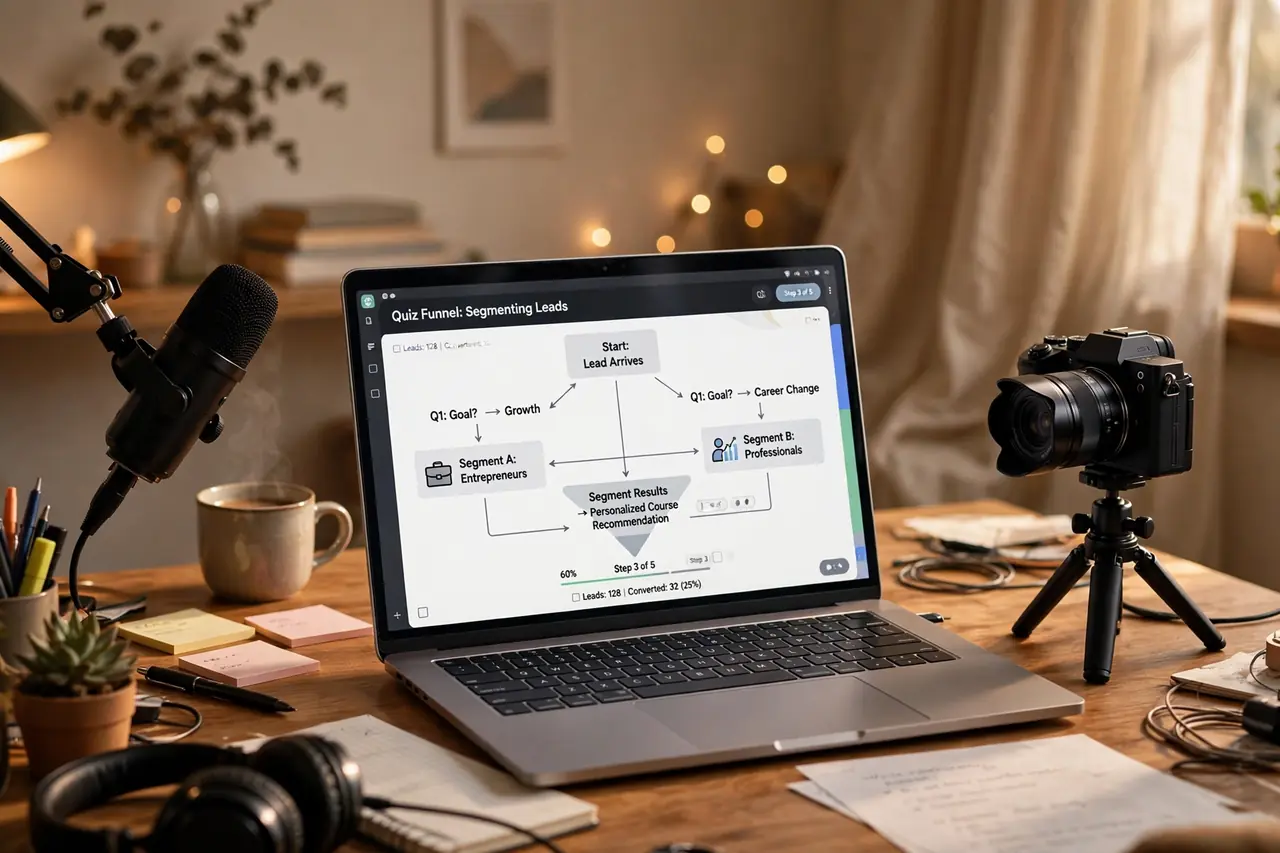
Course creators and coaches convert far better when leads take a quiz first (“Which program fits you?”). A chatbot quiz feels conversive instead of form-like, captures emails at 3x the rate of static forms, and segments leads automatically for targeted follow-up sequences.
Charge $700 to $1,500 per funnel. The creator economy is full of buyers who already spend on ads — show them the quiz lifts conversion and the sale makes itself.
7. Sell HR Onboarding Chatbots to Small Companies
Small businesses without HR departments fumble new-hire onboarding: forgotten paperwork, missed training steps, confused first days. An onboarding chatbot walks new employees through documents, policies, FAQs, and first-week checklists — consistently, every time.
Position it as risk reduction: consistent onboarding means fewer compliance mistakes. At $1,000 to $2,000 setup, it is cheaper than one HR headache, and updates keep you on a $75 to $150 monthly retainer.

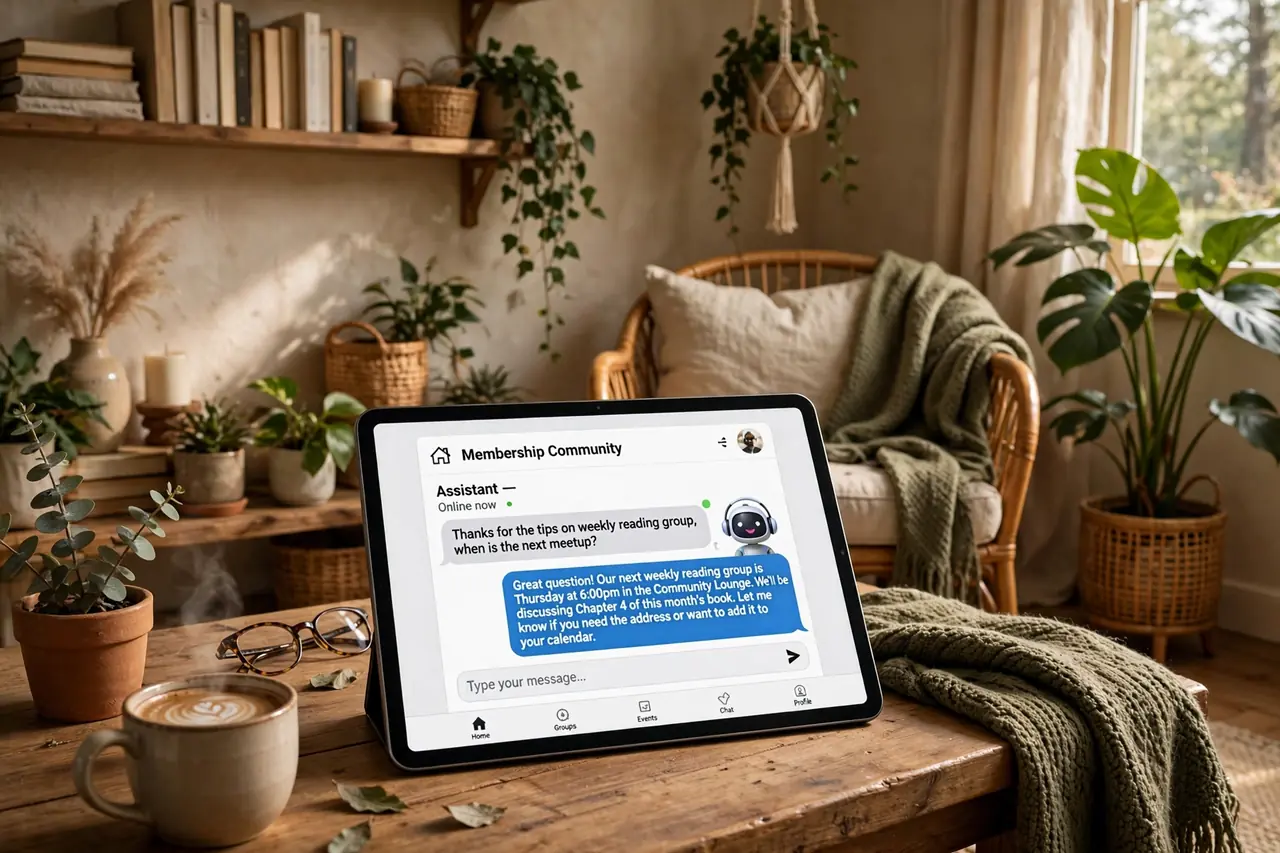
8. Build Membership Site Support Bots
Membership and community owners get the same questions endlessly: how to log in, where is the content, how to cancel. A support bot trained on the member area resolves most of these instantly, protecting the owner’s time and reducing churn from frustrated members.
These clients already earn recurring revenue, so they understand paying for systems that protect it. Charge $800 to $1,500 setup plus monthly maintenance tied to content updates.
9. Create Event Registration Chatbots
Workshops, webinars, and local events lose signups to clunky registration forms. A conversational chatbot registers attendees, answers logistics questions (parking, agenda, refunds), and sends reminders that boost show-up rates. Organizers see fuller rooms with less admin.
Event organizers run events repeatedly, so one good build leads to repeat business. Charge $500 to $1,000 per event setup, then offer a discounted package for their event series.

10. Offer Chatbot Maintenance Retainers
The real money in chatbots is not the build — it is the retainer. Businesses need conversation logs reviewed, wrong answers corrected, new products added, and seasonal updates made. A $100 to $300 monthly retainer per client for a few hours of monthly tuning stacks fast: 10 clients means $1,000 to $3,000 in predictable monthly income.
Sell maintenance with every build as a package, not an afterthought. Frame it as “your bot gets smarter every month” — clients stay because the bot visibly improves, and you earn while you sleep.

Frequently Asked Questions
Do I need coding skills to build AI chatbots for clients?
No. Modern no-code platforms like Tidio, ManyChat, Landbot, and Intercom let you build sophisticated chatbots with drag-and-drop flows. Your value is strategy — knowing what questions to automate and how to design the conversation — not code.
How much can beginners charge for a chatbot project?
Beginners typically charge $500 to $1,000 for a first build, rising to $1,500 to $3,000 with a portfolio of 3 to 5 successful bots. Monthly retainers of $75 to $300 per client add predictable recurring income on top.
How do I find my first chatbot clients?
Start local: walk into or email 20 small businesses in one niche (salons, restaurants, clinics) with a 2-minute demo video of a sample bot. Local businesses decide fast and rarely comparison-shop — one good demo often closes the deal.
What is the best no-code chatbot platform to learn first?
Tidio or ManyChat for beginners — both have free tiers, visual builders, and templates for common use cases. Learn one platform deeply rather than five shallowly; clients hire specialists, and you can always expand later.
Conclusion
AI chatbots sit at the perfect intersection: businesses desperately need them, few freelancers offer them, and no-code tools make them buildable in days. Pick one niche from this list, build a demo bot this week, and start showing it to real businesses. Your first $1,000 chatbot client is closer than you think.