Graduating into student loan payments and entry-level salaries feels like starting 100 yards behind. But you have something no amount of money buys: time. Every dollar of passive income you build in your twenties compounds for 40+ years — a $200/month income stream started at 22 is worth dramatically more than the same stream started at 42. These 12 ideas are chosen for new graduates: minimal startup cash, skills you already have, and realistic timelines. For more strategies, see passive income for busy professionals, passive income for single parents, and passive income ideas for teens.
1. Start a Roth IRA With Index Funds
This is the single highest-ROI move a 22-year-old can make. A Roth IRA lets your investments grow tax-free forever — contribute $7,000/year (2026 limit) in a total stock market index fund (VTI, FSKAX), and at 8 percent average returns, you will have over $1.9 million tax-free by 65. That is not a typo. Time is the asset; start now.
Open a Roth IRA at Fidelity or Vanguard (free, 10 minutes online). Automate $100 to $300/month from your paycheck. You will not feel rich today, but your 65-year-old self will be a millionaire because of decisions you make this year.

2. Sell Study Notes and Guides
You just spent 4 years creating valuable study materials — sell them. Platforms like Stuvia, Nexus Notes, and Studocu pay for class notes, study guides, and summaries. Upload your best work from high-demand courses (organic chemistry, accounting, anatomy) and earn every time another student downloads them.
Top sellers earn $200 to $1,000/month from notes they already made. Price guides at $5 to $15 each. Focus on notoriously difficult courses where desperate students gladly pay. Your GPA is now a product.

3. Create a “New Grad” YouTube Channel
Document what you are living: job hunting, apartment hunting, budgeting on an entry-level salary, adulting fails. “New grad” content has a massive, constantly renewing audience — every May, millions of new graduates search for exactly this. A channel with 100 videos can earn $300 to $2,000/month from ads within 18 months.
Film on your phone; authenticity beats production value for this niche. Post weekly. Topics that explode: salary transparency, “things I wish I knew before graduating,” budget breakdowns. Affiliate links for products you mention add a second income layer.

4. Dividend Reinvestment From Day One
Do not wait until you are “established” to invest for dividends. Even $50/month in a dividend growth ETF (SCHD, VIG) starts the compounding clock. Reinvest every dividend automatically — at 22, each reinvested dollar has 43 years to compound. A dollar invested today at 8 percent is worth $29 at retirement.
Use fractional shares (every major brokerage offers them) so small amounts buy into expensive stocks. Increase contributions with every raise — “pay yourself first” before lifestyle inflation eats the gains. Boring? Yes. Effective? Historically unmatched.

5. Sell Digital Templates From Your Major
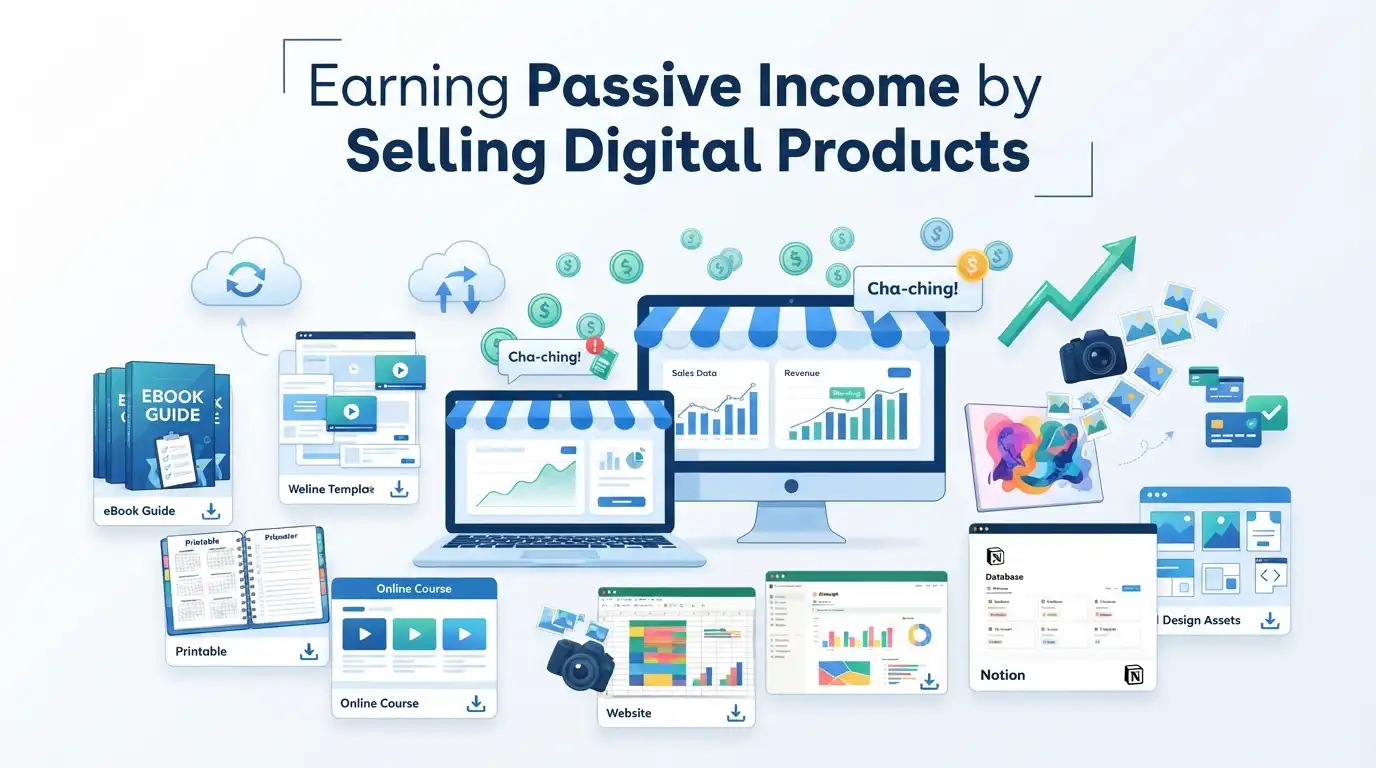
Turn your degree into products. Business majors: financial model templates, pitch decks. Design majors: portfolio templates, social media kits. Education majors: lesson plan templates. CS majors: code snippets, website themes. Sell on Etsy or Gumroad for $9 to $49 each.
You already did the hard work learning these skills — packaging them is the easy part. One excellent Notion template or Excel dashboard can sell hundreds of copies. Market to students in your major (Reddit, Discord, LinkedIn) where you have instant credibility.

6. House Hack Your First Apartment
Rent a 2-bedroom apartment and sublet the second room (where legal) — your roommate’s rent covers most of your housing cost. Or buy a duplex with an FHA loan (3.5% down) and let the tenant’s rent pay your mortgage. House hacking is how many young people live nearly rent-free while building equity.
Check local laws and lease terms before subletting. Screen roommates carefully — a bad roommate costs more than rent savings. The math: if rent is $1,400 and a roommate pays $800, your housing cost drops to $600. That $800/month difference invested is life-changing over time.

7. License Your Photography and Video
Four years of college = thousands of photos and videos. Upload the best to Adobe Stock, Shutterstock, and Pond5. Campus life, graduation, dorm rooms, study sessions, college sports — all in constant demand from marketers targeting the student demographic. Each asset earns per download, forever.
Keyword meticulously (“diverse college students studying library”) — discoverability is everything in stock. A portfolio of 1,000 assets can generate $300 to $1,000/month. Keep shooting after graduation: young professional lifestyle content is equally valuable.

8. Build a Niche Newsletter
Pick a topic you know cold — your industry, your hobby, your city — and write a free weekly newsletter on Substack or Beehiiv. Grow to 1,000+ subscribers, then add paid tiers ($5/month) or sponsorships. Niche newsletters with 5,000 subscribers routinely earn $500 to $3,000/month.
Your unfair advantage: you speak the language of your generation. A newsletter about entry-level tech careers, sustainable fashion, or city-specific events fills gaps big publishers ignore. Write consistently for 6 months before expecting revenue — then it compounds.

9. Create and Sell an Online Mini-Course
What did you master in college that others struggle with? Excel, public speaking, essay writing, a programming language, a musical instrument — package it as a $19 to $79 mini-course on Udemy or Skillshare. Record with your phone, edit in free software, upload once, earn per student indefinitely.
Skillshare pays per minute watched (roughly $0.05 to $0.10/minute), so engaging courses earn steadily. A course with 2,000 students generates $2,000 to $8,000 over its lifetime. Your recent-student perspective is actually an advantage — you remember what confused you.

10. High-Yield Savings for Your Emergency Fund
Before investing aggressively, build a 3-month emergency fund — and keep it in a high-yield savings account earning 4 to 5 percent, not a checking account earning nothing. $6,000 at 4.5 percent earns $270/year while remaining instantly accessible. This is not exciting, but it is the financial foundation everything else builds on.
Automate $200/month into Ally, Marcus, or Capital One on payday. Do not touch it except for true emergencies (job loss, medical). Once the fund is full, redirect that $200/month into your Roth IRA. Systems beat willpower.

11. Affiliate Niche Site in Your Field
Start a simple blog reviewing tools, books, and resources in your professional field. A nursing graduate reviewing stethoscopes, a marketing graduate reviewing software tools, an engineering graduate reviewing calculators — each review with affiliate links earns commissions for years. Niche professional blogs earn $200 to $2,000/month once established.
Write 2 articles per month — sustainable alongside a full-time job. Target “best X for [your profession]” keywords with low competition. Your professional credibility converts readers to buyers better than generic review sites.

12. Rent Out Your Textbooks and Equipment
That $300 camera, $200 graphing calculator, or professional equipment from your major? List it on Fat Llama or local Facebook groups for rental. Textbooks can be rented through Chegg’s partner programs. Even your cap and gown have rental value each graduation season.
This will not make you rich, but it converts dusty assets into cash flow while you decide what to keep. More importantly, it builds the asset-monetization mindset: everything you own is a potential income source. That thinking compounds across your lifetime.

Frequently Asked Questions
Should I pay off student loans or invest first?
Do both strategically: build a small emergency fund ($1,000), then attack high-interest debt (above 6–7%) aggressively while making minimum payments on low-interest federal loans. Simultaneously contribute enough to your 401(k) to capture any employer match — that is a 100% return no debt payoff beats. This is general guidance, not financial advice.
How much can I realistically earn passively as a new grad?
Year one: $50 to $300/month from combined small streams. Year three: $500 to $2,000/month as content, products, and investments compound. The goal is not immediate wealth — it is building machines that grow while you focus on your career.
What if I have no money to start?
Eight of these twelve ideas cost $0: selling notes, YouTube, newsletters, stock photos (from existing photos), affiliate blogging (free platforms), renting equipment you own. Start with zero-cost options and reinvest earnings into the others.
How do I balance this with a full-time job?
Dedicate 3 to 5 hours per week — one focused evening session plus a weekend morning. Batch content creation. Choose one primary stream and one secondary; spreading across all twelve guarantees burnout. Depth beats breadth.
When should I expect meaningful income?
Digital products and content (YouTube, newsletters, courses) typically take 6 to 12 months to generate $500+/month. Investments compound over decades. The graduates who win are not the most talented — they are the most consistent.