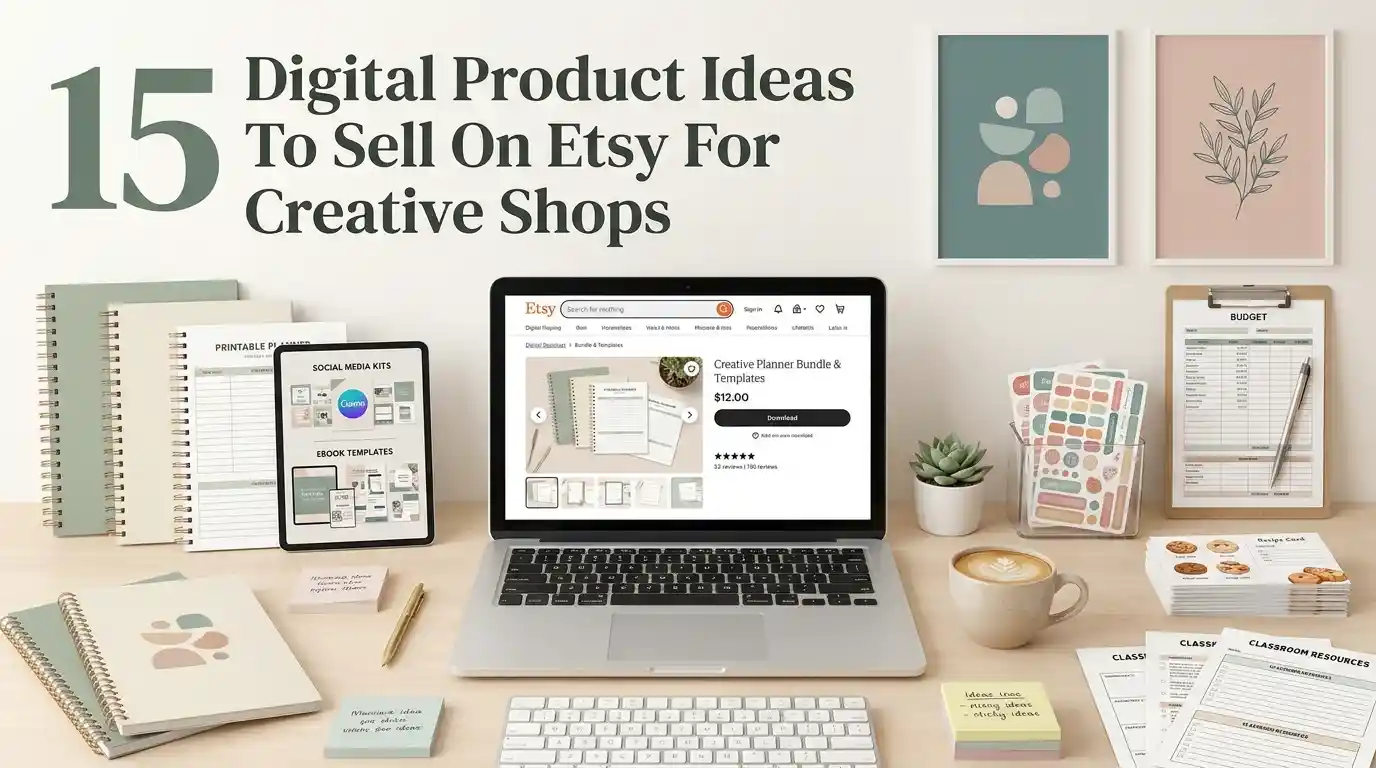
Everyone sells wedding printables and budget planners — which is exactly why you shouldn’t. These 6 low-competition digital product ideas serve real buyers in niches most sellers haven’t discovered, meaning your listings can rank on page one within weeks instead of fighting thousands of competitors.
1. Digital Prayer and Devotional Journals
The faith-based market is enormous and dramatically underserved on Etsy — search “prayer journal” and you’ll find a fraction of the listings that “wedding planner” returns. Digital prayer journals with guided prompts, scripture reflection pages, and gratitude sections sell for $8 to $18, and buyers in this niche are loyal repeat purchasers who gift them widely.
Create denomination-neutral versions plus specific editions (Catholic, Protestant, nondenominational) to multiply your listings from one core design. Church small-group leaders buy in bulk for their groups — offer a group license tier at 3x the price.

2. Funeral and Memorial Service Printables
Almost nobody wants to design memorial programs during grief, which is why families gladly pay $15 to $30 for beautiful, ready-to-personalize funeral program templates, memory table signs, and order-of-service cards. Competition is nearly nonexistent — most sellers avoid the niche out of discomfort, leaving it wide open.
Keep designs dignified and understated with soft color palettes, and offer both religious and secular versions. Funeral homes themselves are B2B buyers — one director who likes your templates can send you steady referral business.

3. Digital Menu Templates for Restaurants
Independent restaurants constantly need updated menus for seasons, specials, and price changes — and most can’t afford a designer each time. Editable menu templates in Canva sell for $12 to $25, and the niche has a fraction of the competition of general “restaurant” searches. Target specific cuisines (taco shops, BBQ joints, cafes) to dominate micro-niches.
Bundle 5 to 10 cuisine-specific designs as a “restaurant pack” for $39 — owners opening second locations or rebranding buy packs, not singles. Include print-ready bleeds and Canva links so even non-technical owners can edit.

4. Car Maintenance Log Printables
Car enthusiasts, fleet managers, and meticulous owners track every oil change, tire rotation, and repair — and printable maintenance logs for specific needs barely exist on Etsy. Logs for classic cars, motorcycles, RVs, and boats each form a micro-niche with almost zero competition, selling at $6 to $12.
Create vehicle-specific editions (motorcycle maintenance, RV trip logs, boat winterization checklists) from one master design. Auto forums and Facebook groups for each vehicle type are concentrated, passionate buyer pools.

5. Homeschool Attendance and Record-Keeping Packs
Homeschooling parents are legally required to keep attendance and progress records in many states — a compliance need, not a nice-to-have, which means consistent demand. Attendance trackers, grade books, and portfolio checklists sell for $8 to $15, and the niche is far less crowded than general “teacher printable” searches.
Research 3 to 4 states’ specific requirements and label listings accordingly (“Texas homeschool attendance log”) — compliance-driven buyers search by state and convert at high rates. Homeschool co-op leaders buy for entire groups.

6. Landlord Move-In and Move-Out Checklists
Small landlords need thorough move-in/move-out inspection checklists to protect security deposits — and disputes over deposits are one of landlords’ biggest headaches. Detailed, photo-prompt checklists sell for $9 to $18, competing against a handful of listings instead of thousands. BiggerPockets and landlord subreddits are full of your buyers.
Add a security deposit demand letter template as an upsell — landlords facing their first deposit dispute will pay premium prices for ready-made legal-adjacent documents (with appropriate disclaimers).

Frequently Asked Questions
How do I know if a digital product niche is truly low-competition?
Search Etsy and count results: under 1,000 listings with steady sales (check reviews and “bestseller” badges) signals opportunity. Also check whether top listings look amateur — if the best competitor’s design is weak, you can win quickly with better quality.
Do low-competition niches have enough buyers?
Yes — low competition usually means an underserved need, not zero demand. Funeral printables, homeschool records, and landlord documents serve buyers with urgent, specific needs who convert at higher rates than casual browsers in crowded niches.
How long until low-competition products start selling?
Faster than crowded niches — often within 2 to 4 weeks versus 3 to 6 months. With fewer competitors, Etsy’s algorithm surfaces new listings quickly, and targeted keywords face little ranking resistance.
Should I avoid crowded niches entirely?
Not necessarily, but start where you can win. Build income and reviews in low-competition niches first, then use that momentum and capital to compete in bigger markets later.
Conclusion
The best digital product niche isn’t the biggest — it’s the one where buyers are waiting and sellers haven’t shown up. Pick one idea from this list, create the best version that exists, and list it this week. In an empty room, even a whisper gets heard.