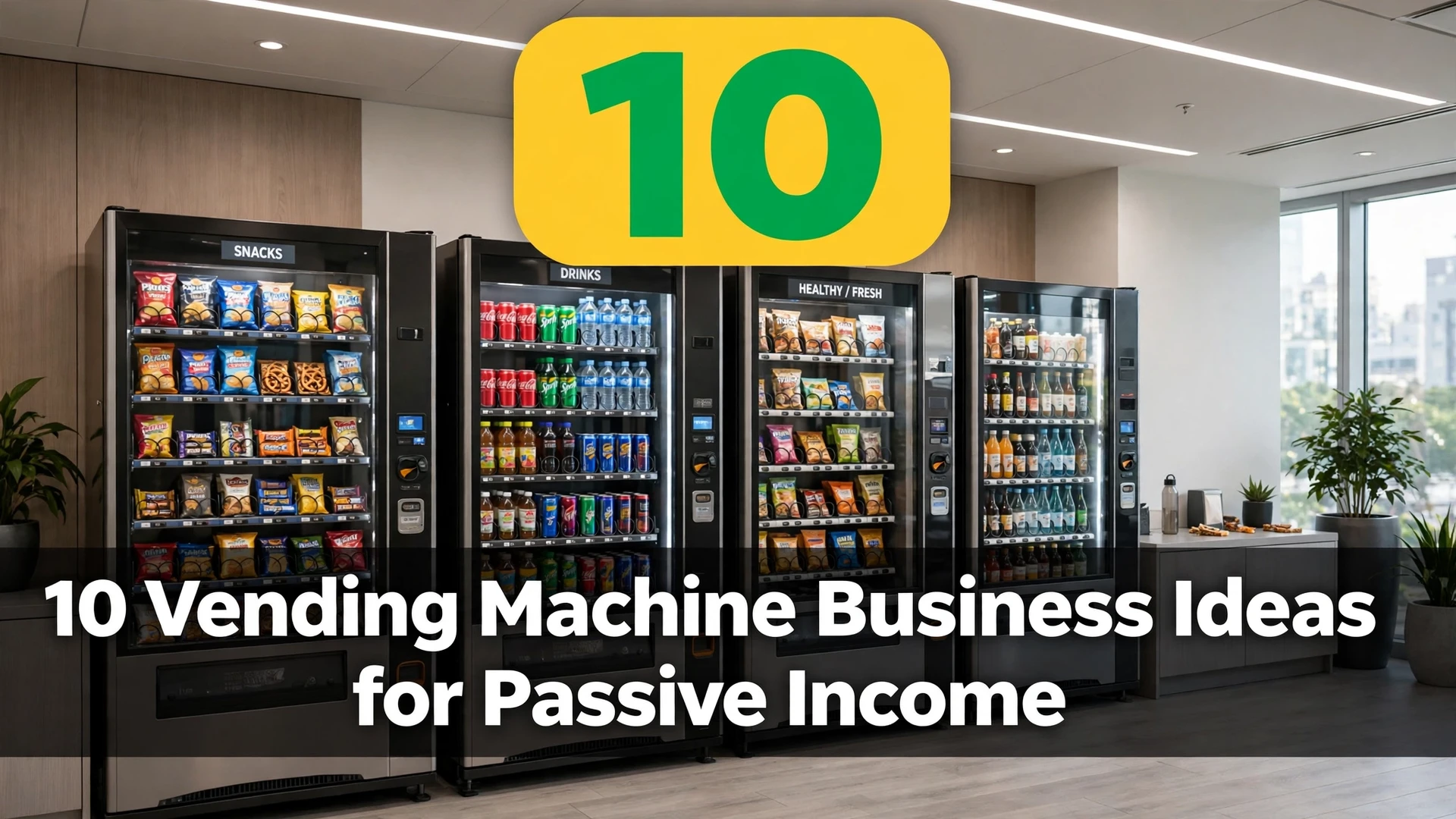
Vending machines are one of the most approachable passive income businesses because the model is simple: buy a machine, stock it with products people want, place it where foot traffic is high, and restock on a schedule. These vending machine business ideas range from low-cost starter routes to higher-investment specialty machines, so beginners can start small and scale. Before you buy anything, research local rules, machine prices, and product suppliers in your area — and if you want other low-capital options too, passive income streams you can start with no money offers useful comparisons. The ideas below are business models, each with its own products, customers, and margins.
1. Healthy Snack and Drink Machines in Offices
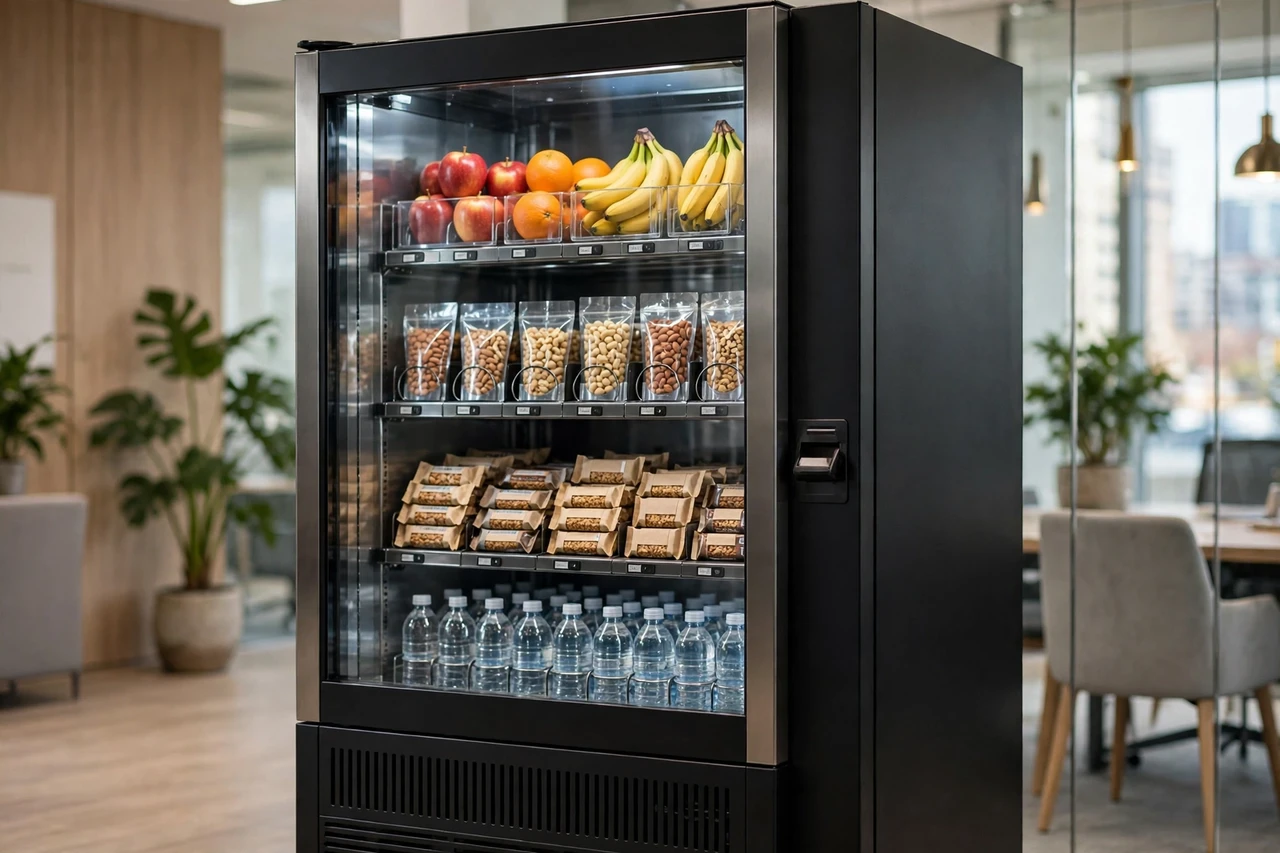
Office workers want better snacks than candy bars and soda, and employers like offering healthier options as a workplace perk. Stock a machine with protein bars, nuts, dried fruit, sparkling water, and low-sugar drinks, and you can charge a premium over standard vending prices. Offices are ideal because the same people buy daily, giving you predictable sales and easy restocking routes.
A refurbished snack machine costs $1,500 to $3,000, and a single busy office location can generate $300 to $800 a month in gross sales. Start with one office, learn which products sell fastest, and adjust your stock every two weeks based on real sales data rather than guesses.
2. Specialty Coffee Vending for Busy Workplaces
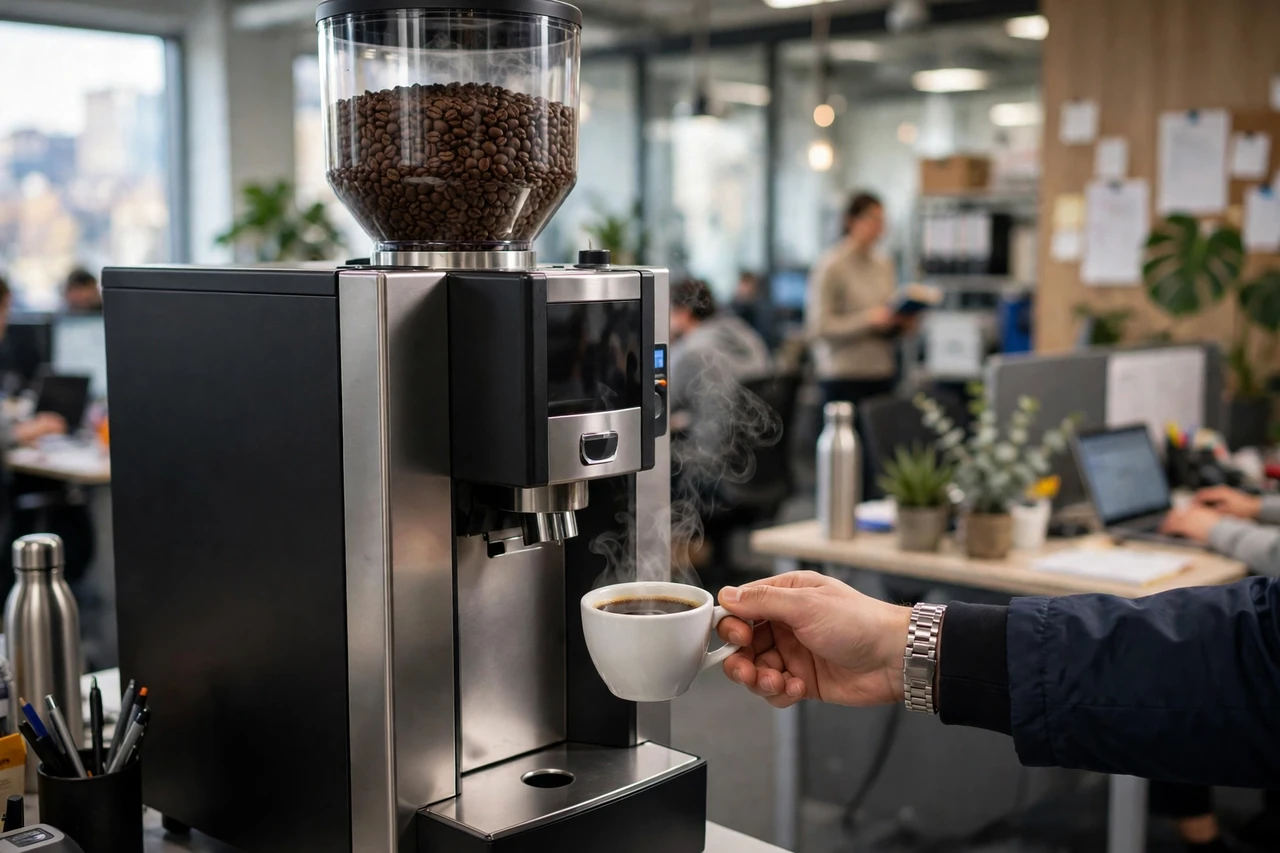
Specialty coffee machines that brew lattes, cappuccinos, and cold brew have transformed vending from a last resort into a genuine coffee stop. Workplaces, hospitals, and colleges all have coffee drinkers who will pay $2 to $4 per cup for quality, and the margins on coffee are among the best in vending. Modern machines handle milk, syrups, and cup sizes automatically, so the customer experience feels close to a cafe.
These machines cost more — $4,000 to $10,000 new — but daily coffee habits mean faster payback in the right location. Partner with a local roaster for beans if you can, since a local brand story helps win placement deals with building managers.
3. Fresh Sandwich and Salad Machines
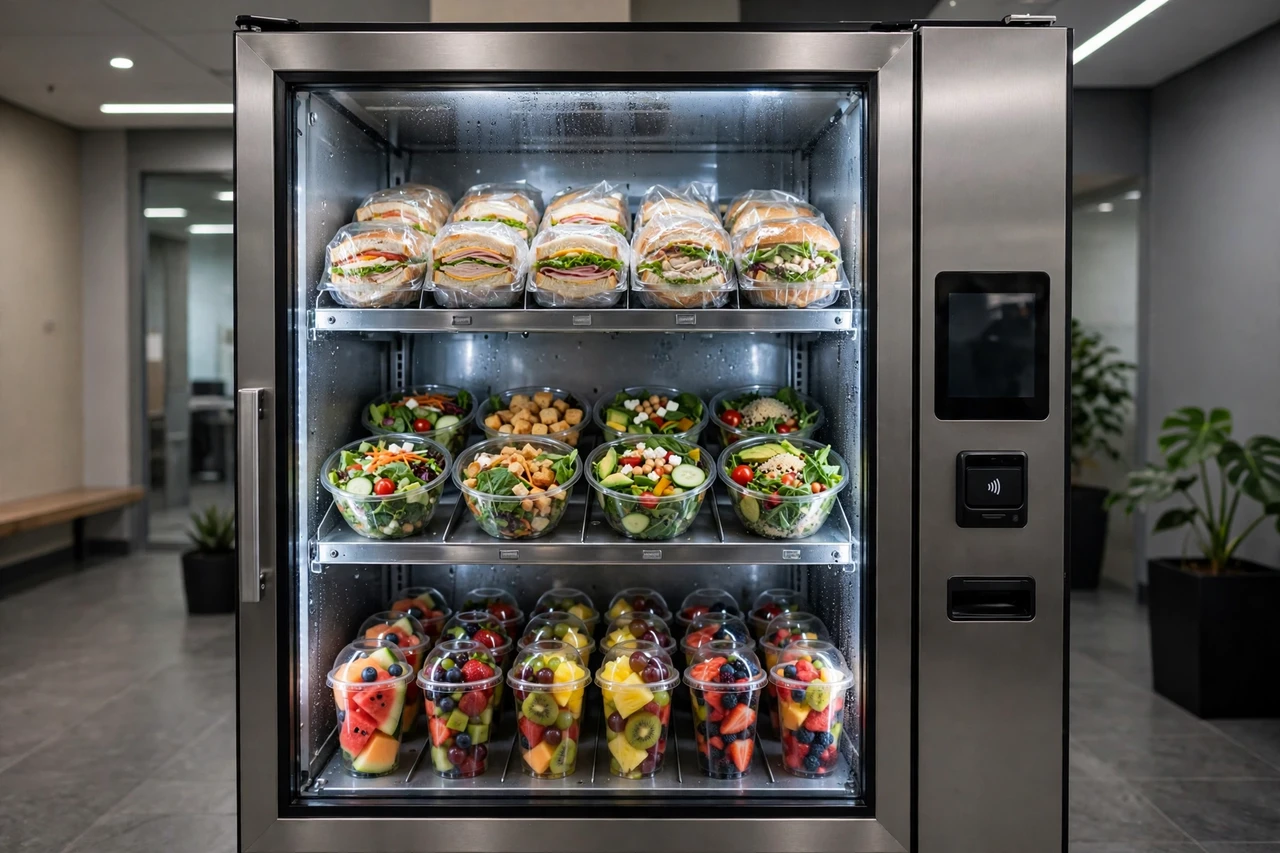
Fresh food vending serves workers and students who need a real meal but have no time for a restaurant queue. Refrigerated machines stocked with sandwiches, salads, wraps, and grain bowls sell at lunch prices of $6 to $12, far above snack margins. The key is a reliable local supplier or commissary kitchen that delivers fresh stock on your schedule, since spoilage is the main risk.
This model suits hospitals, factories, and colleges with limited nearby food options. Track expiration dates carefully, start with a small product range, and expand only the items that sell out consistently. Fresh food machines earn more per sale, but they demand stricter restocking discipline than snack machines.
4. Tech Accessory and Phone Charging Machines
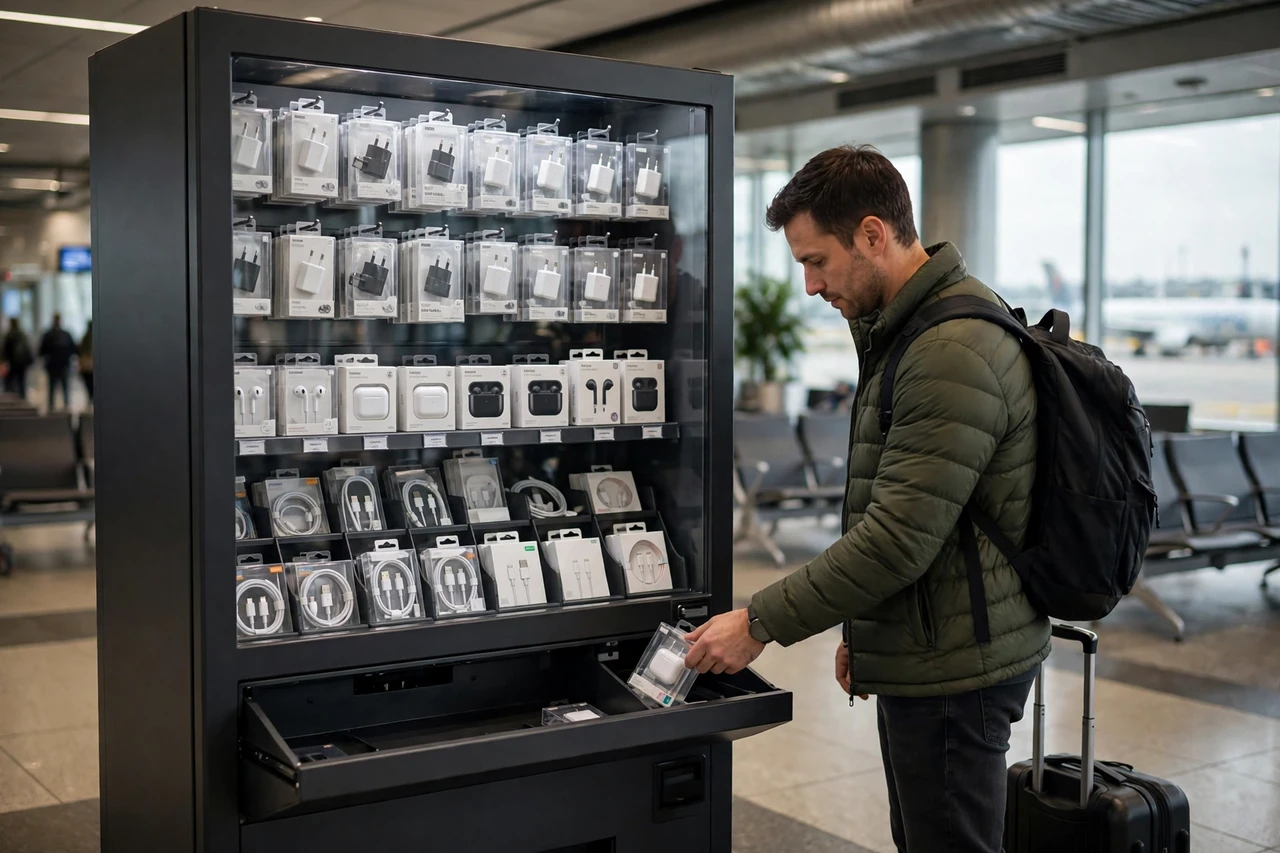
Travelers and students constantly need chargers, earbuds, phone cases, and adapters, usually at the worst possible moment. Tech accessory machines sell high-margin items in airports, malls, and campuses, where a $15 charger that cost you $4 feels like a rescue rather than an expense. Adding a phone charging station to the machine creates extra foot traffic and dwell time.
Startup costs run $3,000 to $7,000 for a secure, well-lit machine, and theft-resistant design matters more here than with snacks. Focus on universal items that fit most phones, keep packaging compact, and restock based on seasonal travel patterns for the best returns.
5. Beauty and Self-Care Product Machines
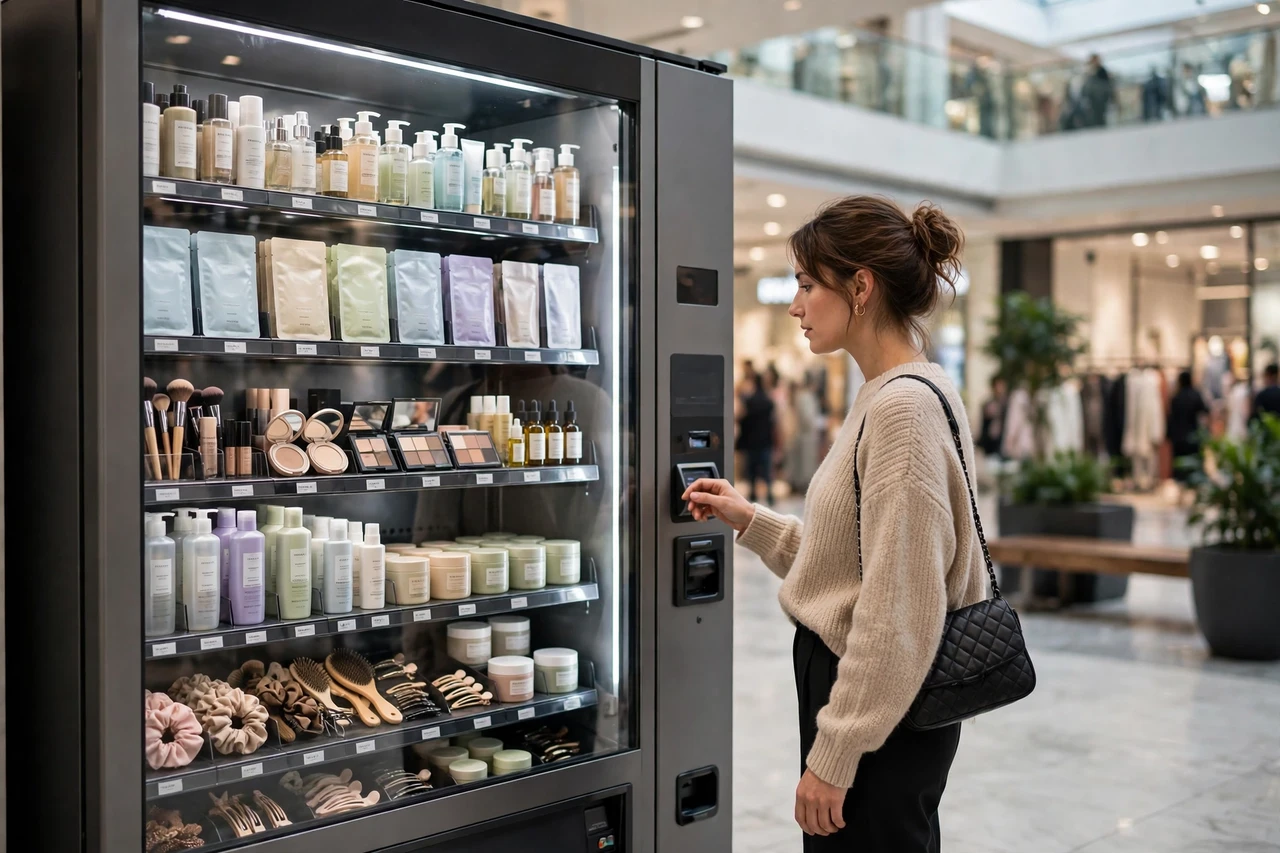
Beauty vending machines sell travel-size skincare, makeup essentials, hair ties, and personal care items in gyms, salons, airports, and malls. Shoppers buy on impulse — a forgotten lip balm, a sheet mask before a flight — and the small product size means high margins per unit. Curating the range for the location matters: gym locations want dry shampoo and deodorant, while airport locations want travel skincare kits.
Start with a compact machine and a tight range of twenty to thirty proven products, then rotate based on sales. Beauty machines work best when they look clean and modern, so invest in good lighting and clear product displays rather than the cheapest used machine.
6. Pet Treat Machines for Animal Lovers
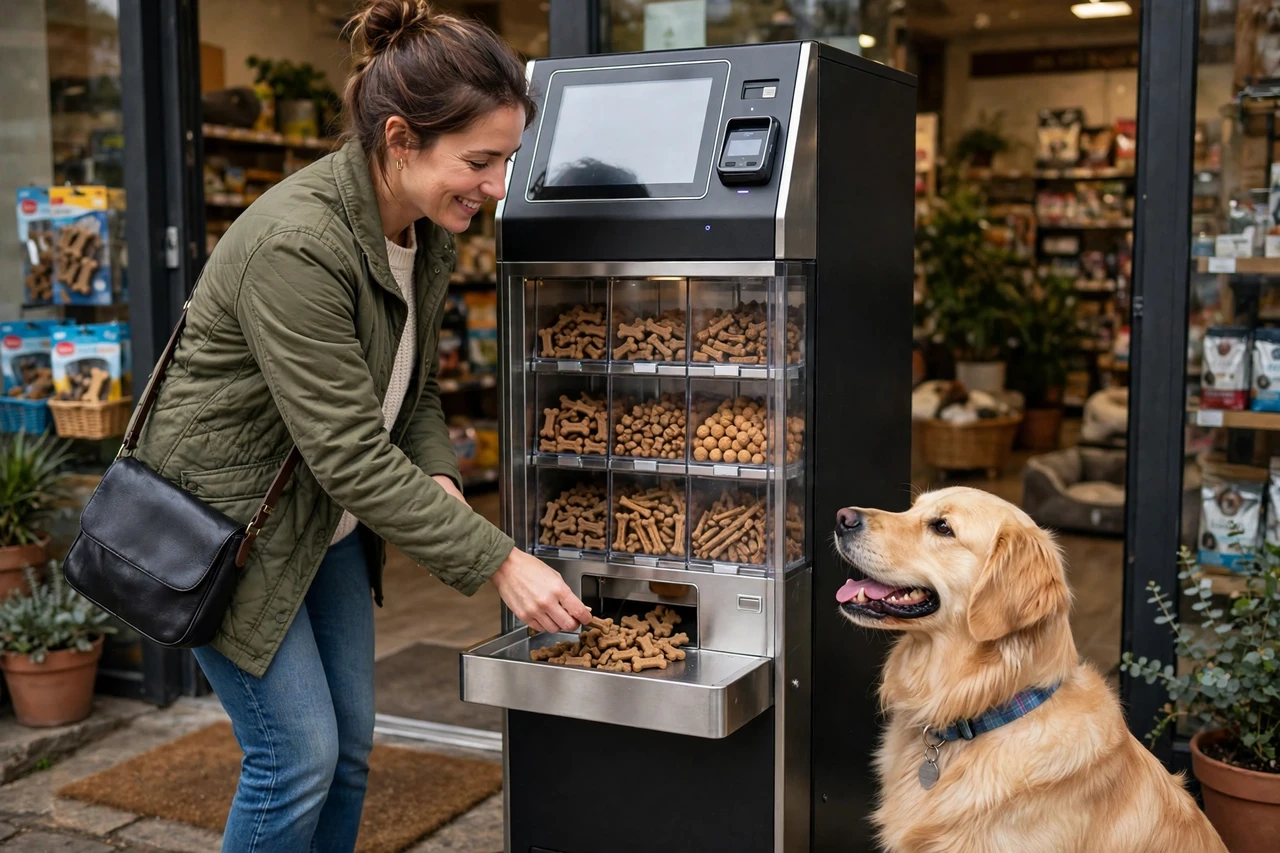
Pet treat vending is a niche with loyal buyers: dog owners happily spend on treats, toys, and waste bags while out with their pets. Machines placed near dog parks, pet stores, and veterinary waiting areas sell single-serve treats, small toys, and emergency supplies like leashes and poop bags. Pet owners are also less price-sensitive than snack buyers, which supports healthy margins.
Keep products sealed, clearly labeled, and suited to common allergies, and partner with a local pet store for supply and cross-promotion. A single well-placed pet machine will not replace a full route, but as a second or third machine it adds a profitable, low-competition income stream.
7. Frozen Dessert Machines for Family Venues
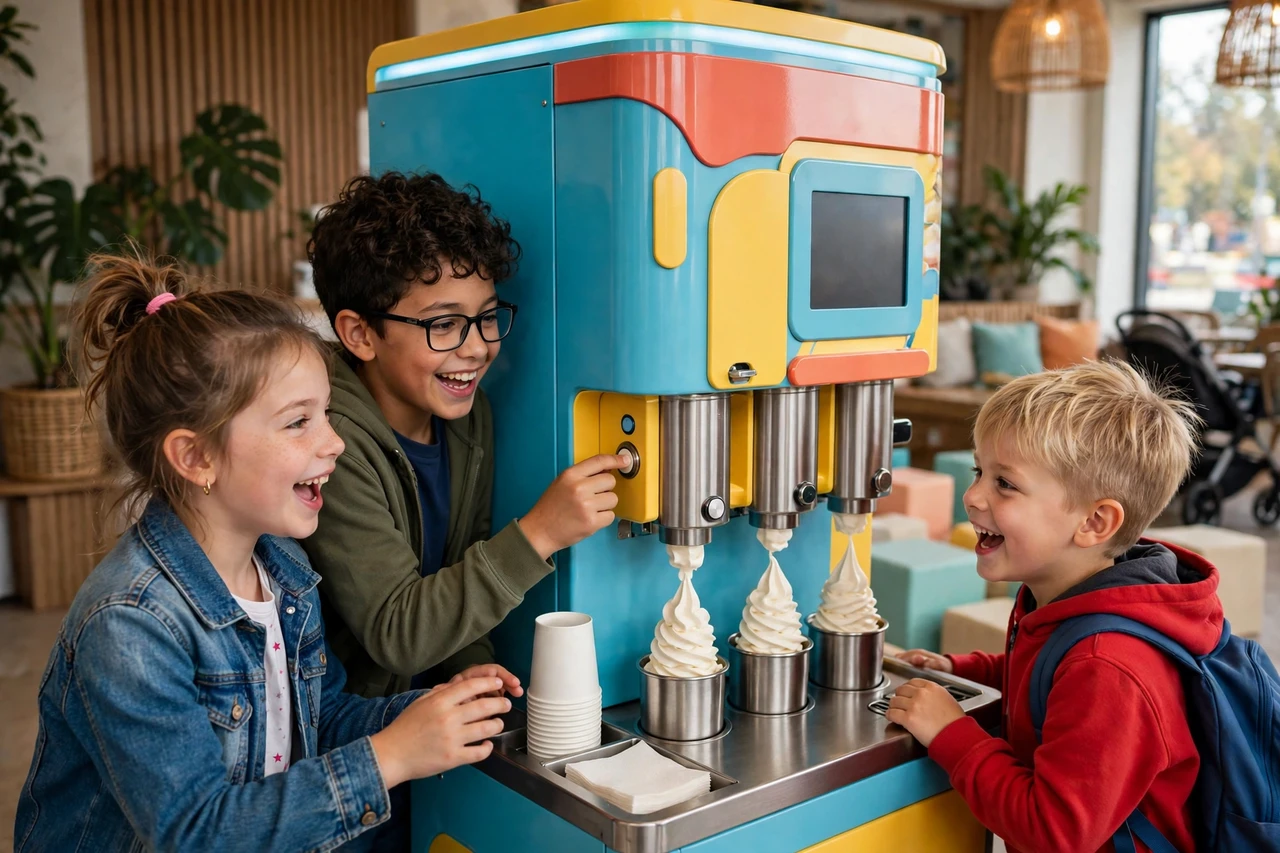
Ice cream and frozen dessert machines turn family venues into steady sellers, especially in warm months. Self-serve soft-serve machines and pre-packaged novelty machines both work, with novelties being simpler for beginners since there is no cleaning of dispensing parts. Family entertainment centers, pools, and shopping areas provide the foot traffic, and parents rarely say no to a $3 treat for their kids.
Budget for higher electricity costs and a reliable freezer machine, and plan a seasonal strategy — frozen desserts peak in summer and slow in winter. Pairing a frozen machine with a snack machine at the same venue can smooth out seasonal dips.
8. Bulk Candy Routes With Low Startup Costs
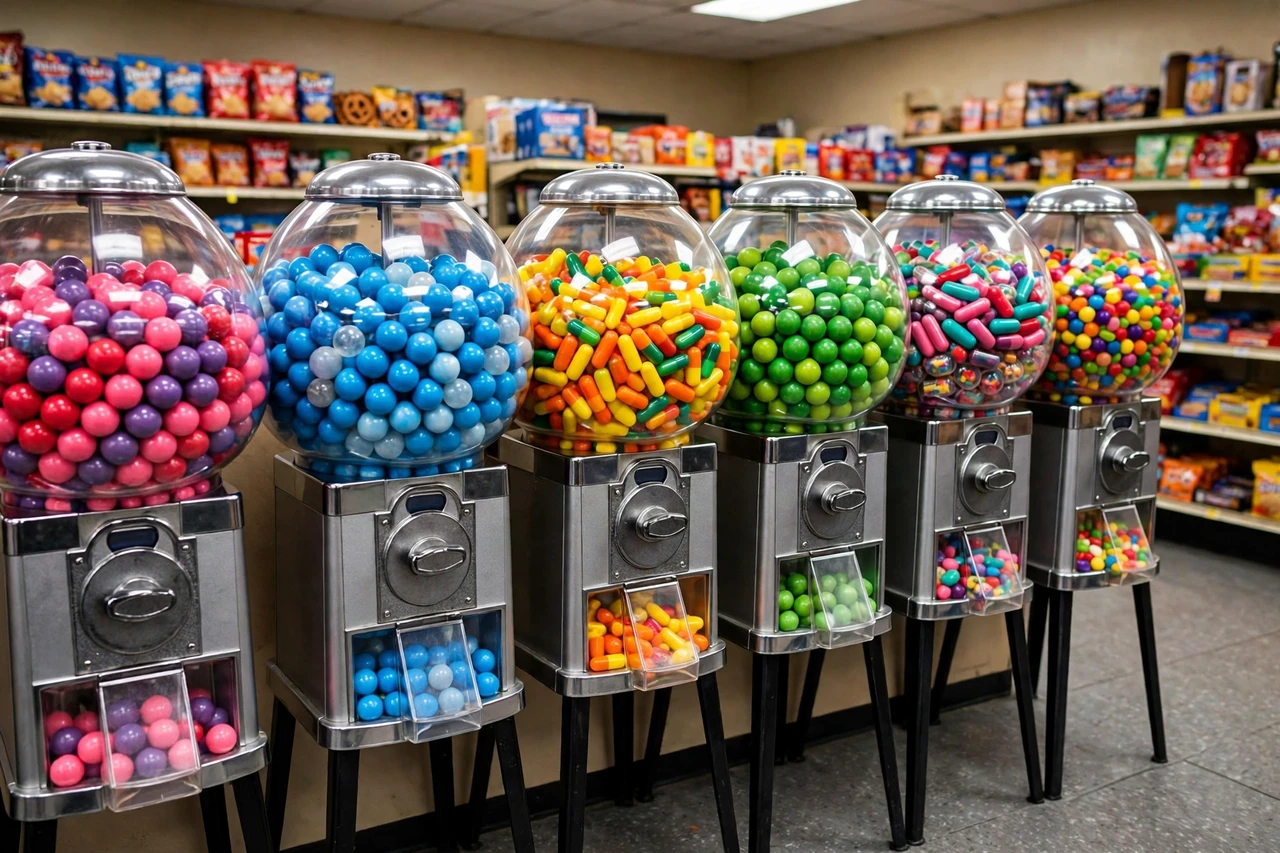
Bulk candy machines — the small gumball and candy dispensers found in diners, barbershops, and waiting rooms — are the cheapest entry point into vending. A single machine costs $50 to $200, and a route of twenty machines can be built gradually for a few thousand dollars. Each machine earns only $20 to $50 a month, but the model is simple, the product never spoils quickly, and restocking takes minutes.
This is the best first business for learning routes, placement negotiation, and cash handling without major risk. Place machines in small businesses where owners welcome a free amenity for their customers, and offer the owner a small commission to secure long-term spots.
9. Book Vending Machines for Young Readers
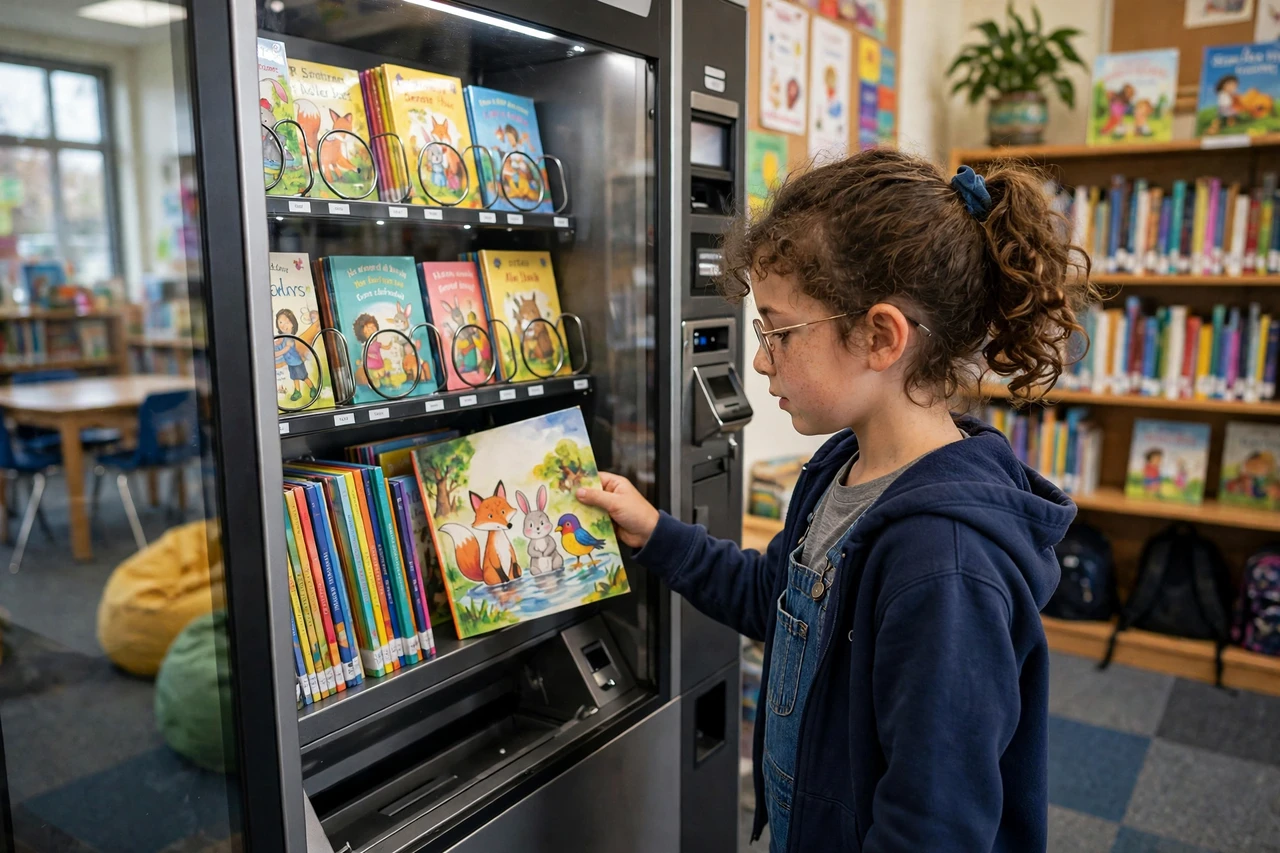
Book vending machines dispense children’s books like a prize machine, rewarding reading instead of candy, and schools and libraries love them. Some models let kids earn tokens for reading achievements, while others sell books directly to families. The business model here often combines machine sales or leasing to schools with book supply contracts, which is different from traditional coin-operated vending.
Approach school administrators and library directors with a clear proposal about literacy benefits and funding options, including grants and PTA budgets. Margins come from book sales and service contracts, and the mission-driven angle makes placement conversations easier than with snack machines.
10. Office Supply and Break-Room Essential Machines
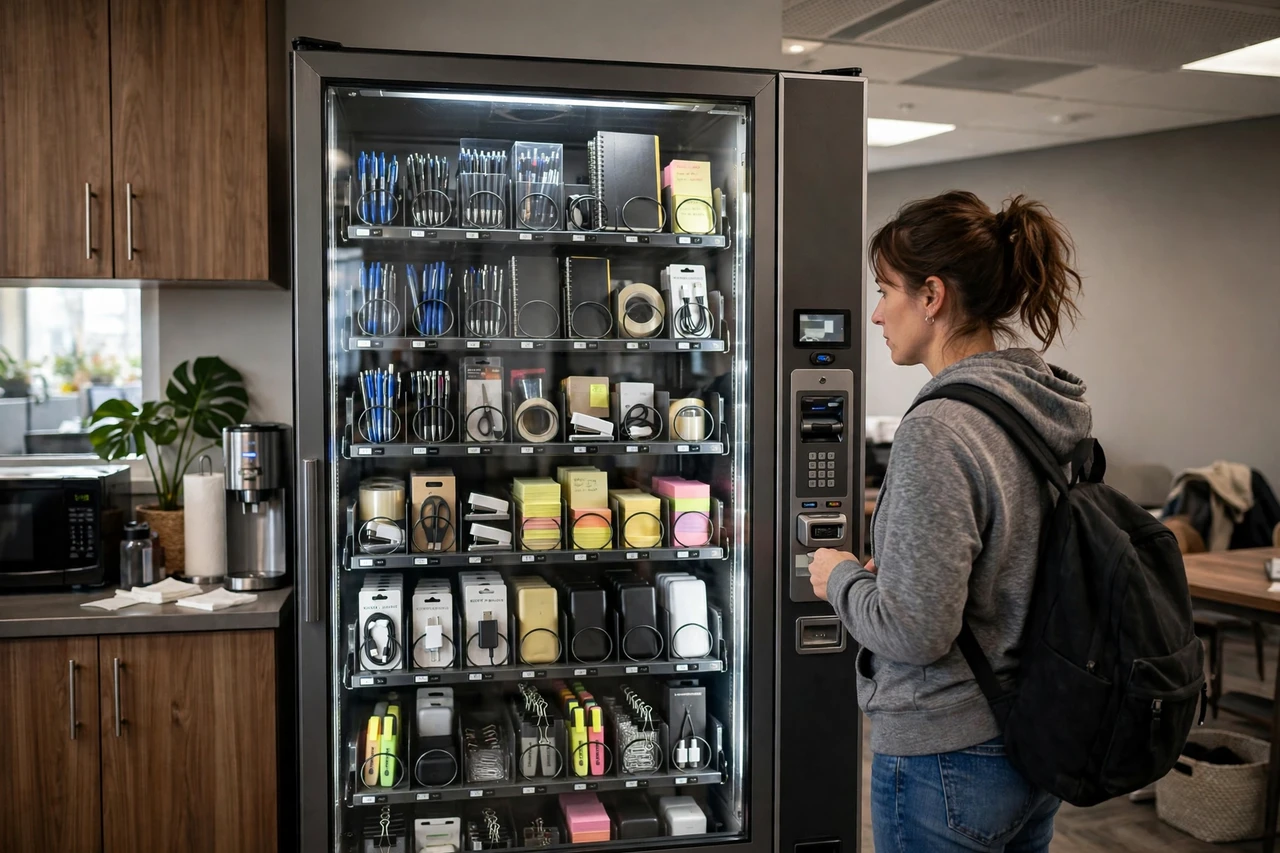
Break-room essential machines sell the small items office workers always run out of: pens, notebooks, phone chargers, pain relievers, tissues, and stain remover pens. Offices and coworking spaces are ideal because the audience is captive, purchases are practical rather than impulse-driven, and restocking is easy on a regular office route. Product costs are low and shelf life is long, which keeps the business simple.
Pitch building managers on convenience: employees stop leaving the office for small supplies, and the machine costs the business nothing to host. Start with one well-stocked machine, learn the top ten sellers for that office, and use that data to win your next placement. For a broader view of how vending fits into a passive income plan, ways to earn passive income online shows how vending compares with digital income streams.
Frequently Asked Questions
How much money do I need to start a vending machine business?
You can start a bulk candy route for under $1,000, a single refurbished snack machine for $1,500 to $3,000, or a specialty coffee or fresh food setup for $5,000 to $10,000. Most beginners start with one refurbished machine and reinvest profits into a second. Avoid financing expensive new machines until you have proven sales at a real location.
How much can one vending machine earn per month?
A typical snack machine earns $100 to $400 a month in net profit depending on location, while coffee and fresh food machines in strong locations can earn $500 or more. Bulk candy machines earn far less per machine but cost far less too. Location quality matters more than machine type — a great location with an average machine beats a great machine in a dead location.
Do I need a license to run vending machines?
Rules vary by state and city, but most operators need a business license, a seller’s permit for sales tax, and sometimes a food handler registration for fresh food machines. Check your state and local requirements before buying, and keep records of your machine locations and product suppliers for tax purposes.
How often do vending machines need restocking?
Snack and drink machines in busy locations need restocking weekly or twice weekly, while bulk candy routes may need attention only monthly. Modern machines with telemetry send low-stock alerts to your phone, saving wasted trips. Build restocking into a fixed weekly route to keep machines full and sales steady.
Is vending machine income really passive?
It is semi-passive rather than fully passive. Once machines are placed and stocked, the weekly work is a few hours of restocking, cleaning, and collecting cash or monitoring card payments. Compared with a job, it is flexible and scalable, but it is not a set-and-forget business — neglected machines lose sales fast.