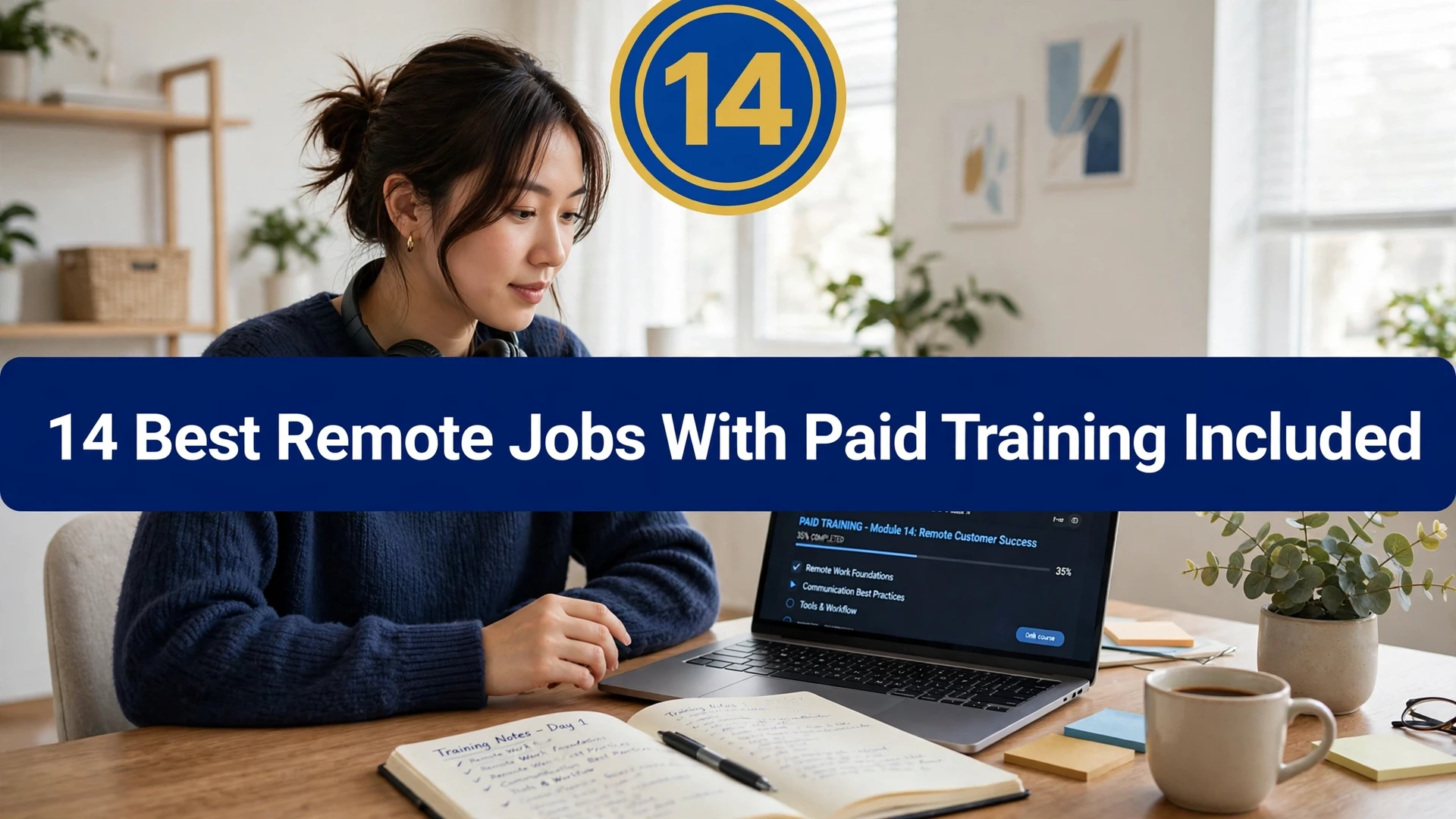
The hardest part of switching to remote work is often the training cost, but these remote jobs with paid training remove that barrier completely. Employers pay you an hourly wage while they teach you the systems, scripts, and skills you need, so you earn from day one instead of paying for a course first. All fourteen roles below hire beginners in the US. For more beginner-friendly options, see these best remote jobs for beginners and these remote jobs with no experience needed.
1. Paid-Training Remote Airline Reservations Agent
Airlines train remote reservations agents for several paid weeks, teaching booking systems, fare rules, and rebooking during disruptions. You help travelers plan trips, change flights, and solve travel problems from home. The training is thorough because the systems are complex, but you are paid throughout. Tip: a quiet room and a headset are essential, since training includes live practice calls. Airlines often offer flight benefits after training, which is a valuable perk if you love to travel on your days off.

2. Licensed Insurance Sales Trainee With Paid Licensing Course
Insurance companies pay for your state licensing course and exam while employing you as a trainee. You study life or health insurance basics on paid time, then move into a licensed sales or service role with commission on top of base pay. Tip: ask whether the company covers the exam fee and study materials, since the best programs cover both. Once licensed, you can choose between sales, service, or a mix of both, depending on whether you prefer commission upside or steady pay.

3. Paid-Training Remote Pharmacy Benefits Support Trainee
Pharmacy benefits companies train remote support trainees to explain prescription coverage, prior authorizations, and copay options to patients and pharmacies. Training lasts two to four paid weeks and covers healthcare privacy rules. Tip: take detailed notes during training, because members ask the same coverage questions again and again. Support trainees who master coverage rules often move into specialist roles that pay more and handle complex patient cases.

4. Remote Bank Customer Onboarding Trainee
Banks hire remote onboarding trainees and pay them through several weeks of training on account opening, identity verification, and fraud prevention. You welcome new customers, help them set up online banking, and answer early account questions. Tip: banks value discretion highly, so show in your interview that you understand why customer data stays inside secure systems. Banks promote heavily from onboarding teams, since staff who understand new accounts also understand the products customers need next.

5. Paid-Training Tech Support Apprentice for Software Companies
Software companies run paid apprenticeships where you learn their product, troubleshooting steps, and ticketing system before handling customers alone. Apprentices start on simple issues and graduate to harder ones over a few months. Tip: practice explaining a tech fix in plain language, since that skill separates good support apprentices from average ones. Apprenticeships usually include mentoring from senior engineers, which accelerates your learning far beyond what a course alone could offer.

6. Remote Healthcare Patient Access Trainee
Hospitals and large clinics train patient access trainees to register patients, verify insurance, and schedule procedures, all remotely. Paid training covers medical terminology and privacy law, so no healthcare background is required. Tip: empathy matters here, because many patients are stressed or unwell when they call. Patient access experience is a strong stepping stone into medical billing, scheduling management, and other healthcare administration careers.

7. Paid-Training Mortgage Document Reviewer
Mortgage lenders pay trainees to learn how to review closing documents, verify borrower information, and spot errors before loans fund. Training is paid and process-driven, with checklists for every document type. Tip: mortgage work is seasonal, so completing training before the spring buying season can lead to overtime opportunities. Reviewers who prove accuracy during busy periods are often kept on permanently, even after the initial hiring surge ends.

8. Remote Cybersecurity Support Trainee
Cybersecurity firms hire remote support trainees and pay for foundational security training, including how to spot phishing, reset access safely, and escalate real threats. You start on a help desk and can grow into analyst roles. Tip: a free introductory security course before you apply makes your application stand out, even though the employer provides full training. Entry-level security support is one of the fastest-growing remote fields, and employer-paid certifications can raise your pay significantly.

9. Paid-Training Online Tutoring Coach for Test Prep
Test prep companies pay new coaches through training on their curriculum, teaching methods, and online classroom tools. You then coach students for exams like the SAT, ACT, or professional certifications, working evenings and weekends if you prefer. Tip: strong scores in one subject are enough to start, since companies train you on the rest of their material. Coaches set their own availability, so this role fits well around college classes, parenting, or another part-time job.

10. Paid-Training Remote Cruise Vacation Support Trainee
Cruise lines train remote support trainees on ships, itineraries, cabins, and booking systems over several paid weeks. You help travelers choose sailings, add excursions, and handle changes before departure. The product knowledge is fun to learn, and travel perks often follow. Tip: genuine enthusiasm for travel shows in interviews, so mention a trip you planned yourself. Cruise support staff often receive discounted sailings, making this a popular choice for people who genuinely love ocean travel.

11. Paid-Training E-Commerce Fraud Screening Trainee
E-commerce companies train fraud screening trainees to recognize risky orders, verify buyers, and protect honest customers from account takeovers. Paid training covers fraud patterns and the review tools you will use daily. Tip: curiosity helps here, because the best screeners notice small inconsistencies others miss. Screening trainees learn risk analysis skills that transfer directly to banking, insurance, and payment companies.

12. Remote Utility Energy Advisor Trainee
Energy providers train remote advisors to help customers understand bills, choose energy plans, and sign up for efficiency programs. Paid training covers energy basics and billing systems, with no technical background required. Tip: customers respond to clear, jargon-free explanations, so practice translating one complex bill line into plain English. Energy advisors help households save real money, which makes the work satisfying as well as straightforward to learn.

13. Paid-Training Language Assessment Rater
Language testing companies pay raters through training on scoring rubrics for speaking and writing tests. You then score recorded responses from home, following strict guidelines for fairness and consistency. Tip: bilingual applicants have an edge, but many programs hire strong English speakers to rate English tests. Rating work is flexible and project-based, so you can scale hours up during busy testing seasons and down when you need a break.

14. Remote Corporate Training Coordinator Trainee
Large companies hire training coordinator trainees to schedule courses, track employee completions, and support virtual classrooms. Employers provide paid training on their learning platforms and internal processes. Tip: organizational skills are the whole job, so mention any experience keeping schedules, records, or events running smoothly. Coordinators gain experience with corporate learning systems, a skill that larger employers pay a premium for.

Frequently Asked Questions
Does paid training mean I earn a full wage during training?
Usually yes. Most employers on this list pay your regular hourly rate during training, though a few pay a slightly lower training rate that rises once you complete the program.
Do I have to repay training costs if I leave early?
Some licensed roles, like insurance, may ask you to stay a minimum period after they pay for your license. Always read the offer letter before accepting.
How long does paid training usually last?
Most programs run two to six weeks, with licensed and technical roles running longer than basic support training.
Can I do paid training fully from home?
Yes, all fourteen roles here offer remote training, usually over video calls and online learning platforms, with no travel required.
What if I fail the training?
Most employers offer retakes or extra coaching, especially for licensing exams. Ask about the pass and retake policy before you start.
Paid training turns the usual job-search catch-22 on its head: you no longer need experience to get experience. Choose a role that interests you, confirm the training is truly paid in the offer letter, and commit fully to the training weeks. That investment of a few weeks can open a remote career that lasts years.