If you want extra income without committing to a second job, apps that pay by the hour are the simplest place to start. You open the app, pick a shift that fits your day, work the hours you chose, and get paid for exactly those hours. There is no salary negotiation, no fixed weekly schedule, and no waiting for a monthly paycheck to see what you earned. The apps below cover warehouses, stores, restaurants, care work, cleaning, and remote support, so you can match the work to your skills and your availability. Availability varies by city, and hourly rates change with demand, location, and experience, so always check the listed rate before you accept a shift. Here are 14 ways to turn spare hours into paid hours.
1. On-Demand Warehouse Shift Apps That Pay Hourly

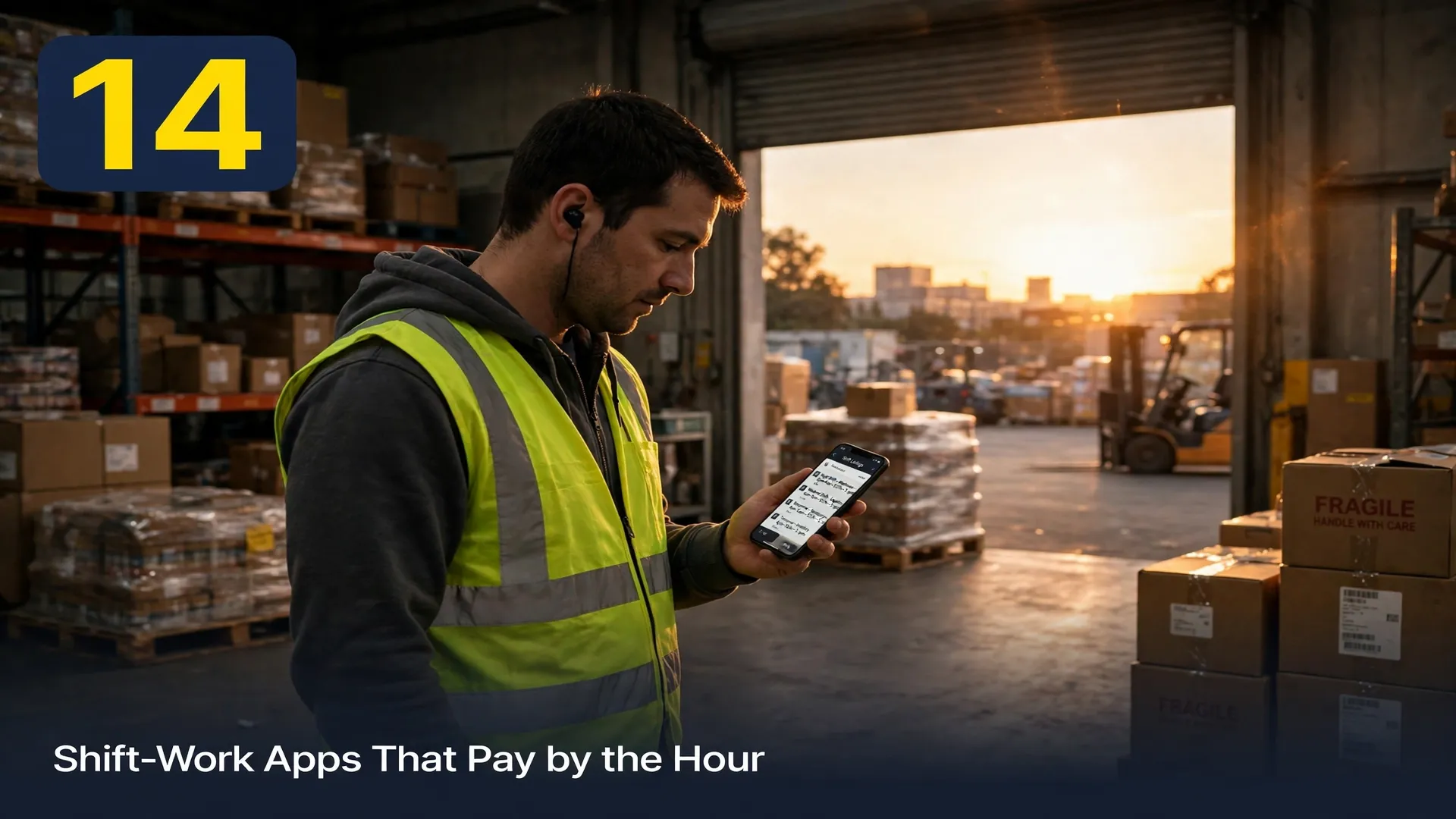
Warehouse shift apps list short shifts for picking, packing, sorting, and loading, usually in two- to eight-hour blocks. Apps such as Wonolo, Veryable, and Instawork post these jobs with the hourly rate, start time, and location shown up front, so you know what a shift pays before you claim it. Most warehouses provide basic training on arrival, and regular workers who show up on time tend to get offered shifts first. Bring water, wear comfortable closed-toe shoes, and arrive early for your first shift so check-in does not eat into your paid time.
Tip: filter for shifts near home first — a high hourly rate loses its value fast if you spend an hour driving there and back unpaid.
2. Retail Shift Apps for Same-Day Store Work

Retail shift apps connect stores with workers for stocking shelves, working the register, helping with inventory counts, and covering busy sale days. Stores post shifts when a regular employee calls out or a promotion brings in extra foot traffic, which means same-day openings are common. You usually need basic customer service skills and the ability to stand for most of the shift. Dress to the store’s guidelines, learn the layout on arrival, and ask the shift lead what the priority task is so you spend your hours on work that matters.
Tip: accept a short first shift at a store you like — a good impression there often turns into repeat requests and steadier hours.
3. Hospitality Shift Apps for Banquets and Events

Hospitality apps such as Qwick and Instawork list banquet server, bartender, event setup, and catering shifts at hotels, venues, and conference centers. These shifts pay by the hour and often run evenings and weekends, which suits anyone with a weekday day job. Many venues want black pants, a white shirt, and non-slip shoes, so keep a basic kit ready and you can accept last-minute calls. Event work is physical and fast-paced, but the shifts are clearly timed, so you know exactly when you clock in and out.
Tip: read the shift notes carefully — some events require food-handler certification or a specific dress code, and missing either can cost you the shift.
4. Healthcare Support Shift Apps for Care Facilities

Care facilities use shift apps to fill gaps for certified nursing assistants, home health aides, and support staff, and the work pays by the hour with rates that rise for nights and weekends. Apps in this space, including Clipboard Health, usually ask for a license or certification and a background check before your first shift. The work is hands-on and personal, from helping residents with daily routines to supporting nurses on a busy floor. If you already hold a CNA or HHA credential, these apps can turn your days off into well-paid shifts without a full-time commitment.
Tip: keep your credentials and vaccination records in one folder on your phone so you can complete verification in a single sitting instead of over several days.
5. Delivery Shift Apps With Hourly Guarantees

Some delivery apps now offer scheduled blocks with an hourly floor, which means you earn a predictable rate for the hours you work instead of gambling on tips alone. You sign up for a block, deliver orders during that window, and the app tops up your pay if orders are slow. You need a car, bike, or scooter depending on your city, plus a phone mount and a hot bag for food orders. Track your miles and gas, because those costs come out of your earnings, and the hourly guarantee only helps if the block is near busy restaurants.
Tip: choose blocks that cover lunch or dinner rush — slow mid-afternoon blocks are where hourly guarantees matter most, but busy blocks usually pay more overall.
6. Gig Cleaning Shift Apps for Offices and Homes

Cleaning shift apps match you with offices, short-term rentals, and homes that need a one-time or recurring clean, and most jobs pay by the hour or by the job with the hours estimated up front. You bring basic supplies unless the listing says they are provided, and a thorough first clean usually leads to repeat bookings from the same client. Turnovers for rental properties are the most time-sensitive jobs — the next guest is arriving — so punctuality and a checklist habit matter more than speed. Take before-and-after photos for your own records and to show future clients your standard of work.
Tip: time your first few jobs honestly so you learn which homes take two hours and which take four before you accept a fixed-price booking.
7. Security and Event Staffing Shift Apps

Event staffing apps list hourly shifts for ushers, ticket scanners, crowd control, and security support at concerts, sports games, and festivals. Some roles need a state security license, while others — such as ushering and guest services — need only a background check and a brief orientation. Shifts are often evenings and weekends, and large events can run long, so confirm the expected end time before you accept. The work is mostly standing and walking, and the pay is steady and predictable because the hours are set in advance.
Tip: apply for a license early if you want the higher-paid security roles — the paperwork can take weeks, and licensed workers get picked first.
8. Childcare Shift Apps for Nurseries and After-School Programs

Childcare shift apps place qualified workers in nurseries, daycares, and after-school programs for hourly shifts, covering staff absences and busy periods. You usually need childcare experience, references, and a background check, and some states ask for specific training or certification. The hours often run early morning or mid-afternoon, which fits well around school runs for parents. If you are a parent looking for work that fits around your own kids, it is also worth reading our guide to apps that pay flexible hours for parents for options built around family schedules.
Tip: keep two strong references ready — nurseries check them every time, and a fast reference reply can win you the shift over a slower applicant.
9. Food Service Shift Apps for Restaurants and Cafes

Food service shift apps list hourly work for line cooks, dishwashers, servers, baristas, and cashiers at restaurants and cafes that need cover for a night or a weekend. Apps such as Qwick and Instawork show the role, the rate, and the dress code before you claim a shift, and some venues add tips on top of the hourly pay. Restaurant work is busy and team-based, so introduce yourself to the shift lead, ask where things live in the kitchen, and stay until your replacement arrives. One strong shift at a popular restaurant can lead to regular weekend bookings.
Tip: bring your own non-slip shoes and a food-handler card if your state requires one — venues turn away workers without them.
10. Moving and Warehouse Labor Shift Apps

Moving and labor apps list hourly shifts for loading trucks, unloading deliveries, assembling furniture, and helping with residential moves. Apps such as Bacon and Wonolo post these jobs with the number of workers needed and the expected duration, and heavier jobs usually pay a higher hourly rate. You need to be able to lift safely and work steadily for several hours, and gloves and a back support belt help on long days. Confirm whether the job provides a dolly and straps, or whether you are expected to bring your own gear.
Tip: learn the right lifting technique before your first moving shift — one bad lift can end your earning week, and good form is what keeps labor workers employed long term.
11. Customer Service Shift Apps You Can Do From Home

Not every hourly shift needs you to leave the house. Some apps and platforms schedule customer service, chat support, and phone support shifts that you work from home, paid by the hour for the time you are logged in and available. You need a quiet space, a reliable internet connection, and a headset, and most platforms run a short training or assessment before your first paid shift. The work suits people who want steady hours without travel, and evening and weekend shifts are usually the easiest to get. Keep a simple log of your scheduled hours so you can check that every paid hour shows up on your payout.
Tip: test your headset and internet speed before the shift starts — technical problems in the first ten minutes are the most common reason new support workers lose a shift.
12. Seasonal Shift Apps for Holidays and Peak Periods

Seasonal shift apps ramp up around the holidays, back-to-school season, and big sale events, when retailers, warehouses, and delivery hubs need extra hands for a few weeks. These shifts often pay a higher hourly rate than the same work in a slow month, and many employers offer a completion bonus if you work the full season. Sign up a few weeks before the peak starts, because onboarding and background checks take time and the best shifts go to workers who are already approved. A strong seasonal run can also turn into a permanent part-time role once the rush ends.
Tip: set your availability wide during peak weeks — the workers who accept the early-morning and late-night shifts get the most hours.
13. Temp Office Shift Apps for Admin and Data Work

Temp office apps place workers in short admin, reception, filing, and data-entry shifts, paid by the hour, for companies covering leave or busy periods. You need basic computer skills, a professional manner on the phone, and the ability to learn a new office’s systems quickly. Some shifts are on-site and some are remote, and the listing usually says which. Bring a notebook on day one, write down passwords, contacts, and procedures as you learn them, and leave a short handover note at the end of the shift — offices remember temp workers who make the next person’s day easier.
Tip: keep your resume and a short skills summary updated inside the app, because office shifts are often filled within an hour of posting.
14. Overnight Shift Apps for Night Owls

Overnight shifts pay some of the best hourly rates on these apps, because fewer workers want them and facilities still need cover. Warehouses, care homes, security posts, and cleaning crews all list night shifts, often with a premium over the daytime rate for the same work. The trade-off is your sleep schedule, so plan rest before and after a night shift and avoid stacking nights back-to-back until you know how your body handles them. For more ideas built around the night, see our guide to side hustles for night shift workers on their days off — many of them pair well with an overnight shift pattern.
Tip: claim night shifts a few days ahead rather than last minute — the premium rates go to the first workers who commit, and late postings are often the hardest to fill for a reason.
Frequently Asked Questions
Do shift-work apps really pay by the hour?
Yes — most shift apps show a fixed hourly rate on the listing, and you are paid for the hours you work. Some delivery and gig apps mix hourly guarantees with per-task pay, so read the listing carefully to see whether the rate is a true hourly wage or an estimated average.
How fast can I start earning on a shift app?
It depends on verification: simple apps can approve you in a day, while care, security, and childcare roles need background checks and credentials that can take one to three weeks. Apply early, finish your paperwork in one go, and you will be ready when shifts appear in your area.
Do I need experience to get shift work?
Many warehouse, retail, cleaning, and event shifts need no experience at all — just reliability and the ability to do physical work. Skilled roles such as care work, cooking, and security pay more, but they ask for a license, certification, or proven experience first.
Are shift apps better than a part-time job?
Shift apps win on flexibility: you choose your hours and can stop any week. A part-time job usually wins on stability, with steadier hours and sometimes benefits. Many people use shift apps to test a type of work, then take a regular part-time role once they know they like it.
How do I avoid low-paying shifts?
Compare the hourly rate against your travel time and costs before you accept, and skip shifts that pay less than your minimum once travel is counted. Track what each app and shift type actually pays you per hour after costs, and favor the ones that consistently come out ahead.
Hourly shift apps work best when you treat them like a menu, not a job: pick the shifts that pay fairly, fit your day, and match what you are good at, and leave the rest. Start with one app, learn which shift types in your city pay best, and build from there. Your spare hours are already there — now they can pay you by the hour.