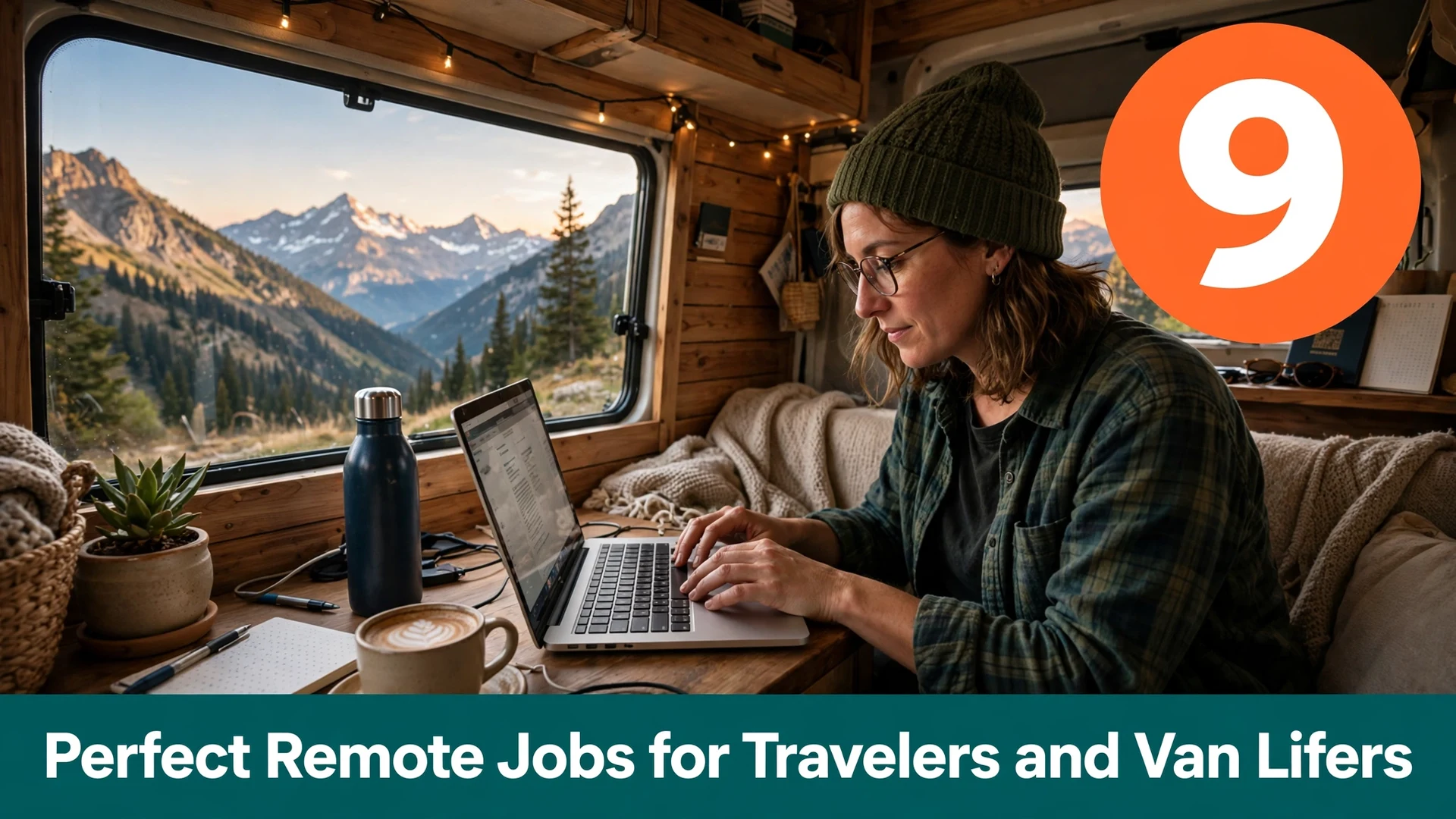
Van life and full-time travel sound free until you try to join a video call from a campground with one bar of signal. The best remote jobs for van lifers do not need fast internet or fixed hours — they are asynchronous, offline-friendly, or batchable, so you can work from a picnic table, upload when you reach town, and drive on. If you want to start quickly, these legit remote jobs you can start this week include several flexible options, and these remote jobs that pay well with no experience are worth a look too.
1. Work Overnight Support Shifts From Any Time Zone
Overnight chat and email support shifts care about coverage, not location. If you can answer tickets between 10 p.m. and 6 a.m. in your current time zone, employers care far less about where you parked for the night. Keep a backup hotspot plan for nights when one carrier drops out. Download offline maps for your route too, so a dead zone never leaves you lost as well as offline. Keep a written log of your hours so pay disputes never depend on memory.
Overnight roles often pay a shift differential on top of $16 to $24 an hour, and ticket volumes are lower than daytime. A mobile hotspot is usually enough, since chat support uses very little bandwidth.
2. Transcribe Audio Files Offline, Upload When You Have Signal
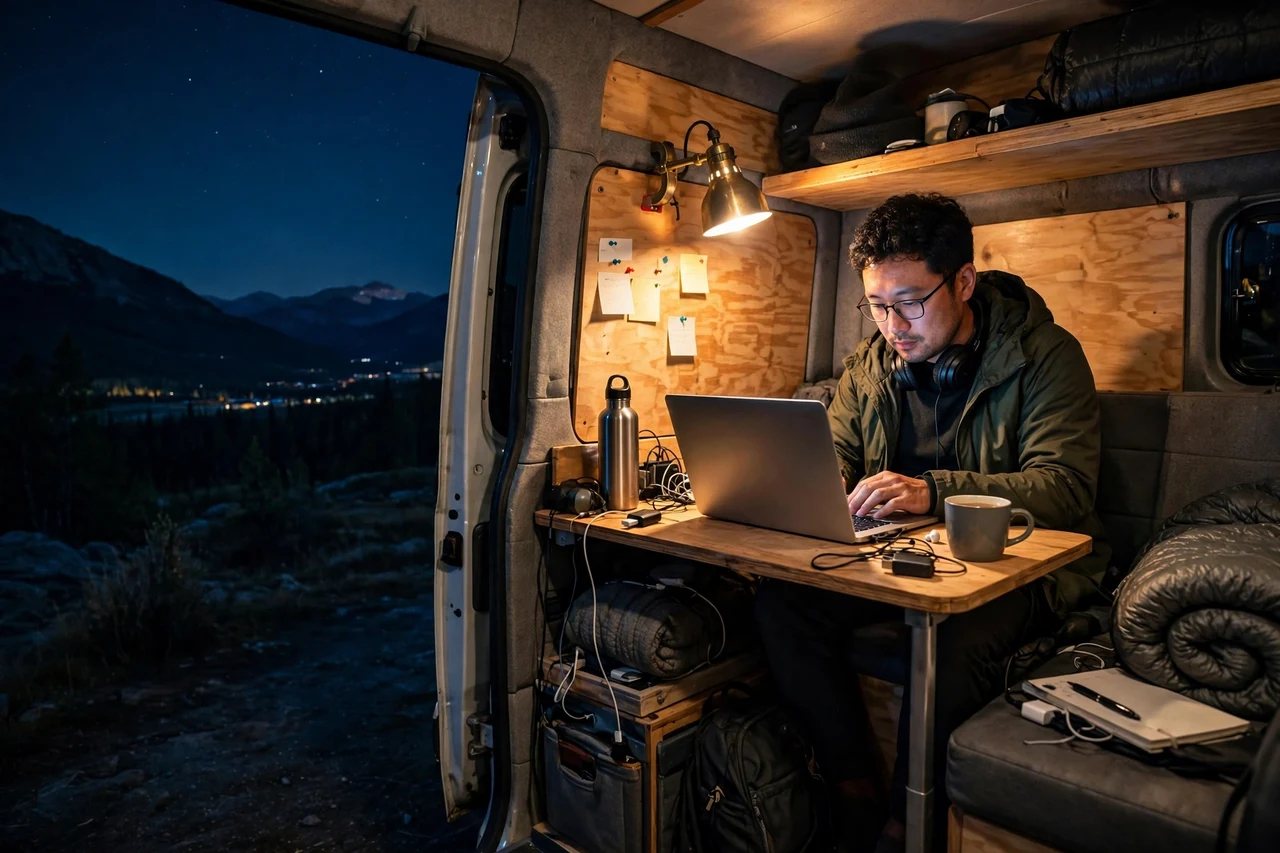
Transcription is one of the most van-friendly jobs there is: download audio files in town, transcribe them offline at a campsite with no signal at all, and upload finished transcripts when you next reach Wi-Fi. Transcriptionists earn $18 to $30 an hour. A simple daily word-count target keeps transcription income steady even on driving days. Offer rush turnaround at a higher rate for clients who need transcripts the same day. Consistency builds trust fast.
Start on Rev or GoTranscript, and build speed with a foot pedal and good headphones. Because deadlines are usually 24 to 72 hours, not minutes, you can plan work around driving days.

3. Teach English Online in Short Blocks Between Drives
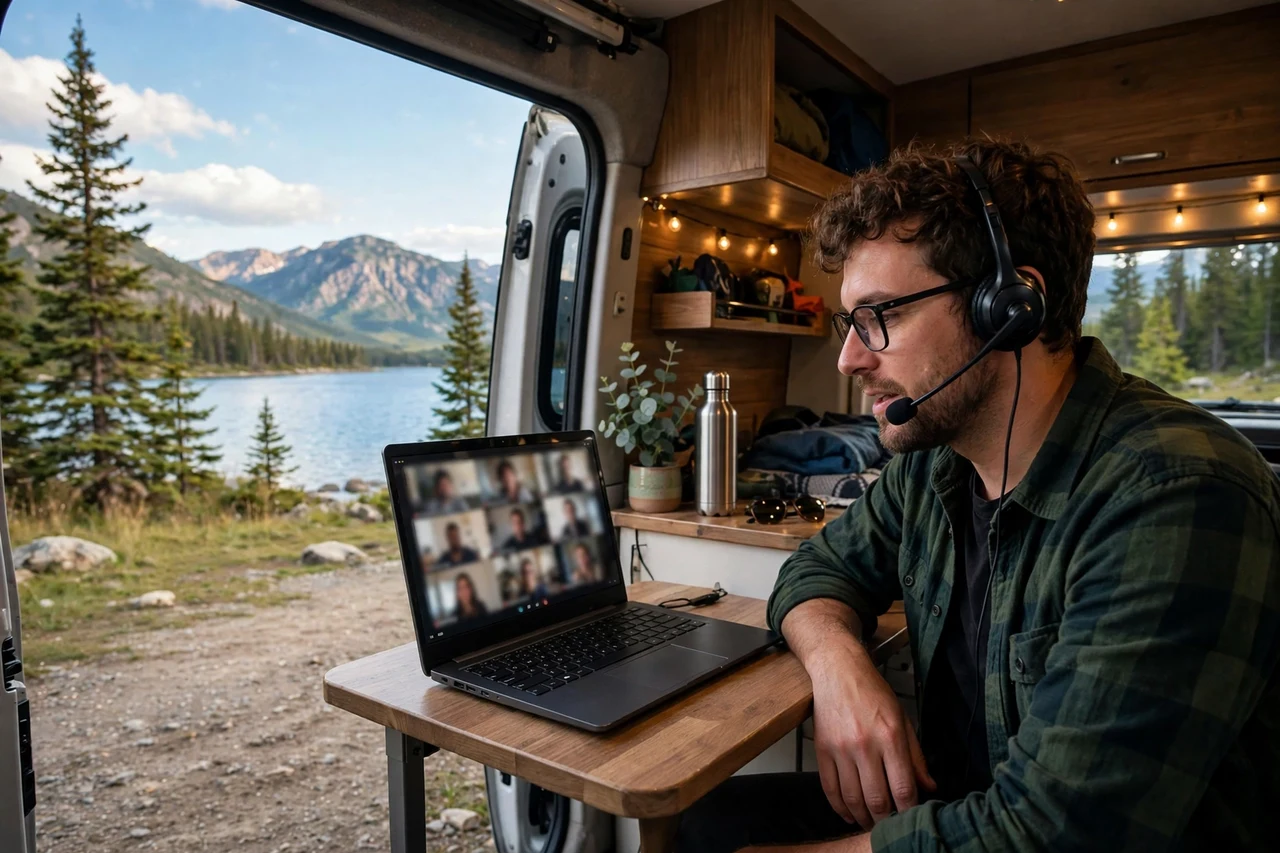
Platforms like Cambly and Preply let you open short teaching blocks — 30 minutes here, an hour there — rather than committing to a full shift. That fits a travel day perfectly: teach in the morning, drive in the afternoon. Block your teaching calendar around planned driving days so students never face surprise cancellations. Keep a simple backup lesson plan ready for days when your connection drops mid-class.
English tutors earn $15 to $30 an hour, and conversation practice needs only a phone or laptop camera and a basic connection. Students in other time zones also mean you can teach at hours that suit your route.
4. Schedule a Week of Pins in One Café Session
Pinterest managers plan and schedule a client’s pins in bulk — one long café session with good Wi-Fi can queue an entire week of content. Managers earn $20 to $35 an hour, and clients judge you on results, not on where you worked from. Ask each client for their brand colors and fonts up front so scheduled pins always look consistent. Review each client’s analytics monthly so you can show exactly which pins drove traffic.
Learn Pinterest scheduling tools like Tailwind, and offer a simple package: 30 pins scheduled per week plus a monthly report. Small businesses and bloggers are the easiest clients to win, and they rarely ask where you are.

5. Write SEO Content in Batches From Campgrounds
SEO writing is deadline work, not live work. Download your briefs, write a batch of articles offline over a few days, and upload them all at once from the next town with Wi-Fi. Writers earn $0.10 to $0.30 per word, or $20 to $50 an hour once experienced. Negotiate per-article rates rather than per-word rates once you prove you can deliver clean drafts.
Pick one niche you know well — travel, outdoors, finance, food — and pitch agencies and blogs that assign in batches. Batch writing is also more efficient: researching five articles at once beats starting from scratch every day.

6. Design Custom Road Trip Itineraries for Other Van Lifers
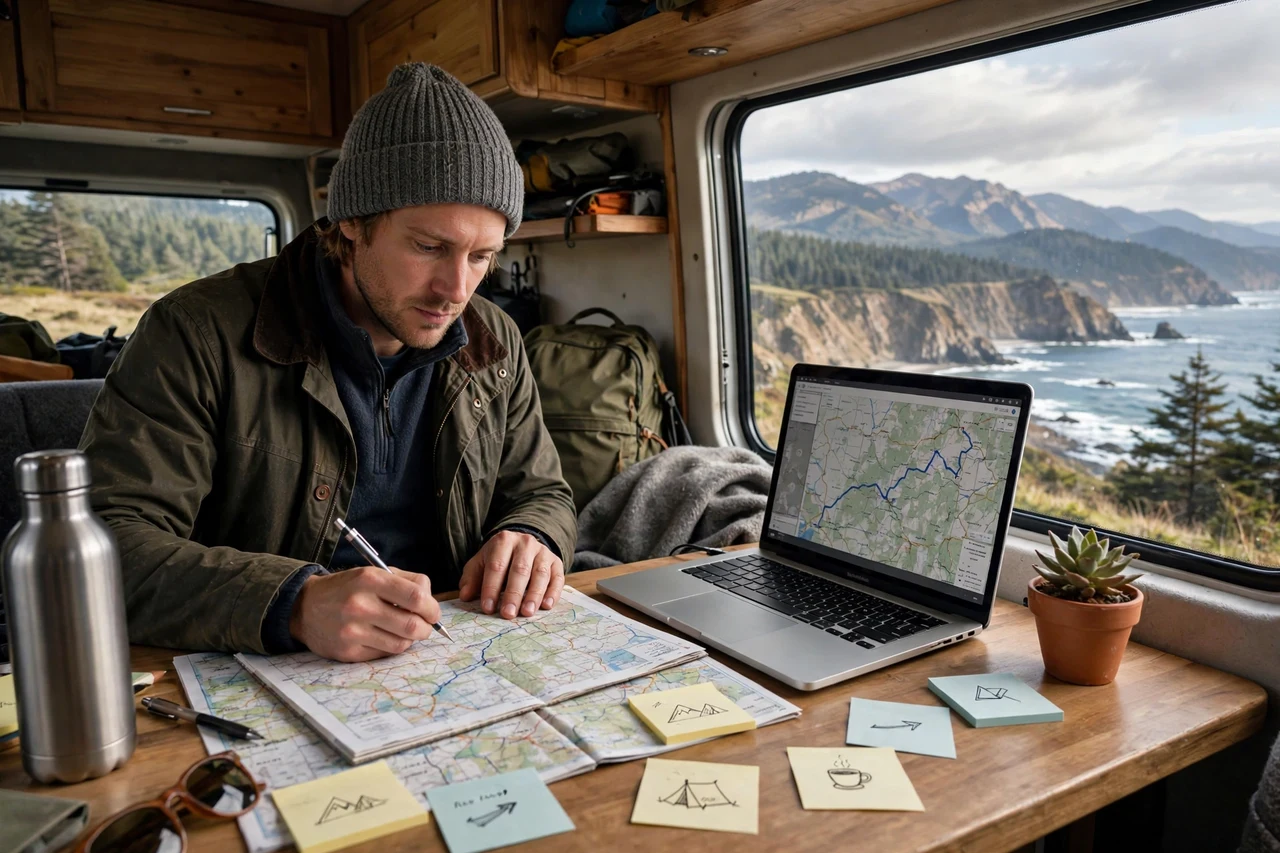
People planning their first van trip will pay $50 to $150 for a custom itinerary: routes, campsites, fuel stops, water sources, and must-see stops, built by someone who has actually done it. Your own travel experience is the qualification. Photograph every stop on your own trips so your itineraries include real, tested recommendations.
Sell itineraries on Etsy or Fiverr, or offer them through van-life Facebook groups and forums. Start with routes you know personally, collect testimonials, and expand to new regions as you travel them.
7. Do Seasonal Bookkeeping for Campgrounds and Tour Operators
Campgrounds, tour operators, and seasonal businesses need bookkeeping help most during their busy season — exactly when you are likely passing through. Remote bookkeepers earn $20 to $35 an hour reconciling bookings, expenses, and seasonal payroll. Use cloud accounting software so clients can see their books without you mailing anything.
Offer a seasonal package: monthly reconciliation plus a year-end summary, all handled by email. Tourism businesses understand travel because they serve travelers, so they are unusually open to a bookkeeper who works from the road.

8. Edit Podcasts From Your Van With Downloaded Files
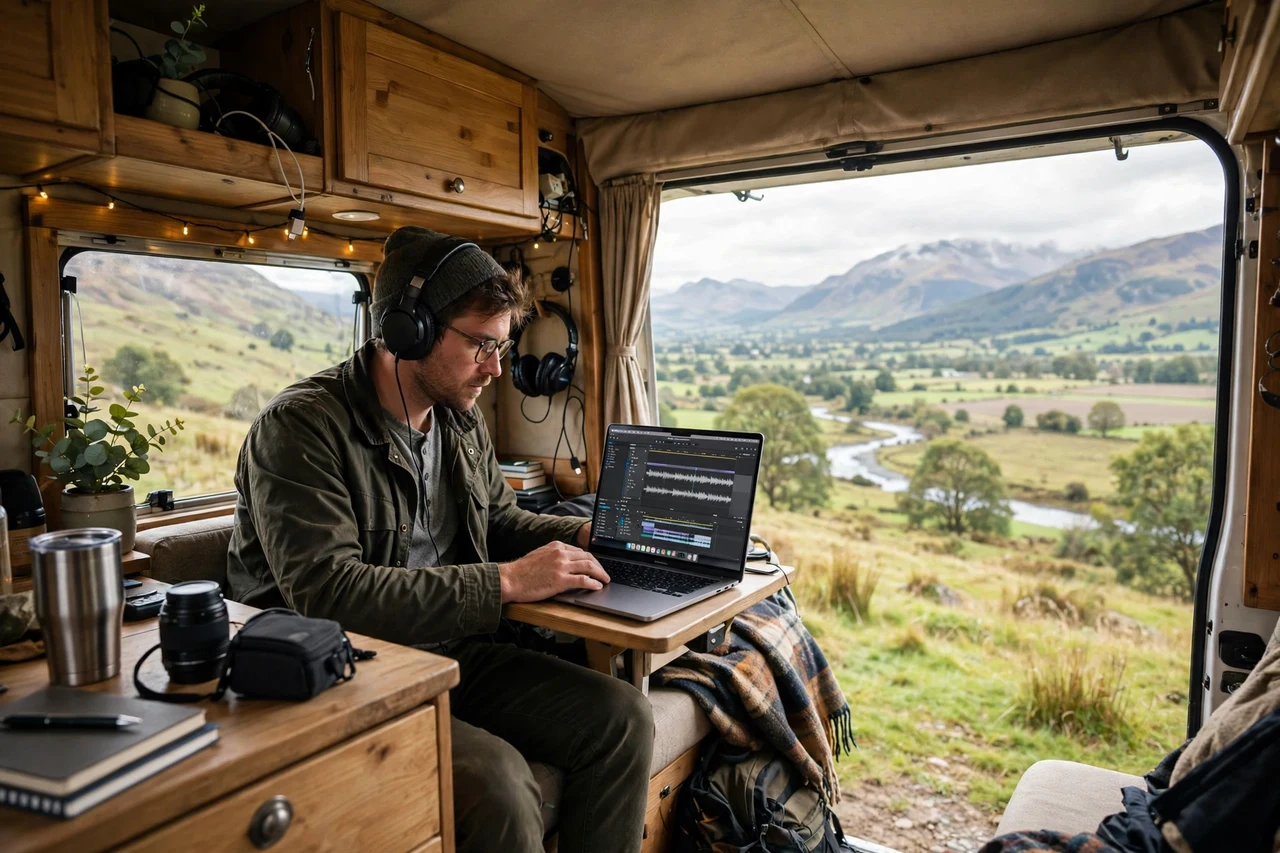
Podcast editing is another offline-friendly job: download raw audio in town, edit it at your campsite with no connection, and upload the finished episode later. Editors earn $25 to $60 per episode or $20 to $40 an hour. Deliver a short sample edit first — podcasters hire editors they trust with their voice.
Learn Audacity or Descript, and offer a sample edit to win your first show. Podcasters care about turnaround time and clean audio, not about your address — and weekly shows mean steady, predictable income.
9. Test Travel Apps and Booking Sites for Pay
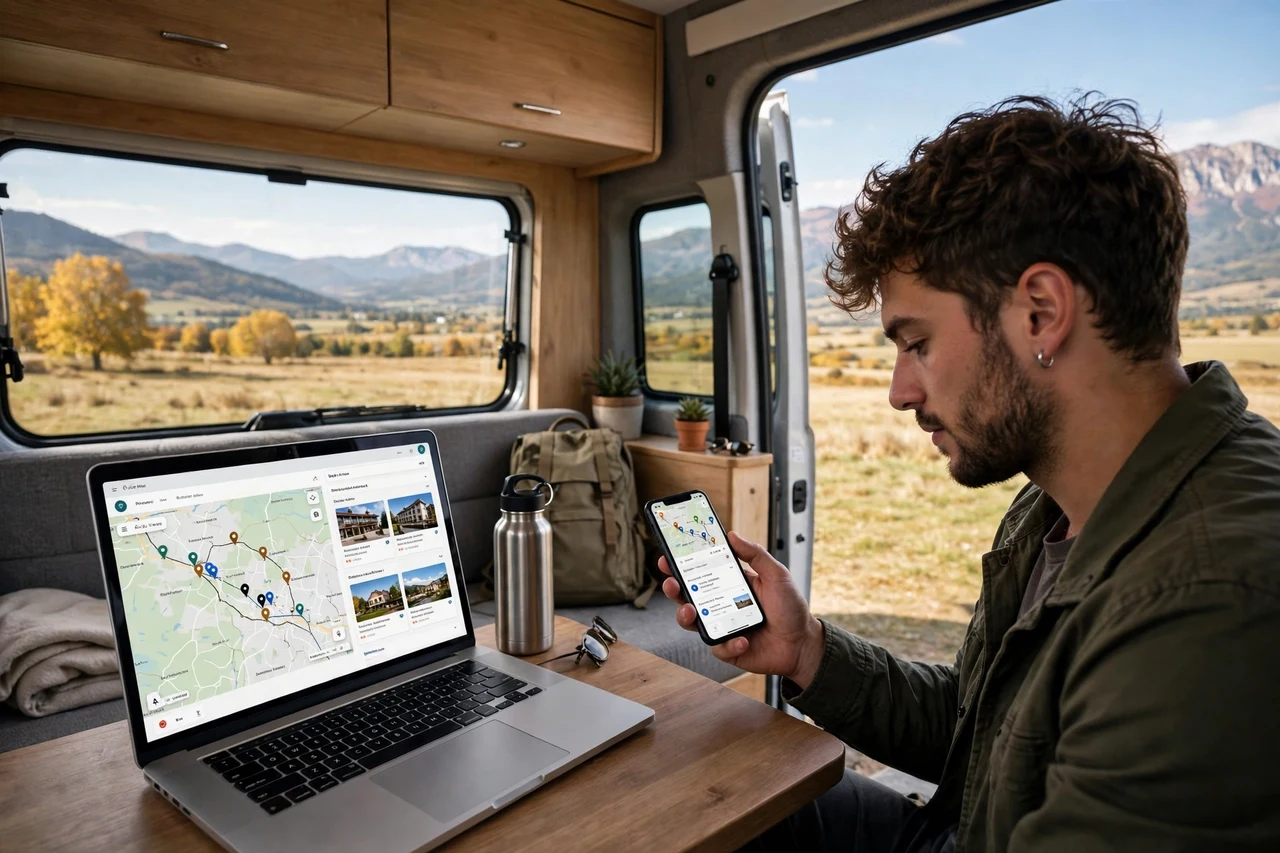
Travel companies pay usability testers $10 to $60 per test to try booking flows, report bugs, and record their honest reactions. Tests take 20 to 60 minutes, need only a phone and a hotspot, and fit neatly into a travel day. Complete your tester profile fully, since platforms assign higher-paying tests to detailed profiles.
Sign up on UserTesting, Maze, and TryMyUI, and highlight your travel experience in your profile — testers who actually travel give far better feedback on travel products. A few tests a week adds $100 to $300 a month with almost no commitment.
Frequently Asked Questions
How much internet do van-life remote jobs really need? Less than you think. Chat support, transcription, writing, and editing all work on a mobile hotspot, and offline-first jobs need a connection only to download and upload files. Avoid roles built around all-day video calls.
What gear do I need to work from a van? A reliable laptop, a mobile hotspot with two carriers if possible, a power bank or solar setup, and noise-cancelling headphones. Test your full setup on a weekend trip before committing to a job.
Can I keep a remote job while crossing time zones? Yes, if the job is asynchronous or shift-based with flexible zones. Tell employers you travel, agree on deadlines in one reference time zone, and keep a shared calendar updated. For more flexible arrangements, see these remote jobs for stay-at-home moms.
Do employers care that I live in a van? Most do not, as long as your work is on time and your connection is reliable when it matters. Never lie about it, but there is rarely a reason to lead with it either — lead with your work.
What if I lose signal for days? Build buffer into every deadline, warn clients before remote stretches, and keep at least one offline-friendly income stream — like transcription or writing — so a dead zone never means a dead paycheck.