Every $3 ATM surcharge you pay is someone else’s passive income — and that someone could be you. These 8 ATM business income strategies show beginners how to place machines, price surcharges, and scale to real monthly income.
1. Target High-Traffic Cash Businesses
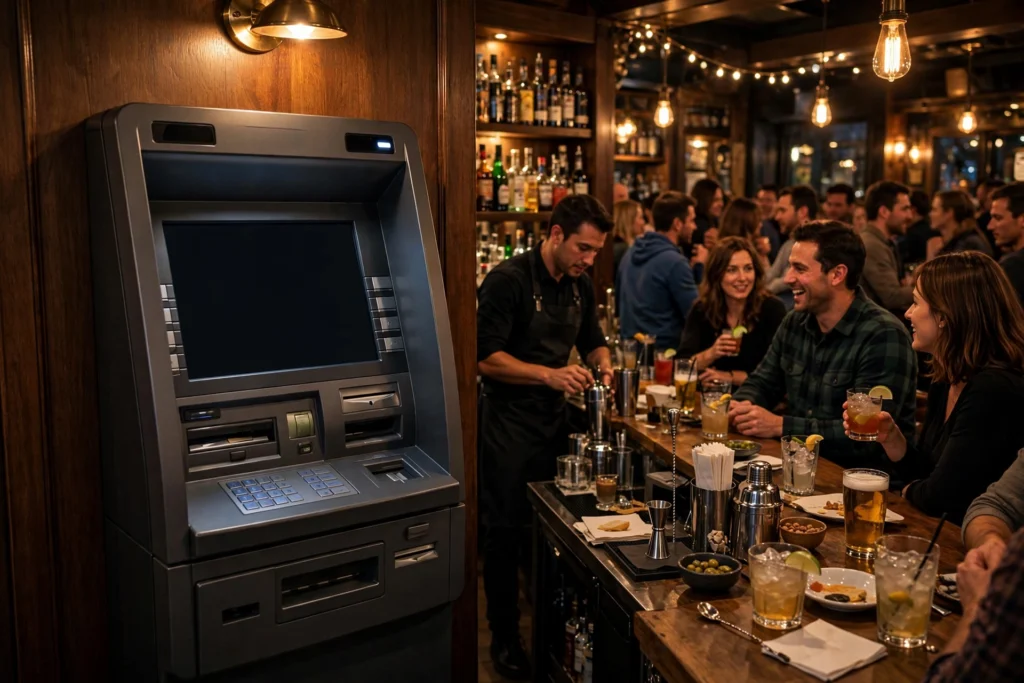
Placement is 80% of the ATM business: bars, nightclubs, convenience stores, barbershops, dispensaries, and cash-only restaurants generate the most withdrawals. A well-placed machine processes 300 to 800 transactions monthly; at a $2.50 average surcharge, that’s $750 to $2,000 per machine per month. Walk into businesses as a customer first and observe foot traffic before pitching.
Pitch owners on the benefits to them: ATMs keep customers spending in-store instead of leaving to find cash, and many owners welcome a free machine installation. Lead with their upside, not yours.
2. Buy Existing Routes Instead of Starting Cold
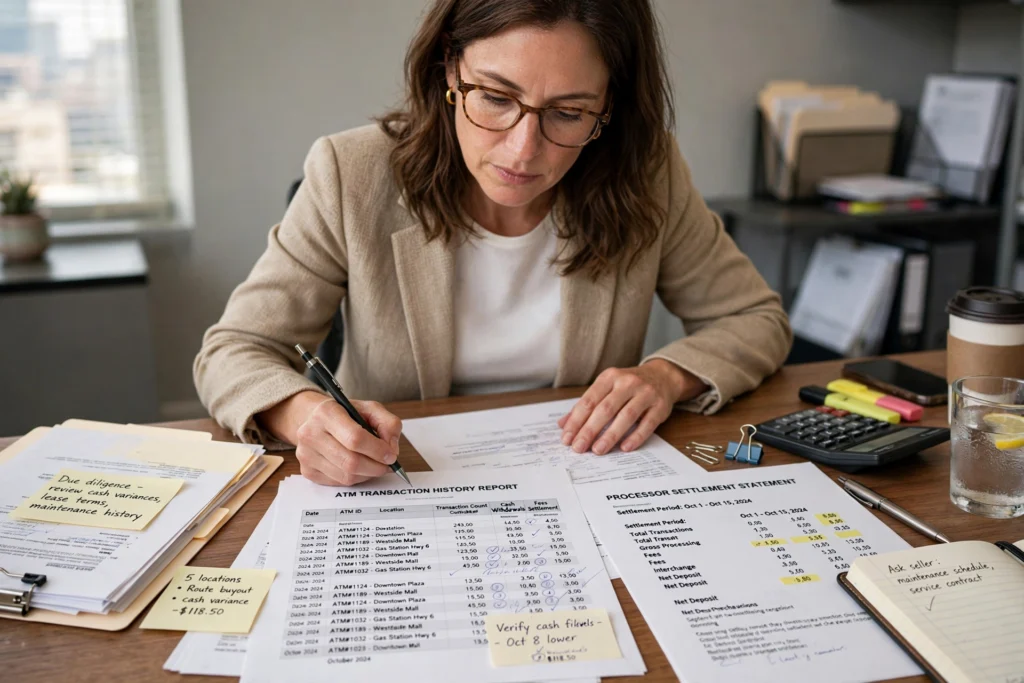
Buying an established ATM route — someone else’s placed machines with proven transaction history — skips the hardest part: finding locations. Routes sell for 1 to 2x annual net income; a 10-machine route netting $30,000 a year might cost $30,000 to $60,000. You get immediate cash flow plus the location contracts already signed.
Verify every machine’s transaction history through processor statements, not the seller’s spreadsheet. Visit the top 3 locations yourself to confirm the businesses are thriving — a dying bar means dying transactions.
3. Price Surcharges for the Location
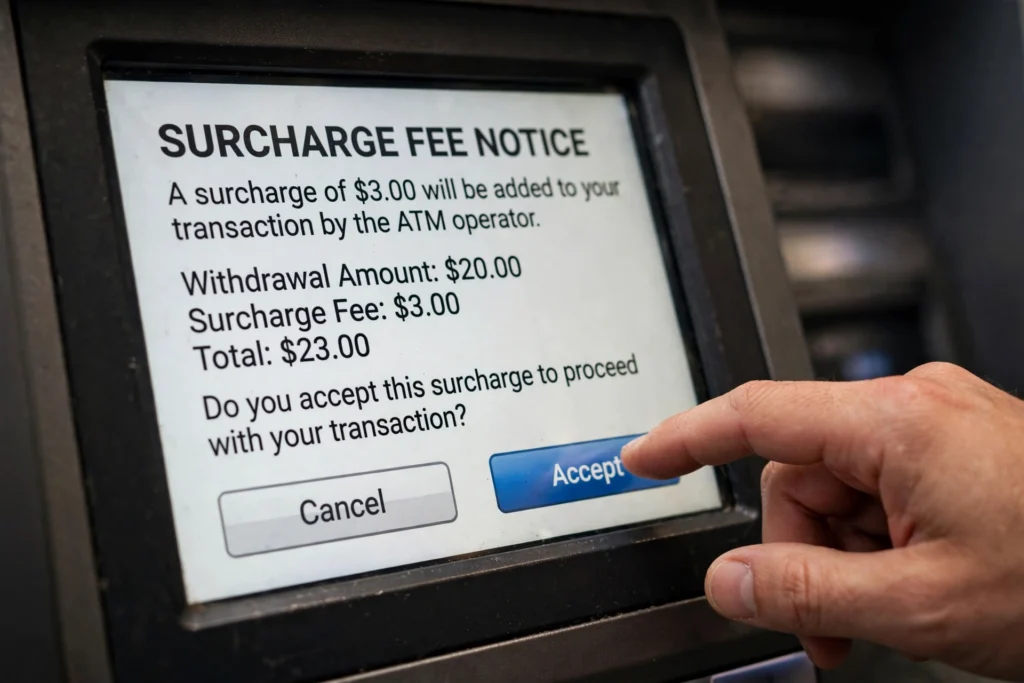
Surcharge pricing isn’t one-size-fits-all: $2.50 works in convenience stores, but bars, clubs, and event venues tolerate $3.50 to $5.00 because customers need cash urgently. Each $0.50 increase on 500 monthly transactions adds $250 per machine per month — pricing is pure profit leverage. Test upward in $0.25 increments and watch transaction counts.
Split surcharge revenue with location owners (typically $0.25 to $0.75 per transaction) to win prime spots — a slightly smaller cut of a busy machine beats 100% of an empty one.
4. Buy Refurbished Machines to Start
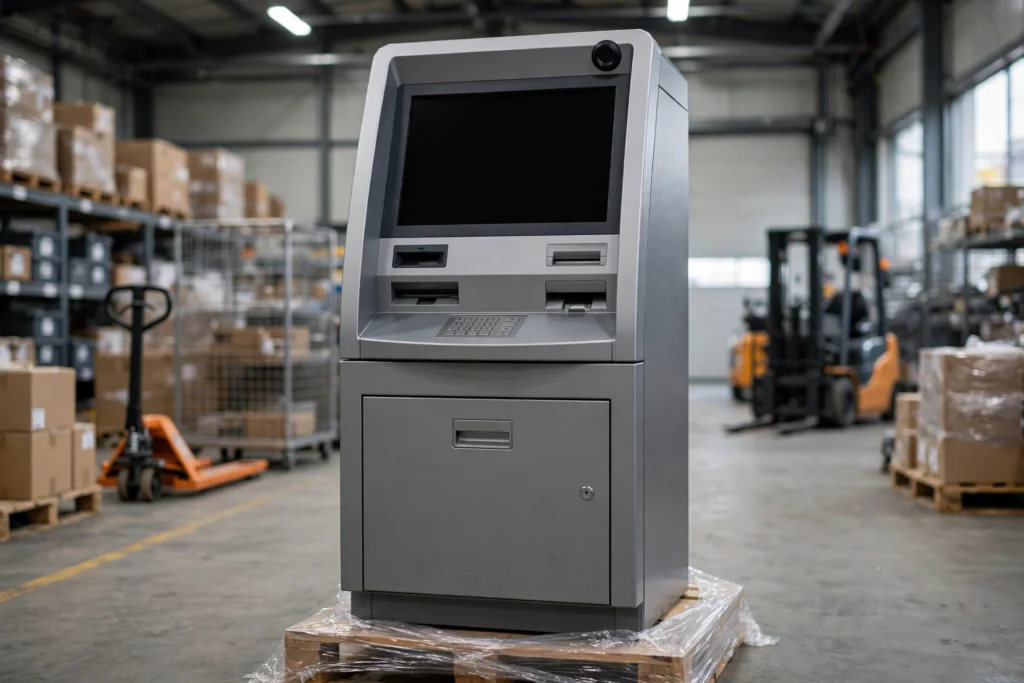
New ATMs cost $2,500 to $4,000, but certified refurbished machines run $1,200 to $2,000 and perform identically for years. Starting with refurbished cuts your payback period from 18 months to under a year on a good location. Reputable refurbishers include warranty and EMV compliance — never buy a machine that isn’t EMV-compliant or you’ll eat fraud liability.
Budget $300 to $500 extra per machine for installation, signage, and initial cash load. All-in under $2,500 per location is an achievable beginner target.
5. Master Cash Loading Logistics
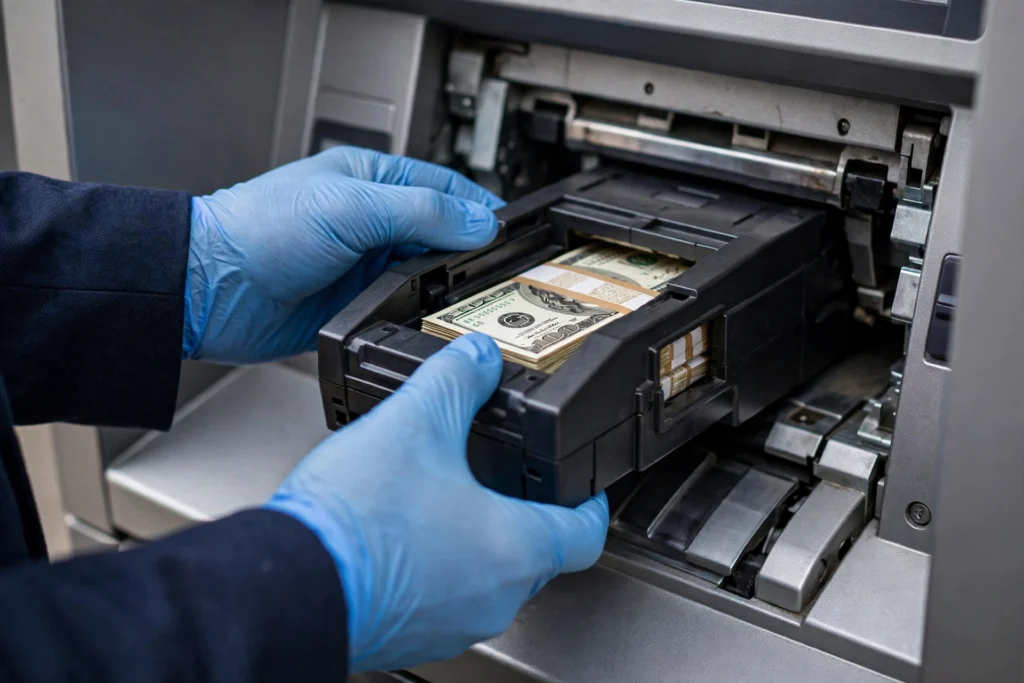
Cash loading is the operational core: machines hold $2,000 to $10,000, and empty machines earn zero. Efficient operators load on a schedule matched to each location’s volume — weekly for busy bars, biweekly for steady stores — minimizing both trips and idle cash. Each loading trip should take under 15 minutes with a system.
Track cash levels through your processor’s remote monitoring to load just-in-time rather than on guesswork. As you scale past 5 machines, armored cash services ($200–$400/month per route) become worth it for safety and time.
6. Negotiate Processing Fees Down
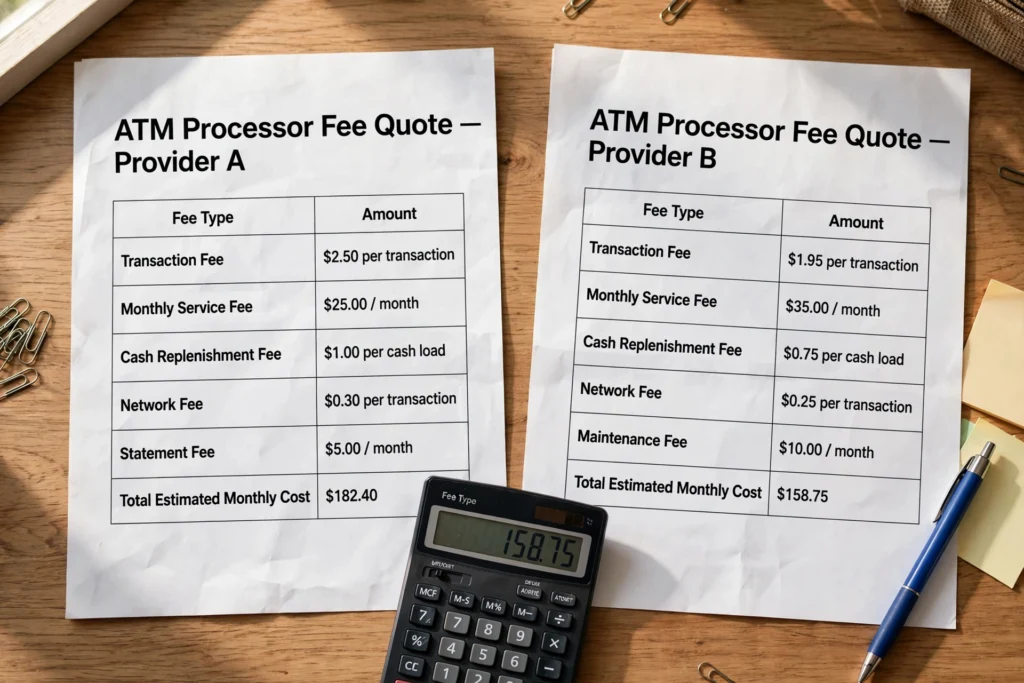
Every transaction carries interchange and processing costs — beginners often pay $0.50+ per transaction while experienced operators negotiate under $0.30. On 500 monthly transactions, that $0.20 difference is $100 per machine per month in pure profit. Get quotes from at least three processors (and ask about flat-rate plans) before committing.
Revisit processor contracts annually as your volume grows; transaction count is leverage. Operators with 20+ machines routinely secure preferred rates beginners can’t — another reason to scale.
7. Service Machines Yourself to Cut Costs
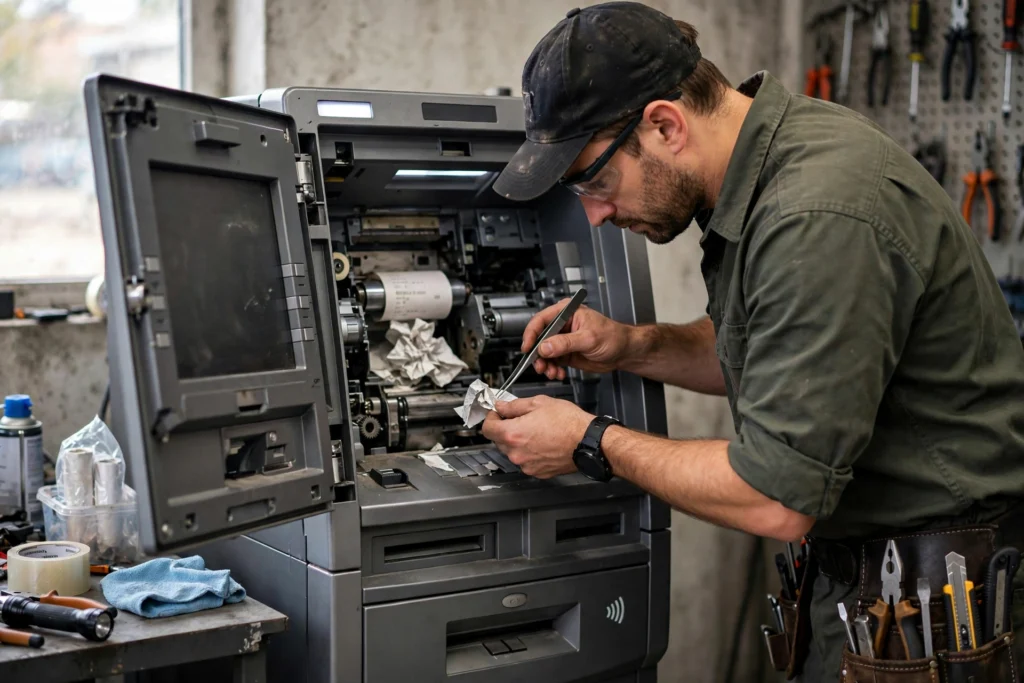
Third-party service calls cost $150 to $300 per visit — learning basic maintenance (clearing jams, replacing receipt paper, rebooting communications) saves thousands yearly across a route. Most issues are simple: 80% of “broken ATM” calls are paper jams or connectivity hiccups fixable in 10 minutes. YouTube and manufacturer manuals teach it all free.
Keep a spare parts kit (receipt paper, cleaning cards, basic tools) in your car. Fast self-service also means less downtime, and downtime is lost surcharge revenue you never recover.
8. Reinvest Surcharges Into More Machines
The ATM business compounds beautifully: one machine’s $1,000 monthly net funds the next machine’s purchase in 2 to 3 months. Operators who reinvest 100% of profits for the first two years routinely grow from 1 machine to 10+ — turning $1,000 a month into $10,000. Resist the temptation to spend early profits; machines buy machines.
At 10+ machines, the business becomes genuinely passive: hire a part-time loader, keep the maintenance routine, and collect surcharge income with a few hours of weekly oversight. Scale is what converts an ATM side hustle into passive income.
Frequently Asked Questions
How much money can you make with an ATM business?
A single well-placed machine nets $500 to $1,500 monthly after expenses. Operators with 10+ machines in good locations commonly net $5,000 to $15,000 per month with part-time effort.
How much does it cost to start an ATM business?
About $2,000 to $3,000 all-in for your first refurbished machine: machine ($1,200–$2,000), installation and signage ($300–$500), plus initial cash load ($1,000–$2,000, which is your money cycling, not spent).
Do I need a license to operate ATMs?
No federal license is required, but you’ll need a business entity, an EIN, and compliance with state money-transmitter rules (most states exempt ATM operators). Your processor handles network compliance; ensure machines are EMV-compliant.
Is the ATM business dying with cashless payments?
Cash usage is declining slowly, but surcharge revenue per transaction is rising and cash-heavy venues (bars, clubs, dispensaries, barbershops) aren’t going anywhere. Well-placed machines remain profitable; poorly placed ones were always marginal.
Conclusion
The ATM business is beautifully simple: right location, right surcharge, reliable machine, repeat. Start with one refurbished machine in a high-traffic cash business, master the operations, then let the surcharges buy your second machine. Passive income, one withdrawal at a time.