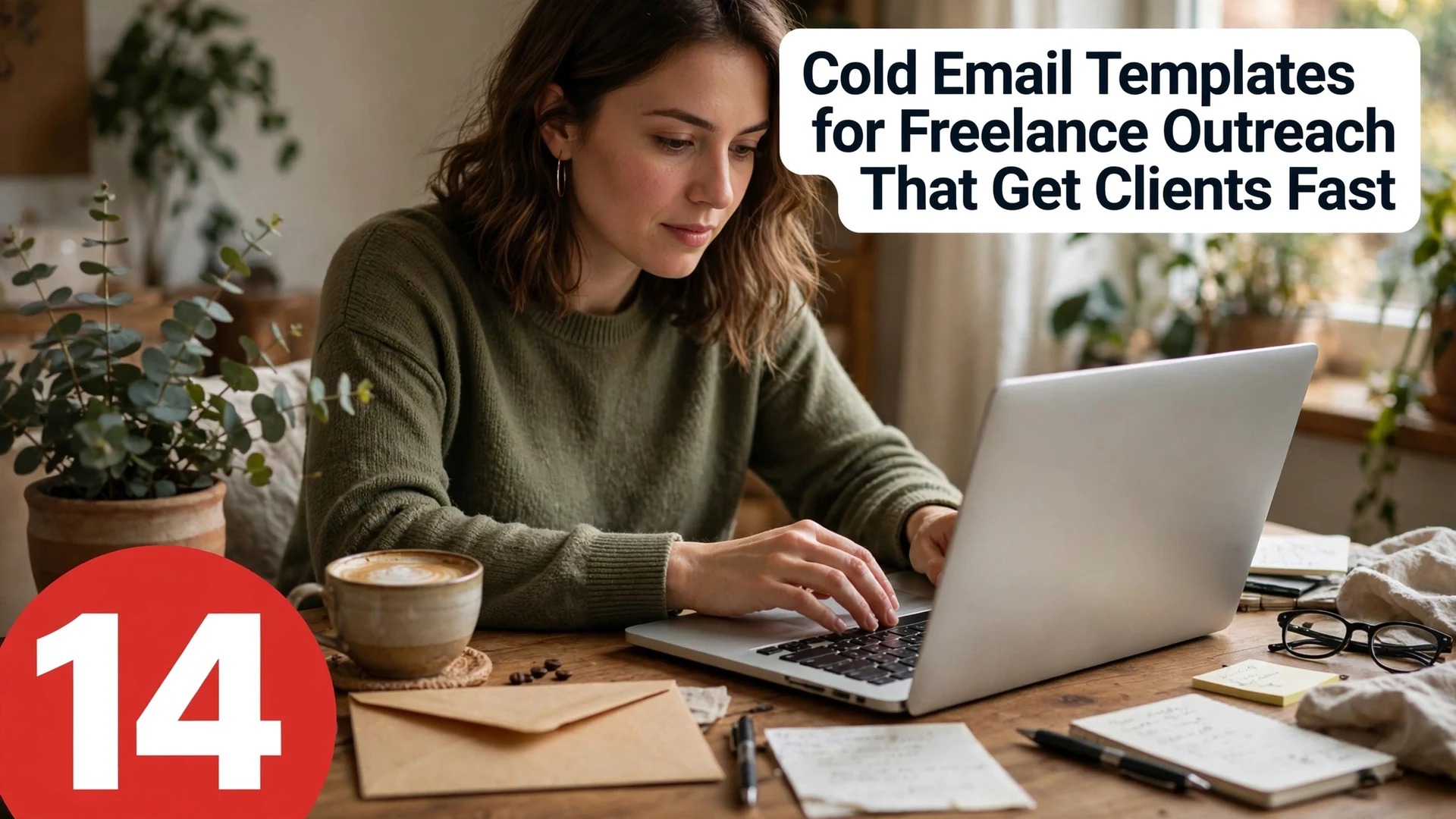
Most freelance cold emails fail for a simple reason: they talk about the freelancer instead of the client. The best cold email templates for freelancers flip that around, opening with something relevant to the prospect, offering clear value, and asking for one small next step. The templates below are written for freelancers pitching real services, and each one includes the structure plus a short example line you can adapt. Customize the bracketed details, keep the email short, and always send to a real person, never a generic info address. Want clients faster? Here is how to get freelance clients fast.
1. The Short Compliment Opener Template

This template works because a specific compliment proves you actually looked at the prospect’s work before writing. Start with one genuine sentence about something specific, such as a recent blog post or product launch, then connect it to your service in a single line. For example: “Your recent guide on email marketing stood out because the examples were unusually practical, and I help creators turn guides like that into weekly newsletters.” End with a low-pressure question like asking whether a short intro call would be useful, and keep the whole email under one hundred words.
2. The Mutual Connection Introduction Template

A shared connection instantly makes a cold email feel warmer, so name the connection in the very first line rather than burying it. Write something like: “Sarah Ahmed suggested I reach out, since you mentioned needing help with your podcast show notes.” Then explain in one sentence how you help people like them, and offer a simple next step such as a fifteen-minute chat. Only use this template when the connection genuinely knows both of you, and always let the connection know you are reaching out first.
3. The Pain-Point First Template

This template opens with a problem the prospect likely has, which grabs attention faster than any introduction. Try an opening like: “Most Shopify store owners I talk to have product descriptions that describe features but never close the sale.” Follow with one sentence about the outcome you deliver, not your life story, and close by offering a quick example or audit. The key is choosing a pain point you can see evidence for, such as an outdated blog or an empty newsletter, rather than guessing blindly.
4. The Recent Work Reference Template

Referencing something the prospect published or launched recently shows your email is not a mass blast. Open with a line like: “I noticed your new course launched last week, and congratulations on the strong early reviews.” Then connect their launch to a specific gap you can fill, such as launch emails or student onboarding messages, and offer one concrete deliverable. This template takes a few minutes of research per prospect, but that research is exactly why it earns replies at far higher rates than generic pitches.
5. The Free Sample Offer Template

Offering a small free sample lowers the risk of replying, because the prospect can judge your work before committing to anything. Write something like: “I rewrote the opening of your homepage to show what I mean, and I am happy to send it over with no obligation.” Keep the sample genuinely useful and short, and never attach large files to a first email. The goal is a reply and a conversation, not a completed project for free, so limit the sample to a paragraph or two.
6. The Case Study Proof Template

Proof beats promises, so this template leads with a result you achieved for a similar client. For example: “I recently helped a fitness coach grow her newsletter from 800 to 2,400 subscribers in three months through weekly emails.” Then explain that you offer the same service to businesses like theirs, and ask whether they would like to see the approach. Even one strong case study transforms your pitch, so build your first one from a discounted project if you need to.
7. The Question Hook Template

Opening with a sharp question pulls the reader into the email instead of letting them skim past it. Try something like: “Are you still writing your own social captions every week, or has that fallen behind since your launch?” The question must be relevant and easy to answer, not a trick or a sales trap. After the question, offer a one-line solution and a simple reply option, such as asking whether they would like a sample caption pack to review.
8. The Ask-for-a-Referral Template

Sometimes the person you email is not the buyer, but they know who is, so asking for a referral is smarter than pitching the wrong person. Write something like: “If you are not the right person for website copy, could you point me toward whoever handles it? I help small agencies with landing pages that convert.” This template works because it is easy to fulfill and flattering rather than pushy. Thank anyone who refers you, and follow up with the referred contact within a day while the introduction is fresh.
9. The Follow-Up After No Reply Template

Most replies come from follow-ups, not first emails, because busy people miss messages constantly. Wait three to four business days, then send a short bump like: “Just floating this back up in case it got buried. Would a quick example of the newsletter format help you decide?” Add something new, such as a fresh idea or a relevant link, rather than simply asking whether they read your email. One or two polite follow-ups are professional, while five in a week is spam, so space them out and stop after the third.
10. The Breakup Email Template

A breakup email politely closes the loop, and it often earns replies from prospects who were simply too busy to respond earlier. Write something like: “I will stop following up after this one, but I wanted to leave you with a quick idea for your abandoned cart emails.” Then include one genuinely useful tip and a simple way to reach you later. Many freelancers report that breakup emails produce their highest reply rates, because the email respects the prospect’s time while demonstrating expertise one final time.
11. The Local Business Walk-In Follow-Up Template

If you visited a local business in person, a follow-up email the same day keeps you memorable while the conversation is still fresh. Reference your visit directly, such as: “Great chatting with you this morning about your salon’s empty booking slots on weekdays.” Then restate the one service you discussed and suggest a next step, like a short call to review a sample booking email. Local owners get fewer emails than online businesses, so a personal follow-up like this stands out immediately.
12. The Value-First Audit Offer Template

This template offers a mini audit before asking for anything, which positions you as an expert rather than a beggar. Write something like: “I reviewed your website and spotted three quick copy fixes that could lift inquiries, and I put them in a one-page note.” Offer to send the note, then let the prospect’s interest guide the conversation toward a paid audit or rewrite. The audit must contain real observations, not generic praise, because prospects can tell the difference instantly.
13. The Seasonal Tie-In Template

Seasonal timing gives your email natural urgency, whether it is holiday sales, tax season, or back-to-school campaigns. Open with the season, such as: “With the holiday rush approaching, many Etsy sellers are booking product description help now to avoid November chaos.” Then offer the specific service that solves the seasonal problem, and suggest booking early. This template works best when sent four to six weeks before the season, when prospects are planning but not yet panicking.
14. The Testimonial Request Template

Past clients are your best source of new work, and a short testimonial request email makes it easy for them to help. Write something like: “I loved working on your launch emails, and a two-sentence testimonial would help me win similar projects.” Include a suggested draft they can approve or edit, because a blank request often gets postponed forever. Happy clients usually say yes within minutes when you remove the effort, and every testimonial makes your next cold email stronger.
Frequently Asked Questions
How many cold emails should a freelancer send per day? Quality beats volume, so aim for ten to twenty well-researched emails per day rather than one hundred generic ones. Personalized emails earn far higher reply rates, and careful targeting protects your sender reputation from spam complaints. First client still missing? Read how to get your first freelance client.
What subject lines work best for freelance cold emails? Short, specific subject lines outperform clever ones, such as “Quick idea for your newsletter” or “Question about your launch emails.” Avoid all caps, excessive punctuation, and words like free or guaranteed, which trigger spam filters.
Should I attach my portfolio to a cold email? No, attachments on first emails often land in spam and feel pushy. Link to one relevant sample or your portfolio page instead, and let interested prospects click through on their own terms.
How long should a freelance cold email be? Aim for seventy to one hundred twenty words, readable in under thirty seconds. Busy prospects decide in the first two sentences whether to keep reading, so put the most relevant detail first and cut everything else.
Is cold emailing legal for freelancers? In the United States, cold business emails are generally legal under the CAN-SPAM Act if you include accurate sender information, a clear subject line, and a working opt-out. Always email business addresses about business topics, and honor every opt-out request immediately.