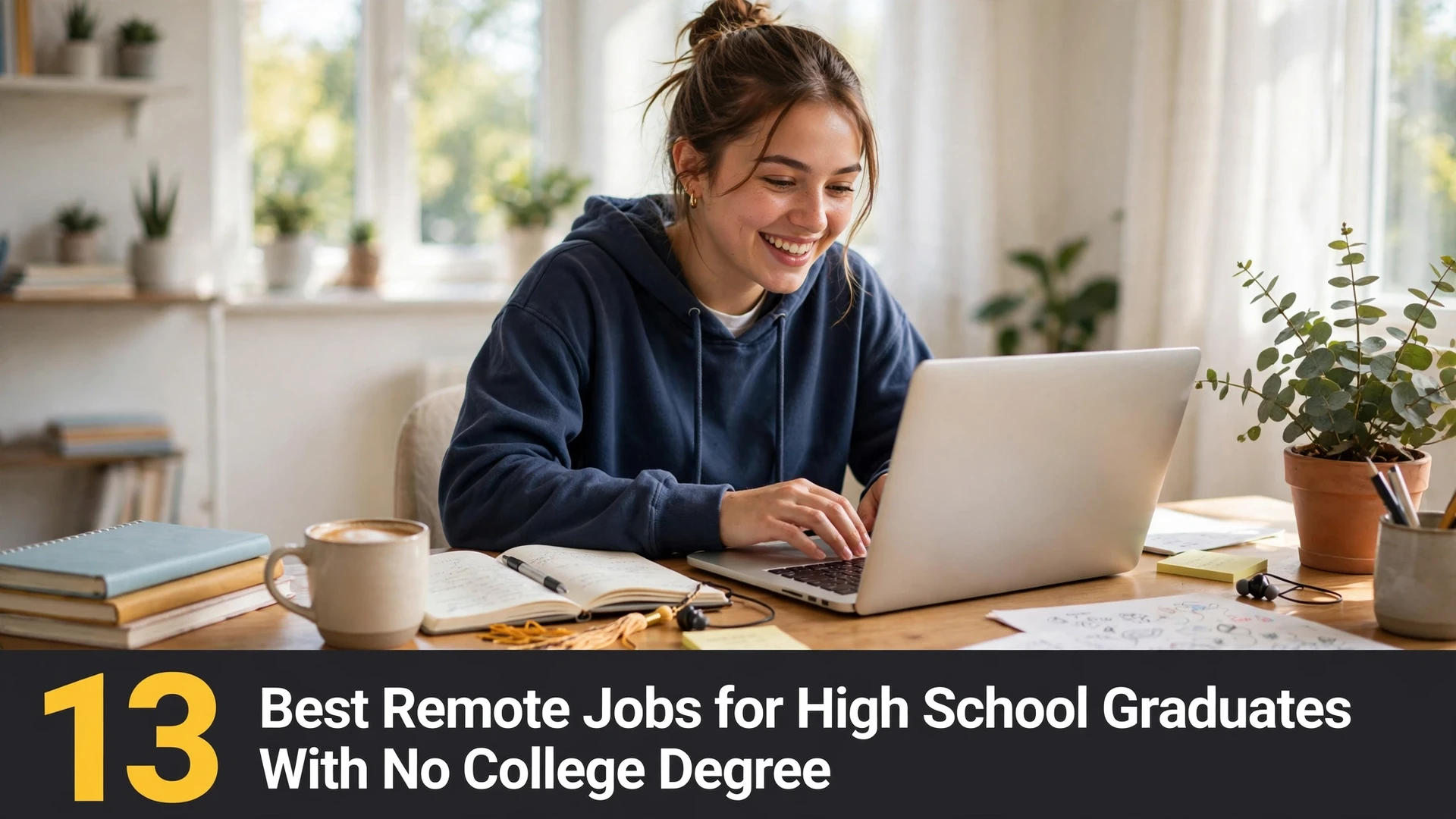
A college degree is not the only ticket to a good remote job. Employers increasingly hire for skills you can prove — clear writing, reliability, basic tech comfort, and learning their systems — and a diploma plus a strong work ethic is enough to start. These remote jobs for high school graduates are roles where you can begin now, learn on the job, and grow: several lead to supervisor, specialist, or freelance work within a couple of years if you keep building skills. Free training, a small portfolio, and a professional application will take you further than you might expect.
If you are just starting out, also read real remote jobs for teens under 18, easy side hustles for a first paycheck, and remote jobs you can start earning from today.
1. Help Middle Schoolers With Homework Online After Graduation

You just finished the subjects middle schoolers are struggling with, and that fresh knowledge is valuable. Tutoring platforms and local tutoring services hire recent graduates to help younger students with math, reading, and science over video call. You do not need to be a certified teacher — you need patience, clear explanations, and a reliable connection. Start with one subject you did well in, keep sessions short and encouraging, and build reviews from parents. Tutoring also proves communication skills and responsibility to future employers.
2. Run Social Media Pages for Local Shops and Cafés

Local shops know they should post regularly, but owners rarely have time. Offer a monthly package: a set number of posts, photos from the shop, replies to comments, and a simple monthly report on what worked. You already understand these platforms better than most small-business owners, and that is the skill they are buying. Visit the business, learn its voice, and post real content — daily specials, new products, staff stories — rather than generic stock images. One shop on retainer beats ten one-off gigs, and local businesses recommend good help to each other constantly.
3. Design Simple Graphics for Small Brands With Free Tools

Small brands need social posts, flyers, menus, and simple logos, and free tools like Canva make this work accessible without design school. Learn the basics — clean layouts, readable fonts, and consistent colors — and build a portfolio of ten strong samples before you pitch anyone. Start with local businesses and online sellers, charge per design or per monthly package, and always deliver files in the formats clients actually need. Design is a skill that compounds: each project teaches you something, and good designers quickly move from simple posts to full brand packages.
4. Caption Short Videos for Busy Creators

Most viewers watch short videos with the sound off, so creators need accurate, well-timed captions — and many will pay someone else to do them. Captioning requires careful listening, fast accurate typing, and attention to timing, all skills you can practice free with sample videos. Offer a per-minute rate, deliver clean caption files in the format each platform needs, and proofread every file before sending it. Creators who post daily become repeat clients fast, and captioning work fits easily around classes, another job, or a job search.
5. Book Discovery Calls for Coaches and Consultants

Coaches, consultants, and small agencies need someone to turn interested leads into booked calls: reply promptly, answer basic questions, send calendar links, and confirm appointments. This is appointment work with a sales flavor, but you are not selling — you are helping interested people take the next step. Employers value friendly writing, fast replies, and careful calendar management. The role teaches you how online businesses actually run, and strong bookers are often promoted to sales or operations roles as the business grows.
6. Organize Digital Files and Folders for Small Business Owners

Small business owners drown in digital clutter: invoices in email, photos in random folders, contracts nobody can find. Offer a cleanup service — sort files into a clear folder system, rename them consistently, back everything up, and write a one-page guide so the owner can keep it tidy. This work needs no special degree, just patience and a logical mind, and owners feel the benefit immediately. Charge per project, work remotely with shared-drive access, and respect confidentiality: a business’s files are private, and discretion is part of the job.
7. Write Online Shop Listings for Handmade Sellers

Handmade sellers on Etsy and similar platforms need listings that actually sell: clear titles, helpful descriptions, and the right search words. If you can write plainly and research what buyers search for, you can write listings from a seller’s photos and notes without ever touching the product. Offer a per-listing rate, include a short set of suggested tags, and show sellers the before-and-after of a listing you improved. Sellers with dozens of products become steady clients, and listing work teaches you e-commerce skills that transfer to many remote roles.
8. Research Vacation Options for Busy Travelers

Busy families and professionals want a vacation planned but do not have hours to compare flights, hotels, and activities. As a remote travel researcher, you gather options within a budget, compare the trade-offs honestly, and present a short, clear plan the traveler can book from. You are not a licensed travel agent unless you train for that, so be clear about what you offer: research and planning, not bookings on their behalf, unless you work through an agency. Knowledge of destinations, careful reading of reviews, and honest comparisons are the skills that earn repeat clients here.
9. Edit Photos for Real Estate and Product Listings

Real estate agents and online sellers need photos that look bright, straight, and professional — and most of them take the photos themselves, then need someone else to fix them. Learn basic editing with free or low-cost tools: correct brightness and color, straighten lines, and remove small distractions. Offer a per-photo rate with a fast turnaround, since agents often list within days of a shoot. Build a before-and-after portfolio first, because edited photos sell this service better than any description. Steady agents and sellers send new batches every week, which makes this reliable recurring work.
10. Greet Callers Remotely for Small Professional Offices

Small medical, legal, and consulting offices need a friendly voice answering their phones, taking messages, and booking appointments — and that person can work from home. Remote reception work suits graduates with a clear phone manner, good manners under pressure, and careful message-taking. Employers provide scripts and training on their booking systems, and shifts often include mornings or lunch coverage. This role is an excellent first office job: it teaches professional communication, confidentiality, and how real businesses handle clients, all of which strengthen every future application.
11. Collect and Organize Customer Reviews for Local Businesses

Reviews decide where customers spend money, but small businesses rarely have a system for collecting them. Offer a service that asks recent customers for reviews politely, tracks responses in a simple spreadsheet, and flags problems for the owner to fix. Never write fake reviews or offer incentives that break platform rules — your job is to make it easy for real customers to share real experiences. Charge monthly, report results simply, and let the business’s rising rating speak for your work. This is a genuinely useful service that local owners understand and value immediately.
12. Help Job Seekers Format Simple Resumes Online

You have just built your own first resume, so you know exactly what other first-time job seekers struggle with: layout, wording, and what to leave out. Offer a formatting and cleanup service — turn a rough draft into a clean, readable resume with consistent formatting and stronger action words, without inventing experience the person does not have. Charge per resume, deliver within a few days, and include a short note on what you changed and why. This work fits perfectly alongside your own job search, and every resume you improve teaches you more about what employers actually look for.
13. Build Simple Budget Spreadsheets for First-Time Earners

Many first-time earners want a budget but have never made one. If you are comfortable with spreadsheets, build simple templates: income, fixed bills, savings goals, and a weekly tracker, with formulas already working. Sell templates or offer a one-time setup call to build the sheet together. Keep it simple, never give regulated financial advice, and focus on clarity: a budget someone actually uses beats a complicated one they abandon.
Frequently Asked Questions
Can I really get a remote job with only a high school diploma?
Yes — many remote employers hire on skills, assessments, and trial tasks rather than degrees. Focus on roles like those above, build a small portfolio or sample of your work, and apply to companies that list skills and experience rather than a degree as a requirement.
What skills should I learn first after graduating?
Start with professional communication, basic spreadsheets, and one tool for your chosen path — Canva for design, a captioning tool for video work, or a booking system for reception roles. Free tutorials cover all of these, and a completed sample project proves the skill better than a course certificate alone.
Should I still consider college later?
Maybe — but you do not need to decide now. Working remotely first shows you which fields you enjoy and whether a specific qualification would actually raise your pay. Many employers also offer tuition help once you are hired, which can make later study much cheaper.
How do I compete with college graduates for remote jobs?
Compete on proof, not credentials: a portfolio, a sample project, a certification in the exact tool the job uses, and a professional, error-free application. Hiring managers remember candidates who show their work, and many prefer a reliable beginner they can train over an overqualified applicant who will leave quickly.
How much can a high school graduate earn remotely?
It varies widely by role, hours, and location, and no honest guide can promise a specific figure. Entry-level remote roles typically start modestly and rise with experience, specialization, and a track record of reliable work — so treat your first role as the start of a career path, not just a paycheck.