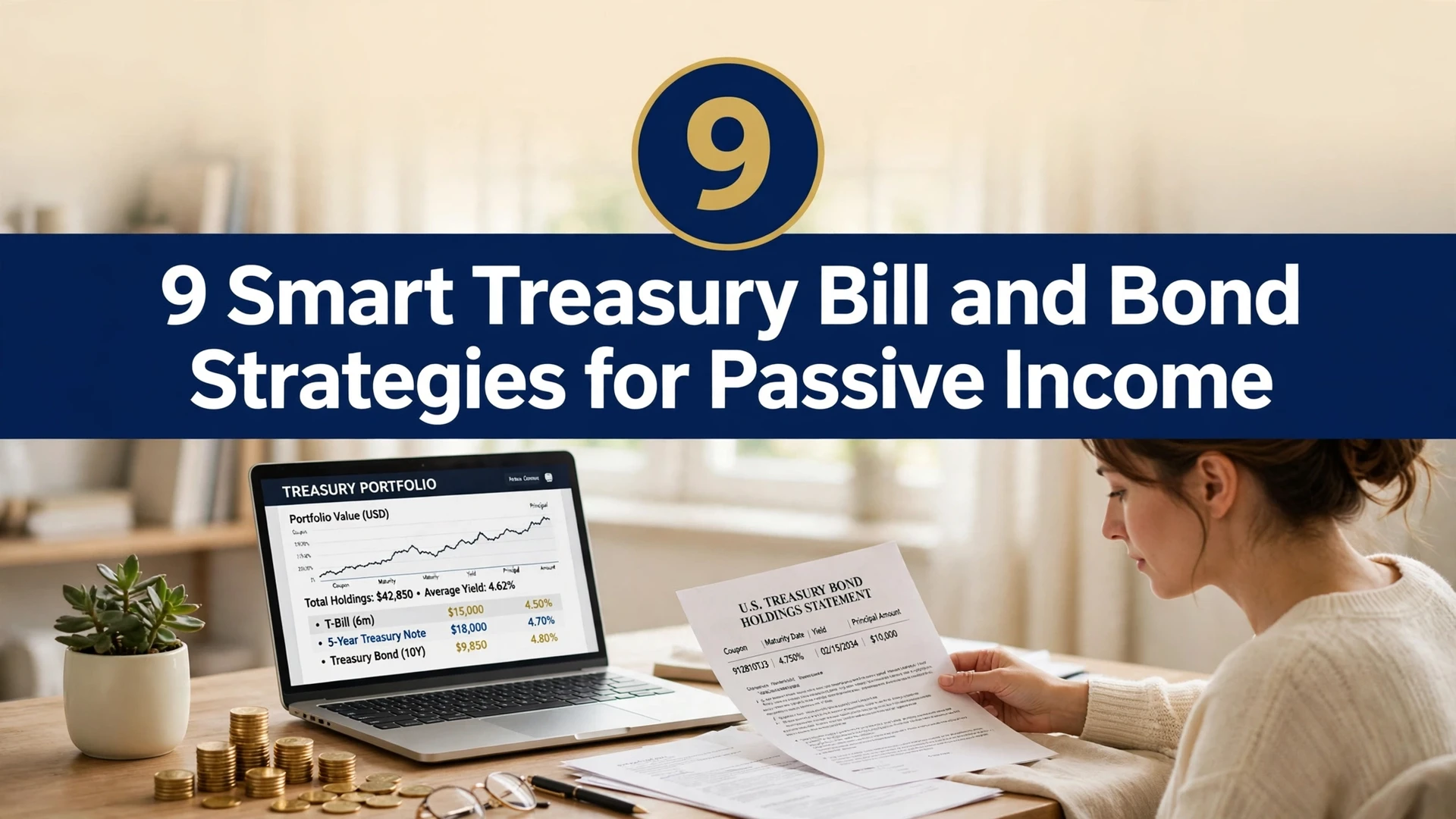
Treasury bills and bonds are a popular starting point for beginners who want passive income from government-backed securities in the United States. Treasury bills mature in a year or less, Treasury notes run for a few years, and Treasury bonds stretch the longest, so you can match a security to when you actually need the money. The strategies below focus on how these securities work and how to use them as a system, rather than chasing a single headline rate. Remember that rates change over time, so always check current rates and terms before you buy.
1. Start With Treasury Bills for Short-Term Cash You Can Plan Around

Treasury bills are a natural first step because they mature quickly, which makes them easy to understand and easy to plan around. You buy a bill at a discount and receive its full face value at maturity, and the difference is your interest. Because the wait is short, you are not locking your money away for years while you learn how Treasury securities work.
Tip: begin with money you will not need before the bill matures, and keep a small cash buffer elsewhere so a surprise expense never forces you to sell early.
2. Roll Maturing Bills Into Fresh Issues to Keep Income Flowing

Rolling simply means using the money from a maturing bill to buy a new bill, repeating the cycle as each one comes due. This turns a one-time purchase into a steady routine, and it keeps your cash working instead of sitting idle while you decide what to do next. Many beginners set a simple rule for themselves, such as reinvesting on the same schedule every time a bill matures. If you are building a broader passive income plan, our passive income ideas for retirees show how retirees structure steady income.
Tip: write down your reinvestment rule in advance so you follow it calmly instead of reacting to every market headline.
3. Add Treasury Notes When You Want a Longer Income Horizon

Treasury notes work differently from bills because they pay interest on a regular schedule, typically every six months, rather than only at maturity. That regular payment pattern suits money you want to hold for a few years, such as savings for a future home expense or a longer-term goal. Notes also let you stretch beyond the short maturities of bills without committing to the decades-long timeline of a bond.
Tip: match the note’s maturity to a real date in your plan, so the money becomes available right when you expect to use it.
4. Use Treasury Bonds for the Longest Government-Backed Income Stream

Treasury bonds are the longest-dated Treasury securities, and like notes they pay interest on a regular schedule before returning the principal at maturity. They suit money you can truly set aside for many years, such as a portion of long-term savings you do not expect to touch. Because the timeline is long, bonds deserve more thought than a quick bill purchase, especially around how your plans might change.
Tip: only commit money to bonds that you are comfortable leaving untouched for the full term, and keep shorter-term money in bills or notes.
5. Hold Treasury Securities to Maturity to Lock In Your Planned Return

Holding to maturity is the simplest way to know what you will receive and when, because the payment schedule is set at purchase. Selling early on the secondary market can produce a different result, since market prices move as interest rates change. Beginners often find that a hold-to-maturity plan removes the temptation to trade on news or guess where rates are headed next. For a dividend-based complement to Treasury income, see our dividend investing tips for passive income.
Tip: before buying, confirm the maturity date fits your timeline, and treat that date as part of the decision, not an afterthought.
6. Buy Through TreasuryDirect to Skip Brokerage Markups

TreasuryDirect is the U.S. Treasury’s own online platform, and buying there lets you purchase new Treasury securities directly without a brokerage middleman. That direct route can keep costs simple and gives you a single place to track your holdings, reinvestment choices, and maturity dates. Some investors still prefer a brokerage for convenience, but it is worth comparing the two routes before you default to one.
Tip: open your account and complete any verification steps before you plan to buy, so an auction deadline never catches you unprepared.
7. Pair Treasury Inflation-Protected Securities With Rising Prices in Mind

Treasury Inflation-Protected Securities, known as TIPS, adjust their principal with inflation, which makes them a different tool from ordinary bills, notes, and bonds. They are worth understanding if you worry that rising prices could quietly shrink what your future payments can buy. TIPS have their own tax treatment and price behavior, so read the details carefully rather than assuming they behave like a standard bond.
Tip: consider TIPS as one part of a broader plan, not as a replacement for every other Treasury security you own.
8. Time Your Purchases Around Auction Schedules

New Treasury securities are sold on a published auction schedule, with different maturities offered on different dates. Checking that schedule helps you plan purchases instead of scrambling when you have cash ready, and it lets you line up maturities with your goals. Auction dates and offering details are published in advance, so a quick calendar check becomes part of a calm routine.
Tip: mark the auction dates for the maturities you use most, and set a reminder a few days before each one.
9. Keep a Treasury Reserve Separate From Your Emergency Fund

A Treasury reserve is money earmarked for planned future needs, while an emergency fund is money for surprises, and keeping them separate avoids confusion when either need arises. Treasury bills can suit a reserve for a known expense a few months away, while your emergency fund should stay instantly accessible. Mixing the two can leave you short in a crisis or force an early sale you did not plan.
Tip: label each pot of money by its purpose, and review both once a year to make sure the split still matches your life.
Frequently Asked Questions
What is the difference between a Treasury bill, note, and bond?
Bills mature in a year or less and pay interest as the difference between the purchase price and face value. Notes run for a few years and bonds run the longest, and both pay interest on a regular schedule before returning principal at maturity.
Do Treasury rates stay the same after I buy?
The terms of a security you already own are set at purchase, but rates on new issues change over time with market conditions. Always check current rates before making a new purchase rather than assuming yesterday’s rate still applies.
Can I sell a Treasury security before it matures?
Yes, Treasury securities can generally be sold on the secondary market, but the price you receive may differ from the face value depending on market conditions. Holding to maturity avoids that price uncertainty.
Is TreasuryDirect the only way to buy Treasury securities?
No, you can also buy through many banks and brokerages, but TreasuryDirect lets you buy new issues directly from the Treasury. Compare fees, convenience, and account features before choosing a route.
Are Treasury securities suitable for beginners?
They are often a good learning tool because the mechanics are straightforward and the issuer is the U.S. government. Start small, match maturities to your timeline, and keep learning before committing larger amounts.
Treasury bills and bonds reward patience and planning more than clever timing, and a beginner who follows a simple routine will usually do better than one who chases every new headline. Keep a written record of what you own, when each security matures, and what you plan to do at each maturity date, so decisions stay calm and deliberate rather than rushed. Start with short bills, learn the rhythm of rolling and auctions, and only stretch into longer notes and bonds when the timeline truly fits your goals. Check current rates before every purchase, keep your emergency fund separate, and let a simple, repeatable system do the quiet work of building passive income over time.