Stay-at-home parents need work that bends around nap times, school pickups, and sick days — not the other way around. These freelance niches are asynchronous, flexible, and genuinely doable in 2-hour pockets of focused time. No meetings at 9 AM, no boss wondering where you were. For client-finding basics, read our guide to landing your first freelance client and our freelancing tips for beginners.
1. Proofreading for Bloggers and Authors
Proofreading is the ultimate nap-time gig: quiet, focused, deadline-driven but schedule-flexible. Bloggers, self-published authors, and course creators all need clean copy.
Charge $25 to $50 per 1,000 words starting out. A single blog post takes 30 to 60 minutes — perfect for one nap window.
Start with one niche and master it before adding a second — depth beats breadth for referrals.

2. Pinterest Management for Small Businesses
Small businesses need Pinterest managers to design pins, write descriptions, and schedule content — all asynchronous work. Learn the platform once, manage 5 to 10 clients monthly.
Charge $300 to $800 per client per month. Five clients at $500 is $2,500 a month from your kitchen table.
Create 3 portfolio samples even without clients; mock projects demonstrate your skills convincingly.

3. Transcription for Podcasts and Videos
Podcasters and YouTubers need every episode transcribed. Work when the kids sleep, pause when they wake — the audio waits for you.
Pay ranges $15 to $30 per audio hour for general transcription, more for technical niches. A fast typist clears $20+ an hour.
Set ‘office hours’ and communicate them clearly — boundaries make freelancing sustainable with kids.

4. Virtual Bookkeeping for Small Businesses
Reconciling transactions, categorizing expenses, invoicing — bookkeeping is steady, recurring, monthly work. Clients stay for years once they trust you.
Charge $200 to $500 per client monthly. Ten retainer clients is a full-time income on part-time hours.
Use a simple contract template for every client, even friends — professionalism prevents misunderstandings.

5. Resume Writing for Job Seekers
Job seekers pay well for resumes that get interviews. One resume takes 2 to 3 hours — a perfect evening project after bedtime.
Charge $100 to $300 per resume. Career-changer and executive resumes command the highest fees.
Batch similar tasks together: all writing on Mondays, all admin on Fridays — context-switching kills productivity.

6. Social Media Content Creation
Batch-create a month of posts for a local business in one weekend afternoon: captions, graphics in Canva, hashtag sets. Then schedule and forget.
Charge $400 to $1,000 per client monthly. Batching means 3 to 4 clients fit in 10 hours a week.
Raise your rates every 6 months as your portfolio and testimonials grow.

7. Online Tutoring in Your Strength Subject
Tutor math, reading, or test prep online in the evenings when kids are asleep. Platforms handle the students; you handle the teaching.
Earn $20 to $60 an hour. Evening and weekend slots pay premiums because that is when students are available.
Join niche-specific communities where your ideal clients hang out, not just freelancer groups.

8. Data Entry and CRM Cleanup
Businesses pay for clean data: deduplicating contacts, updating CRMs, organizing spreadsheets. Mindless in the best way — perfect for tired-parent brain.
Pay is $15 to $25 an hour, but the work is abundant and truly flexible. Great starter niche to build a client base.
Automate invoicing with free tools so billing does not eat into family time.

9. Email Newsletter Writing
Small businesses need weekly newsletters but never have time to write them. One newsletter a week per client, written whenever suits you.
Charge $150 to $400 per newsletter monthly retainer. Five clients is $1,000 to $2,000 a month for very part-time work.
Keep a ‘wins’ folder of positive client feedback for motivation on hard days.

10. User Testing for Websites and Apps
Get paid $10 per 15-minute test to narrate your thoughts while using a website. Tests arrive randomly — grab them between kid duties.
It will not replace a job, but $100 to $200 a month for talking out loud is the easiest money on this list. No skills required.
Plan for school holidays and sick seasons — build a financial buffer during good months.

How to Land Your First 3 Clients in 30 Days
Days 1 to 7: pick one niche and create 3 portfolio samples. Do not wait for paying clients — mock projects for imaginary businesses demonstrate your skills just as well. A proofreader can proofread public-domain texts; a Pinterest manager can redesign pins for a favorite brand as a spec piece.
Days 8 to 14: warm outreach. Message 20 people you know — friends, former colleagues, fellow parents — with a specific offer: “I am starting a proofreading service for bloggers, $25 per 1,000 words. Know anyone who blogs?” Specific beats vague; asking for referrals beats asking for work directly.
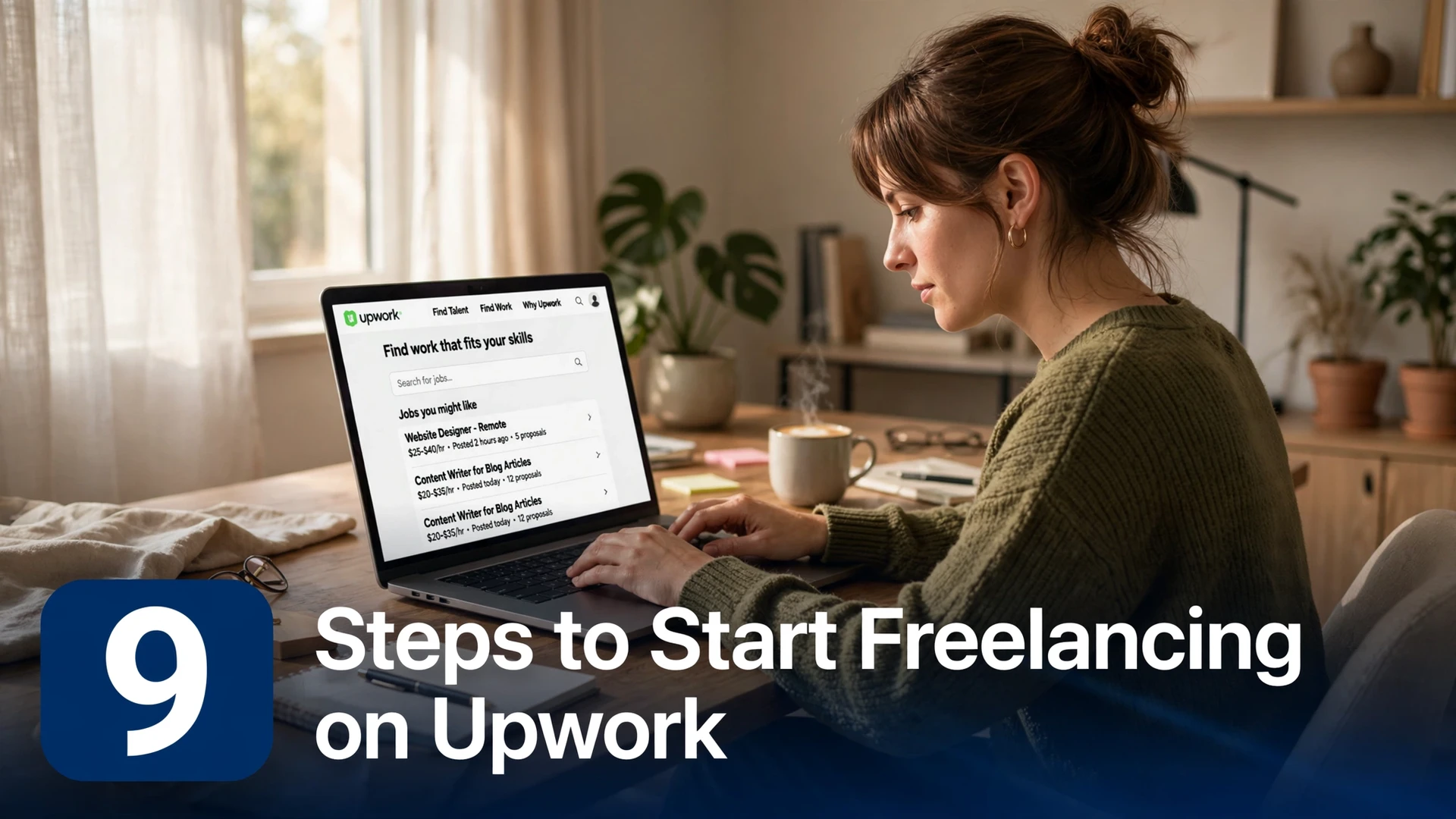
Days 15 to 21: set up profiles on Upwork and one niche job board. Write your profile around outcomes, not tasks: “I help busy bloggers publish error-free content” beats “I am a proofreader.” Apply to 5 jobs daily with customized proposals that reference the client’s specific needs.
Days 22 to 30: follow up and deliver excellently. Follow up once on every proposal after 5 days — half of freelance work comes from follow-ups. When you land a client, over-deliver slightly and ask for a testimonial immediately. Three testimonials unlock consistent inbound work.
Frequently Asked Questions
How many hours can I realistically freelance as a stay-at-home parent?
Most parents manage 10 to 20 hours a week in pockets — nap times, evenings, weekends. Choose asynchronous niches (writing, bookkeeping, design) over meeting-heavy ones (coaching, consulting).
Do I need childcare to freelance?
Not for most niches on this list. Proofreading, transcription, and data entry pause easily. Client calls are the main conflict — batch them into one or two days with coverage.
How fast can I get my first client?
Two to four weeks with focused effort. Start with warm outreach (friends with businesses), then Upwork and niche job boards. A simple portfolio of 3 sample pieces beats a fancy website.
Should I form an LLC?
Not immediately. Start as a sole proprietor — it is free and simple. Form an LLC once you are consistently earning $1,000+ a month and want liability separation.
How do I handle taxes as a freelancer?
Set aside 25 to 30% of every payment for taxes, pay quarterly estimated taxes, and track expenses (home office, software). A separate bank account for freelance income simplifies everything.
Which niche is best for complete beginners?
Data entry and user testing require zero experience and pay within days. Proofreading needs a short learning curve but pays better long-term. Start with easy wins for cash flow, then upskill. For niches built to last, see our guide to AI-proof freelance niches for the long term.
How do I find clients without a network?
Upwork and Contra for general freelancing, plus niche job boards. Cold outreach to 10 local businesses a week also works — small businesses are chronically underserved.
Can I really earn full-time income part-time?
Yes. Retainer-based niches pay $1,500 to $4,000 a month for 10 to 15 hours a week once you have 5 to 8 clients. It takes 6 to 12 months to build to that level.