Twitter, now called X, is one of the few platforms where founders, creators, and hiring managers post work publicly, in plain language, every single day. You do not need a huge following to use Twitter X to find freelance work: you need a clear profile, visible proof of your skill, and a habit of showing up where buyers already talk. The five tactics in this guide are simple enough for a beginner to start this week, and they work best together — a strong profile makes your replies credible, and regular posts make your replies familiar. If you already know how to get freelance clients fast, think of X as the place where that same approach happens in public, in real time.
1. Turn Your X Profile Into a One-Service Landing Page
Before you post anything, rebuild your X profile so a stranger can understand what you sell in five seconds. Your bio should name one service, one client type, and one outcome — for example, “I write launch emails for course creators” — instead of listing five skills. Use a clear photo, a header showing your work, and a pinned post as your mini-portfolio: who you help, what you deliver, and how to contact you.
Link your bio to a booking or contact page, not just a homepage, so a buyer can reach you in one click. Review recent posts through a buyer’s eyes: if your last ten posts are only jokes, a hiring manager has no reason to trust you with paid work.
A strong profile also saves time later: when you reply to a hiring post, the buyer checks your profile first, and a clear profile often decides whether that conversation happens. Treat your bio, pinned post, and link as your shop window.
Finally, be honest about experience. A bio saying you specialize in one starter service for small businesses is more believable, and more hireable, than one claiming to do everything.

2. Post Daily Proof-of-Work Threads Buyers Can Retweet
Proof beats promises on X, and short proof-of-work threads show it best. A thread can be a before-and-after example, a three-step breakdown of a client problem you solved, or a lesson from a real project — with client details removed or permission granted. Post several times a week, each post focused on one idea a buyer can grasp without context.
End threads with a clear takeaway and, occasionally, a soft next step, such as “I help small brands with this — my DMs are open.” Avoid hype, fake income claims, and screenshots you cannot back up. Over time, these threads become a public portfolio buyers can browse before messaging you.
Repurpose your own work to keep this sustainable. One project can become several posts: the problem, your approach, the result, and one mistake to avoid next time. When a founder retweets your thread, their audience sees your name attached to a real skill — exactly how warm leads begin on X.
Engage with replies, too. Answer questions thoughtfully, thank people who share your work, and follow up with anyone who asks a detailed question — they may be a buyer testing whether you are responsive. A thread that sparks a genuine conversation is worth far more than a thread that simply gets likes.
If you are just starting out, see freelancing jobs for beginners.

3. Reply to Hiring Posts Within the First Hour With a Specific Offer
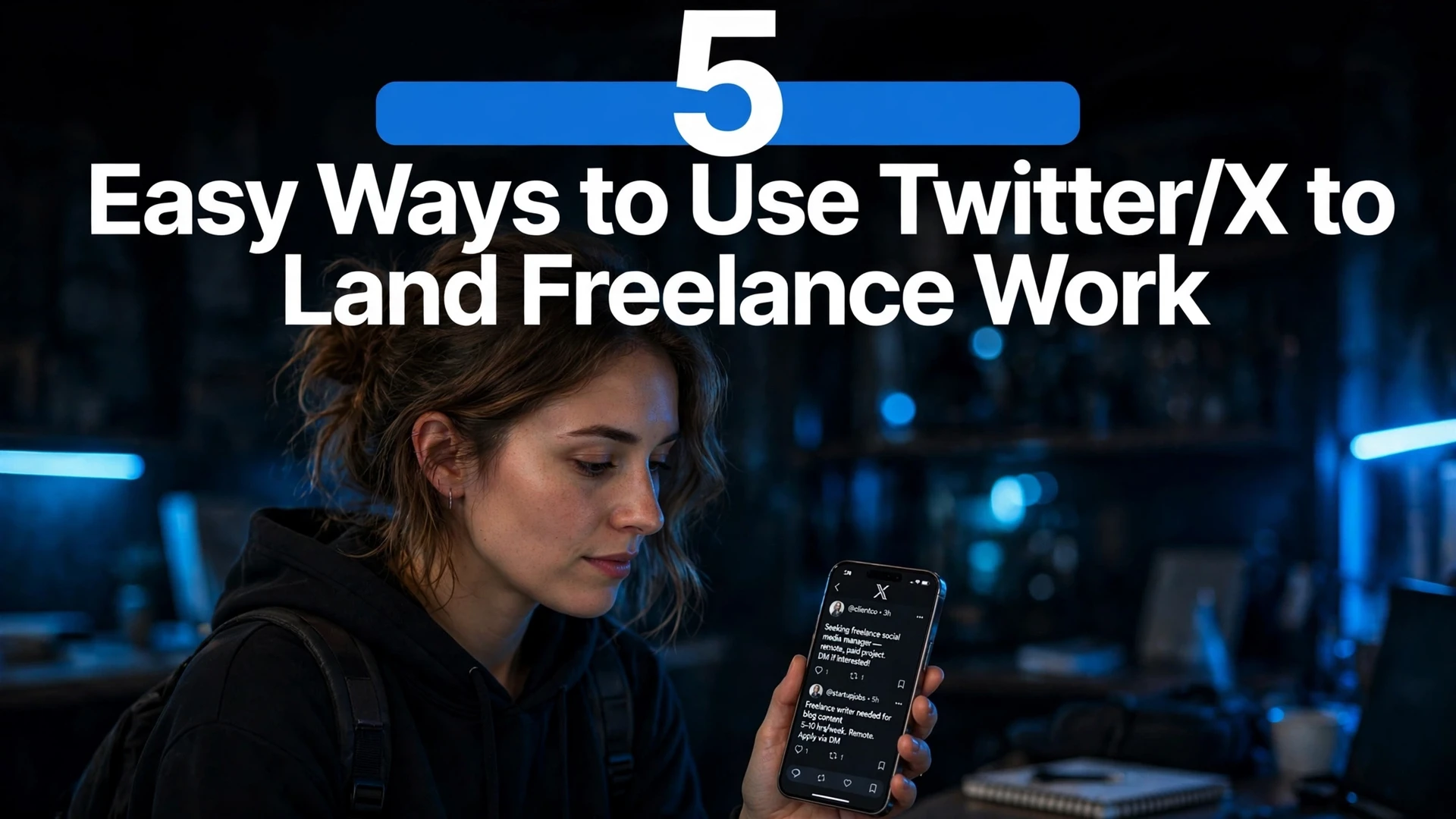
Founders post hiring needs on X like “Looking for a designer for our landing page this week.” These posts move fast, and the first helpful replies often get the conversation. Check X at set times daily — morning, lunch, and early evening — and reply quickly when a post fits. Speed matters, but specificity matters more: name the deliverable, timeline, and one example.
A strong reply is short: “I redesign landing pages for small SaaS brands — I can share two examples and start this week.” Compare that with a vague “DM me, I can help,” which tells the buyer nothing. Link one sample, and avoid posting rates publicly unless asked.
If the buyer prefers DMs, send a brief message that repeats your offer, links one sample, and asks one clear question, such as whether they have a deadline in mind. Do not send long pitches, follow up aggressively, or reply to posts that do not fit your service — spamming hiring threads damages your reputation quickly. Track the posts you reply to in a simple list, so you can follow up once, politely, if a promising buyer goes quiet for a few days.
Remember that not every reply will convert, and that is normal. The goal is a steady habit: a few specific, timely replies each day will produce more real conversations than a weekend of mass messaging ever will, and each conversation teaches you how buyers describe the work they actually need.

4. Use X Lists and Advanced Search to Find Buyers Before They Post Jobs
You do not have to wait for a hiring post. Lists let you follow founders and small business owners in your niche without drowning in your main feed, and advanced search finds people talking about problems you solve. Create a private list of 50 to 100 ideal buyers, check it daily, and watch for signals: website complaints, email questions, or an upcoming launch.
For advanced search, try phrases buyers use, such as “looking for a writer” or “recommend a designer,” combined with niche words, filtered for recent posts. Save a few searches to repeat daily, and reply only where you can genuinely help — often before a formal job post exists.
The key is to engage before you pitch. Reply to a founder’s post with a useful observation or a short answer first, follow them if their work interests you, and let them see your proof-of-work posts over a few days. By the time you mention your service, you are a familiar name, not a stranger. Cold DMs to people who have never seen your work rarely succeed; warm, visible helpfulness does.
Keep this system lightweight: one list, three saved searches, and fifteen minutes a day is enough to start. Review the list monthly, remove accounts that never post about hiring needs, and add new founders you discover through retweets and replies. A small, well-chosen list will outperform a huge, unfocused feed every time.
For platforms beyond X, see the best freelance platforms to make money.

5. Run a Weekly X Space or Q and A That Turns Followers Into Inquiries
A weekly X Space or Q and A positions you as a helpful expert, not just another freelancer looking for work. Pick one narrow topic buyers care about — such as “landing pages that convert” — and host a 20- to 30-minute session at the same time each week. Announce it a day ahead and invite questions in advance.
You do not need a large audience: even five or ten listeners, including one founder with a real problem, can lead to paid work. Post the key points afterward as a short thread, so people who missed it can still find your advice and contact link. Consistency beats polish.
Use the session to listen: buyers’ questions reveal the language they use and the problems they will pay to solve. Turn the best questions into proof-of-work posts, and follow up privately with attendees who asked detailed questions — a brief review offer often turns a listener into a client.
Promote the session simply: one announcement post, a reminder on the day, and a thank-you thread afterward tagging no one without permission. Over a few months, a weekly Space or Q and A becomes a reliable, low-cost way for buyers to discover you, trust you, and reach out when they are ready to hire — without you chasing every job post.

Frequently Asked Questions
Do I need a large following to get freelance work on X?
No. Most freelance work on X comes from timely replies, useful posts, and warm introductions, not follower counts. A small account with a clear service and visible proof can win work faster than a large account with no clear offer.
How much time should I spend on X each day?
Start with 20 to 30 minutes: check your buyer list, reply to one or two relevant posts, and publish one useful post. Consistency beats long, irregular sessions, and you should protect most of your day for paid client work.
Should I pitch in DMs or in public replies?
Start in public with a short, specific reply, then move to DMs only if the buyer invites it or the post asks for DMs. Unsolicited long pitches in DMs usually get ignored and can harm your reputation.
What should I post if I have no clients yet?
Post practice work: redesign a real landing page as a sample, rewrite a public email as an example, or explain a skill step by step. Label samples honestly, and buyers will judge the quality of the work, not the client list behind it.
Is X still worth it for freelancers in 2026?
Yes, for niches where founders and creators are active there, such as tech, ecommerce, courses, and content. Test it for four weeks with the tactics in this guide, track inquiries, and keep it only if it produces real conversations.