Standard planners fail ADHD brains — tiny boxes, rigid schedules, and no room for the way neurodivergent minds actually work. That is why ADHD-specific planners are among Etsy’s bestselling digital products: adults with ADHD will gladly pay for planning systems designed around time blindness, executive dysfunction, and dopamine needs. Each planner type below targets a real ADHD struggle, which is exactly why they sell. For Etsy selling basics, see these digital products to sell on Etsy and digital products that sell themselves. New to product creation? Start with how to create and sell digital products. Here are 14 ADHD planners for adults that actually sell on Etsy.
1. Daily Time-Blocking Planner With Visual Timers
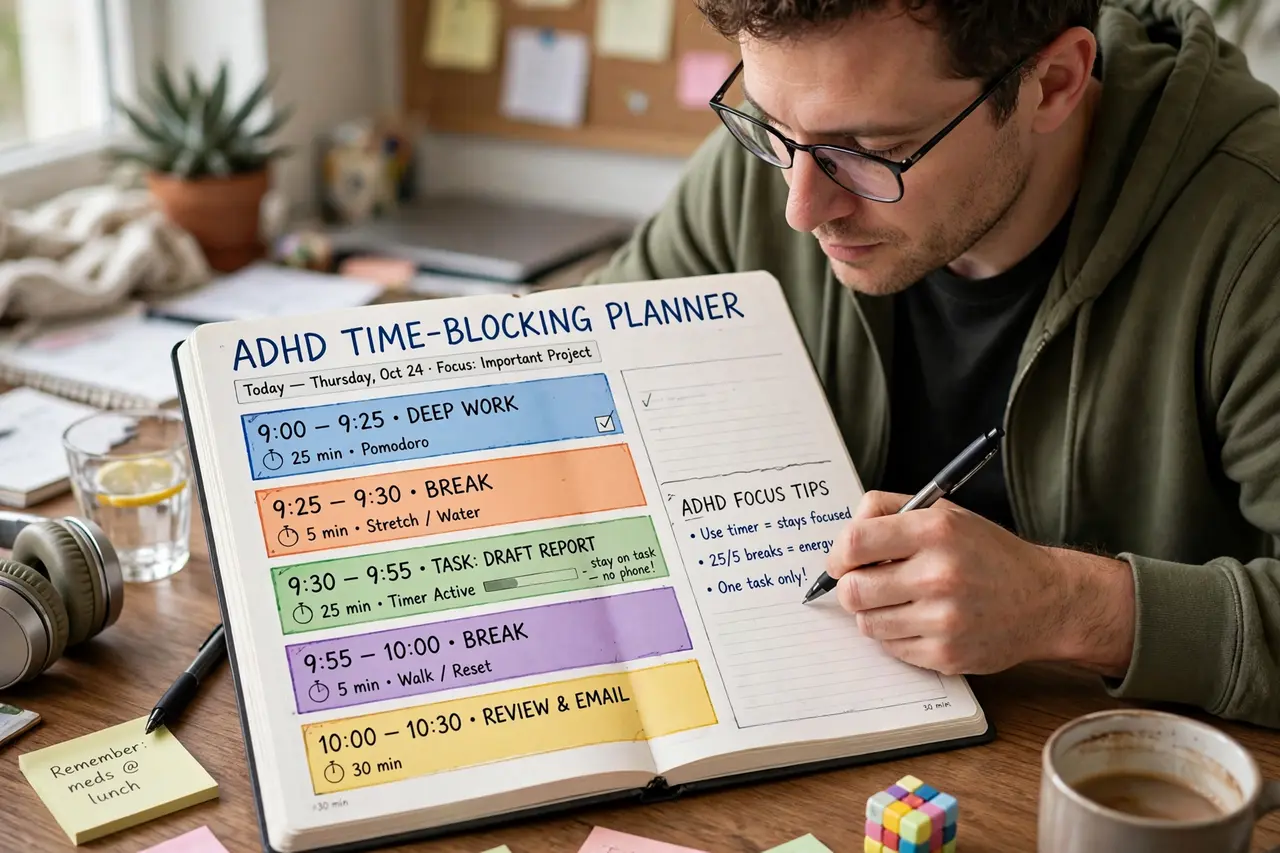
ADHD time blindness makes abstract schedules useless — this planner fixes it with visual time blocks sized proportionally to their duration, plus built-in timer checkboxes for each block. Adults with ADHD buy it because seeing time as physical space finally makes hours feel real. Sell as a printable PDF or GoodNotes file for $6 to $12.
Include both 15-minute and 30-minute block versions, plus a “time audit” page for reviewing where the day actually went. Buyers consistently review that the visual proportions (not just labels) are what makes it work. This is the flagship ADHD planner — every shop in this niche needs one.
2. The Brain Dump to Action Weekly Planner
ADHD minds generate ideas faster than they can organize them. This planner starts each week with a full-page unstructured brain dump zone, then guides users through sorting chaos into three priority tiers with a simple triage worksheet. It sells because it works with the ADHD brain instead of fighting it.
Add a “parking lot” section for ideas that are not this week’s problem — buyers say this single feature reduces their anxiety dramatically. Price at $5 to $10 as a printable. Market it with the phrase “for brains that won’t shut up,” which resonates strongly in ADHD communities.

3. ADHD Medication Tracker and Symptom Log
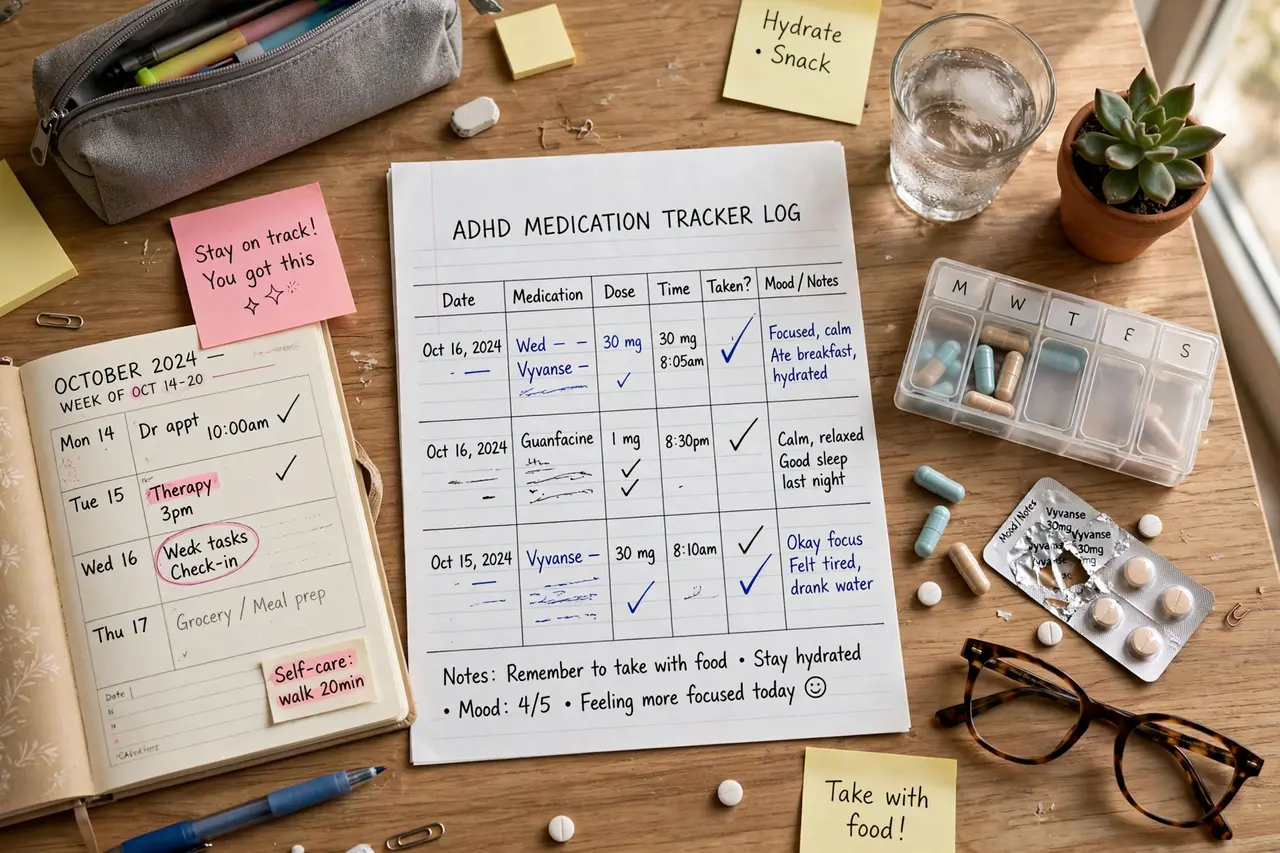
Finding the right ADHD medication requires tracking effectiveness, side effects, timing, and sleep — data most people lose in scattered notes. This tracker provides structured daily logs with medication timing grids, effectiveness scales, and side-effect checklists. It sells steadily because psychiatrists actively ask patients to bring this data to appointments.
Include a monthly summary page that visualizes patterns at a glance — buyers photograph this page for their doctors. Price at $4 to $8. Note in your listing that it is a personal organization tool, not medical advice, to stay within Etsy’s policies.
4. Executive Function Task-Breakdown Planner
The number one ADHD struggle is starting tasks that feel overwhelming. This planner’s core feature is a task-breakdown worksheet that splits any project into absurdly small steps (“open laptop,” “open document”) — the granularity ADHD brains need to initiate action. Each breakdown sheet includes dopamine-reward checkboxes per micro-step.
Buyers describe this as “the planner that finally gets me to start.” Sell for $6 to $12 with 20+ breakdown templates included. Add a worked example (like “clean the kitchen” broken into 15 steps) so buyers immediately understand the method.

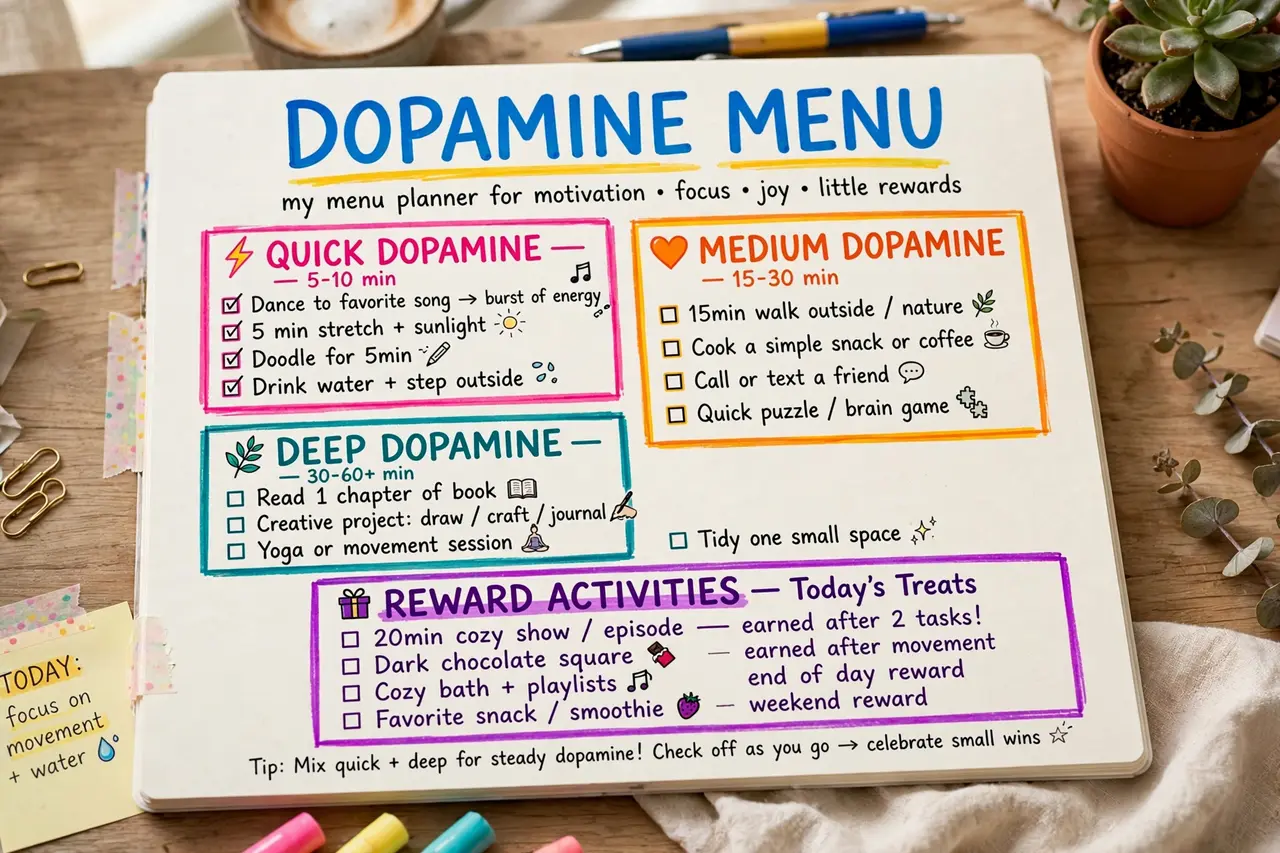
5. Dopamine Menu Planner
ADHD brains run on dopamine, and this planner gamifies the day around it. Users build a “menu” of quick dopamine activities (categorized by time: 5-minute, 15-minute, 30-minute options) and schedule them as intentional rewards between tasks. It reframes rest as strategy rather than procrastination — a message that deeply resonates.
Include a pre-filled menu of 50+ activity ideas plus blank templates for personalization. Price at $5 to $9. This planner photographs beautifully for Pinterest and TikTok, where ADHD creators frequently feature it — free influencer marketing in your exact niche.
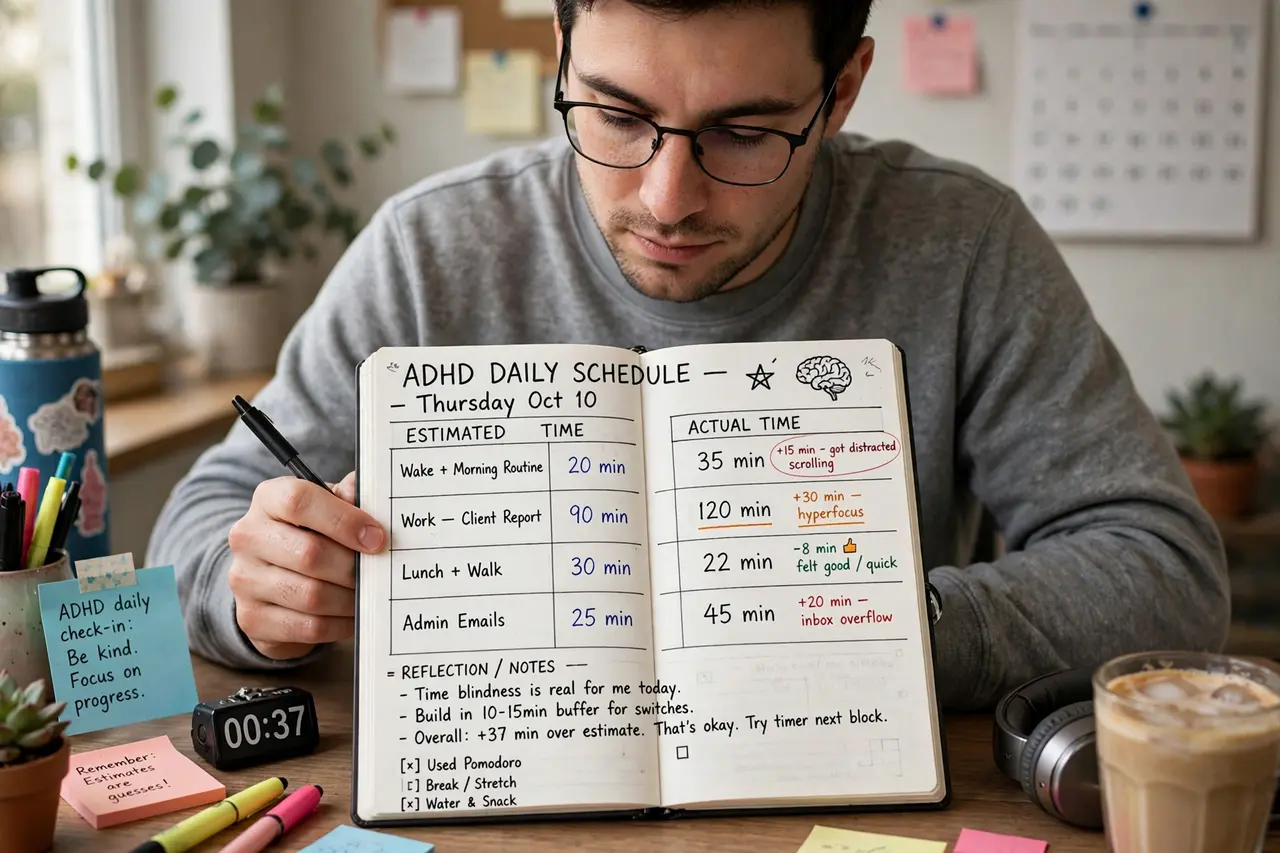
6. Time-Blindness Correction Daily Schedule
This planner attacks time blindness directly: every task gets an “estimated time” column, an “actual time” column, and a running variance tracker that teaches users how long things really take. Over weeks, the data corrects chronic underestimation — the root cause of most ADHD lateness and missed deadlines.
The magic is the weekly calibration review, where users compare estimates to reality and adjust. Buyers report this single habit transformed their relationship with time. Sell for $5 to $10. Emphasize “stop being late” in your listing title — it is the pain point that drives purchases.
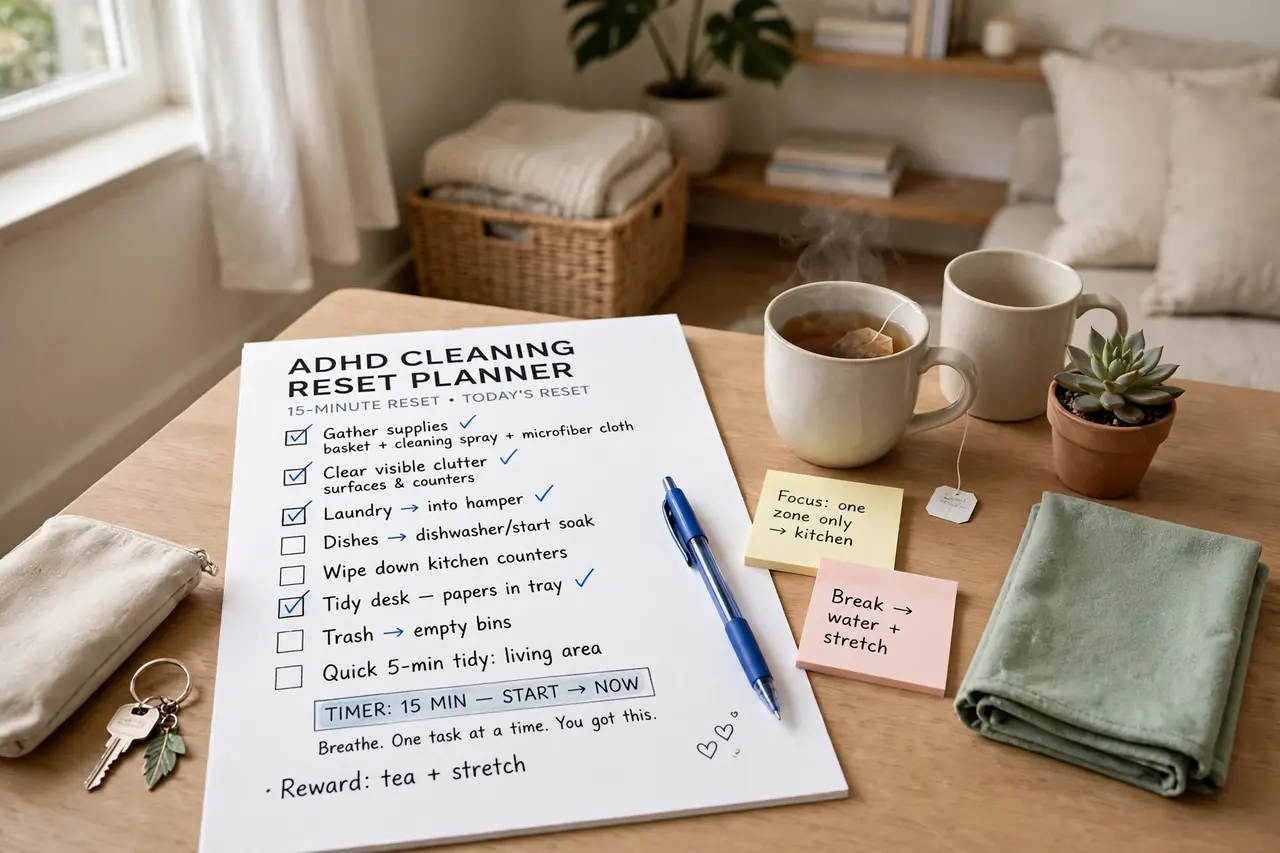
7. ADHD Cleaning and Home Reset Planner
ADHD homes tend toward chaos, and marathon cleaning sessions lead to burnout. This planner structures cleaning as 15-minute “resets” with room-by-room rotation schedules, visual progress trackers, and “good enough” checklists that fight perfectionism paralysis. It sells because a tidy space genuinely improves ADHD symptoms.
Include seasonal deep-clean checklists and a “reset playlist” suggestion page for body-doubling with music. Price at $5 to $9. Before-and-after photos in reviews drive powerful social proof — encourage buyers to share their reset results.
8. The Two-Minute Rule Quick-Task Planner
Small tasks pile up into overwhelming mountains for ADHD brains. This planner is built entirely around the two-minute rule: a dedicated daily capture page for quick tasks, batching worksheets that group them by location or context, and a “quick win” tracker that builds momentum through tiny completions.
The psychological trick is celebrating volume over importance — 10 tiny tasks done beats one big task avoided. Sell for $4 to $8. Buyers love the “quick win streak” tracker, which turns mundane errands into a game their dopamine-starved brains actually want to play.

9. ADHD Workday Focus Planner (Pomodoro-Integrated)
Standard Pomodoro timers fail ADHD workers who hyperfocus past breaks or abandon sessions entirely. This planner adapts the technique: flexible session lengths (15/25/45 minutes), “hyperfocus permission slips” for flow states, transition ritual checklists, and distraction parking lots for intrusive thoughts during focus blocks.
Include a “meeting survival” page with note-taking templates designed for wandering attention. Price at $7 to $12 as a printable or digital planner. Remote workers with ADHD are a growing, high-intent buyer segment actively searching for exactly this.

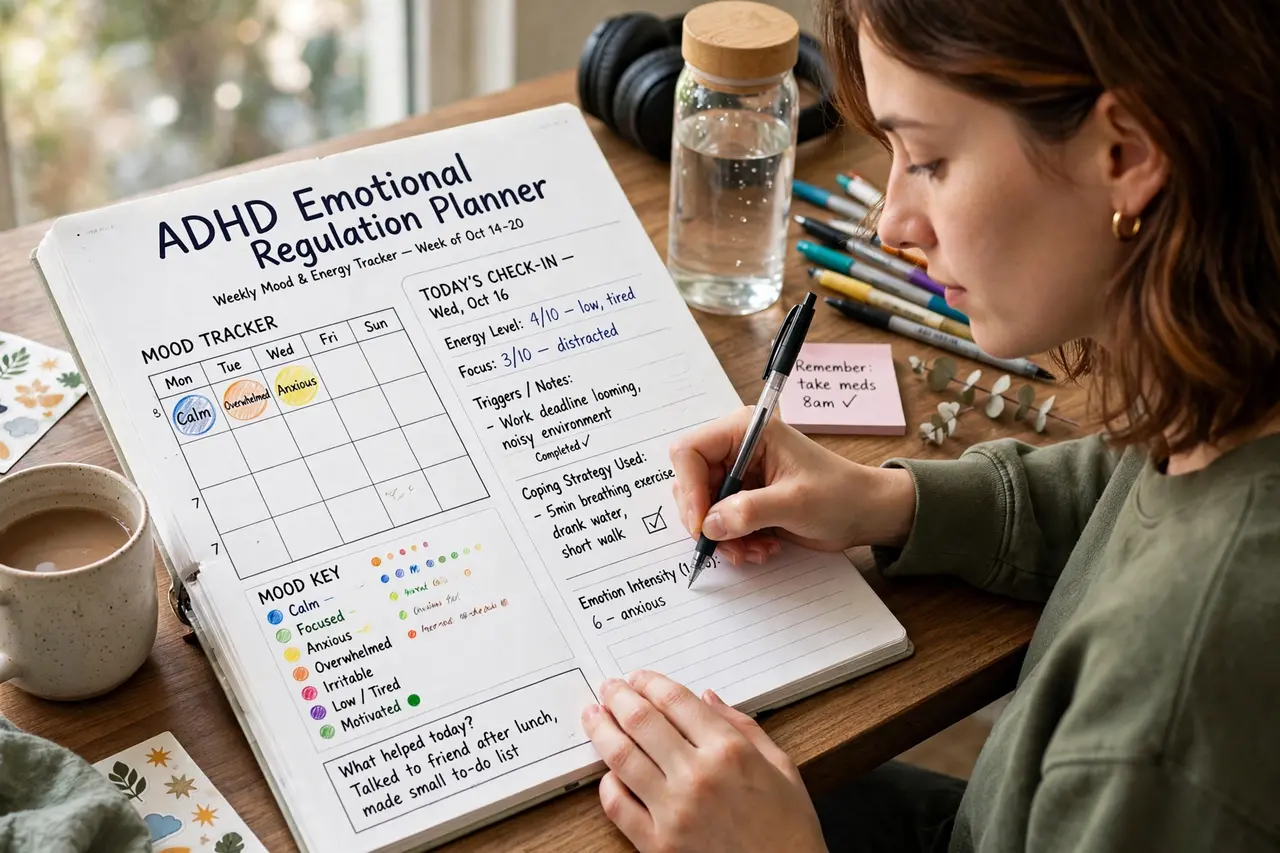
10. Emotional Regulation and Mood Tracker Planner
ADHD involves intense emotions and rejection sensitivity, not just attention issues. This planner combines hourly mood logging with trigger identification worksheets, coping strategy menus, and pattern-spotting monthly reviews. It sells because emotional dysregulation is the ADHD symptom least addressed by mainstream planners.
Add a “toolbox” section where users list personalized calming strategies to reference during overwhelm. Price at $5 to $10. Use gentle, non-clinical language in your listing — buyers want support, not a diagnosis. Therapists sometimes recommend these to clients, creating word-of-mouth sales.
11. ADHD Meal Planning and Grocery Planner
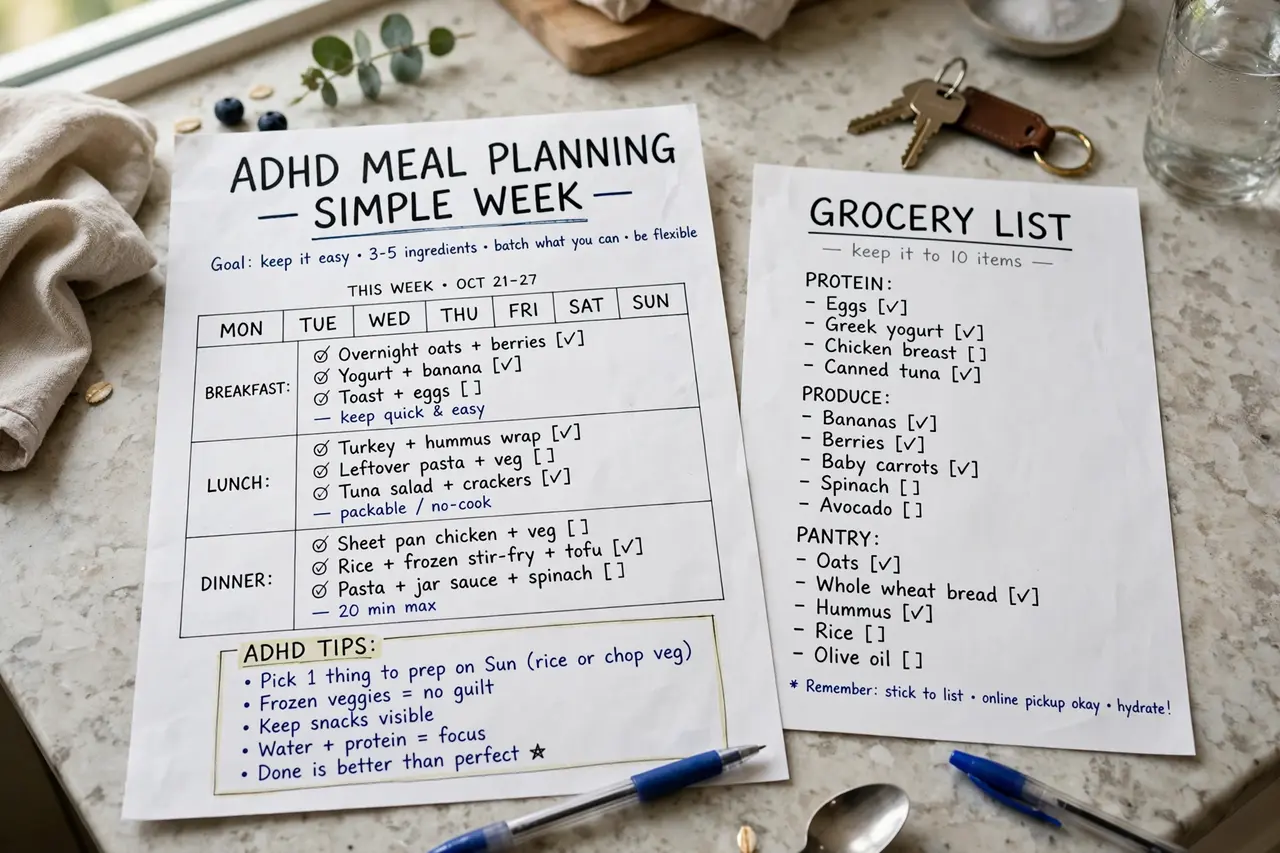
Decision fatigue hits ADHD brains hardest at mealtimes, leading to expensive takeout and food waste. This planner removes decisions: rotating two-week meal frameworks, “same meal” permission pages (eating the same lunch daily is fine), simplified grocery lists organized by store layout, and a “too tired to cook” emergency meal list.
The emergency meal page alone justifies the $5 to $9 price — buyers say it paid for itself the first week. Include freezer inventory tracking to reduce waste guilt. Market to the intersection of ADHD and budget-conscious buyers for a double-sized audience.
12. The Body Doubling Accountability Planner
Body doubling — working alongside someone else — is a proven ADHD focus strategy. This planner structures it: session planning pages (what you will do, with whom, for how long), virtual body doubling session logs, accountability partner check-in templates, and progress celebration pages. It productizes a technique from ADHD support communities.
Include a directory-style page for finding body doubling communities (Focusmate, Discord servers, TikTok lives). Price at $6 to $10. Reference “body doubling” in your title — it is a high-intent search term with surprisingly little planner competition.

13. ADHD Financial Management Planner
Impulse spending and bill avoidance are classic ADHD money struggles. This planner addresses both: a 24-hour impulse purchase waiting list, automated bill tracking with visual due-date alerts, “spending triggers” identification worksheets, and a no-shame budget review designed for inconsistent incomes.
The waiting-list page is the hero feature — buyers report it alone curbed hundreds in impulse buys. Price at $7 to $12. Financial shame keeps many buyers from seeking help, so position your listing with warmth and zero judgment to convert this sensitive audience.

14. Weekly Review and Reset Planner for ADHD Brains
ADHD systems collapse without maintenance, so this planner is pure maintenance: a guided 20-minute weekly review ritual with celebration prompts (what went right), compassionate reset worksheets (no guilt, just data), next-week intention setting, and a “system tweak” log for evolving the planner itself.
Sell it standalone ($5 to $8) or as the companion to your other ADHD planners — bundle pricing dramatically increases average order value. The compassionate tone is the differentiator: every prompt assumes the user is doing their best, which is exactly what ADHD buyers need to hear.

Frequently Asked Questions
Why do ADHD planners sell better than regular planners?
Because standard planners are designed for neurotypical brains — rigid, tiny, and shame-inducing when you fall behind. ADHD planners acknowledge time blindness, executive dysfunction, and dopamine needs directly. Buyers pay a premium for products that finally “get” how their brain works.
Do I need ADHD to create these planners?
No, but you need to understand the struggles. Research ADHD communities on Reddit (r/ADHD), TikTok, and Twitter to learn the language buyers use — terms like “time blindness,” “body doubling,” and “dopamine menu” signal authenticity. Never claim medical expertise; you are selling organization tools, not treatment.
Printable PDF or digital planner (GoodNotes) — which sells better?
Both sell well, and the smartest sellers offer both. Printable PDFs appeal to paper-planner lovers; hyperlinked GoodNotes/PDF files appeal to iPad users. Creating both from one design doubles your market — price the bundle 30 to 50 percent above the single version.
How should I price ADHD planners on Etsy?
Single planners: $5 to $12. Bundles of 3 to 5 related planners: $15 to $30. The ADHD niche tolerates premium pricing because buyers have been burned by generic planners before — they will pay more for something that actually works for them.
How do I market to ADHD buyers specifically?
Use their language in titles: “ADHD planner,” “time blindness,” “executive dysfunction,” “dopamine.” Post flip-throughs on TikTok and Pinterest — ADHD creators actively share tools that help. Etsy search heavily favors exact-match keywords, so put “ADHD planner for adults” in your title verbatim.