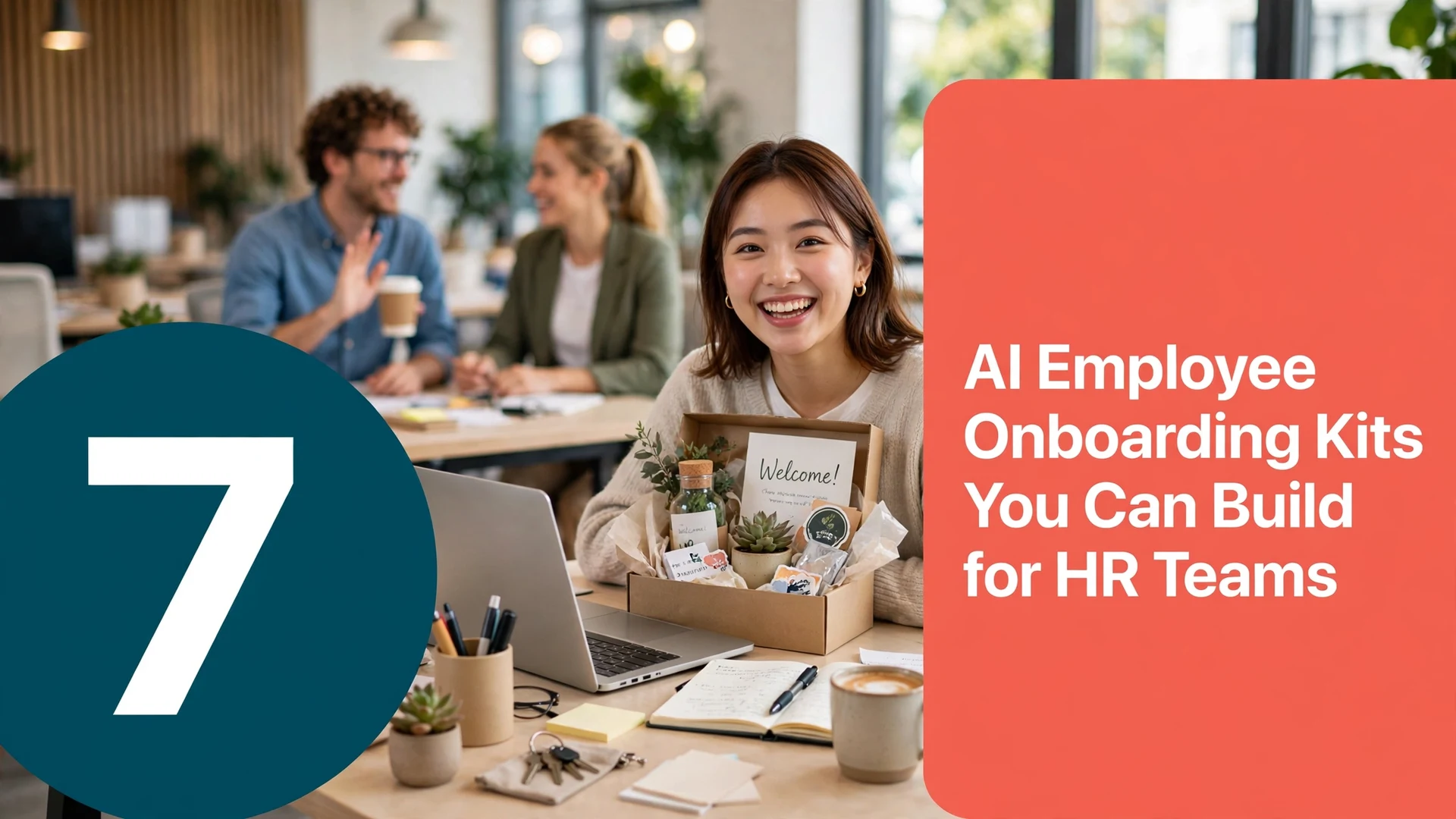
Small HR teams rarely have time to build a great first week from scratch, and that is exactly why AI employee onboarding kits sell. A kit is not a vague advice document: it is a complete, ready-to-use bundle — checklists, welcome messages, schedules, explainer sheets, and templates — that an HR manager can hand to a new hire on day one. With AI, you can draft the structure fast, tailor it to one role or one company, and still add the human review that makes it trustworthy. If you already offer AI services to small businesses, onboarding kits are a natural next offer, because every hire creates the same repeatable need. This guide walks through seven kits you can build, price, and deliver without an HR degree, as long as you keep each kit practical, specific, and checked against the client’s real policies.
1. First-Day Welcome Kit for New Hires in Small HR Teams

A first-day welcome kit answers the questions every new hire is too nervous to ask: where do I go, who do I meet, what do I need, and what happens first? Build it as a single polished package with a welcome letter from the manager, a first-day schedule broken into hours, a who-is-who sheet with names and roles, login and access instructions, and a simple checklist the new hire can tick off by lunchtime. Use AI to draft the schedule and welcome wording, then customize the names, tools, and office details for that employer, because a generic kit feels generic the moment a new hire spots the wrong software name.
Sell this kit per hire or as a reusable template the HR team can reissue. Small companies love it because it makes a one-person HR team look organized, and it cuts the frantic first-morning messages that usually eat up a manager’s day. Add a short “what to bring” and “what not to worry about” section, and you have already removed the two biggest sources of first-day stress. Keep the tone warm and plain, and have the HR manager approve every fact before delivery.
2. Role-Specific 30-60-90 Day Starter Kit for HR Teams

A 30-60-90 day starter kit turns a vague job description into a clear ramp-up plan. For the first 30 days, list what the new hire should learn, who they should meet, and which small tasks prove they understand the basics. Days 31 to 60 add real projects with support, and days 61 to 90 set the first independent goals and a review meeting. Build one version per role — a customer service rep needs very different milestones from a warehouse associate — and use AI to draft the milestones from the job posting and manager interview notes, then tighten them with the hiring manager.
HR teams pay for this kit because it prevents the most common onboarding failure: a new hire who drifts for three months with no clear expectations. Include a simple progress tracker and a manager check-in script for each stage, so the plan does not sit in a drawer. Price it higher than a welcome kit, since it takes more interviews to build, and offer a refresh when the role changes. A kit that managers actually open at each review is worth far more than a longer document nobody reads.
If you also sell AI help to solo operators, AI tools for freelancers pair well with these kits.
3. Remote Employee Home-Office Welcome Kit for Distributed HR Teams

Remote hires miss the office tour, the desk neighbor, and the casual introductions, so their welcome kit has to replace all three. Build a remote kit with a first-week video-call schedule, a home-office setup checklist covering internet, headset, lighting, and ergonomics, a guide to the company’s chat and video tools, and a “meet the team” sheet with photos, time zones, and preferred contact methods. Add a troubleshooting page for the five login problems that happen most often, and a clear note on working hours and response-time expectations.
Use AI to draft the tool guides and schedules, but test every link and login step yourself before delivery, because a broken link on day one destroys trust fast. Distributed HR teams value this kit because remote onboarding is where most companies quietly lose new hires in the first two weeks. Offer a short async video script the manager can record, and a day-one buddy introduction message, and the new hire will feel part of the team before their first project even starts.
4. Compliance Paperwork and Policy Explainer Kit for HR Teams

Nobody reads a 40-page handbook on day one, but every new hire still has to complete tax forms, benefits enrollment, safety acknowledgments, and company policies. A compliance paperwork kit organizes that mess into a plain-English checklist: which form is due when, where to sign, what each policy means in everyday language, and who to ask for help. Use AI to draft the plain-English summaries from the client’s actual documents, and never invent legal wording — your job is to organize and explain, not to replace the employer’s official forms or legal advice.
This kit must always be reviewed and approved by the HR manager or the company’s advisor before it reaches a new hire, and you should say so in your sales pitch, because that honesty builds trust. HR teams buy it because it reduces missed signatures, repeated questions, and awkward follow-ups in week two. Include a tracking sheet so HR can see at a glance which forms are complete, and a friendly reminder sequence for the stragglers. Clear paperwork is boring, and that is exactly why companies will pay someone else to make it painless.
New to selling AI services at all? Start with AI side hustle ideas for beginners to pick a first offer.
5. Buddy and Mentor Match Kit for First-Week HR Onboarding

A buddy kit gives a new hire one friendly person who is not their boss. Build it with a buddy matching guide based on role, shift, and location, a first-week conversation plan with five easy topics for each day, a short introduction message template, and a list of things a buddy should show the new hire, from the break room to the unwritten team norms. Use AI to draft the conversation prompts and introduction messages, then let the HR team pick the actual buddies, since they know personalities and workloads far better than any tool.
6. Manager’s First-Week Check-In Kit for New Team Leads

Managers often want to support a new hire but have no idea what to say beyond “how’s it going?” A manager’s check-in kit solves that with a day-one welcome script, a day-three progress conversation guide, an end-of-week review template, and a list of warning signs, such as missing access, unclear tasks, or isolation, with suggested responses for each. Use AI to draft the scripts in a natural, conversational tone, then tailor them to the team’s work, so a retail manager and a software team lead are not reading the same generic lines.
HR teams like this kit because it improves the manager, not just the new hire, and better managers retain more staff. Offer it as a one-page-per-meeting format, not a long manual, since busy managers will only use what fits on a single page. Add a space for notes after each check-in, so the manager builds a record that helps at the 30-day review. When you can show HR that managers actually used the kit, repeat work follows, because every new hire on that team needs the same support.
7. First-Paycheck, Benefits, and Payroll Explainer Kit for HR Teams

Money questions cause more first-week anxiety than almost anything else, and most new hires will not ask them out loud. A first-paycheck explainer kit covers, in plain language, when paydays fall, how direct deposit works, where to find a pay stub, what common deductions mean, how benefits enrollment deadlines work, and who to contact about a payroll problem. Use AI to draft the explanations from the employer’s real payroll calendar and benefits summary, and flag anything you are unsure about for HR to confirm, because payroll details must be exactly right.
This kit works best as a short, friendly guide plus a one-page FAQ, not a benefits booklet rewrite. HR teams value it because it cuts the same five payroll questions from every new hire, and it helps employees feel secure from the first paycheck. Never give personal tax or benefits advice in the kit; point readers to HR or the benefits provider for individual decisions. A clear, accurate money explainer is one of the most appreciated things a new hire receives, and it positions you as a careful, trustworthy provider for the next kit.
Frequently Asked Questions
Do I need HR experience to build AI employee onboarding kits?
No, but you do need care and a review step. You bring structure, writing, and AI drafting skills, while the client provides their real policies, tools, and approval. Always have the HR manager check facts, deadlines, and legal wording before a kit reaches a new hire.
How much can I charge for an onboarding kit?
Simple welcome kits often sell as lower-priced template packages, while role-specific 30-60-90 kits and compliance kits command project prices because they require interviews and customization. Start with clear per-kit pricing, then offer bundles when a client hires regularly.
How do I find HR teams to sell to?
Start with small businesses, startups, and local employers that hire steadily but have no dedicated onboarding specialist. Offer one small kit, such as a welcome kit, as a low-risk first project, and let good delivery lead to the larger kits.
Can AI write the whole kit for me?
AI can draft structure, checklists, and wording fast, but it cannot know a company’s tools, policies, or people. Your value is in interviewing the client, tailoring every detail, testing every link, and getting HR approval before delivery.
What should I never put in an onboarding kit?
Never invent legal, tax, or benefits advice, and never copy another company’s handbook wording. Use only the client’s approved documents, keep explanations plain and general, and direct individual questions to HR or the proper advisor.