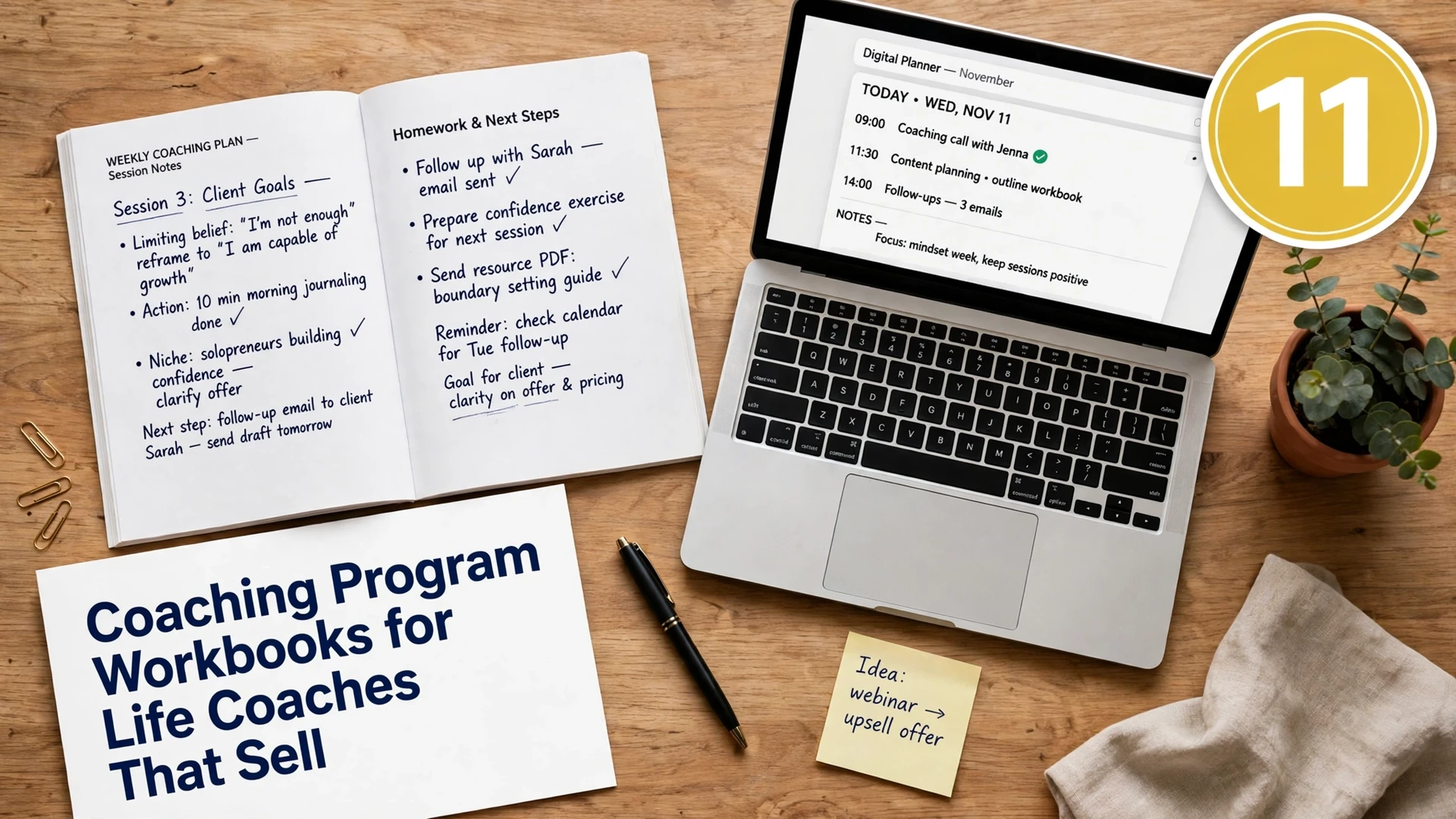
Life coaches already have the hard part — a method that helps clients change. A workbook turns that method into a product clients can buy, work through, and finish without booking a call. The coaching program workbooks for life coaches in this list are the ones buyers actually search for on Etsy and other marketplaces: focused on one problem, structured week by week, and written so a client can use them alone. Each one can be built in a design tool, sold as a printable PDF, and bundled with a coaching package later. Here are eleven workbook ideas that sell.
1. The 90-Day Life Reset Coaching Workbook
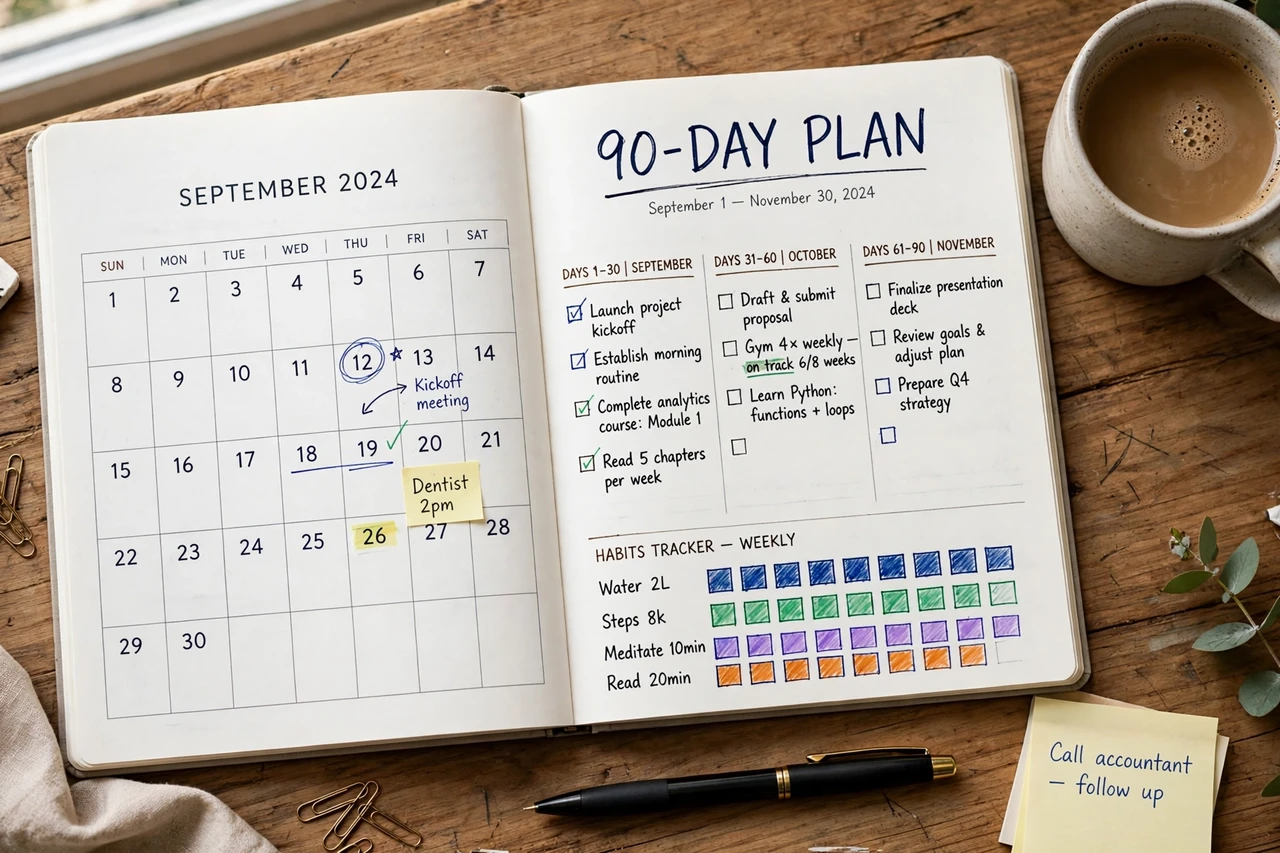
A 90-day reset is the classic coaching program, and a workbook makes it feel real: twelve weekly check-ins, a life-audit wheel, goal-setting pages, and a weekly review spread the client fills in as they go. Buyers love it because 90 days is long enough to see change and short enough to finish. Build it with a clear start, a midpoint review, and a final celebration page — and price it as a program, not a worksheet, since it replaces a month of sessions for the client.
Tip: add one fillable weekly scorecard clients can print twelve times, so the workbook feels like a full quarter of coaching in one download.
2. The Goal-Setting and Action-Plan Workbook

Most people do not fail at goals because they lack ambition — they fail because the goal never becomes a plan. This workbook walks a client from a vague dream to a dated, step-by-step action plan: a goal-clarifier page, a breakdown into monthly and weekly steps, obstacle planning, and a habit tracker for the first 30 days. It is the easiest workbook to sell because every coaching niche needs it, from career coaches to wellness coaches.
Tip: include a “reverse-plan” page where clients start from the finished goal and work backwards — it is the page buyers photograph and share, which drives more sales.
3. The Confidence-Building Workbook for New Coaching Clients

New clients often arrive doubting themselves, and a confidence workbook gives them a win in the first week. Fill it with a strengths inventory, a “wins log” for daily evidence of capability, reframing exercises for negative self-talk, and small courage challenges that build up over four weeks. Keep the tone warm and practical — this workbook should feel like a supportive coach, not a textbook.
Tip: add a one-page “confidence first aid” card clients can keep on their desk — a printable extra like this turns a good workbook into one buyers recommend.
4. The Morning Routine Reset Workbook for Busy Clients

Morning routines are one of the most searched coaching topics, and a workbook gives clients something to follow instead of just advice. Design a 14-day reset: a current-routine audit, a menu of small habits to choose from, a build-your-own morning planner, and a daily tracker with a weekly review. Make it realistic for people with kids, commutes, and early alarms — a 10-minute version for busy days and a longer version for weekends.
Tip: offer two versions of the tracker, weekday and weekend, so clients do not quit on Saturday because the plan did not fit their life.
5. The Career Change Coaching Workbook

Career changers are motivated buyers — they are stuck, they want out, and they will pay for a clear path. This workbook should cover a skills audit, a values check, a list of realistic next roles, a 90-day transition timeline, and a money-planning page for the gap between jobs. It works especially well as a lead-in to your one-on-one career coaching, since clients who finish it know exactly what they need help with next. If you are building a client base from scratch, these steps to land your first freelance client work the same way for coaches. [ADDED LINK]
Tip: include a “talk to three people” networking page with scripts for informational interviews — it is the step most career changers skip, and the one that gets results.
6. The Money Mindset Workbook for Life Coaching Clients

Money beliefs quietly run a client’s decisions, and a money mindset workbook makes them visible: a money-story writing prompt, a beliefs audit, a spending-values check, and a 30-day abundance practice with daily journal prompts. Keep it focused on mindset and behavior, not financial advice — you are coaching beliefs, not selling investment tips — and pair it with a simple monthly money tracker so clients see their habits change.
Tip: add a disclaimer page that the workbook is coaching support, not financial advice — it protects you and builds trust with buyers who read the fine print.
7. The Boundaries Workbook: Help Clients Say No Without Guilt

Clients who cannot say no burn out, overcommit, and resent the people they love — and they search for help with exactly this problem. A boundaries workbook should include a boundary audit across work, family, and friendships, scripts for saying no kindly, a practice log for small boundary wins, and a recovery plan for the guilt that follows. Short, direct exercises sell better than long theory here, because the buyer wants words they can use today.
Tip: write the scripts in the client’s own voice, not a therapist’s — buyers copy the exact lines into real conversations, and that is what earns five-star reviews.
8. The Habit Tracker and Accountability Workbook

Accountability is the product coaches sell most, and this workbook packages it: a habit-chooser page, a 66-day tracker grid, weekly check-in prompts, a streak-recovery plan for missed days, and an accountability-partner agreement page. It is simple to build and easy to bundle — pair it with any other workbook on this list as a bonus, or sell it on its own as a low-priced entry product that brings buyers into your shop.
Tip: design the tracker grid in a clean, minimal style with plenty of white space — buyers print these every month, and ink-heavy designs get complaints.
9. The Self-Discovery Journal Workbook

Self-discovery is the broadest coaching niche and one of the best sellers, because the buyer is often buying the workbook for themselves at a moment of change. Structure it as a 30-day journal: one prompt a day, a weekly reflection page, a values-sorting exercise, and a final “who I want to be” vision page. The prompts should be specific, not generic — “What would you do if you had one free year?” beats “What are your dreams?” every time.
Tip: keep every prompt to one or two sentences and leave half the page blank for writing — buyers judge a journal workbook by how much room it gives them to think.
10. The Stress Reset Workbook for Overwhelmed Clients

Overwhelmed clients need relief fast, so this workbook should work in a single sitting as well as over four weeks. Include a stress-audit page, a “drop, delegate, delay” triage exercise, breathing and grounding practices, a simplified weekly planner, and a personal reset checklist for bad days. Market it honestly as a coaching tool, not a medical treatment, and keep the design calm — soft colors, wide margins, and no clutter.
Tip: put the one-page reset checklist at the very front, not the back — buyers who find relief on page one come back to buy your other workbooks.
11. The Client Onboarding Workbook for Your First Session

Every coach needs an onboarding workbook, and other coaches will buy yours instead of building their own. This one is for coaches, not clients: a welcome page, a client intake form, a goals and expectations agreement, a session-prep checklist, and a first-session worksheet. Sell it as a ready-to-use business tool, and include an editable version so buyers can add their own logo and branding — that one feature justifies a higher price. A strong intake form matters here too — these client questionnaire templates for photographers show how to ask the right questions first. [ADDED LINK]
Tip: include a short “how to use this workbook” page at the start, so buyers can hand it to a client on day one without writing their own instructions.
Frequently Asked Questions
Do coaching workbooks really sell on Etsy?
Yes — coaching workbooks are a steady niche on Etsy and similar marketplaces, because buyers want a guided program they can start today without booking a call. Sales build slowly: a shop with ten or twenty well-made workbooks earns far more than a shop with one, so plan to list several.
How much should I charge for a coaching program workbook?
Most printable coaching workbooks sell for $8 to $25, depending on length and depth. A short 10-page tracker might sell for $7, while a full 40-page 90-day program can sell for $20 or more. Price on the value of the outcome, not the page count.
Do I need to be a certified life coach to sell these workbooks?
No — you are selling a digital product, not a coaching service. Buyers care that the workbook is useful and well-designed. That said, real coaching experience makes the content much better, and you should never claim a certification you do not hold.
What format should a coaching workbook be in?
A PDF is the standard: buyers print it or use it on a tablet. Offer a US Letter size as the default, and consider an A4 version for international buyers. If you can, include a fillable PDF version too — many buyers prefer typing to printing.
How do I get my first sales for a coaching workbook?
Start with good listing photos that show real pages, a title with the exact words buyers search for, and a clear description of who the workbook is for. Share the listing in coaching and self-improvement communities where it is welcome, and ask your first buyers for reviews — early reviews drive the search ranking.
A coaching workbook is your method, packaged so it can help someone while you sleep. Pick the workbook closest to what you already teach, build it around one clear result, and list it — then build the next one. The coaches who earn from digital products are not the ones with the biggest audience; they are the ones with the most useful workbooks for sale.